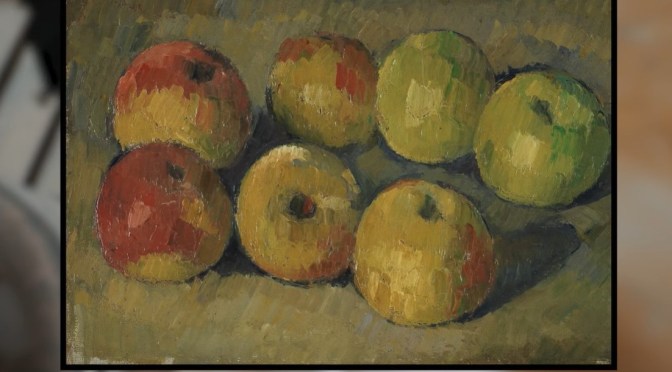
The Fitzwilliam Museum – This painting was executed sometime between 1877, when Cézanne exhibited for the second and last time with the Impressionist painters, and 1878, when he returned to live in Provence. Cézanne himself claimed that he planned to conquer Paris with an apple, and his paintings of this single fruit have in fact proved to be among his most admired works.
Bought by Degas for 100 francs in January 1896, it was acquired in Paris by John Maynard Keynes at the sale of the contents of Degas’s studio in March 1918. It is one of the most celebrated of all his still-lifes, and, through Keynes’s friendship with the painter and writer Roger Fry, and the circle of Bloomsbury writers, came to be crucial in the dissemination of knowledge of Cézanne’s work in England.
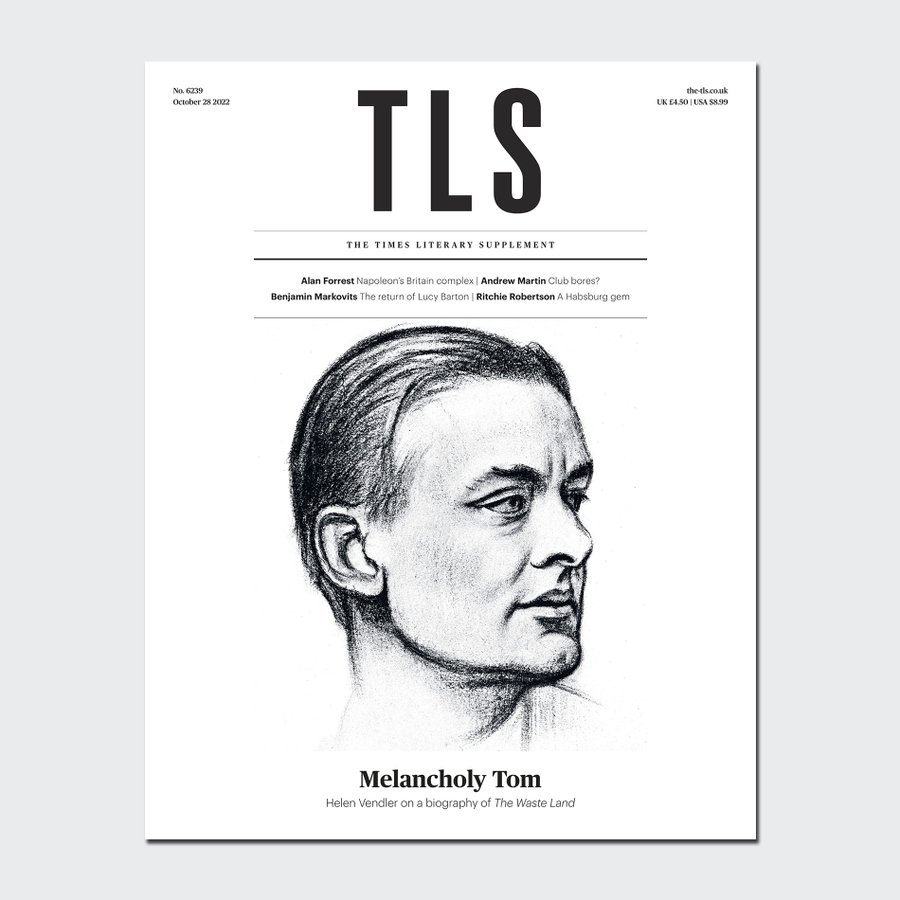
This week’s @TheTLS , featuring Helen Vendler on Matthew Hollis’s biography of The Waste Land; Vernon Bogdanor on the UK’s future; Christopher Priest on Terry Pratchett; Felipe Fernández-Armesto on lying; @irinibus on the creative potential of constraints – and more.
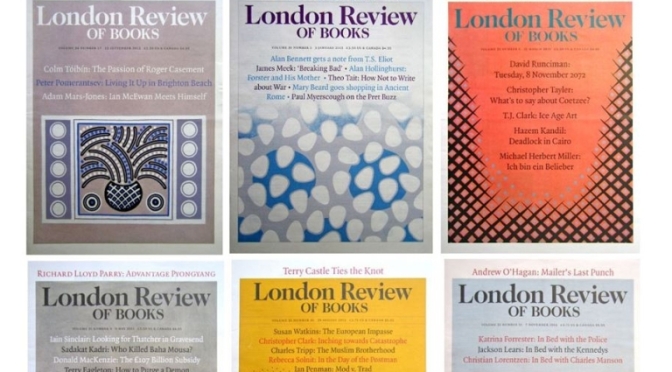
Charles Glass – Although World War Three had come perilously close, Martin Indyk absolves Henry Kissinger: Soviet actions were ‘yet again characterised by an ultimate timidity in the face of American resolve’. ‘Resolve’ is one way of describing the risk of nuclear Armageddon. Another is ‘recklessness’.
Susan Pedersen – The problem with individual conscientious objection is that we are mutually dependent whether we acknowledge it or not. You may refuse to get vaccinated on grounds of conscience but will benefit from herd immunity if others do; you may refuse to pay taxes but will still get your rubbish collected; you may refuse to take up arms in war but will be protected from harm if others serve.
James Meek – If an innocuous merchant ship passing through the Baltic or the North Sea had a handful of ordinary, secretly armed trucks lashed to its deck, would any Nato country notice? Would the drones be detected or intercepted? If they were launched and hit their targets, could it ever be proven where they originated? As a threat to Europe, this is creative licence. But using swarms of Shahed-136s and other forms of missile to destroy a country’s energy system, on the eve of winter, is exactly what Russia is doing to Ukraine.
The Getty Magazine – Fall 2022: Featuring Conserving Black Modernism, our recently launched effort to conserve Modern Movement architecture by Black architects and designers, plus more behind-the-scenes info on all things Getty.
The Art of Exhibition Design
How to put on a really 16 great show
Egyptomania!
An international passion for Egypt fueled the discovery of King Tut’s 22 tomb
A virtuoso of the eighteenth-century version of viral memes and fake news, he had a sense of political theatre that helped create a radical new reality.
Sergio García Sánchez’s “Old Haunts”
The artist discussed Día de todos los santos and taking inspiration from the Old Masters.
CBS Sunday Morning – Author John Irving has mined his personal history and obsessions as the starting point for such acclaimed works of fiction as “The World According to Garp” and “The Cider House Rules.” Now 80, he has published his first novel in seven years, “The Last Chairlift,” a tale of sexual politics and ghosts. He talks with correspondent Rita Braver about inspiration, Charles Dickens, and acceptance.
This week: we talk to Emma Brown of Just Stop Oil about why the group targeted Vincent Van Gogh’s Sunflowers in the National Gallery, London, for its climate emergency protest.
Stacy Boldrick, assistant professor of museum studies at the University of Leicester, discusses the climate protests in the context of the long history of iconoclasm and attacks on works of art. The first version of Paris+, Art Basel’s fair in the French capital, opened this week, and we ask Melanie Gerlis, a columnist for the Financial Times and The Art Newspaper, how it compares to Paris’s previous fair, Fiac, and to the Frieze fairs in London last week.
And this episode’s Work of the Week is Frank Bowling’s Suncrush (1976), which features in an exhibition of the Guyana-born artist’s work at the Museum of Fine Arts in Boston. Reto Thüring, the curator of the show, tells us about the painting and Bowling’s 10-year stay in America in the 1960s and 1970s.
Links:juststopoil.orgStacy Boldrick, Iconoclasm and the Museum, Routledge, 212pp, £27.99, $35.96 (pb)Paris+, until 23 October.Melanie Gerlis, The Art Fair Story: a Rollercoaster Ride, Lund Humphries, 104pp, £19.99, $34.99 (hb)Frank Bowling’s Americas, Museum of Fine Arts, Boston, 22 October-9 April 2023; San Francisco Museum of Modern Art, 13 May-10 September next year. Related shows: Equals 6: A Sum Effect of Frank Bowling’s 5+1, University Hall Gallery, UMass Boston, 14 November-18 February 2023; Revisiting 5+1, Paul W. Zuccaire Gallery, Staller Center for the Arts, Stony Brook University, 10 November-23 February 2023.
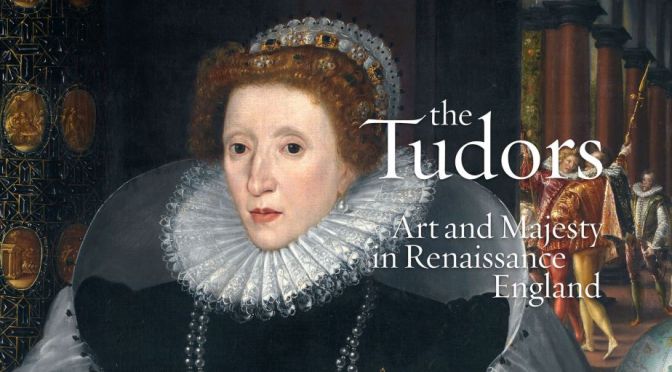
England, under the volatile Tudor dynasty, was a thriving home for the arts. An international community of artists and merchants, many of them religious refugees, navigated the high-stakes demands of royal patrons, including England’s first two reigning queens. Against the backdrop of shifting political relationships with mainland Europe, Tudor artistic patronage legitimized, promoted, and stabilized a series of tumultuous reigns, from Henry VII’s seizure of the throne in 1485 to the death of his granddaughter Elizabeth I in 1603.
The Tudor courts were truly cosmopolitan, boasting the work of Florentine sculptors, German painters, Flemish weavers, and Europe’s best armorers, goldsmiths, and printers, while also contributing to the emergence of a distinctly English style. Join Elizabeth Cleland, Curator in the Department of European Sculpture and Decorative Arts, and Adam Eaker, Associate Curator in the Department of European Paintings, to explore The Tudors: Art and Majesty in Renaissance England, which traces the transformation of the arts in Tudor England through more than 100 objects—including iconic portraits, spectacular tapestries, manuscripts, sculpture, and armor—from both The Met collection and international lenders.











 Apollo Magazine –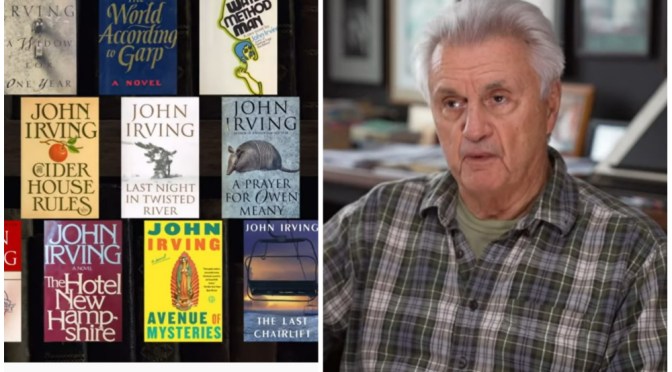

 England, under the volatile Tudor dynasty, was a thriving home for the arts. An international community of artists and merchants, many of them religious refugees, navigated the high-stakes demands of royal patrons, including England’s first two reigning queens. Against the backdrop of shifting political relationships with mainland Europe, Tudor artistic patronage legitimized, promoted, and stabilized a series of tumultuous reigns, from Henry VII’s seizure of the throne in 1485 to the death of his granddaughter Elizabeth I in 1603.
  Boomers Daily