Sotheby’s (May 6, 2023) – Fraught with chilling grandeur, Spider from 1996 is the ultimate embodiment of Louise Bourgeois’ singular contribution to the history of Modern Art.
Among the earliest monumental iterations of Bourgeois’ Spiders, the present work represents the absolute zenith of her artistic practice and the most ambitious embodiment of her signature motif; decades later, her towering Spiders stand among the most iconic sculptures of the twentieth century.
In its elegant yet otherworldly presence, Bourgeois’ spellbinding Spider speaks to the conceptual concerns at the very heart of her oeuvre: an unflinching confrontation of her own emotions and psyche, translated into sculptural form.
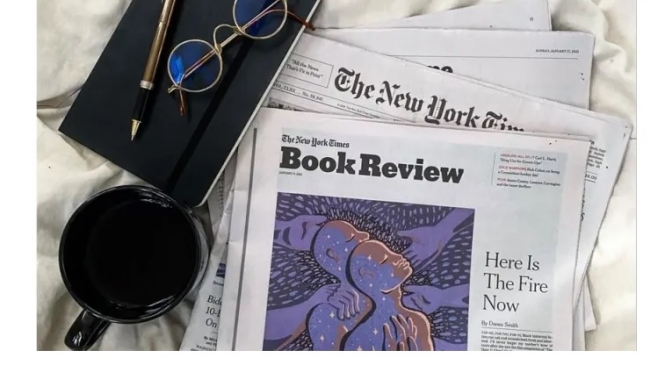
Claire Dederer’s deft and searching book surfaces a “fan’s dilemma” over such figures as Vladimir Nabokov, Woody Allen, Willa Cather and Roman Polanski.
Expanding on a popular essay published in The Paris Review a month after the exposure of Harvey Weinstein’s sexual predation, “Monsters” sustains an essayistic, sometimes aphoristic tone throughout 250-odd pages.
Welcome to three novels set in locales where life is exceedingly difficult.
By Alida Becker
AT THE HOUR BETWEEN DOG AND WOLF by Tara Ison
The title comesfrom a French expression for twilight. Sure enough, her novel sends us to the dusk that borders the familiar and the wild, the known and the unknown. It’s where our beliefs and suspicions can cast dark shadows over our lives. And, of course, the lives of others.
Alarmed by the country’s political divisions, Jeff Sharlet embarked on an anguished quest to understand the rise of antidemocratic extremism. In “The Undertow,” he documents his findings.
By Joseph O’Neill
THE UNDERTOW: Scenes From a Slow Civil War, by Jeff Sharlet
The premise of “The Undertow,” Jeff Sharlet’s anguished new book of reportage, is that the United States is “coming apart.” The disintegration is political. It involves the rise of the autocratically inclined Donald Trump; the attempt by members of the Republican Party to overthrow the election of Joe Biden in January 2021; and, during the Biden presidency, the overturning by the Supreme Court of Roe v Wade.
The Art Newspaper May 4, 2023: Featuring the coronation in the UK. As Charles III is crowned at Westminster Abbey this weekend, Anna Somers Cocks, founder of The Art Newspaper and a former assistant keeper of metalwork at the Victoria and Albert Museum in London, tells us about the objects involved in the coronation and the monarchical history they convey.
The Metropolitan Museum of Art in New York this week opens Karl Lagerfeld: A Line of Beauty, the latest in the hugely successful Costume Institute exhibitions. The German designer, who died in 2019, was also the inspiration for this year’s Met Gala, the museum’s star-studded fundraiser.
We talk to Stephanie Sporn, a fashion historian and arts and culture writer, about the exhibition, the gala and the controversy around Lagerfeld’s offensive comments about a range of issues. And this episode’s Work of the Week is Good Housekeeping III (1985/2023) by the British artist Marlene Smith. She was part of the Blk Art Group, a collective of young Black British artists active in the late 1970s and 1980s, which is the subject of The more things change…, an exhibition at the Wolverhampton Art Gallery in the UK.
Smith has re-created the work, first made in 1985, for the show, and tells us more about its making, its context, and the history of the Blk Art Group. Karl Lagerfeld: A Line of Beauty, Metropolitan Museum of Art, New York, until 16 July.The more things change…, Wolverhampton Art Gallery, UK, until 9 July.
The New York Review of Books – May 25, 2023 issue: Michael Hofmann on Goethe’s last years, Jerome Groopman on the business of biotech, Joan Acocella on Balanchine, Jed S. Rakoff on William O. Douglas’s environmentalism, Adam Hochschild on 1619 and 1776, Willa Glickman on grassroots labor unions, Brenda Wineapple on Susanna Moore, Ian Johnson on art looters, Jenny Uglow on Samuel Pepys and the wreck of the HMS Gloucester, Nicholas Guyatt on financing the Civil War, Elaine Blair on how we talk about sexual assault, poems by Eugene Ostashevsky, D. Nurske, and Ama Codjoe, and much more.
In Johann Eckermann, Goethe found an amanuensis made in heaven.
Conversations with Goethe: In the Last Years of His Life by Johann Peter Eckermann, translated from the German by Allan Blunden, with an introduction and notes by Ritchie Robertson
A strange time to publish—strange time to publish anything—a translation of Eckermann’s Conversations with Goethe (or should that be Goethe’s Conversations with Eckermann?), in six hundred static, major-key pages that can easily feel like twice as many. The big man, himself by now somewhat fallen on hard times, recorded by the little acolyte.
A new book reveals the split personality of the biotech industry: an altruistic enterprise that creates breakthrough treatments for patients in need, and a bare-knuckle business that seeks to generate astronomic profits and stop competitors from developing better treatments.
A research scientist for Pharmacyclics, Sunnyvale, California, 2013. In For Blood and Money, Nathan Vardi writes that when Pharmacyclics—which developed ibrutinib, a treatment for chronic lymphocytic leukemia—was bought by the pharmaceutical giant AbbVie in 2015 for $21 billion, ‘the deal…set the new high-water mark for success in the biotechnology industry.’
Pace Gallery (May 3, 2023) – In our new film, Zhang Xiaogang discusses his unique approach to representing light in his paintings, as seen in his solo exhibition, “Lost,” on view at our Hong Kong gallery through May 18.
The artist has been refining his expressive depictions of light for some 30 years, since the 1980s and 1990s. As such, light has become a key subject in its own right in Zhang’s practice.
Zhang Xiaogang, Light No. 9, 2022
Zhang Xiaogang is a contemporary Chinese symbolist and surrealist painter. Paintings in his Bloodline series are predominantly monochromatic, stylized portraits of Chinese people, usually with large, dark-pupiled eyes, posed in a stiff manner deliberately reminiscent of family portraits from the 1950s and 1960s.
Sotheby’s (May 3, 2023) – ‘Jardin devant le Mas Debray’ captures this pivotal moment in summer of 1887 where color, subject and paint handling crystallized into Van Gogh’s mature style, one that would flourish in the three years remaining of his life in Paris, Arles, Saint-Rémy-de-Provence and Auvers-sur-Oise.
It was during this period of time, from 1887 to 1890, that Van Gogh’s greatest masterpieces were created, forever changing in the history of modern art. Surrounded by artists, dancers, musicians, actors and writers in Montmartre, Van Gogh abandoned the dark palette that dominated many of his early paintings in Holland and replaced it with a newfound love of color.
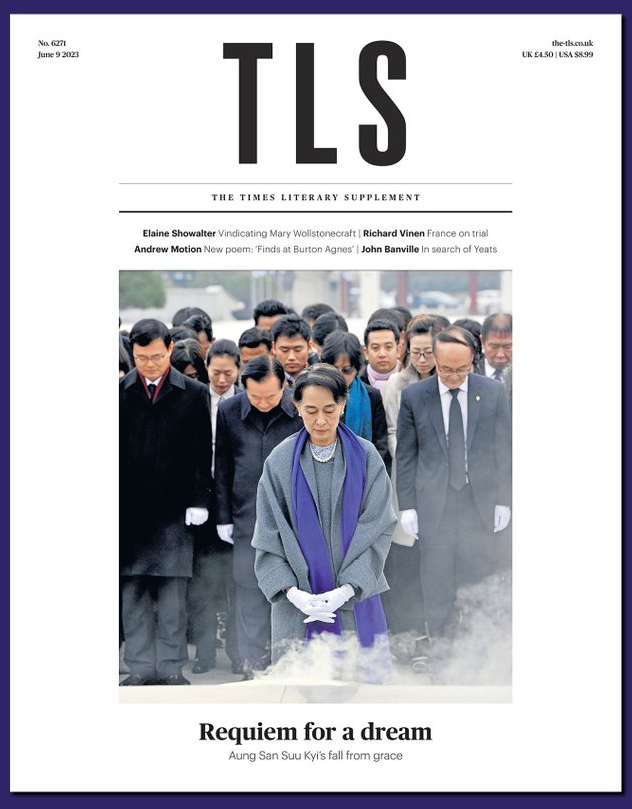
Times Literary Supplement @TheTLS (May 5, 2023) – This week’s @TheTLS features Bruno Schulz – a writer from another Europe; Patrick O’Brian’s bleak vision; Vermeer – a great but flawed exhibition; extreme fandom and Derek Parfit, eccentric genius.
How Bruno Schulz found freedom on the periphery of life By Boris Dralyuk
It’s more than a little discomfiting to read the great Polish novelist Witold Gombrowicz’s description, in his diary from the early 1960s, of his not-quite-friend Bruno Schulz: “A tiny gnome with enormous head, appearing too scared to dare exist, he was rejected by life and slouched along its peripheries”. Written for publication two decades after Schulz was gunned down by a Nazi just outside the ghetto of his occupied native town of Drohobych in November 1942, these words cannot help but seem impious.
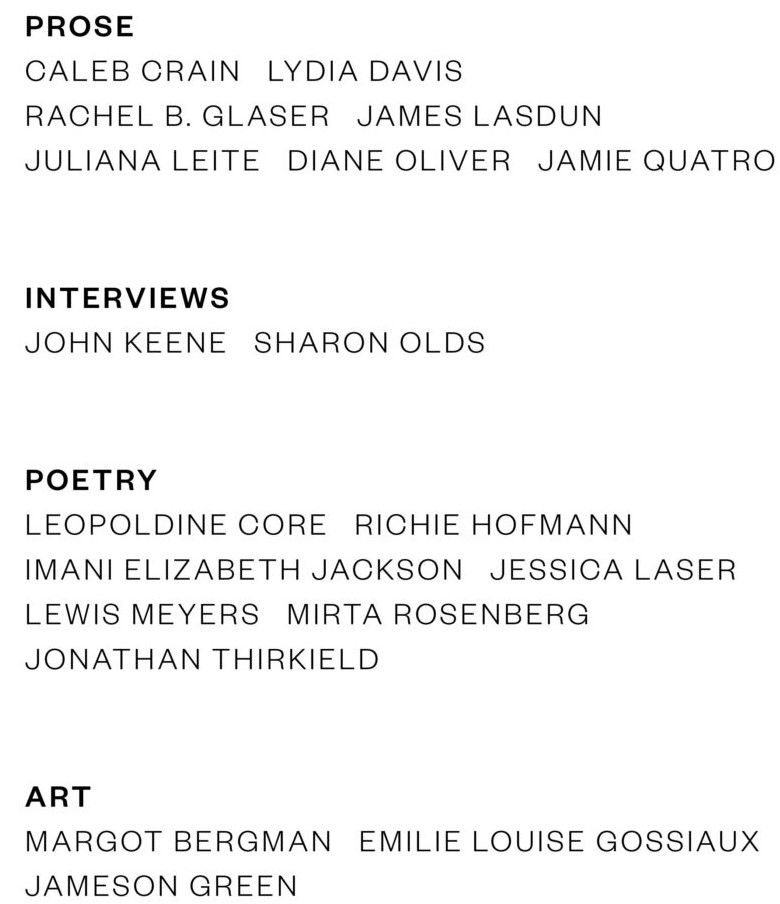
The Mysteries of the Universe by Anna Badkhen: “I see now what this is about. I’m a professor and author in America, she’s in a war zone: to her, I’m rich and happy. How is she supposed to know about the cancer, the medical debt, Ksyusha’s student loans? So, I try to deflect.”
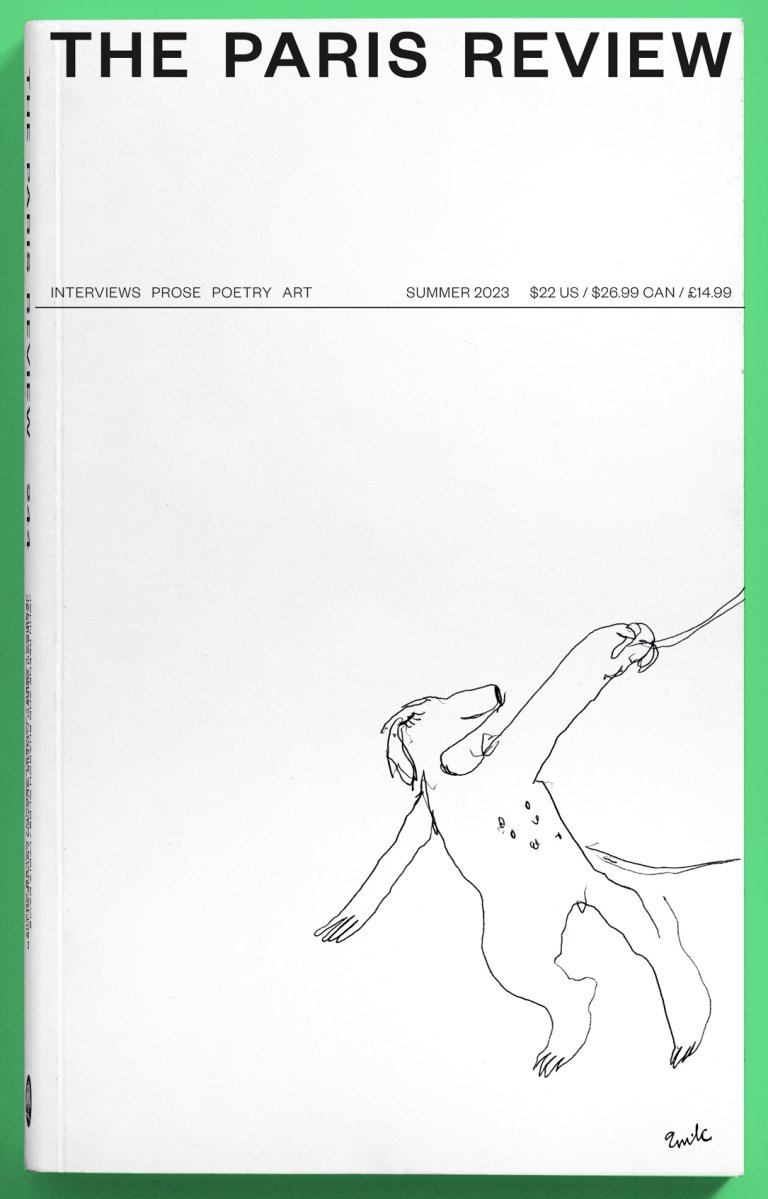
Encyclopedia of Botany by Jane Marchant: A daughter’s closely observed catalog of the flora around her Bay Area home, and of her family’s complex history of identity.
Glint of Sport by Angie Sijun Lou: “I don’t know if this story is true. You can’t divide truth from kitsch in this place…”
Eulogy by William Hawkins: In the wake of a funeral, a dead father’s legacy hangs over his surviving adult sons as they trudge into the lukewarm waters of the lake by the family pier.
The Eye by Elodie Saint-Louis: “When Theo spoke, she thought, you could see all of these places on his body. Vyros, Hymettus, Loutro, Parnitha. The land was in him. It was the river running out of his mouth. The words that bumped into each other gently but never spilled over, petering out into a gentle sway.”
Plus more fiction by Perry Janes, David Hayden (there be strange happenings in a dilapidated insurance building in Chicago), and Wendy Elizabeth Wallace.
Nonfiction
Jane Marchant on the flora around her Bay Area home—and her family’s complex history of identity.
Poetry
Jason Allen-Paisant, Dan Alter, Allison Benis White, Ricardo Cázares, E.G. Cunningham, Peter LaBerge, Joyce Mansour, Maria Zoccola
Sotheby’s (May 1, 2023) – Returning each season to live and paint in Truro elevated Hopper’s art, allowing him to concentrate on the simplification of forms and the depth of both light and color woven into the surrounding landscape.
Both his technical approach to painting and his perception of the world from 1930 onwards are greatly informed by the Cape. Cobb’s Barns, South Truro derives its bright palette and topographical features from Hopper’s immediate environment, and is emblematic of the profound influence that life in South Truro had on his manner of painting.
Group of Houses, dated 1923-24, stems from a pivotal stage in the development of Edward Hopper’s career. Residential homes occupy much of Hopper’s subject matter in these early watercolors, and Group of Houses is no exception. These charming saltbox houses are typical for the Cape Ann region, whose architectural style reflects its coastal New England atmosphere.
The Battery, Charleston, S.C., dated 1929, is the result of Hopper’s three-week stay in the charming southern city, which is renowned for its Georgian-style architecture and cobblestone streets lined with lush palm trees. His Charlestown pictures possess an inherently tropical feeling, which sets them apart from his otherwise New England-focused oeuvre.
Red Barn in Autumn Landscape is among the limited number of watercolors that Hopper completed during the fall of 1927 in Vermont, and embodies the rustic quality of the New England scenery that drew Hopper to this region in the first place. Hopper routinely sketched his surroundings in coastal towns on the Cape or along the Maine shore, but Red Barn in Autumn Landscape is quite unique in that it captures a specific fall moment as the leaves gradually fade from green to burnt orange and red. The present work is emblematic of the simplicity and charm that characterize Hopper’s New England watercolors.
When in 1960 I first came across Osip Mandelstam’s poetry, nobody in the USSR had enjoyed access to his work since the early 1930s and few even knew of his existence, let alone of his death, as he had predicted, in Stalin’s Gulag. His books had been removed from libraries and bookshops.
‘Winnie and Nelson: Portrait of a Marriage’ By Jonny Steinberg
Under apartheid, aspiring South African writers frequently marketed themselves to the world as committed and heroic anti-apartheid activists. The enormous success of Alan Paton’s Cry, the Beloved Country (fifteen million copies sold and counting) showed the way, though Paton was the real McCoy, a committed liberal who suffered for his beliefs.
News, Views and Reviews For The Intellectually Curious