FEATURES | Glenn Adamson on Alice Neel’s compassionate portraits; Antony Gormley interviewed by Gabrielle Schwarz; Christopher Turner on the Surrealist houses of Edward James; Morgan Falconer on Jessica Morgan’s ambitious vision for the Dia Art Foundation; Kaywin Feldman on cultural leadership in 2021
REVIEWS | Eve M. Kahn on the opening of the Frick Madison; Sukhdev Sandhu on ‘Grief and Grievance’ at the New Museum; Christopher Baker on friendship and portraiture in 18th-century France; Michael Prodger on art museums in the 21st century
MARKET | Susan Moore previews spring auctions and reviews sales in Paris and Brussels; Emma Crichton-Miller on collecting Tiffany glass; Samuel Reilly on Frieze New York and gallery reopenings in London
PLUS | Kirsten Tambling on satirical images of Robert Walpole; Tim Smith-Laing on Baudelaire’s cantankerous art criticism; Emilie Bickerton in Eugène Atget’s Paris; Emma Crichton-Miller on single-artist museums in Switzerland; Will Wiles on the future of department stores; Thomas Marks on the Georgian feasts of Niko Pirosmani; Robert O’Byrne on Spain before the Civil War
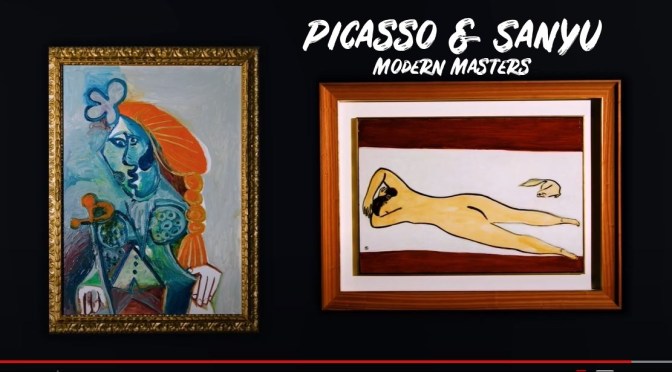
Pablo Picasso is perhaps the Modern master most admired by Asian artists. His commitment to breaking with tradition resonated deeply with Chinese modernist pioneer Sanyu. In this episode of Expert Voices, our Head of Modern Art in Asia, Felix Kwok, introduces masterworks by both artists, which will headline our upcoming Beyond Legends: Modern Art Evening Sale (18 April | Hong Kong). ‘Nu Avec un Pékinois’ is a masterpiece from Sanyu’s post-war period that reflects themes of love and perseverance and ‘Buste de Matador’ from the 1970s is the first painting in Picasso’s final Matador and reflects an urgency in the face of mortality.
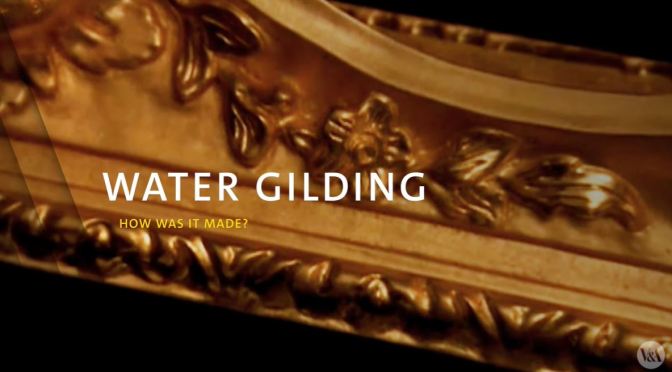
Water gilding is a process which makes wood look like gold. Follow the stages involved in gilding a wooden frame – from brushing on layers of gesso (glue and chalk mixture), to applying and burnishing the gold leaf.
How to make a gilded frame: Glue applied to wood: 00:27 Gesso mixed and applied in layers: 00:34 Gesso smoothed with dried horsetail plant: 00:46 Details cut into the base: 00:58 Yellow ochre pigment applied: 01:07 Bole applied: 01:20 Surface is smoothed with a brush: 01:29 Water is brushed on and gold leaf is applied: 01:56 An animal tooth is used to burnish the surface: 02:15 Frame is coated with glue for an even finish: 02:33
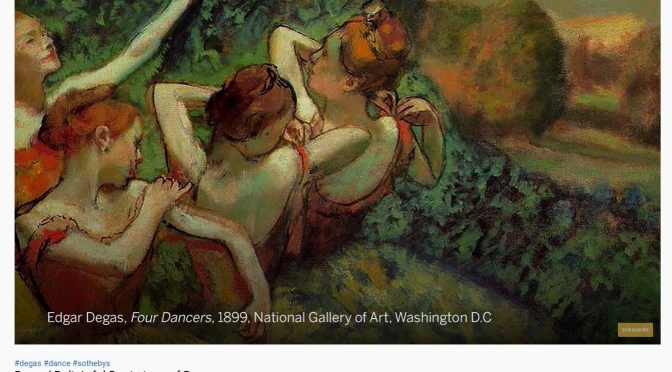
Edgar Degas was a prolific artist of dance. In this latest episode of Expert Voices, Sotheby’s specialist Brooke Lampley takes us through his fascination with dance, exploring how he perfectly captured every movement both on and off-stage. Ahead of Sotheby’s upcoming Art Impressionniste et Moderne Evening Sale (25 March 2021 | Paris) discover how his painting ‘Danseuse au Tutu Vert’ beautifully illustrates a dancer’s private moment backstage. Find out about the artist’s intense use of colour and how his chosen medium of pastel has truly stood the test of time.
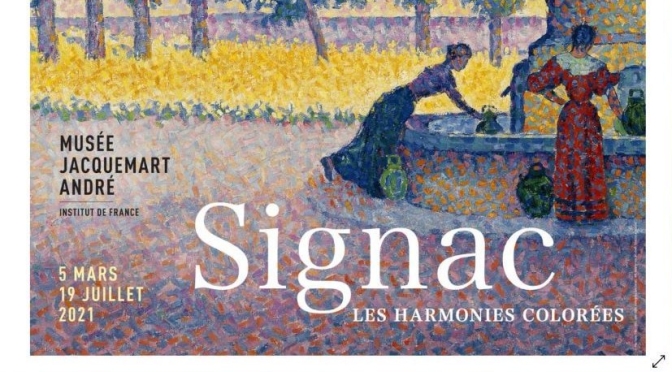
Signac, Colored Harmonies – From March 26 to July 19, 2021
In 2021, discover the work of Paul Signac (1863 – 1935), master of landscape and main theorist of neo-impressionism, through nearly 70 works from the finest collection of neo-impressionist works in private hands. Alongside 25 of his paintings such as Avant du Tub (1888), Saint-Briac. Les Balises (1890), Saint-Tropez. After the storm (1895), Avignon. Matin (1909) or Juan-les-Pins, Soir (1914) and around twenty watercolors, the exhibition will present more than twenty works by Georges Seurat, Camille Pissarro, Maximilen Luce, Théo Van Rysselberghe, Henri-Edmond Cross , Louis Hayet, Achille Laugé, Georges Lacombe and Georges Lemmen.
The entire exhibition will follow a chronological route, from the first impressionist paintings painted by Signac under the influence of Claude Monet to the brightly colored works produced by the artist in the 20th century, including his meeting with Georges Seurat in 1884. The exhibition, which will retrace the life of Signac and his work to liberate color, will also evoke the history of neo-impressionism.
Read by Shane Morris. – Chief Tecumseh was a great Native American warrior chief who was leader of a large tribal confederacy which opposed the United States during Tecumseh’s War. Although his efforts to unite Native Americans ended with his death in the War of 1812, he became an iconic folk hero in American, Indigenous, and Canadian history.
Tecumseh was a Shawnee chief, warrior, diplomat, and orator who promoted resistance to the expansion of the United States onto Native American lands. He traveled widely, forming a Native American confederacy and promoting tribal unity.
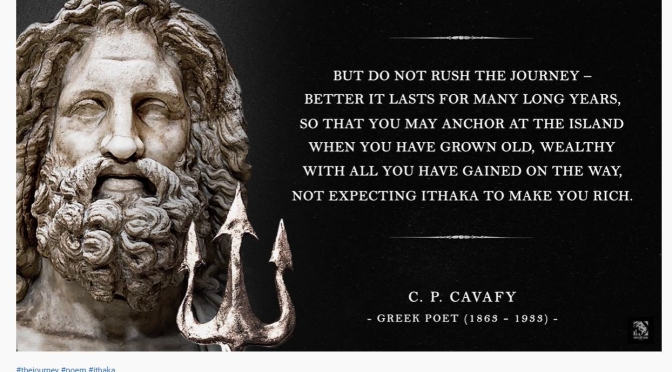
Constantine Peter Cavafy was an Egyptiot Greek poet, journalist and civil servant. His consciously individual style earned him a place among the most important figures not only in Greek poetry, but in Western poetry as well. Cavafy wrote 155 poems, while dozens more remained incomplete or in sketch form.
As you set out for Ithaka hope your road is a long one, full of adventure, full of discovery. Laistrygonians, Cyclops, angry Poseidon—don’t be afraid of them: you’ll never find things like that on your way as long as you keep your thoughts raised high, as long as a rare excitement stirs your spirit and your body. Laistrygonians, Cyclops, wild Poseidon—you won’t encounter them unless you bring them along inside your soul, unless your soul sets them up in front of you.
Hope your road is a long one. May there be many summer mornings when, with what pleasure, what joy, you enter harbors you’re seeing for the first time; may you stop at Phoenician trading stations to buy fine things, mother of pearl and coral, amber and ebony, sensual perfume of every kind— as many sensual perfumes as you can; and may you visit many Egyptian cities to learn and go on learning from their scholars.
Keep Ithaka always in your mind. Arriving there is what you’re destined for. But don’t hurry the journey at all. Better if it lasts for years, so you’re old by the time you reach the island, wealthy with all you’ve gained on the way, not expecting Ithaka to make you rich.
Ithaka gave you the marvelous journey. Without her you wouldn’t have set out. She has nothing left to give you now.
And if you find her poor, Ithaka won’t have fooled you. Wise as you will have become, so full of experience, you’ll have understood by then what these Ithakas mean.
Six large sculptures of fractured human faces form the underwater museum that British sculptor Jason deCaires Taylor has created off the coast of Cannes, France. The Underwater Museum of Cannes is a permanent installation beside the island of Sainte-Marguerite that is intended to “draw more people underwater” to engage with marine life. It is designed by deCaires Taylor to be highly accessible by either snorkelling or diving, positioned two and three metres below sea level. The goal is that visitors will “foster a sense of care” for marine life and better appreciate its value, while oceans environments are continually threatened by human activity.
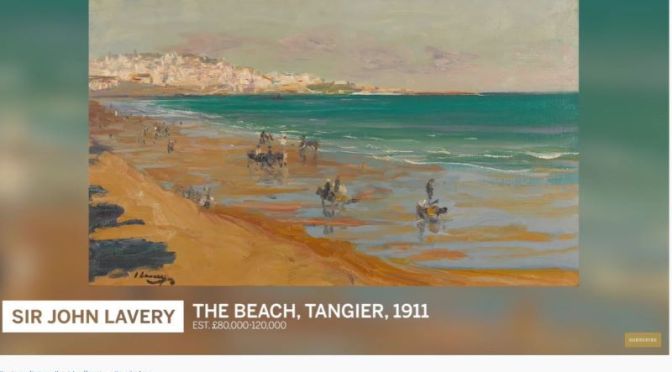
Orientalist art transports and immerses the viewer into a place in time. 100 and more years after it was painted, it beguiles us even now. Sotheby’s upcoming Orientalist sale (22 – 30 March) which includes works from the celebrated Najd Collection, features fascinating landscapes from John Lavery’s depictions of Tangier to Edward Lear’s View of the Pyramids Road. As well as stunning scenery, artists captured the lives of water sellers, musicians and soldiers, providing valuable documentary evidence of how the Orient looked at a time when the region was still an elusive dream to many.
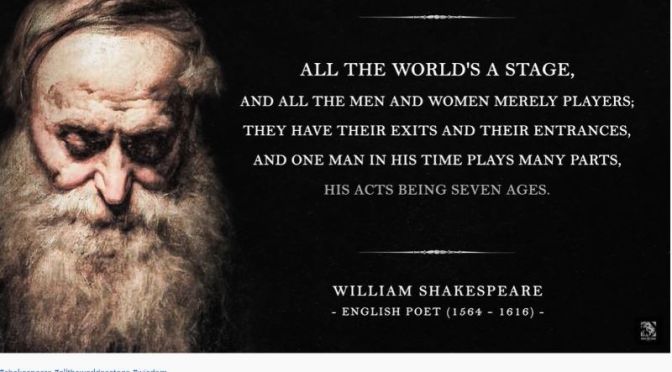
All the world’s a stage, And all the men and women merely players; They have their exits and their entrances; And one man in his time plays many parts, His acts being seven ages. At first the infant, Mewling and puking in the nurse’s arms; And then the whining school-boy, with his satchel And shining morning face, creeping like snail Unwillingly to school. And then the lover, Sighing like furnace, with a woeful ballad Made to his mistress’ eyebrow. Then a soldier, Full of strange oaths, and bearded like the pard, Jealous in honour, sudden and quick in quarrel, Seeking the bubble reputation Even in the cannon’s mouth. And then the justice, In fair round belly with good capon lin’d, With eyes severe and beard of formal cut, Full of wise saws and modern instances; And so he plays his part. The sixth age shifts Into the lean and slipper’d pantaloon, With spectacles on nose and pouch on side; His youthful hose, well sav’d, a world too wide For his shrunk shank; and his big manly voice, Turning again toward childish treble, pipes And whistles in his sound. Last scene of all, That ends this strange eventful history, Is second childishness and mere oblivion; Sans teeth, sans eyes, sans taste, sans everything.
News, Views and Reviews For The Intellectually Curious




 Boomers Daily