Tag Archives: Arts & Literature

Museum Tour: ‘Van Gogh And The Olive Groves’ (4K)

‘Van Gogh and the Olive Groves’ (11 March 2022 – 12 June 2022).

Van Gogh made fifteen paintings of olive groves, constantly experimenting with various approaches. Fascinated by the gnarly shapes of the olive trees and their ever-changing colours, he painted them over and over. He painted at different times of the day and used colours inspired by the season. Vincent himself considered his paintings of olive trees to number amongst the best he had made in the South of France.

This exhibition reunites Van Gogh’s paintings of olive groves and exhibits them together for the first time, thanks to unique loans from museums in Europe and the United States.
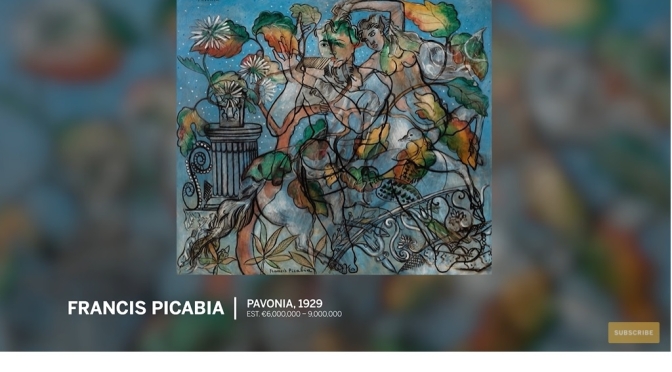
Profiles: French Painter Francis Picabia (1879-1953)

Sotheby’s explores two Picabia masterpieces: ‘Pavonia’, a cinematic example from his ‘Transparencies’ series, and ‘Nu de Dos’, a striking and controversial female nude.

Francis Picabia, (born January 22, 1879, Paris, France—died November 30, 1953, Paris), French painter, illustrator, designer, writer, and editor, who was successively involved with the art movements CubismDada, and Surrealism.

Picabia was the son of a Cuban diplomat father and a French mother. After studying at the École des Arts Décoratifs (1895–97), he painted for nearly six years in an Impressionist mode akin to that of Alfred Sisley. In 1909 he adopted a Cubist style, and, along with Marcel Duchamp, he helped found in 1911 the Section d’Or, a group of Cubist artists. Picabia went on to combine the Cubist style with its more lyrical variation known as Orphism in such paintings as I See Again in Memory My Dear Udnie (1913–14) and Edtaonisl (1913). In these early paintings he portrayed assemblages of closely fitted, metallic-looking abstract shapes. As Picabia moved away from Cubism to Orphism, his colours and shapes became softer.

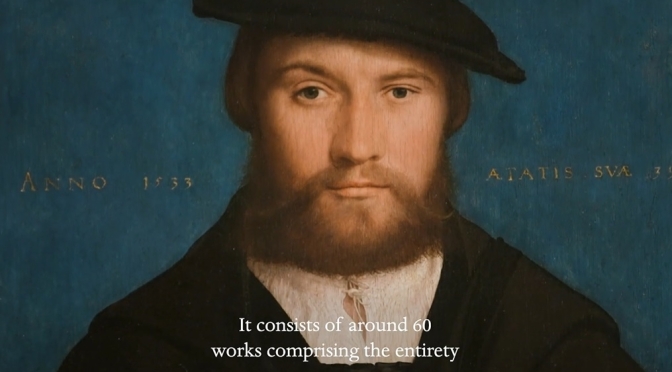
Morgan Library: ‘Holbein – Capturing Character’

Hans Holbein the Younger (1497/98–1543) was among the most skilled, versatile, and inventive artists of the early 1500s. He created captivating portraits of courtiers, merchants, scholars, and statesmen in Basel, Switzerland, and later in England, and served as a court painter to Tudor King Henry VIII (1491–1547). Enriched by inscriptions, insignia, and evocative attributes, his portraits comprise eloquent visual statements of personal identity and illuminate the Renaissance culture of erudition, self-fashioning, luxury, and wit. February 11 through May 15, 2022

Art Exhibits: Australian Painter Jeffrey Smart

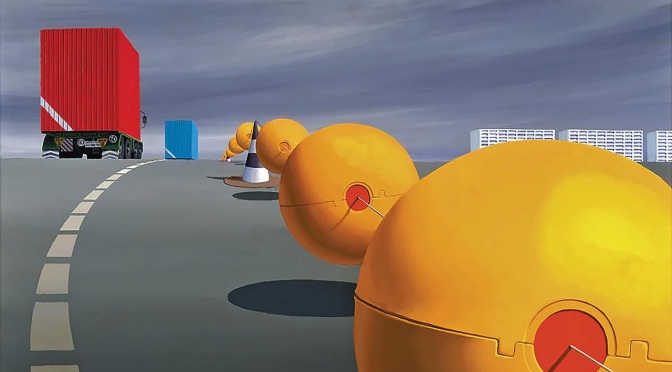
‘Suddenly I will see something that seizes me – a shape, a combination of shapes, a play of light or shadows, and I send up a prayer because I know I have seen a picture.’

JEFFREY SMART The year 2021 marks one hundred years since the birth of acclaimed Australian artist Jeffrey Smart. This major exhibition celebrates and commemorates this significant centenary. One of Australia’s most celebrated artists, Smart sought inspiration from the world around him – looking to the environment of urban and industrial modernity – which he transformed through his imaginative sense of theatre and intimate understanding of geometry and composition.

These potent and intriguing images have become emblematic of 20th and 21st century urban experience. Building on the foundational work already undertaken on Smart, this exhibition will bring fresh perspectives to his artistic contribution so that his remarkable legacy will be kept alive in the present. Curators: Dr Deborah Hart, Henry Dalrymple Head of Australian Art and Dr Rebecca Edwards, Sid & Fiona Myer Curator of Ceramics and Design

Art Fair Tours: Zonamaco 2022 In Mexico City, Mexico

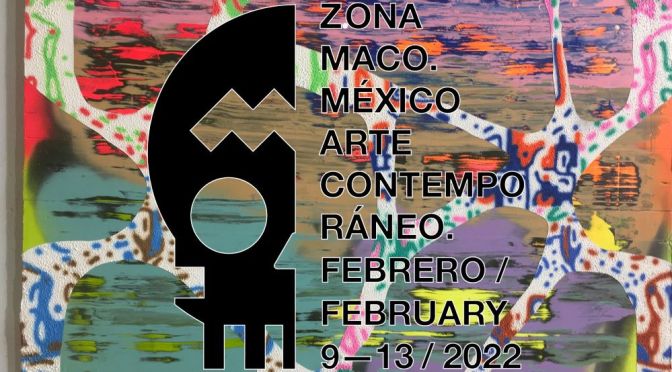
Mexico City Art Fair: Zonamaco 2022

ZⓈONAMACO is the largest art fair platform in Latin America. It was founded in 2002 by Zélika García, with four events that take place annually at Centro Citibanamex, in Mexico City.

ARTISTS & GALLERIES MENTIONED: About the Fair (0:00) Gabriel Rico, Eduardo Sarabia: Gallery OMR (0:49) Carlos Aires, Omar Barquet: Zilberman (2:13) Darío Escobar: Galería RGR (3:12) Jeppe Hein, König Gallery (3:47) Zhivago Duncan, Colector (4:05) The Hole (4:53) Yoshua Okón: Proyectos Monclova (5:45) Richard Prince: Gagosian (6:39) Olivia Steele: Maia Contemporary (7:07) Frida Orupado: Gallery Nordenhake (7:48) Juan Uribe, Héctor Madera: SGR Galeria (8:09) Furiosa (8:40) Jon Young, Carl Kostál (9:00) Los Bravú, Lyle O. Reitzel (9:47) Dr. Lakra, Kurimanzutto (10:41) Alex Hubbard, Larry Johnson: House of Gaga (11:59) Guadalupe Maravilla, Carlos Alejandro Motta: P.P.O.W (12:36) Miguel Angel Madrigal, Jeffly Gabriela Molina: Galeria Enrique Guerrero (13:10) Dan Lam, Hashimoto Contemporary (13:44) Gabriela Kraviez, CarrerasMugica (14:16) Boris Viskin, Galería Ethra (14:53) Josh Reames, Grip Face: Cerquone Gallery (15:30) Caleb Hahne, Yves Scherer, 1969 Gallery & Cassina Projects (16:19) Le Laboratoire (16:49) Anna Segovia, Lucía Vidales: Galeria Karen Huber (17:49) Donna Huanca, Charlie Billingham, Ana Prata: Travesía Cuatro (18:38) Erick Medel, Seasons LA (19:54) Piers Alsop, Neon Gallery (20:32)

20th Century: Was Francis Bacon The Best Painter?

Is Francis Bacon really the greatest painter of the 20th century?

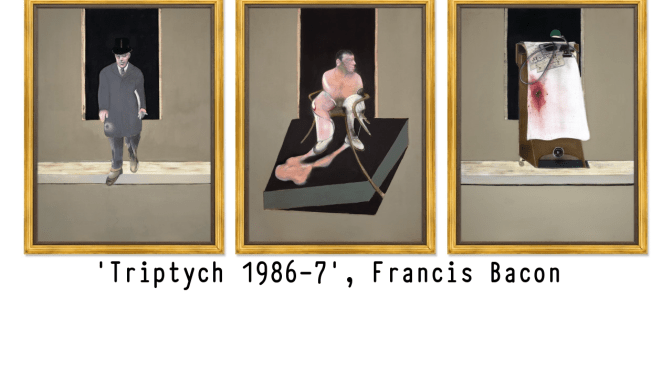
Triptych 1986-7 (detail)

It was not an enormous surprise that an exhibition of works by Francis Bacon at the Royal Academy that is supported by Christie’s should swiftly be followed by an announcement of the auction house offering a large work for sale. Triptych 1986-7, whose central panel depicts the artist’s partner John Edwards, with Woodrow Wilson on one side and the assassinated Trotsky’s study on the other, is being offered in the sale that takes place on 1 March with an estimate of £35m–£55m. Nor is it a surprise that an auction house should drum up interest in one of their lots using superlatives. But Rakewell was a little taken aback by the claim on Instagram from a Christie’s specialist that ‘Francis Bacon is unmistakably on of the greatest painters of the 20th century.’

Read more

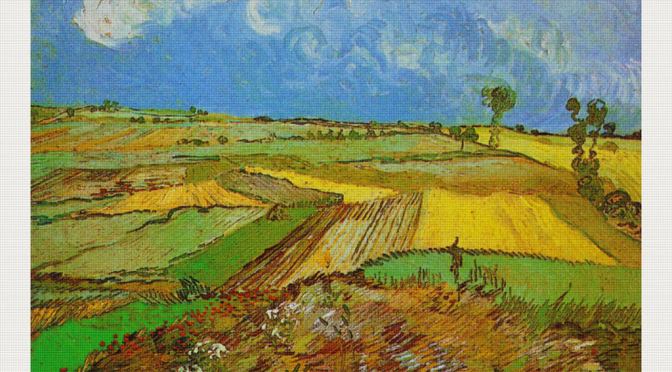
Museum Insider : ‘Wheat Fields After The Rain’ By Vincent Van Gogh (1890)

Wheat Fields after the Rain (The Plain of Auvers) – 1890

Wheat Fields is a series of dozens of paintings by Dutch Post-Impressionist artist Vincent van Gogh, borne out of his religious studies and sermons, connection to nature, appreciation of manual laborers and desire to provide a means of offering comfort to others. The wheat field works demonstrate his progression as an artist from the drab Wheat Sheaves made in 1885 in the Netherlands to the colorful and dramatic 1888–1890 paintings from ArlesSaint-Rémy and Auvers-sur-Oise in rural France.

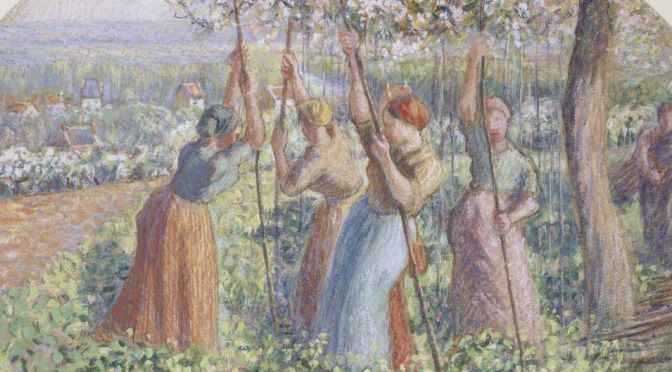
2022 Exhibitions: ‘Pissarro – Father Of Impressionism’

This major exhibition, of works drawn from the Ashmolean’s collections as well as international loans, will span Pissarro’s entire career.

Camille Pissarro (1830–1903) is one of the most celebrated artists of nineteenth-century France and a central figure in Impressionism. Considered a father-figure to many in the movement, his work was enormously influential for many artists, including Claude Monet and Paul Cézanne. It opens in spring 2022.

See more

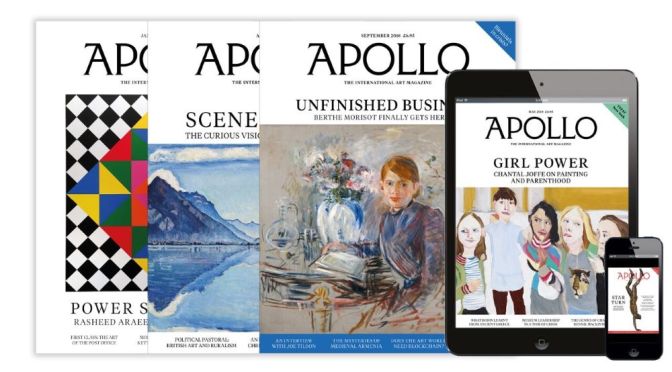
International Art: Apollo Magazine – February 2022

February 2022 | Apollo Magazine

• An interview with Ai Weiwei

• The art of kabuki theatre

• Dining with Beauty and the Beast

• The drawings of Jacques-Louis David

Plus: a touring display of Islamic arts in France, the hellish mining scenes of George Bissell, Madame de Pompadour’s porcelain, and a preview of Asia Week New York

Read more

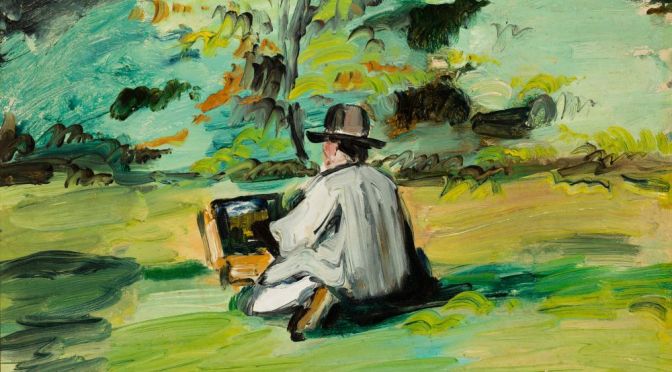
Exhibitions: 19th Century European & American Art At The Denver Art Museum

The department of European and American Art Before 1900 oversees a collection that includes more than 3,000 artworks and is composed of painting, sculpture, and works on paper, with significant strengths in early Italian Renaissance, 19th century French painting, and British art from 1400 to 1900.

The Denver Art Museum began acquiring notable examples of European art as early as the 1930s, with donations from Samuel H. Kress, Mr. and Mrs. Simon Guggenheim, and the Havemeyers, to name a few. Their generosity helped initiate a collection that grew in time through gifts and purchases.