

 At First Light chronicles twenty-six extraordinary artists of the last two hundred years who have lived and worked in Maine. Published to coincide with the state’s bicentennial in 2020, the volume considers the significant contributions artists have made to a deeper and more profound understanding of Maine’s history, its land and its peoples. Maine’s unique and breathtaking landscape–from its rugged coastline, quaint harbors, majestic mountains, and verdant forests–continues to have a powerful effect on the artists who are drawn to its shores.
Tag Archives: Artists
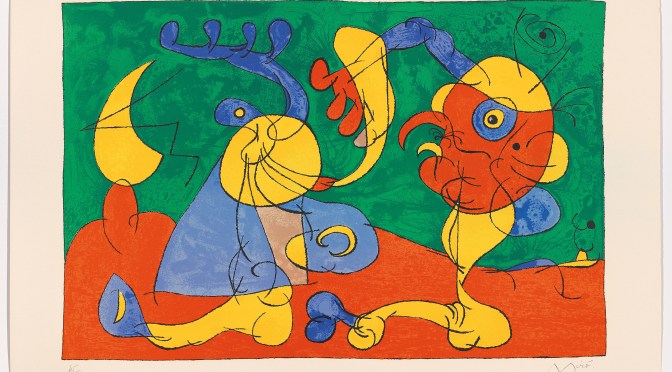
Artists: Spanish Painter Joan Miró’s “Endlessly Creative” Printmaking
Excerpts from a Christie’s online article (Feb 28, 2020):
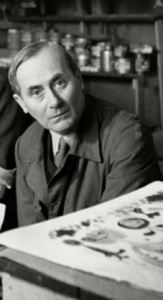
Like Pablo Picasso, his compatriot and peer, Miró had an unwavering commitment to printmaking. Also like Picasso, he created more than 2,000 works in the medium. It’s often said that Miró’s fondness for calligraphic lines — such a distinctive feature of his paintings — lent itself naturally to graphic work.
‘In terms of both the quality and quantity of his output, Joan Miró was one of the most important printmakers of the 20th century,’ says Murray Macaulay, Head of Prints at Christie’s in London.
 The son of a watchmaker, Joan Miró was born in Barcelona in 1893. He moved to Paris in the early 1920s and soon joined the Surrealist movement. He also befriended a host of avant-garde writers, such as Max Jacob, Tristan Tzara, Antonin Artaud, André Breton and Paul Eluard.
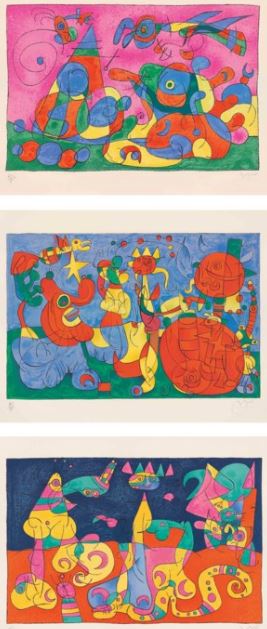
The first prints Miró ever made were illustrations for Tzara’s 1930 book of poems, L’arbre des Voyageurs. Literary sources would prove to be a constant inspiration for him, with notable examples including Alfred Jarry’s play, Ubu Roi; Stephen Spender’s poem, Fraternity; and the mystic, medieval text, Canticle of the Sun, by St Francis of Assisi.
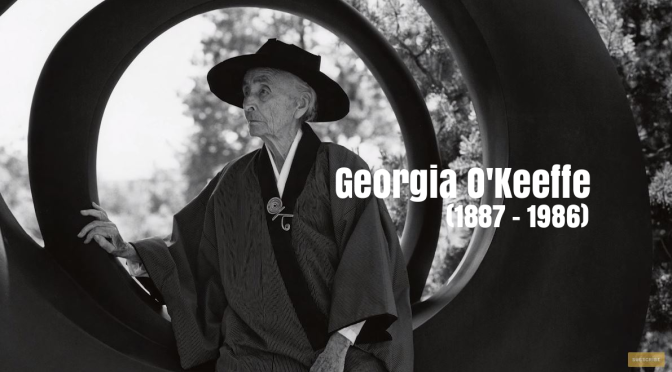
Art Videos: “Georgia O’Keeffe’s Century Of American Art” (Sotheby’s)
 In the final years of Georgia O’Keeffe’s nearly century-long life, she employed and befriended the young sculptor Juan Hamilton. The two would become inseparable, and upon her death in 1986, Hamilton inherited fine art and personal affects from the artist’s estate, including rarely seen pieces from the estate of O’Keeffe’s late husband, Joseph Stieglitz.
This March, Sotheby’s is honored to present these works in Alfred Stieglitz, Georgia O’Keeffe, Juan Hamilton: Passage, a dedicated auction in New York on 5 March 2020. In this episode of Expert Voices, Head of American Art Kayla Carlsen explores the stories behind this remarkable collection while highlighting exceptional works, including O’Keeffe’s Nature Forms – Gaspé, Stieglitz’s Hand and Wheel and Hamilton’s Untitled (Red Form).
(New York | 5 March 2020)

Art: “What Is A Japanese Living National Treasure?” (British Museum Video)
The British Museum has been collecting artworks made by Japanese Living National Treasures since 2007, but what is a Living National treasure and why are they so important to Japanese Cultural Heritage? In this film Nicole Rousmaniere, research director of SISJAC and Hayashida Hiyaki of the Japan Kōgei Association talk all about the Living National treasures programme and highlight some of the most beautiful pieces of Japanese craftsmanship collected by the Museum.
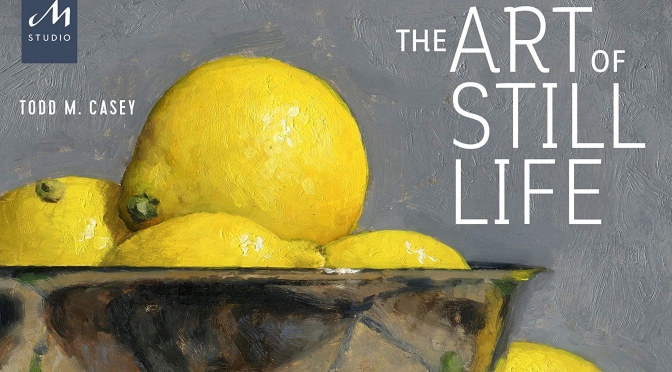
New Art Books: “The Art Of Still Life” By Todd M. Casey
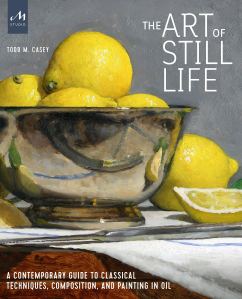 Every artist needs to learn and master the still life. Written by a well-known artist and expert instructor, The Art of Still Life offers a comprehensive, contemporary approach to the subject that instructs artists on the foundation basics and advanced techniques they need for successful drawing and painting.
In addition to Casey’s stunning paintings, the work of over fifty past and present masters is included, so that the book will do double duty as a hardworking how-to 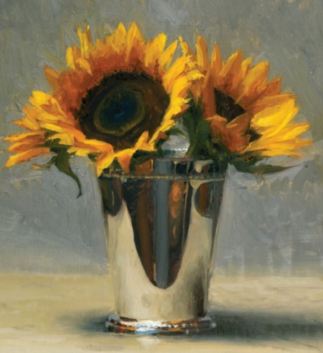 manual and a visual treasure trove of some of the finest still life art throughout history and being created today.
A Massachusetts native, TODD M. CASEY studied at art schools in Boston and San Francisco before embarking on the classical artistic education offered by Jacob Collins’s famed Water Street Atelier in New York City. A modern master of the still life genre, Casey teaches at several institutions, including the Art Students League of New York. He is represented by Rehs Contemporary Galleries, Inc., New York, and his paintings are held in numerous private collections worldwide. He lives with his wife and daughter in New York’s Hudson Valley. Visit his website at toddmcasey.com.
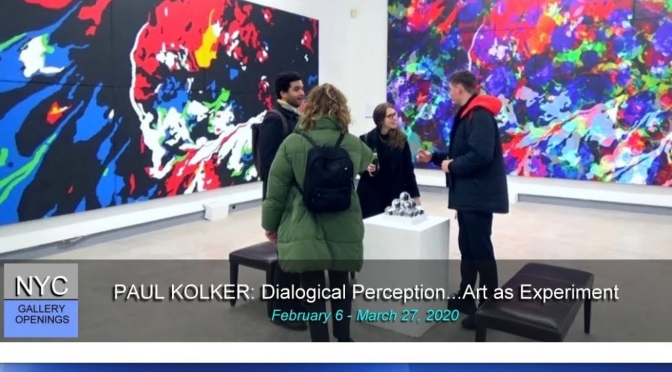
New Exhibitions: 84-Year Old Artist Paul Kolker – “Dialogical Perception…Art As Experiment” (Video)
Paul Kolker is pleased to present his seventy-third solo exhibition, Dialogical Perception… Art as Experiment at his studio, the PAUL KOLKER collection, 511 West 25th Street from February 6 through March 27, 2020.
Paul Kolker (b. 1935) is a New York-based artist with doctorate degrees in medicine and law. He began his career of painting and sculpture in the 1960s, illustrating his peer review medical journal articles and life-casting anatomical models. In the 1970s he treated his art production as a post-minimalist experiment questioning experience and using the viewer as the measuring instrument as well as the interpreter of the experiment’s results. Many of his early works are sculptures, each painted in an elemental color, black or white.
In 1975 Kolker developed a keen and hands on understanding of light optics when he purchased a first generation three tube front end television projector with an alignment grid. That grid became the infrastructure for his works, which involved fractionation of a photographic image and the use of modular panels and canvases to create large scale works. In the 1980s Kolker began making light sculptures using one-way mirror and LED message screens, reflecting ad infinitum. In 2001, when he moved into his studio in Chelsea, he created an algorithm for a process of painting minimal shapes, such as a dot or square, in elemental colors (never mixed with each other, but sometimes mixed with black and/or white to form tints and shades). This process is called ‘fracolor’ in attribution to Benoit Mandelbrot’s fractal geometry, wherein minimal shapes and forms are serially replicated, like branches on a tree, rectangles on a grid, or pixels and dots on a television display screen.
As a result, Kolker’s works have become reminiscent of our pixelated world of digital information transfer, as we see it up close as grids of colored dots on our television, computer and cell phone screens; and how more highly defined that screen becomes when viewed from afar. His works are observational experiments which cry out to us, “Because of biases of color, shapes, parallax and perspective relative to where we stand as the observer, a dot may be a universe; and a universe may be a dot.”
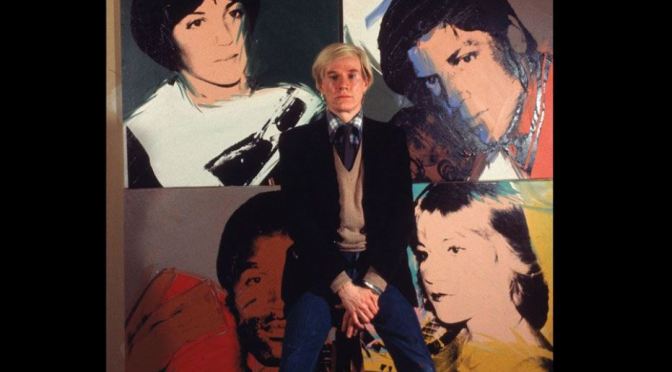
Artists: Inside Story Of Andy Warhol’s “Athletes” Paintings (Christie’s)
From a Christie’s Magazine online article (February 2020):
 ‘The sports stars of today are the movie stars of yesterday,’ proclaimed the artist. It was true; thanks to rapid advances in TV broadcasting, sporting champions in the 1970s were starting to achieve the same level of popularity as other entertainers.
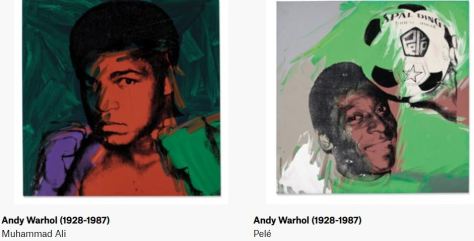
In 1977, Richard L. Weisman approached his friend Andy Warhol with the idea for a new series: a set of silkscreen portraits of the day’s leading sports stars. Called ‘Athletes’, these pictures have come to be regarded as some of the standout works of Warhol’s later years.

Weisman (1940-2018) was a dedicated collector, and the two men bonded mostly over art, although they also crossed paths regularly at social gatherings across New York. On some occasions, these gatherings were held at Warhol’s Factory studio; on others, at Weisman’s apartment on United Nations Plaza.
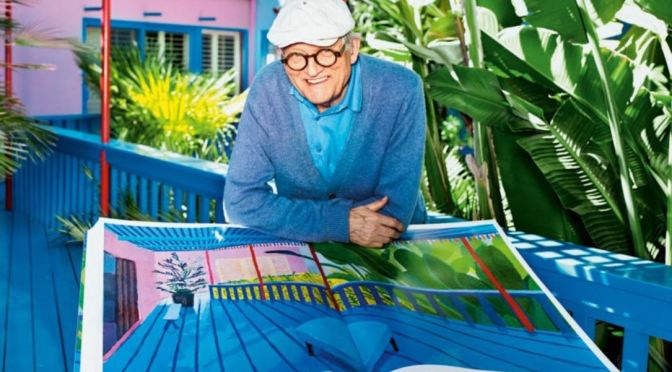
Profiles: How The 1960’s Inspired Painter David Hockney, Now 82 (Video)
 David Hockney, (born 9 July 1937) is a British painter, draftsman, printmaker, stage designer, and photographer. As an important contributor to the pop art movement of the 1960s, he is considered one of the most influential British artists of the 20th century.
Hockney has owned a home and studio in Bridlington and London, and two residences in California, where he has lived on and off since 1964: one in the Hollywood Hills, one in Malibu, and an office and archives on Santa Monica Boulevard in West Hollywood, California. (From Tate Museum Biography)
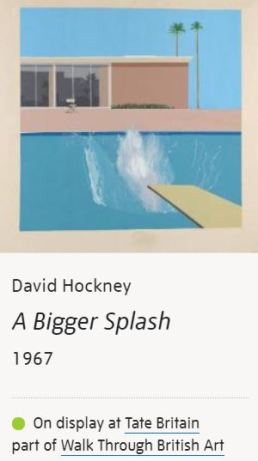
Painted in Los Angeles in 1966, David Hockney’s ‘The Splash’ is as recognizableThe as Monet’s ‘Waterlilies’, Van Gogh’s ‘Sunflowers’ and Munch’s ‘The Scream’. In this episode of Expert Voices, discover how the liberal lifestyle in Los Angeles inspired one of the most iconic images of the 20th century and hear Hockney himself explain how he immortalised his split-second swimming pool moment on canvas.
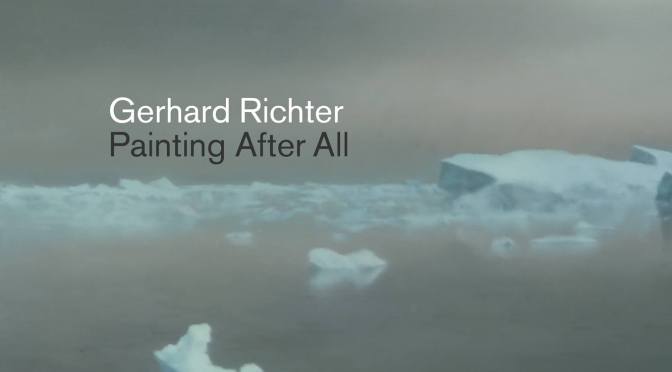
Exhibitions: 88-Year Old Gerhard Richter “Painting After All” – Landscape As A Site Of Memory (The Met)
 Over the course of his acclaimed 60-year career, Gerhard Richter (b. 1932) has employed both representation and abstraction as a means of reckoning with the legacy, collective memory, and national sensibility of post–Second World War Germany, in both broad and very personal terms.
This handsomely designed book features approximately 100 of his key canvases, from photo paintings created in the early 1960s to portraits and later large-scale abstract series, as well as select works in glass.

 New essays by eminent scholars address a variety of themes: Sheena Wagstaff evaluates the conceptual import of the artist’s technique; Benjamin H. D. Buchloh discusses the poignant Birkenau paintings (2014); Peter Geimer explores the artist’s enduring interest in photographic imagery; Briony Fer looks at Richter’s family pictures against traditional painting genres and conventions; Brinda Kumar investigates the artist’s engagement with landscape as a site of memory; André Rottmann considers the impact of randomization and chance on Richter’s abstract works; and Hal Foster examines the glass and mirror works. As this book demonstrates, Richter’s rich and varied oeuvre is a testament to the continued relevance of painting in contemporary art.
Metropolitan Museum of Art website
Gerhard Richter was born in Dresden on 9th February 1932, the first child of Horst and Hildegard Richter. A daughter, Gisela, followed four years later. They were in many respects an average middle-class family: Horst worked as a teacher at a secondary school in Dresden and Hildegard was a bookseller who liked to play the piano.1 In an interview with Robert Storr, Richter described his early family life as “simple, orderly, structured – mother playing the piano and father earning money.”2
In 1935, Horst accepted a teaching position at a school in Reichenau, a town which today is known as Bogatynia in Poland, at the time located in the German province Saxony. Settling in Reichenau was a drastic change for the family, which was accustomed to the vivid cultural life of the larger Dresden.3 Yet, it was also a move which would keep the family largely safe from the coming war. In the late 1930s Horst was conscripted into the German army, captured by Allied forces and detained as a prisoner of war until Germany’s defeat. In 1946, he was released and returned to his family, who had again relocated, this time to Waltersdorf, a village on the Czech border.
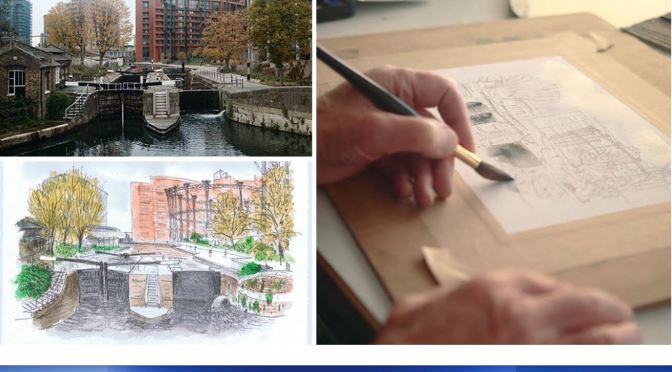
Video Profiles: 89-Year Old London Illustrator David Gentleman On His New Book “My Town” (May 2020)
David Gentleman is an iconic British illustrator and designer who has lived a lifetime in London. Drawing from over sixty years of engagement with this most 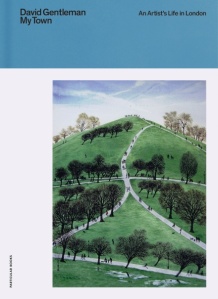 well-known capital city, his most recent book,
My Town presents London as it was and as it is today. His beautiful and intricate work – of the Thames, Hampstead Heath, Camden Town (where David Gentleman has lived in the same house for fifty years), London’s parks and sights – offers us the pleasure of looking again at the everyday.
Accompanied by reflections on the work of an artist, commentary on the possibilities of ink, pen and paint and personal thoughts on the ever-changing city, this is a delight for all those who flock to London.
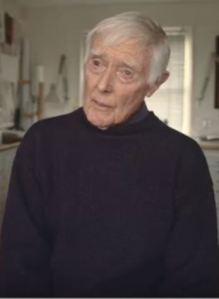
David William Gentleman is an English artist. He studied illustration at the Royal College of Art under Edward Bawden and John Nash. He has worked in watercolour, lithography and wood engraving, at scales ranging from platform-length murals for Charing Cross Underground Station in London to postage stamps and logos. (Wikipedia)
 Boomers Daily