

Covid-19’s Delta variant is proliferating world-wide threatening unvaccinated populations and economic recovery. WSJ breaks down events in key countries to explain why Delta spreads faster than previously detected strains. Composite: Sharon Shi
Tag Archives: Analysis
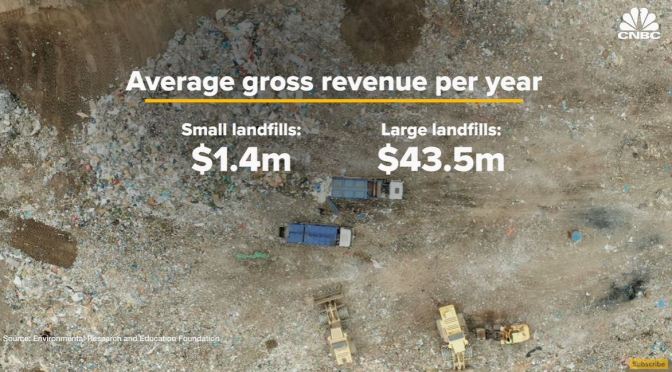
Analysis: How Landfills Make Millions From Trash
In 2019, the North American waste management market reached $208 billion. Thanks to advancements in modern chemistry and support from municipal governments, landfills have seen astonishing financial success in recent years. Private companies like Waste Management and Republic Services now own a majority of landfills across the U.S., their stocks outperforming the market every year since 2014. So how exactly are landfills turning a profit out of garbage and just how much money can be made? Watch the video to find out.

Social Media: Tik Tok’s Algorithms Know ‘You’
The Wall Street Journal created dozens of automated accounts that watched hundreds of thousands of videos to reveal how the social network knows you so well A Wall Street Journal investigation found that TikTok only needs one important piece of information to figure out what you want: the amount of time you linger over a piece of content. Every second you hesitate or rewatch, the app is tracking you. Photo illustration: Laura Kammermann/The Wall Street Journal
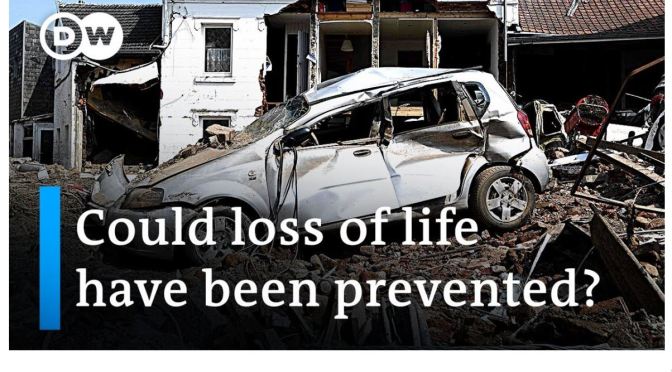
Review: A German Flood Warning System Failure?
00:00 The death toll from Germany’s devastating flood disaster has risen to more than 160, as emergency workers continue to search for dozens of people still unaccounted for. German authorities insist their flood warnings worked, even though there was massive loss of life. Some experts say Germany’s flood warning system failed and has led to such widespread devastation. They say authorities knew what was coming, but failed to prepare.
02:28 DW reporter Giulia Saudelli is on the ground covering the latest developments. She joins us from the town of Altenahr, in the German state of Rhineland-Palatinate, which was especially hard hit by the flooding.
05:19 DW reporter Emily Gordine is covering the latest developments in Schönau, in the southern German state of Bavaria. 09:40 Jeff Da Costa, he’s a researcher focusing on flood warning systems at the University of Reading and has been personally affected by events as his family’s home in Luxembourg was flooded.

Stock Trading: The Rise Of Robinhood (WSJ Video)
The twists and turns of the online brokerage’s path to a public offering The brokerage app Robinhood has transformed retail trading. WSJ explains its rise amidst a series of legal investigations and regulatory challenges as it looks forward to its IPO. Photo illustration: Jacob Reynolds/WSJ
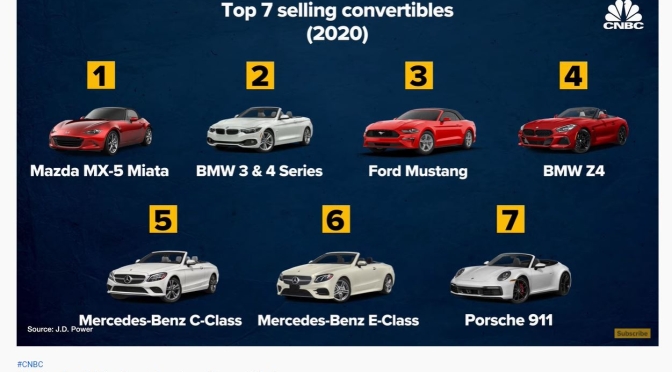
Automobiles: Decline Of The American Convertible
Rising in popularity in the 1950s and 1960s, the convertible car is an automotive American icon. It was a vehicle meant for leisure and fun. Some of the most iconic models throughout history were convertibles, such as the Chevrolet Corvette and the Ford Mustang. However, in the last few years, convertibles have been slowly declining in popularity. Along with rising prices, American car buyers, especially those with children, value practicality and functionality over looks and leisure, leading their interest towards SUV’s and midsize sedans. In 2021, convertibles make up only 0.46% of new car sales. Can the iconic design stand the test of time?

Aviation: Boeing & Airbus Counter China’s Comac
Boeing and Airbus dominate global aviation, but China’s Comac wants to challenge the duopoly with new planes. WSJ’s Jon Sindreu explains how supply chains, technology and geopolitics could help the Western aircraft makers to protect key markets. Photo Composite: George Downs

Container Shipping: How Maersk Managed Crisis
The global container business is in chaos. Surging consumer demand, covid outbreaks and a shortage of containers has led to higher volume for ocean carriers and congestion at ports.
Maersk, the world’s largest container shipper, has seen record profits. The Danish shipping firm whose customers include Walmart and Nike announced May 2021 first-quarter revenue of $12.4 billion, a 30% increase from a year earlier. Maersk has a fleet of over 700 ships and handles one in every five containers shipped by sea. The company also owns terminals around the world and has a growing land-based logistics business. On average a Maersk container ship calls on a port somewhere around the globe every six minutes.
Like its competitors the company has faced a series of obstacles in the first half of 2021 ranging from the worldwide shortage of shipping containers to the blockage of the Suez Canal. So, with vaccine rollouts in place in the U.S. and consumer discretionary spending shifting towards services will Maersk and its rivals be able to maintain their momentum? And what do bottlenecks at ports and higher freight rates mean for U.S. consumers? Watch the video to find out what’s next for Maersk.
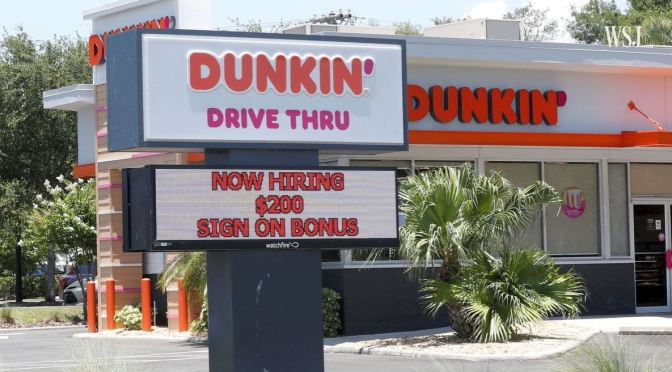
Employment: Do Hiring Incentives Work? (WSJ)
Low-wage work is in high demand, and employers are now competing for applicants, offering incentives ranging from sign-on bonuses to free food. But with many still unemployed, are these offers working? Photo: Bloomberg

Analysis: The Cognitive Effects Of Covid-19
Covid-19 is complex. It can affect the nervous system, leading to language disorders, strokes and seizures. Scientists are still trying to understand why. 75% of people hospitalised with the virus continue to suffer from secondary symptoms at least six months after they recover. Many find it hard to function in their daily lives. Researchers hope understanding Covid’s impact on the brain could pave a way for treatment.
 Boomers Daily