Tag Archives: Aging

Diet Studies: “Eat Less, Live Longer” – Calorie Restriction Delays Age-Related Diseases (Salk)

Salk Institute logoEat less, live longer- If you want to reduce levels of inflammation throughout your body, delay the onset of age-related diseases and live longer—eat less food. That’s the conclusion of a new study by scientists from the US and China that provides the most detailed report to date of the cellular effects of a calorie-restricted diet in rats.

(Salk News, February 27, 2020)

While the benefits of caloric restriction have long been known, the new results show how this restriction can protect against aging in cellular pathways, as detailed in Cell on February 27, 2020.

Aging is the highest risk factor for many human diseases, including cancer, dementia, diabetes and metabolic syndrome. Caloric restriction has been shown in animal models to be one of the most effective interventions against these age-related diseases. And although researchers know that individual cells undergo many changes as an organism ages, they have not known how caloric restriction might influence these changes.

In the new paper, Belmonte and his collaborators—including three alumni of his Salk lab who are now professors running their own research programs in China—compared rats who ate 30 percent fewer calories with rats on normal diets. The animals’ diets were controlled from age 18 months through 27 months. (In humans, this would be roughly equivalent to someone following a calorie-restricted diet from age 50 through 70.)

Read more 

Interview: 71-Year Old Model And Dietitian Maye Musk On Getting “More Fabulous” As She Ages

Excerpts from a WSJ. Magazine interview (Feb 24, 2020):

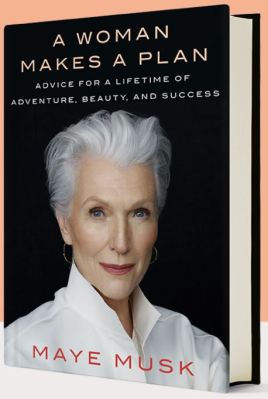
A Woman Makes A Plan Maye Musk bookWell, when you get older, you are more fabulous, actually. You go through a lot of hard times in your life… and then, at this stage you get out of those bad situations quicker and they are less painful. You figure them out, and you move on. And I’m having the best time ever. I’m 71 now, it’s the best time ever, and I think at 81 it will be great. My mom [had] her best times when she was in her 90s. So I look forward to that.
A model since age 15, Maye Musk was in her 60s when her life took a turn for the fabulous. In her seventh decade, the former dietitian appeared in a Beyoncé music video, signed a contract with top modeling agency IMG and became a CoverGirl spokesperson, setting a record as their oldest yet. At the end of last year, Musk, now 71, added memoirist to her resume. Her book, A Woman Makes a Plan: Advice for a Lifetime of Adventure, Beauty and Success, chronicles her career and experience raising her children—SpaceX and Tesla founder Elon, restaurateur and philanthropist Kimbal and filmmaker Tosca—as a single mother who fled a turbulent marriage.

Born in Canada, raised in South Africa and now residing in L.A., Musk spoke to WSJ. about what she eats for breakfast, how she stays on top of emails and why she doesn’t miss hustling all the time.

Read full article

Elder-Care Crisis: Early Screening For Dementia, Increased Preventative Primary-Care Are Needed

From a Wall Street Journal Opinion article (Feb 10, 2020):

How to address the elder-care crisis? Ideally, doctors would screen older patients for dementia. An early diagnosis helps patients understand treatment options, plan for the future and receive appropriate care in the hospital. 

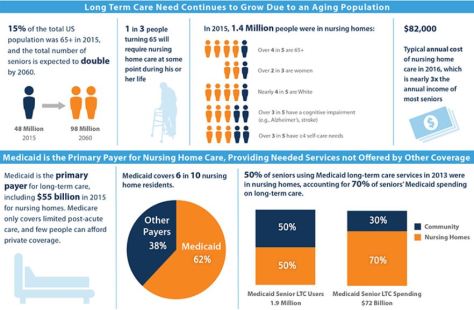
Costs of Long-Term Elderly Care Kaiser Infographic

Other steps include: more preventive care, changes to Medicare’s rehabilitation policies, adopting new reimbursement methods, and developing new measures of success. Primary-care offices can prevent hospital visits, but Americans seeking primary care face an average wait time of 24 days. This might not be a problem for a patient in need of an annual physical, but conditions like chest pain or infections require prompt treatment. Primary-care offices that offer same-day sick visits, home visits for bed-bound older adults, or at-home monitoring of conditions could reduce emergency department volumes.

Read full article by Elizabeth Goldberg MD

New Books On Ageing: “The Changing Mind” By Daniel Levitin (February 2020)

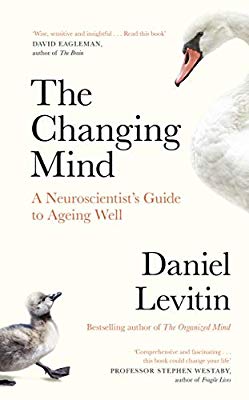
The Changing Mind A Neuroscientist's Guide To Ageing Well Daniel Levitin Feb 2020Challenging widely held assumptions about the diminishing abilities of an ageing brain, leading neuroscientist Daniel Levitin argues that we should view getting older as a beneficial experience rather than a form of cognitive entropy. Persuasively argued and consistently surprising, The Changing Mind will alter your perception of the relationship between age and intellect.
We have long been encouraged to think of old age as synonymous with deterioration. Yet, recent studies show that our decision-making skills improve as we age and our happiness levels peak in our eighties. What really happens to our brains as we get older?

More of us are living into our eighties than ever before. In The Changing Mind, neuroscientist, psychologist and internationally-bestselling author Daniel Levitin invites us to dramatically shift our understanding of growing older, demonstrating its many cognitive benefits. He draws on cutting-edge research to challenge common and flawed beliefs, including assumptions around memory loss and the focus on lifespan instead of ‘healthspan’.

Levitin reveals the evolving power of the human brain from infancy to late adulthood. Distilling the findings from over 4000 papers, he explains the importance of personality traits, lifestyle, memory and community on ageing, offering actionable tips that we can all start now, at any age.

Featuring compelling insights from individuals who have thrived far beyond the conventional age of retirement, this book offers realistic guidelines and practical cognition-enhancing tricks for everyone to follow during every decade of their life. This is a radical exploration of what we all can learn from those who age joyously.

Read more or purchase

Research: “Designing Tech For Healthy Aging In Place” (UC San Diego Video)

Digital tools including mobile apps, wearable sensors, and social network platforms offer unprecedented opportunities in health research and healthcare. However, this rapidly emerging sector is outpacing existing regulatory structures and challenging norms for ethical practice.

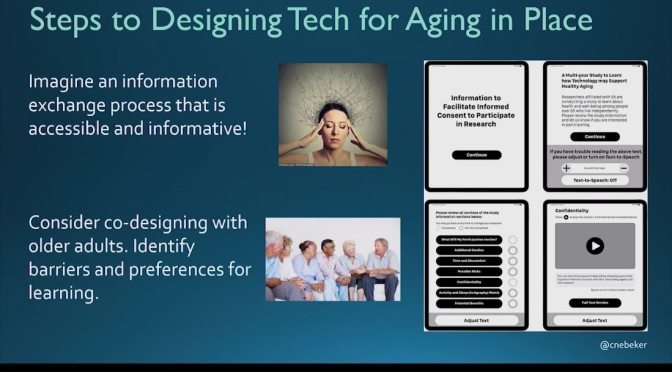
Camille Nebeker, EdD, MS, Associate Professor of Behavioral Medicine in the Department of Family Medicine & Public Health at the UC San Diego School of Medicine describes how technologies, including wearable sensors and artificial intelligence, are leveraged to capture personal health data and infer health status. Nebeker presents the ethical considerations specific to informed consent, risks of harm and potential benefits while underscoring the role that funding agencies, policy makers, researchers, ethicists, and editors have in creating the infrastructure needed to advance safe digital health research and practice.

Excerpts: Chip Walter On The “Search For The Aging Cure” (“Immortality, Inc.”)

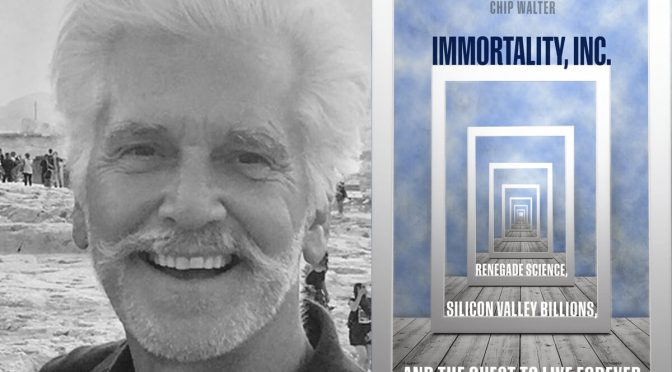
From a LitHub online article by Chip Walter, 69:

Immortality Inc Chip Walter bookAnd what if older neurons were replaced wholesale with new stem cells? They might scramble different sectors of the brain by destroying the new connections between the originals. Fiddle with those, and who knew what mayhem might follow? Memories, learning, and other cerebral functions that the brain had grown accustomed to might simply vanish. On the other hand, in the case of a disease like Alzheimer’s, maybe new memories would be better than no memories at all.

Robert Hariri’s views on human health began to take an unusual turn a little more than 25 years ago, when he was working as a neurosurgeon and trauma doctor at the New York Hospital-Cornell Medical Center. Day after day, he watched patients come into the emergency room with severe brain injuries, and it was a painful thing to witness.

He never forgot the case of a woman who had arrived after a senseless automobile accident. She was young, and the injury was bad. Every time he spoke with the family, the big questions they asked were: “How will she be? Will she come back? Could she be a mother to her children again?” It broke his heart.

Read more

William J. (Chip) Walter Jr. (born May 23, 1951) is an author, journalist, National Geographic Fellow, educator, filmmaker and former CNN bureau chief. He has written five mainstream science books between 1991 and 2019. Walter was one of the original employees at Cable News Network when it went on the air June 1, 1980 and later became its youngest bureau chief when he created CNN’s first Southeast Bureau in 1981 before heading up the network’s San Francisco Bureau in 1982. He has written and produced several PBS science documentaries, served as an adjunct professor at Carnegie Mellon University in three different departments, worked with UNICEF on the issue of childhood trauma, spoken at Harvard, Xerox PARC, Carnegie Mellon University and the Chautauqua Institution. One of his three original screenplays was produced and released under the title Sunset Grill in 1993 starring Peter Weller, Lori Singer and Stacy Keach. In 2015 his feature story for National Geographic Magazine explored the origins of human art and symbolic thinking.

From Wikipedia

Boomers & Technology: “2020 Tech And The 50+ Survey” (AARP – Dec 2019)

Tech ownership among older adults is growing with no signs of slowing down.

2020 Tech and The 50+ Survey AARP Wearable• For many devices, adoption among adults ages 50 and older is comparable to younger generations. Adults ages 50
and older are adopting smartphones, wearables, home assistants/smart speakers, and smart home technology at
nearly the same rate as adults ages 18–49.
• Younger adults have abandoned tablets, but older adults are adopting tablets at an increasing rate: More than half
(52%) of adults ages 50 and older own a tablet.
• Once adopted, usage of smartphones, wearables, tablets, home assistants/smart speakers, and smart home
technology is high with most owners using their technology daily.
While older adults are highly engaged with their devices, many are not using the technology to its full potential.
• Adults ages 50 and older are using smartphones and tablets to maintain social connections, find information, and for
entertainment, but only a few are using their device to automate their home or conduct transactions.
• Engaging in social media is one of the most common uses of a tech device (e.g., computer, tablet, or smartphone).
• Though 49% claim to own a smart TV, only 42% are using streaming or online options to watch shows.
• Nearly half (46%) of all smart home assistant/smart speaker owners do not use their device daily.

Read Report

Studies: Depression Diagnosis Increases Risk Of Dementia For Decades

From a PLOS Medicine online study:

Depression is associated with increased odds of dementia, even more than 20 years after diagnosis of depression, and the association remains after adjustment for familial factors. Further research is needed to investigate whether successful prevention and treatment of depression decrease the risk of dementia.

The risk of dementia is increased for decades after a diagnosis of depression, where those diagnosed with especially severe depressions are at increased risk.

Risk of Dementia increased after diagnosis of Depression chart 2020

Dementia is common among the elderly, causing severe individual suffering as well as societal strain. As the proportion of people aged 65 years and above is rapidly increasing in the world population, the number of individuals with dementia is expected to double within 20 years, and this condition was estimated to have a worldwide cost of US$604 billion in 2010. Effective treatments for dementia remain scarce; however, a preventive approach may be possible through the identification of high-risk individuals and potentially modifiable risk factors.

Read full study

Studies: Alzheimer’s Disease Linked To Poor Sleep In Older Adults

From a MedPageToday online article:

Science Translational Medicine“Amyloid is important in initiating disease, but the actual damage in the brain is probably due to the accumulation of tau,” Holtzman told MedPage Today. “Normally, tau protein is inside cells, but there is more and more evidence suggesting that its spread to different parts of the brain is responsible for the progression of Alzheimer’s disease.”

Two studies in January explored how sleep might be associated with Alzheimer’s tau pathology. The first, led by Brendan Lucey, MD, and David Holtzman, MD, both of Washington University in St. Louis, found that older adults who had less slow-wave sleep had higher levels of brain tau.

The findings, published in Science Translational Medicine, suggested that poor quality sleep in late life may signal deteriorating brain health.

Sleep patterns predicted amyloid and tau burden, reported Matthew Walker, PhD, of the University of California Berkeley, and co-authors, in June.

To read more