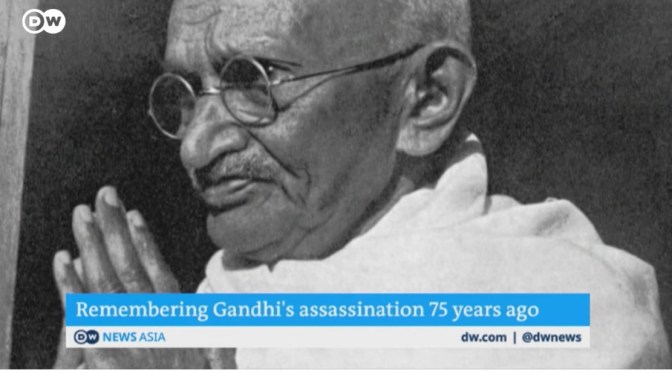
DW News – 75 years ago today, Mahatma Gandhi, who led the campaign for India’s independence, was assassinated in Delhi. The former lawyer is often called the “Father of the Nation” and credited with leading a non-violent struggle for independence from British rule.
Gandhi wanted an independent, peaceful India that protected religious freedom. But that was challenged by growing Muslim and Hindu nationalism. In 1947, India gained independence from the British, but at the cost of Partition – Muslim majority Pakistan and Hindu majority but secular India, came into being. Religous riots followed and Gandhi went on hunger strike to oppose the violence.
On January 30th, 1948, he was assassinated by a Hindu nationalist who believed Gandhi had been too accommodating to Muslims during the Partition. Around a million people turned out for his funeral. That was in 1948. But the India of 2023 is rather different. Hindu nationalism has been emboldened by Prime Minister Narendra Modi – leaving Gandhi’s legacy in tatters, as DW Correspondent Manira Chaudhary finds out.
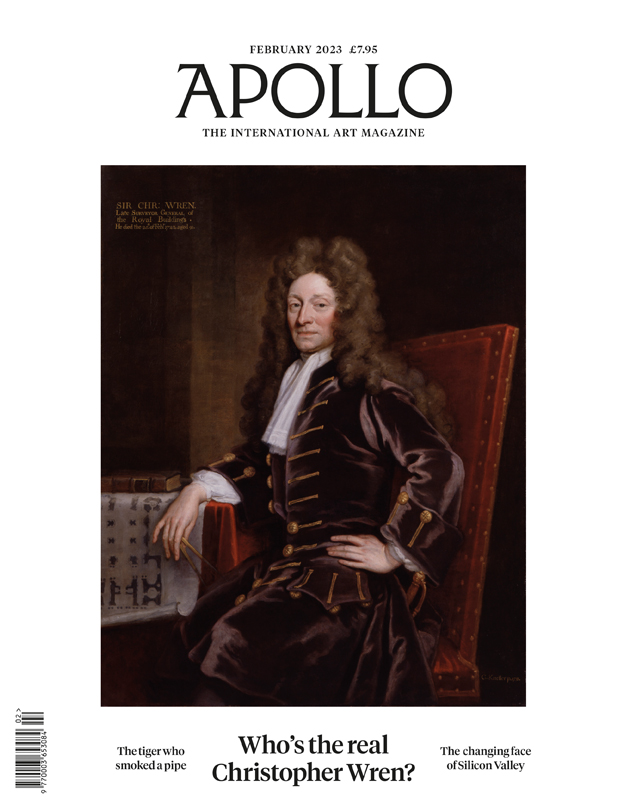
Plus: the uncertain market for Old Masters, the Cambridge colleges that have turned to wood, the artists who have taken young women seriously, and reviews of Guido Reni, Edward Hopper and the new museum at the Bibliothèque nationale
US slaps sanctions on a Chinese company for allegedly supplying satellite images to the Wagner Group. Plus: Russia’s shifting focus after Western powers promise tanks for Ukraine, and Nato chief Jens Stoltenberg visits South Korea and Japan.
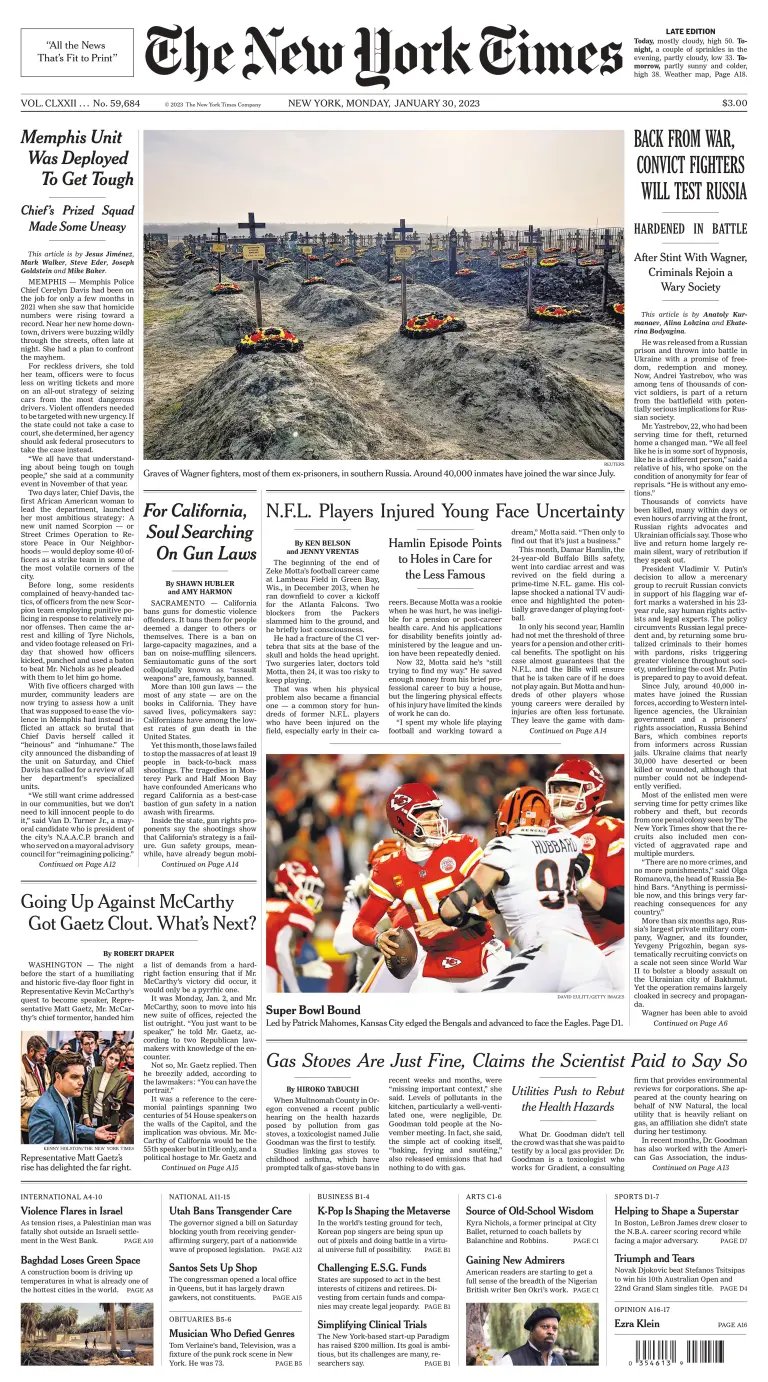
Tens of thousands of inmates have joined a mercenary group fighting with the Kremlin’s decimated forces in Ukraine. Some of them are returning to civilian life with military training and, in many cases, battlefield traumas.
The injury to Damar Hamlin of the Buffalo Bills, who collapsed on the field in cardiac arrest, has drawn attention to players who have been hurt early in their careers and now struggle to get help.
The state is still reeling from back-to-back attacks that left at least 19 people dead. The killings have spurred lawmakers to call for more regulations.
January 29, 2023: We leave you this Sunday morning in a snowstorm, in the White Mountains of New Hampshire. Videographer: Scot Miller.
There are 733 named mountains in the White Mountains of New Hampshire. The highest and most prominent of these mountains is Mount Washington, which stands at a respectable 6,288 feet (1,917 meters), making it the tallest peak in the Northeastern United States.
While the peaks of the White Mountains don’t manage to break the 6,500 ft (1,981m) barrier, they are home to some of the most difficult hiking terrain and worst weather in the continental United States.
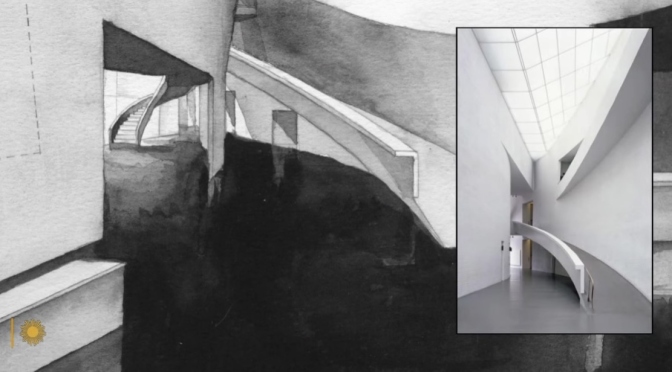
CBS Sunday Morning (January 29, 2023) – The works of architect Steven Holl have helped define the look of cities around the world, making remarkable use of light and space.
Correspondent Rita Braver talks with Holl, whose recent works include the REACH at the John F. Kennedy Center for the Performing Arts, in Washington, D.C., and the Kinder Building at The Museum of Fine Arts, Houston – buildings in which Holl hopes to express “the joy from the creative act.”
Steven Holl is a tenured Professor of Architecture who has taught at Columbia GSAPP since 1981. After completing architecture studies in Rome in 1970, the University of Washington in 1971, and graduate studies at London’s Architectural Association in 1976, Holl founded Steven Holl Architects in 1977. Based in New York City, the forty person firm also has an office in Beijing.
Steven Holl has realized cultural, civic, academic and residential projects both in the United States and internationally including the Kiasma Museum of Contemporary Art in Helsinki, Finland (1998); the Chapel of St. Ignatius, Seattle, Washington (1997); Simmons Hall at the Massachusetts Institute of Technology in Cambridge, Massachusetts (2002); the Nelson-Atkins Museum of Art in Kansas City, Missouri (2007); the Horizontal Skyscraper in Shenzhen, China (2009); the Linked Hybrid mixed-use complex in Beijing, China (2009); Cité de l’Océan et du Surf in Biarritz, France (2011); the Reid Building at the Glasgow School of Art, Glasgow, Scotland (2014); the Arts Building West and the Visual Arts Building at the University of Iowa in Iowa City, Iowa (2006, 2016); the Ex of IN House (2016); the Lewis Arts Complex at Princeton University in Princeton, New Jersey (2017); Maggie’s Centre Barts in London (2017); the Institute for Contemporary Art at Virginia Commonwealth University (2018); and the Glassell School of Art at the Museum of Fine Arts, Houston (2018). Upcoming work includes the REACH expansion of the John F. Kennedy Center for Performing Arts in Washington, D.C. (2019); the Winter Visual Arts Center at Franklin & Marshall College (2019); Rubenstein Commons at the Institute for Advanced Study in Princeton, New Jersey (2019); and the expansion of the Museum of Fine Arts, Houston (2020).
January 29, 2023: Monocle’s editorial director Tyler Brûlé, Priska Amstutz and Florian Egli on the weekend’s biggest talking points. We will also speak to our friends and correspondents in London and Ljubljana.
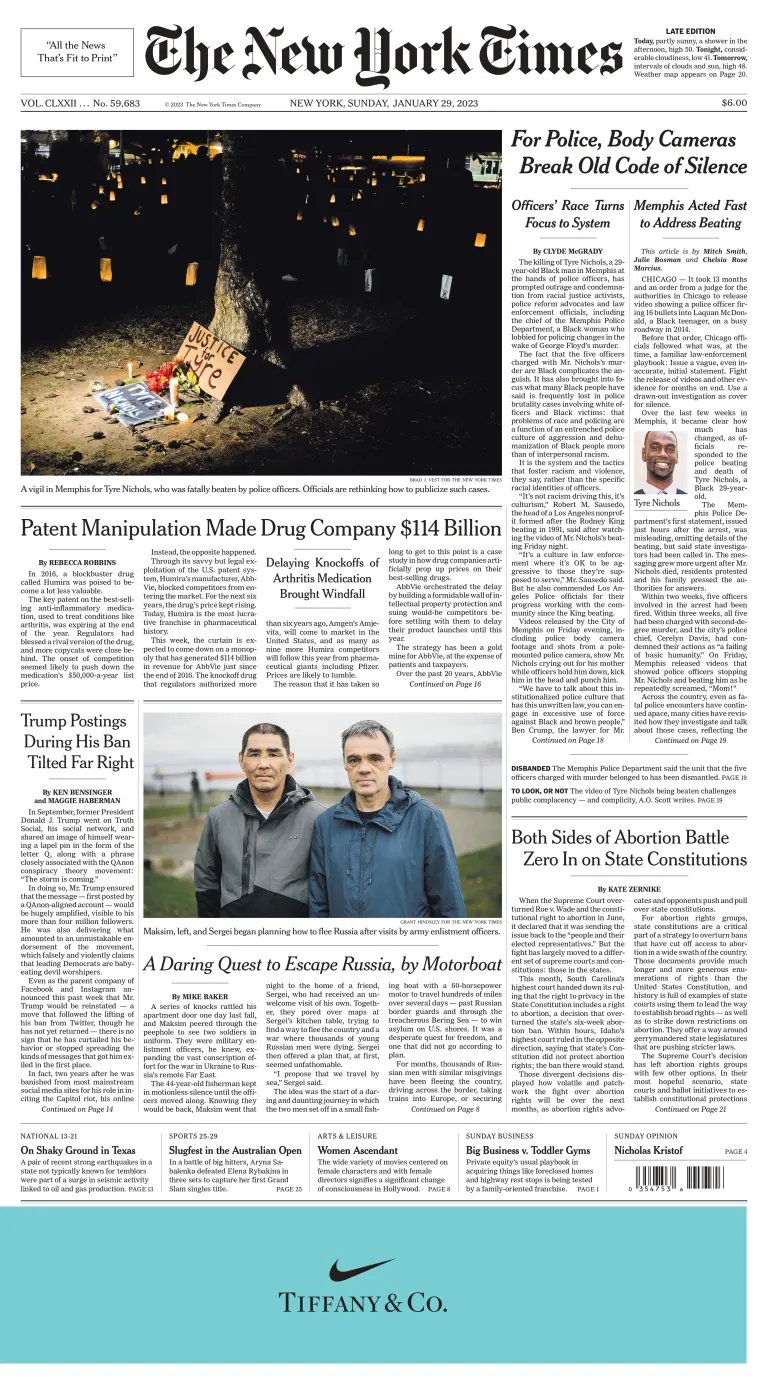
Many of the legal arguments seeking to overturn abortion bans rely on rights provided by the states, and how they are interpreted by state supreme courts.
BBC Earth – It is one of the largest freshwater reservoirs on the South American continent. It is the largest protected area in Argentina, with 1.3 million hectares of pristine wilderness. Also referred to as Esteros del Iberá, the Iberá Wetlands stays true to its name with a spectacular offering of streams, marshes, lagoons and swamps that cover approximately 14 % of the Corrientes Province.
The wetlands are home to a staggering 4,000 plant and animal species, which make up 30 % of Argentina’s biodiversity. The indigenous communities of the wetlands inhabited the area as early as in the 9th century.
News, Views and Reviews For The Intellectually Curious















 Boomers Daily