



Learn about some of the measures NYU Langone’s Perlmutter Cancer Center has taken to keep patients and staff safe during this time.

From a Rolling Stone Magazine Interview (April 22, 2020):
 Well, in 1970, things were vastly more limited. We had three dominant television networks, and also public broadcasting. We had a handful of national newspapers and the wire services. News magazines were much more important than now. That was pretty much it.
Denis Hayes is the Mark Zuckerberg of the environmental movement, if you can imagine Mark Zuckerberg with a conscience and a lot less cash. Like Zuckerberg, Hayes dropped out of Harvard to start an eccentric and unpromising venture. Zuckerberg’s was called Facebook, which he launched in 2004; Hayes’ was called Earth Day, which he founded in 1970.
Hayes is a child of the Sixties. He grew up in a small town on the Columbia River in Washington state, where his father worked in a paper mill and Hayes saw firsthand the toxic consequences of the collision between industry and nature: dirty air, spoiled streams, dead fish. He drifted through college, bummed around in Asia and Africa, and thought deeply about the role of humans in the natural world.
 23 April 2020: Denisovan DNA in modern Europeans, and the birth of an unusual celestial object. This week, evidence of ancient hominin DNA in modern human genomes, and the origin of a snowman-shaped object at the edge of the solar system.
In this episode:
00:45 Intermixing of ancient hominins
By combing through the DNA of over 27,000 modern day Icelanders, researchers have uncovered new insights about the ancient hominin species who interbred with Homo sapiens. Research Article: Skov et al.
08:05 Research Highlights
The scent of lemur love, a hidden Viking trade route, and ‘gargantuan’ hail. Research Highlight: Lemurs’ love language is fragrance; Research Highlight: Vikings’ lost possessions mark a long-hidden early trade route; Research Highlight: Enormous hailstones inspire a new scientific size category: ‘gargantuan’
11:44 The origin of Arrokoth
In 2019, the New Horizon Spacecraft took images of Arrokoth – an unusual, bi-lobal object found in the Kuiper belt. Now, researchers believe they’ve figured out how it formed. Research Article: Grishin et al.
17:29 Pick of the Briefing
We pick some highlights from the Nature Briefing. This week we discuss why the Universe may be lopsided, and why water could actually be two different liquid states. Scientific American: Do We Live in a Lopsided Universe?; Chemistry World: The weirdness of water
Lucy Chiswell, the Curatorial Fellow for Paintings 1600-1800, explores a day in the countryside through paintings by Rubens, Constable and Corot.
Paintings mentioned
0:50 Peter Paul Rubens ‘An Autumn Landscape with a View of Het Steen in the Early Morning’ 🎨 https://www.nationalgallery.org.uk/pa…
4:19 John Constable, ‘The Hay Wain’ 🎨 https://www.nationalgallery.org.uk/pa…
8:03 Jean-Baptiste-Camille Corot ‘The Four Times of Day: Night’ 🎨 https://www.nationalgallery.org.uk/pa…
An investigation into the U.S. response to COVID-19, from Washington State to Washington, D.C.
How did the U.S. become the country with the worst known coronavirus outbreak in the world? FRONTLINE and veteran science reporter Miles O’Brien investigate the American response to COVID-19, and examine what happens when politics and science collide.
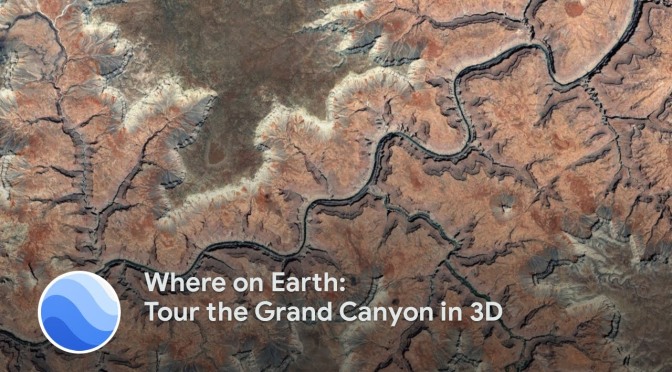
Visit the most scenic spots in Grand Canyon National Park with Google Earth! Travel from the Abyss to the “Black Bridge” over the Colorado River to Hopi Point to watch the sunrise.
 To reopen the economy safely, experts estimate the U.S. will need to administer millions of tests every month.







 Boomers Daily