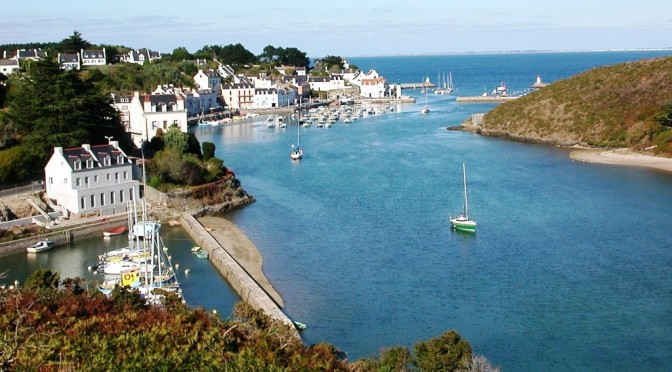
Off the coast of the French region of Brittany is a picturesque island for all those who want to disconnect. A 45-minute ferry ride separates the island of Belle-Île-en-Mer from the mainland, making it a world apart that attracts 100,000 visitors a year. Tourists also appreciate Belle-île’s food, especially its fish. We take a closer look at the island in summer.
Belle-Île is an island off the coast of Brittany in northwest France. In the main town La Palais, Citadelle Vauban is a star-shaped fortress. The fort at Pointe des Poulains, the island’s northern tip, houses a museum dedicated to 19th-century actress Sarah Bernhardt. Sandy Donnant Beach lies on the rugged west coast. Nearby, the Grand Phare lighthouse looks out over the needles rock formations of Port-Coton.
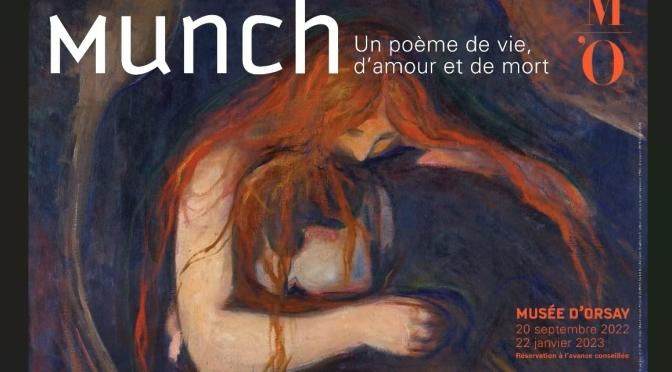
In collaboration with the Munch Museum in Oslo, the Musée d’Orsay is devoting an exhibition to the famous Norwegian painter Edvard Munch (1863-1944), whose work, in all its breadth – sixty years of creation – and complexity, remains partly unknown.
Munch’s work occupies a pivotal place in artistic modernity. It has its roots in the 19th century and would find its place firmly in the next one. Moreover, his entire work is permeated by a singular vision of the world, giving it a powerful symbolist dimension that is not limited to the few masterpieces he created in the 1890s. Moving beyond fin-de-siècle symbolism, Munch transcended this movement beyond its peak to make it the backbone of his work, giving it its great coherence.
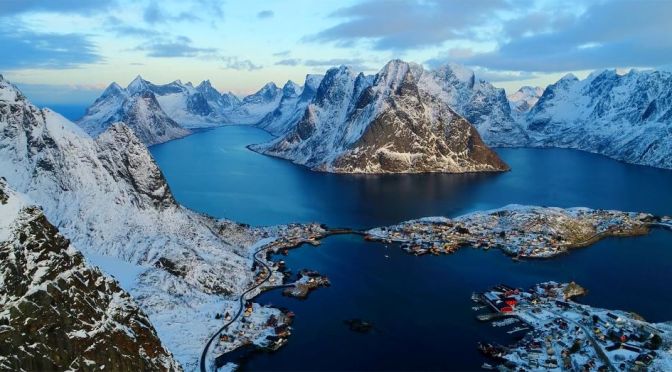
Norway is a Scandinavian country encompassing mountains, glaciers and deep coastal fjords. Oslo, the capital, is a city of green spaces and museums. Preserved 9th-century Viking ships are displayed at Oslo’s Viking Ship Museum. Bergen, with colorful wooden houses, is the starting point for cruises to the dramatic Sognefjord. Norway is also known for fishing, hiking and skiing, notably at Lillehammer’s Olympic resort.
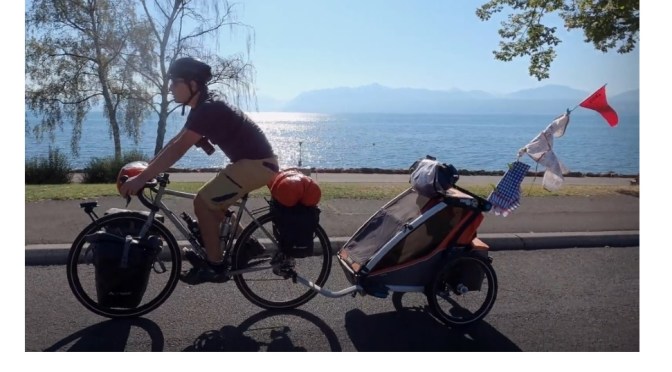
This two-year-old girl in the trailer is Zoé. After a great bike tour to discover her country last year, France, her parents take her to cross Switzerland, its mountains, its lakes, its cows, its rocky tracks. A travel from Lake Geneva to Lake Constance totaling 550 km, 12,000 metres of elevation but above all a lot of sharing with our daughter who is growing so fast. — More info about the route: komoot.fr/collection/1785457/-switzerland Music: Bunker Buster – Colorful and Animated Film with Sony Alpha 7III & GoPro 8
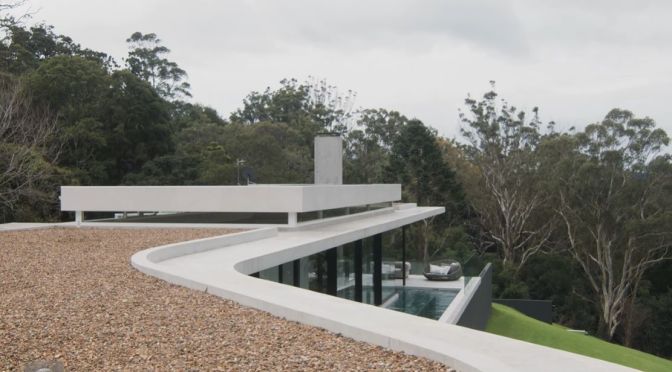
Evoking grandiosity through carefully considered sharp points and rounded edges, the concrete super house by Joe Adsett Architects offers unrivalled views of Toowoomba’s sweeping landscape. Creating a piece of architecture that was befitting of the location and striking natural landscape,
Video timeline: 00:00 – A Welcome to Cliffhanger House 00:36 – The Location of the Super House 00:46 – Building On The Edge of A Landslide Zone 01:36 – Arriving At The Site 02:00 – The Vitrocsa Glazing Suite 02:40 – A Seamless Flow From Kitchen to Outdoors 03:00 – An Extension of The Main Living Area 03:14 – The Material Palette 03:52 – Emulating The Architecture Through Furniture 04:17 – Designing Weather Flexible Houses 04:41 – The Challenging Aspect of The Cantilever
Vitrocsa collaborated with Joe Adsett Architects to produce the concrete super house that fully embraced its location. Balancing at the very top of the site, the concrete super house offers views from East of Brisbane toward Picnic Point and Table Top Mountain. Whilst the home’s location is situated over a ridge, Joe Adsett Architects endeavoured to create more space by cantilevering away from the slope.
By projecting part of the concrete super house out from the built space, the ability to create a more functional living space with privacy from surrounding neighbours arose. Arriving at the concrete super house, the gaze is immediately ensnared by the curving concrete wall that cantilevers away from the base of the home. With the garage underneath the house offering one way of entrance, it is the curved pathway leading to the deliberately oversized glass pivot door that is the striking entrance of the home.
Working with Vitrocsa to create the glazing for the home, the frame of the windows was done with a slender aluminium product comprised of reinforced stainless steel. Made in Australia and designed to Swiss specifications, the framing offers unbroken views of the surrounding landscape whilst also bringing a seamless indoor-outdoor flow into the home. With restrained materials used across the exterior architecture, the interior design choices also reflect the primary theme of the concrete super house.
Softened with veneered timber products and large porcelain tiles, curves and sharp points are repeated through the joinery elements. Furthermore, the furnishings also introduce soft textures and colours that bring a humanising element to the concrete super house.
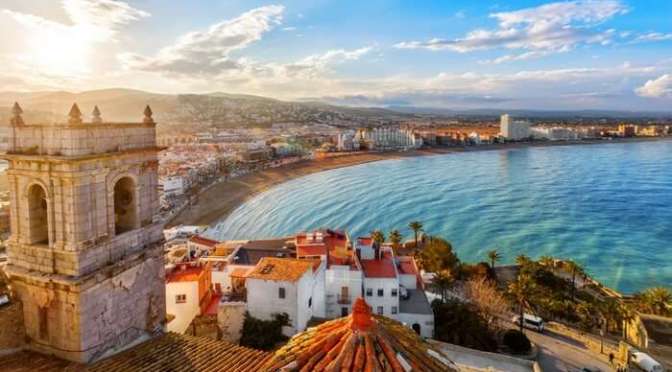
Our Valencia travel guide! Never before has a city taken me quite like Valencia did. A weekend break to this Spanish gem inspired me to return just two weeks later to film an episode in Valencia.
Spain has a lot of great cities but there’s something about Valencia that just makes me…happy. The weather maybe? Or perhaps the food? Or the friendly people? Most likely it’s that elusive combination of all three. Valencia is one of those cities that has something to offer all year round.
The port city of Valencia lies on Spain’s southeastern coast, where the Turia River meets the Mediterranean Sea. It’s known for its City of Arts and Sciences, with futuristic structures including a planetarium, an oceanarium and an interactive museum. Valencia also has several beaches, including some within nearby Albufera Park, a wetlands reserve with a lake and walking trails.
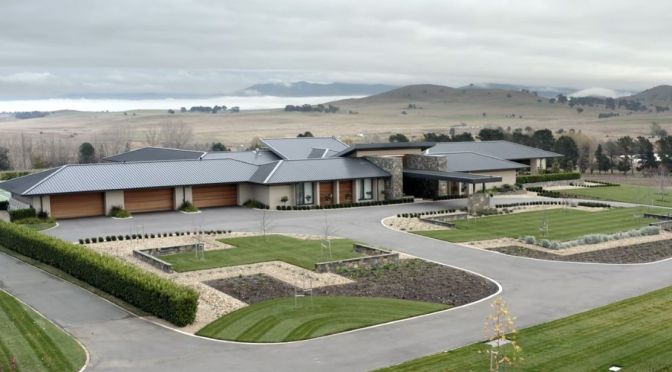
In touch with a vast rural landscape, Wallaroo Residence rises from atop one of Canberra’s many slopes. Crafted by DNA Architects, the modern farmhouse gently weaves natural elements into its modern expression, emerging as a place of retreat.
Video timeline: 00:00 – Introduction to theModern Farmhouse 00:35 – Hitting The Brief 01:10 – A Walkthrough of the House 01:47 – The Key Architectural Features 02:23 – Navigating The Weather Elements 02:44 – Separation Between The Family and The Entertaining Areas 02:55 – The Contemporary Kitchen 03:41 – A Focus On Sustainability 04:24 – The Modern Farmhouse Aesthetic 04:52 – The Architects Favourite Part of The Home
Settled on the edge of Canberra, Wallaroo Residence follows a design brief readily assigned to DNA Architects. The luxury home presents as a modern farmhouse, a concept first proposed by its traditional pitched roof and then explored within an interior of considered materials maturely applied. Aggrandising the entrance of the modern farmhouse, a floating porte-cochère leads on to an impressive set of glass doors. Internally, a timber-clad kitchen sits to the east of the arrival space, beyond which lies the family living room.
From there, the residence separates into the laundry room and master suite which offers unobstructed southern views. Along the back wall of the kitchen, Fisher & Paykel DishDrawers are effortlessly integrated into both the wall itself and the adorning joinery. On the kitchen island, a Full Surface Fisher & Paykel Induction Hob satisfies the desire for sustainable living and enables multiple pans to be warmed at once.
In the laundry room, large capacity Fisher & Paykel Washer Dryers inject a sense of efficiency into the modern farmhouse. Embracing its unique perspective, Wallaroo Residence testifies to the ongoing appeal of a city escape. With inhered functionality and a contemporary aesthetic, the modern farmhouse represents a distinguished interpretation of rural luxury.
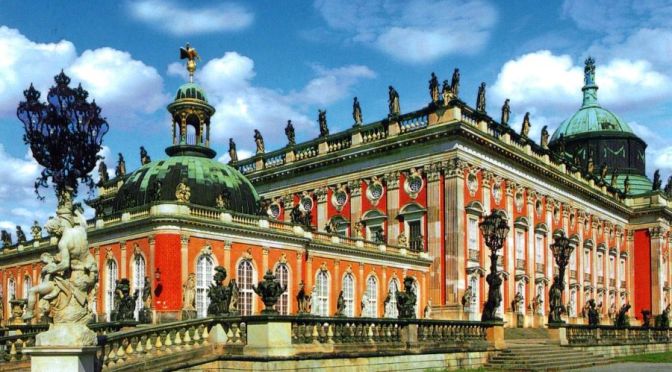
How does this sound: A picturesque little castle palace surrounded by wine terraces and a romantic park – and you right in the middle of it all! Join DW reporter Hannah Hummel for a relaxing day in Potsdam. She visits Sanssouci, the pleasure palace of King Frederick the Great. Hannah immerses herself in the atmosphere of the place, very much in the spirit of the Prussian king, who indulged in the good life here, far away from his court. Here he could indulge in nature, music and philosophy without worry – sans souci.
Potsdam, city, capital of BrandenburgLand (state), eastern Germany. Lying on the southwest border of Berlin, it is sited where the Nuthe River flows into the Havel River, the confluence becoming a series of lakes.
First mentioned in 993 as a Slavic settlement known as Poztupimi, it received its charter in 1317. It became Brandenburg’s electoral residence in 1640 under Frederick William (the Great Elector) and the Prussian royal residence under Frederick II (the Great), during whose reign (1740–86) it was an intellectual and military centre and virtual capital of Prussia. In the 18th century a colony of Dutch immigrants gave their quarter of the city, and some other parts as well, a distinctly Dutch flavour. Potsdam suffered severe damage in World War II, but many monuments survived and others have been restored. The Cecilienhof Palace was the scene (July 17–August 2, 1945) of the Potsdam Conference of the Allied leaders; it now houses a museum and a memorial, as well as a hotel. From 1952 to 1990 the city was capital of the Potsdam Bezirk (district) of East Germany.
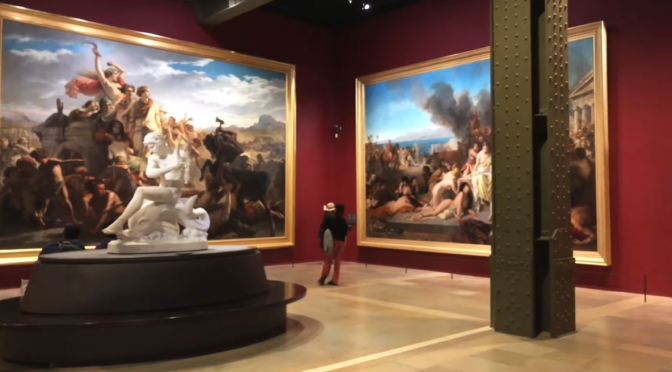
Musée d’Orsay, (French: “Orsay Museum”) national museum of fine and applied arts in Paris that features work mainly from France between 1848 and 1914. Its collection includes painting, sculpture, photography, and decorative arts and boasts such iconic works as Gustave Courbet’s The Artist’s Studio (1854–55), Édouard Manet’s Le Déjeuner sur l’herbe (1863; Luncheon on the Grass), and Pierre-Auguste Renoir’s Dance at Le Moulin de la Galette (1876; Bal du moulin de la Galette).
The Musée d’Orsay is housed in the former Gare d’Orsay, a railway station and hotel that was designed by Victor Laloux and located on the Left Bank of the Seine River opposite the Tuileries Gardens. At the time of its completion in 1900, the building featured an ornate Beaux Arts façade, while its interior boasted metal construction, passenger elevators, and electric rails.
Because of changes in railway technology, however, the station soon became outdated and was largely vacant by the 1970s. Talks to transform the builing into an art museum began early in the decade and were finalized in 1977 through the initiative of Pres. Valéry Giscard d’Estaing. With government funds, the building was restored and remodeled in the early 1980s by ACT architecture group.
The interior was designed by Gaetana Aulenti, who created a complex layout of galleries that occupied three main levels surrounding the atrium beneath the building’s iconic iron-and-glass barrel vault. On the ground floor, formerly the building’s train platforms, extensive stone structures broke up the cavernous space and created a central nave for the sculpture collection and gallery spaces for painting and decorative arts.
In 2019, artist Peter Alexander was invited by Langson IMCA Museum Director Kim Kanatani to curate an exhibition of California Impressionism from the Museum’s collections.
Prior to his untimely death in 2020, Alexander had begun identifying works that he felt exemplified the California Impressionists’ profound connection to the light, space, and natural phenomena of California and the similar influence they had on his own work.
In honor of Alexander’s commitment to the project, a team of curators consisting of Kevin Appel, Julianne Gavino, Kim Kanatani, Curt Klebaum, Claudia Parducci, and Bruce Richards expanded the exhibition into a dialogue between the early modernist painters and Alexander’s own work, forming a fluid exchange between generations equally influenced by the atmospheric light of the Golden State.
The passages in this exhibition follow phenomena experienced over the course of a day from dawn, to dusk, to the depths of night. From mountain peaks to the ocean floor, Alexander and these California Impressionist painters echo one another in their pursuit of capturing the ineffable sensibility of place and space.
With works spanning from 1896 to 2020, Echoes of Perception: Peter Alexander and California Impressionism includes 14 Impressionist works from Langson IMCA’s collection along with 11 of Alexander’s resin sculptures, canvases, works on paper, and a painting on velvet that offer an alternative way to engage with California Impressionism through the eyes of this pioneering contemporary artist.
News, Views and Reviews For The Intellectually Curious


 Boomers Daily