The Economist (January 4, 2024) – A new wave of artificial intelligence is starting to transform the way the entertainment industry operates. Who will be the winners and losers?
Video timeline: 01:07 AI is changing the music business 04:09 How big data revolutionised entertainment industries 05:20 Can AI predict a film’s success? 09:26 How generative AI is creating new opportunities 12:36 What are the risks of generative AI?
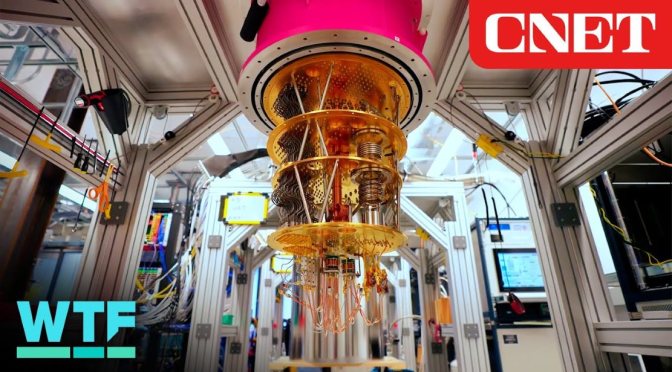
nature podcasts (December 29, 2023) – A new kind of solar cell is coming: is it the future of green energy? Firms commercializing perovskite–silicon ‘tandem’ photovoltaics say that the panels will be more efficient and could lead to cheaper electricity.
On the outskirts of Brandenburg an der Havel, Germany, nestled among car dealerships and hardware shops, sits a two-storey factory stuffed with solar-power secrets. It’s here where UK firm Oxford PV is producing commercial solar cells using perovskites: cheap, abundant photovoltaic (PV) materials that some have hailed as the future of green energy. Surrounded by unkempt grass and a weed-strewn car park, the factory is a modest cradle for such a potentially transformative technology, but the firm’s chief technology officer Chris Case is clearly in love with the place. “This is the culmination of my dreams,” he says.
The Economist (December 28, 2023) – What are the stories set to shape 2024? From the biggest election year in history, to how to control AI and even taxis that fly, The Economist offers its annual look at the world ahead.
Video timeline: 00:00 – The World Ahead 2024 00:33 – Vital votes 03:34 – Taxis take off 07:10 – AI rules 10:19 – Industry cleans up? 13:48 – BRICS build
Brightline, a private company that completed the final phase of the intercity rail line connecting Miami and Orlando, Fla., this year, secured the U.S. Department of Transportation grant as part of the historic infrastructure package, Nevada’s U.S. senators said. The rest of the funds for the $12-billion project are expected to be raised through private capital and bonds.
The trip on the 218-mile electrified line from Rancho Cucamonga to Las Vegas will take just over two hours, with stops in Hesperia or Apple Valley, according to Brightline. The trains can reach speeds of 200 miles per hour. The company already has the federal permits, the labor agreements and the land — a swath in the wide median of Interstate 15 — to build the line. Construction is expected to begin early next year.
The Wall Street Journal (December 16, 2023) – How does Google Maps use satellites, GPS and more to get you from point A to point B? What is the tech that powers Spotify’s recommendation algorithm?
Video timeline: 0:00 Google Maps 9:07 LED wristbands 14:30 Spotify’s algorithm 21:30 Tap-to-Pay 28:18 Noise-canceling headphones 34:33 MSG Sphere 41:30 Shazam
From the unique tech that works in seconds to power tap-to-pay to how Shazam identifies 23,000 songs each minute, WSJ explores the engineering and science of technology that catches our eye. Chapters:
The Wall Street Journal (December 14, 2023) – As autonomous driving technology becomes more mainstream, automakers like Waymo and Geely are beginning to make crucial decisions about what their next generation of vehicles will look like.
Video timeline:0:00 The future of the car 0:51 Car seats and safety 3:51 Wheel and trust 5:11 Screens and sickness 7:15 Trusting autonomous cars
So could future driverless cars have no steering wheels? And what could the touchscreen dashboards look like? WSJ’s George Downs explores how the car could evolve when you don’t need to be behind the wheel. #Autonomous#Cars#WSJ
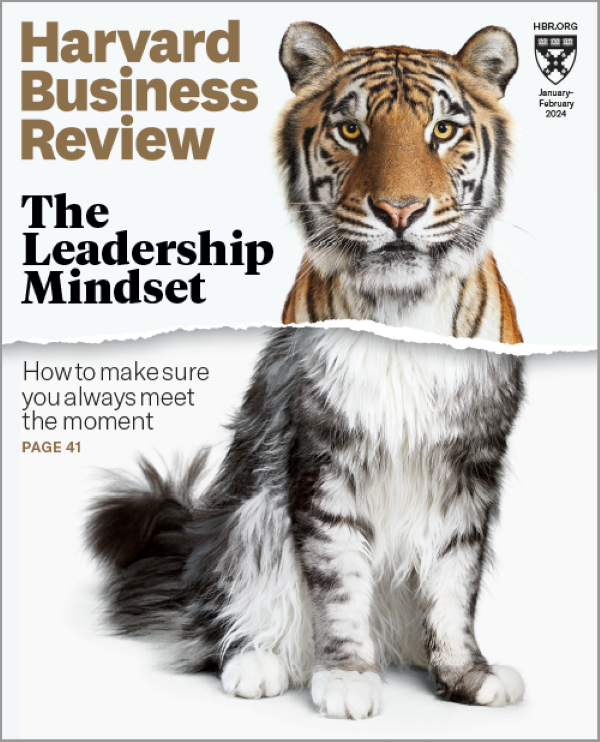
The best ad campaigns make a memorable, valuable, and deliverable promise to customers.
More than a century ago the merchant John Wanamaker wryly complained, “Half the money I spend on advertising is wasted. The trouble is, I don’t know which half.” Because the proponents of advertising have always struggled to prove that the money is well spent, that indictment has long helped financial executives justify cutting ad budgets. As no less an authority than Jim Stengel, a former chief marketing officer at Procter & Gamble, has noted, the struggle continues, although huge resources go toward testing advertising copy and measuring effectiveness.
New systems can learn autonomously and make complex judgments. Leaders need to understand these “autosapient” agents and how to work with them.
The wheel, the steam engine, the personal computer: Throughout history, technologies have been our tools. Whether used to create or destroy, they have always been under human control, behaving in predictable and rule-based ways. As we write, this assumption is unraveling. A new generation of AI systems are no longer merely our tools—they are becoming actors in and of themselves, participants in our lives, behaving autonomously, making consequential decisions, and shaping social and economic outcomes.
Wall Street Journal (December 6, 2023) – To help counter China, the U.S. military is racing to develop a fleet of next-generation drones. For the Pentagon, it’s not just a matter of gaining the technological edge.
Video timeline: 0:00 Autonomous systems 0:40 The need for next-generation drones 1:49 Scaling up 4:07 Keeping up with China
It’s a race against the clock, as Beijing has militarized islands in the South China Sea, and President Xi Jinping has ordered his military to be ready to invade Taiwan by 2027. Some experts are skeptical the U.S. military can work fast enough to meet its goals.
New Scientist (December 5, 2023) – Stonehenge was built between 3000 and 2000 BC and is one of the world’s most famous prehistoric monuments. Each year, the site attracts thousands of visitors during the summer and winter solstices.
Whether used for ceremonial, astronomical or spiritual events, Stonehenge remains a subject of intrigue. Now, using the latest scientific technologies such as radiocarbon dating and 3D laser scanning, archaeologists are understanding how this colossal stone circle was built and what its purpose was, as well as gaining new insight into how our Stone Age human ancestors lived.
New studies even suggest some of the stones could align with the moon during rare lunar events.
News, Views and Reviews For The Intellectually Curious




















 Boomers Daily