
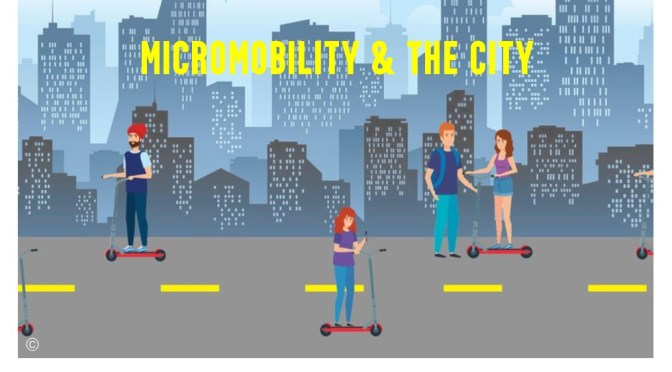
Transport by Electric Scooters: Are Our Cities Ready for Micromobility? https://t.co/i3likt1ull
— ArchDaily (@ArchDaily) November 8, 2021
Category Archives: Technology
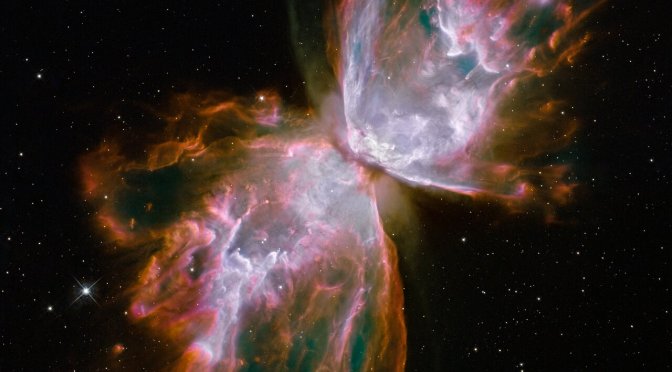
Astronomy: Stunning ‘Butterfly Nebula’ From Hubble Space Telescope

This celestial object looks like a delicate butterfly. But it is far from serene. What resemble dainty butterfly wings are actually roiling cauldrons of gas heated to nearly 20 000 degrees Celsius. The gas is tearing across space at more than 950 000 kilometres per hour — fast enough to travel from Earth to the Moon in 24 minutes! A dying star that was once about five times the mass of the Sun is at the centre of this fury. It has ejected its envelope of gases and is now unleashing a stream of ultraviolet radiation that is making the cast-off material glow. This object is an example of a planetary nebula, so-named because many of them have a round appearance resembling that of a planet when viewed through a small telescope. The Wide Field Camera 3 (WFC3), a new camera aboard the NASA/ESA Hubble Space Telescope, snapped this image of the planetary nebula, catalogued as NGC 6302, but more popularly called the Bug Nebula or the Butterfly Nebula.
WFC3 was installed by NASA astronauts in May 2009, during the Servicing Mission to upgrade and repair the 19-year-old Hubble. NGC 6302 lies within our Milky Way galaxy, roughly 3800 light-years away in the constellation of Scorpius. The glowing gas is the star’s outer layers, expelled over about 2200 years. The “butterfly” stretches for more than two light-years, which is about half the distance from the Sun to the nearest star, Proxima Centauri. The central star itself cannot be seen, because it is hidden within a doughnut-shaped ring of dust, which appears as a dark band pinching the nebula in the centre. The thick dust belt constricts the star’s outflow, creating the classic “bipolar” or hourglass shape displayed by some planetary nebulae. The star’s surface temperature is estimated to be over 220 000 degrees Celsius, making it one of the hottest known stars in our galaxy. Spectroscopic observations made with ground-based telescopes show that the gas is roughly 20 000 degrees Celsius, which is unusually hot compared to a t

Views: Candela C7 – The World’s First Electric Hydrofoil Boat (Video)
At the recent Cannes Yachting Festival, MBY editor Hugo Andreae took the helm of the Candela C-7, the world’s first foiling electric boat, for the flight of a lifetime… Candela C-7 specifications LOA: 25ft 3in (7.7m) Beam: 7ft 10in (2.4m) Weight: 1,300kg Motor: 55kW Torqeedo Battery: 40kWh Lithium Ion Top speed: 30 knots Range: 50nm @ 22knots +8nm @ 5knots Wave height: Up to 1.1m Draft: 0.7m (foils lifted) 1.5m (foils down) Foiling capacity: 800kg
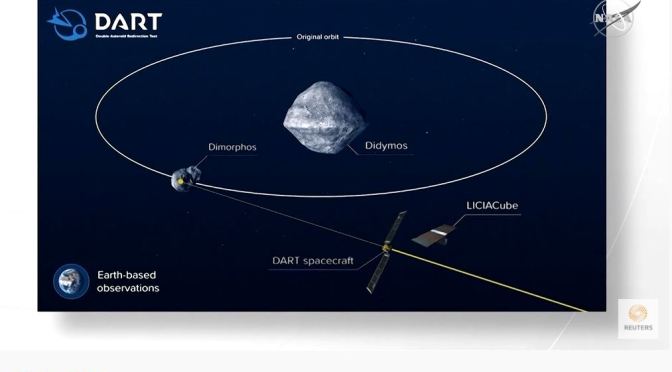
Technology: NASA Targets Asteroid With Spacecraft
NASA introduced the space agency’s first planetary defense test mission, the Double Asteroid Redirection Test or DART, a spacecraft they plan to launch later this month on a mission to crash into an asteroid.
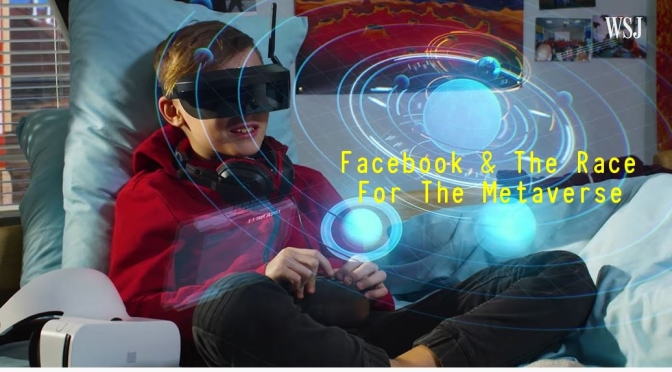
Analysis: Facebook & The Race For The Metaverse
A tech industry battle is taking shape over the “metaverse.” WSJ tech reporter Meghan Bobrowsky explains the concept and why tech companies like Facebook, Roblox and Epic Games are investing billions to develop this digital space. Photo: Storyblocks
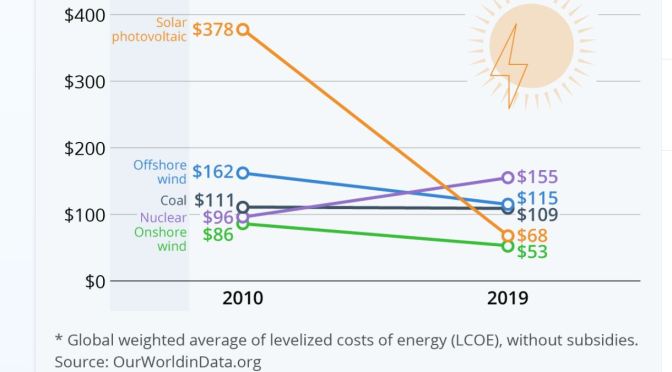
Infographic: Renewable Energy’s Falling Costs
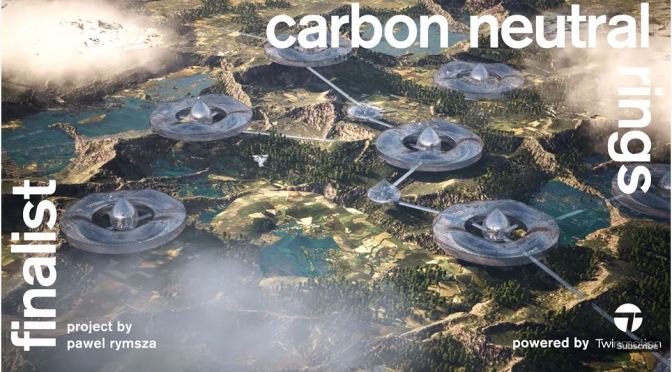
Sustainability: Redesign The World Competition – ‘Carbon Neutral Rings’
Pawel Rymsza’s proposal to house humanity in a network of ring-shaped structures built around huge algae-rich lakes is the first of 15 visionary projects shortlisted for the Redesign the World competition powered by Twinmotion.
Called Carbon Neutral Rings, Rymsz’s proposal is to create a network of enclosed carbon-neutral cities for humanity to live in. Each ring is built around a huge reservoir of algae, which would be used to filter the air inside the rings and act as a carbon sink to absorb the city’s emissions.
The carbon dioxide absorbed by reservoirs would ensure the cities are carbon-neutral initially and would become carbon-negative over time as humanity shifts to less carbon-intensive technologies.
Redesign the World is the ultimate design competition, which called for new ideas to rethink planet Earth to ensure that it remains habitable long into the future. Launched in partnership with Epic Games, the contest asked entrants to visualise their concepts using architectural visualisation software Twinmotion.
Read more on Dezeen: https://www.dezeen.com/?p=1730861

Science: Sleeping Without A Brain, Insect Invasions, Racist Search Algorithms
Simple animals like jellyfish and hydra, even roundworms, sleep. Without brains. Why do they sleep? How can we tell a jellyfish is sleeping?
Staff Writer Liz Pennisi joins host Sarah Crespi to talk about what can be learned about sleep from these simple sleepers. The feature is part of a special issue on sleep this week in Science.
Next is a look at centuries of alien invasions—or rather, invasive insects moving from place to place as humans trade across continents. Sarah talks with Matthew MacLachlan, a research economist at the U.S. Department of Agriculture’s Economic Research Service, about his Science Advances paper on why insect invasions don’t always increase when trade does.
Finally, a book on racism and the search algorithms. Books host Angela Saini for our series of interviews on race and science talks with Safiya Umoja Noble, a professor in the African American Studies and Information Studies departments at the University of California, Los Angeles, about her book: Algorithms of Oppression: How Search Engines Reinforce Racism.
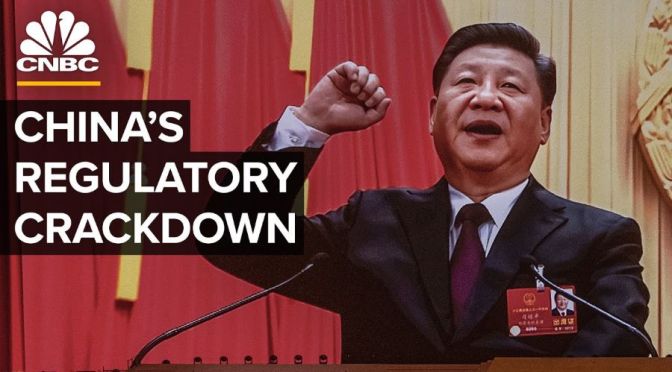
Analysis: China’s New Regulations On Tech
Big Tech, real estate, and even video games are being targeted by new regulations in China. This regulatory upheaval could be yet another sign that Xi Jinping and the Chinese Communist Party is trying to reign in the business sector.
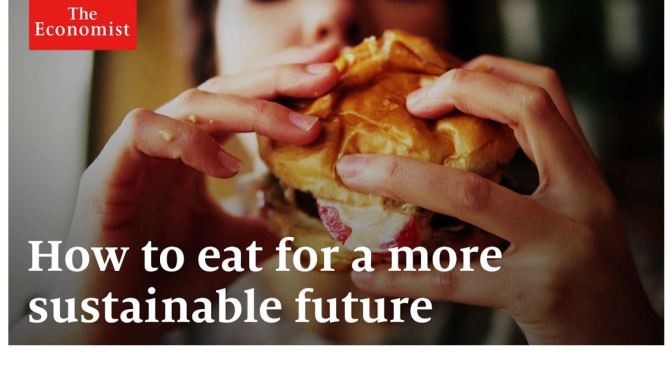
Analysis: Food’s Future In A More Sustainable World
Over one-third of greenhouse-gas emissions come from food production. For a greener future, this urgently needs to change. What’s the future of food in a more sustainable world? Our experts answer your questions.
Video timeline: 00:00 – Food’s environmental impact 00:44 – Why it’s important to make food sustainable 01:34 – Will everyone have to give up meat? 02:13 – Can lab-grown meat be scaled up? 03:32 – Could nutrients and vitamins be added to new foods? 04:52 – Will insects become a new staple food? 05:35 – Why small-scale farming isn’t the main solution 06:51 – Is vertical farming more sustainable? 07:36 – Will consumers accept new foods?
 Boomers Daily