Category Archives: Studies

New Years Resolutions: “Stop Making Excuses Not To Exercise!!” (NY Times)

From a New York Times online article:

The New York Time logoAt the moment, about two-thirds of Americans do not meet the standard exercise guidelines of about 30 minutes a day of moderate exercise, such as walking.

These findings might suggest that, if we adjusted our schedules and turned off the TV, phone or computer, most of us would have plenty of time to work out.

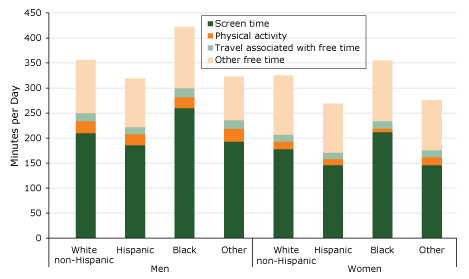
Screen Time vs Physical Activity vs Free Time Chart CDC

Almost all of the respondents — whatever their income, age, gender or ethnicity — reported about five hours a day of leisure time. Men tended to have more free time than women, older people more than the young, and African-American women the least of all. But no group reported less than about four and a half hours a day of free time.

To read more

Dementia: Cognitive Loss Is Greatest At “Slightest Level Of Hearing Loss”

From a New York Times online article:

Hearing Loss…the researchers demonstrated that the biggest drop in cognitive ability occurs at the slightest level of hearing loss — a decline from zero to the “normal” level of 25 decibels, with smaller cognitive losses occurring when hearing deficits rise from 25 to 50 decibels.

Hearing loss is now known to be the largest modifiable risk factor for developing dementia, exceeding that of smoking, high blood pressure, lack of exercise and social isolation, according to an international analysis published in The Lancet in 2017.

the new findings on cognitive losses linked to subclinical hearing loss, gleaned from among 6,451 people age 50 or older, suggest that any degree of hearing loss can take a toll.

To read more

Health: 60-Year Old “B-D” Editor Launches “18-Hour Intermittent Fasting” Diet Study For 2020’s Decade

Following the important publishing of “The Benefits Of Intermittent Fasting” study by Johns Hopkins in the New England Journal of Medicine on December 26, 2019, the 60-year old editor of Boomers-Daily.com (“B-D”) will launch, participate in, and document a decade-long, 18-Hour Intermittent Fasting Diet on December 30, 2019. The following protocol will be followed:

  • All daily food consumption will be between 10 am and 4 pm
  • Diet will be followed 7 days a week
  • High fiber, nutrition-dense foods will be favored
  • Gluten-free and Lactose-free foods will be favored
  • Eating will NOT be calorie-restricted
  • Bedtime target of 7:30 to 8:30 pm (or earlier) every night
  • 7-8+ hours of sleep per night a PRIORITY
  • Early morning vigorous exercise daily of 1 – 1 1/2 hours targeted

All readers of Boomers-Daily.com are encouraged to communicate with B-D and launch their own 18-hour Intermittent Fasting Diet (the 6-hour eating period can be varied 1-2 hours later or earlier). Please email boomersdaily@gmail.com to join the study, comment or inquire about this or your own 18-Hour Intermittent Fasting Diet. We will be looking to start an online chat room and other online platforms to increase the size, scope, visibility and transparency of the study over the next decade.

12-26-19  Intermittent Fasting: Live ‘Fast,’ Live longer? (infographic).png.png

New Studies: Beneficial Effects Of “18-Hour Intermittent Fasting” On Health And Aging (NEJM)

From a New England Journal of Medicine online release:

In humans, intermittent-fasting interventions ameliorate obesity, insulin resistance, dyslipidemia, hypertension, and inflammation. Intermittent fasting seems to confer health benefits to a greater extent than can be attributed just to a reduction in caloric intake.

Evidence is accumulating that eating in a 6-hour period and fasting for 18 hours can trigger a metabolic switch from glucose-based to ketone-based energy, with increased stress resistance, increased longevity, and a decreased incidence of diseases, including cancer and obesity.

The New England Journal of Medicine Logo

Preclinical studies and clinical trials have shown that intermittent fasting has broad-spectrum benefits for many health conditions, such as obesity, diabetes mellitus, cardiovascular disease, cancers, and neurologic disorders. Animal models show that intermittent fasting improves health throughout the life span, whereas clinical studies have mainly involved relatively short-term interventions, over a period of months.
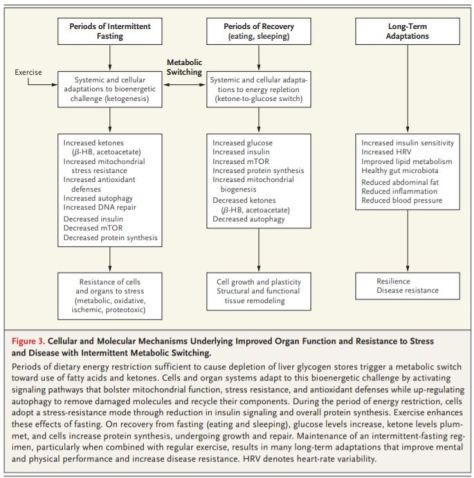
Effects of Intermittent Fasting on Health, Aging, and Disease New England Journal of Medicine December 26 2019

BOOMERS-DAILY.COM “18-HOUR INTERMITTENT FASTING DIET” STUDY

How much of the benefit of intermittent fasting is due to metabolic switching and how much is due to weight loss? Many studies have indicated that several of the benefits of intermittent fasting are dissociated from its effects on weight loss. These benefits include improvements in glucose regulation, blood pressure, and heart rate; the efficacy of endurance training; and abdominal fat loss.

To read more

Inline image

Healthiest Adults: Early Risers With 7-8 Hours Of Sleep, No Insomnia Or Daytime Drowsiness

From a European Heart Journal study:

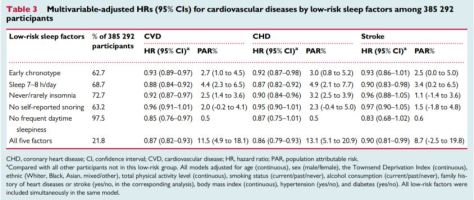
European Society of Cardiology logoWhen the five sleep factors were collapsed into binary categories of low risk vs. high risk (reference group), early chronotype, adequate sleep duration, free of insomnia, and no frequent daytime sleepiness were each independently associated with incident CVD, with a 7%, 12%, 8%, and 15% lower risk, respectively (Table 3). Early chronotype, adequate sleep duration, and free of insomnia were independently associated with a significantly reduced risk of CHD; while only adequate sleep duration was associated with stroke.European Society of Cardiology Sleep patterns, genetic susceptibity and incident cardiovascular disease a prospective study of 385,292 participants lowest risk factorsCardiovascular disease (CVD), including coronary heart disease (CHD) and stroke, is among the leading causes of mortality globally.1 In addition to traditional lifestyle behaviours, emerging evidence has implicated several unhealthy sleep behaviours were important risk factors for CVD.2,3 For example, short or long sleep duration,4–9 late chronotype,10,11 insomnia,12–17 snoring,18,19 and excessive daytime sleepiness20,21 were associated with a 10–40% increased CVD risk. European Society of Cardiology Sleep patterns, genetic susceptibity and incident cardiovascular disease a prospective study of 385,292 participants
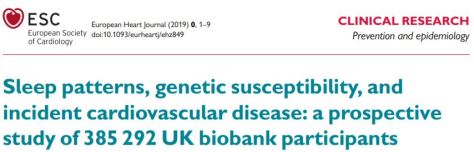
 

To read more: https://academic.oup.com/eurheartj/advance-article/doi/10.1093/eurheartj/ehz849/5678714

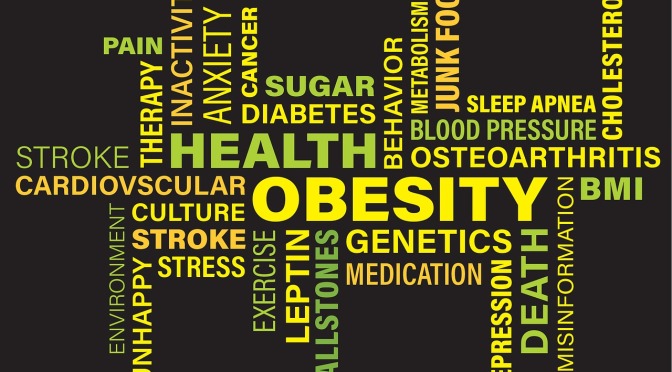
New Study: Nearly 50% Of Americans Will Have Obesity By 2030, 25% Severely Obese (NEJM)

From a New England Journal of Medicine online study release:

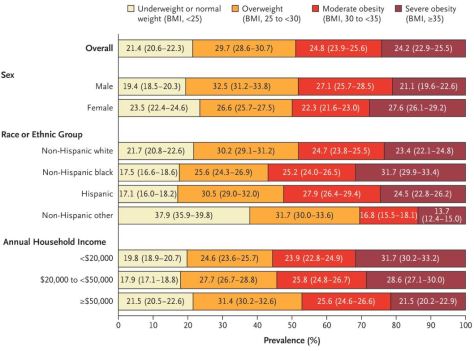
The findings from our approach suggest with high predictive accuracy that by 2030 nearly 1 in 2 adults will have obesity (48.9%; 95% confidence interval [CI], 47.7 to 50.1), and the prevalence will be higher than 50% in 29 states and not below 35% in any state.

New England Journal of Medicine logo

Nearly 1 in 4 adults is projected to have severe obesity by 2030 (24.2%; 95% CI, 22.9 to 25.5), and the prevalence will be higher than 25% in 25 states. We predict that, nationally, severe obesity is likely to become the most common BMI category among women (27.6%; 95% CI, 26.1 to 29.2), non-Hispanic black adults (31.7%; 95% CI, 29.9 to 33.4), and low-income adults (31.7%; 95% CI, 30.2 to 33.2).

Projected National Prevalence of BMI Categories in 2030, According to Demographic Subgroup. New England Journal of Medicine December 2019

Although severe obesity was once a rare condition, our findings suggest that it will soon be the most common BMI category in the patient populations of many health care providers. Given that health professionals are often poorly prepared to treat obesity,27 this impending burden of severe obesity and associated medical complications has implications for medical practice and education.

In addition to the profound health effects, such as increased rates of chronic disease and negative consequences on life expectancy,25,28 the effect of weight stigma29 may have far-reaching implications for socioeconomic disparities as severe obesity becomes the most common BMI category among low-income adults in nearly every state.

To read more: https://www.nejm.org/doi/full/10.1056/NEJMsa1909301?query=featured_home

Studies: “Why Your Brain Needs Exercise” (Scientific American)

From a Scientic American online article:

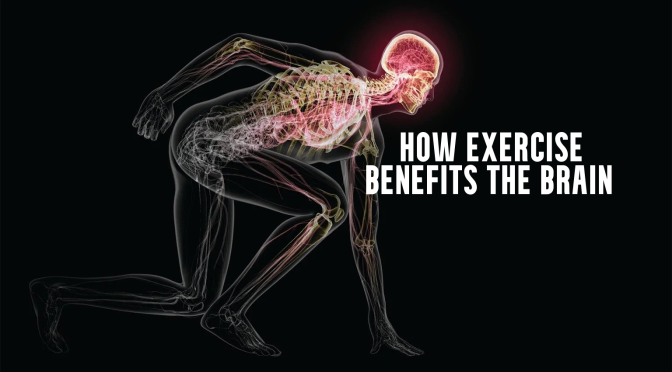
Scientific American logoIn our own study of more than 7,000 middle-aged to older adults in the U.K., published in 2019 in Brain Imaging and Behavior, we demonstrated that people who spent more time engaged in moderate to vigorous physical activity had larger hippocampal volumes. Although it is not yet possible to say whether these effects in humans are related to neurogenesis or other forms of brain plasticity, such as increasing connections among existing neurons, together the results clearly indicate that exercise can benefit the brain’s hippocampus and its cognitive functions.
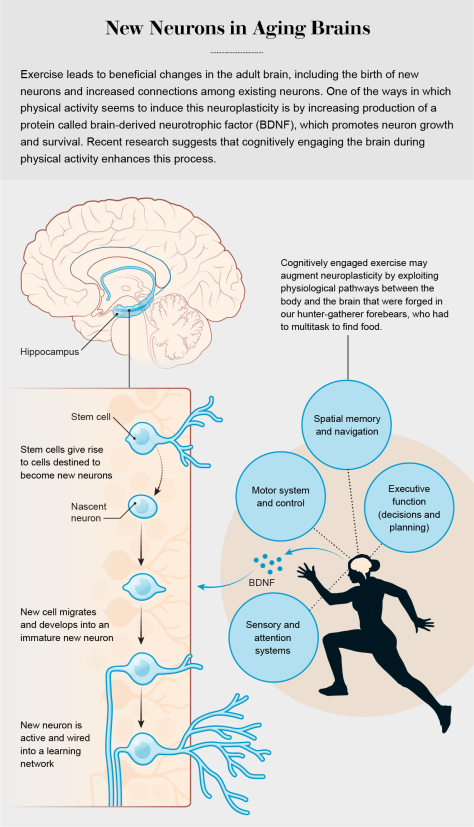
New Neurons in Aging Brains Why Your Brain Needs Exercise Scientific American December 18 2019

In fact, a growing body of research suggests that exercise that is cognitively stimulating may indeed benefit the brain more than exercise that does not make such cognitive demands. For example, Gerd Kempermann and his colleagues at the Center for Regenerative Therapies Dresden in Germany explored this possibility by comparing the growth and survival of new neurons in the mouse hippocampus after exercise alone or after exercise combined with access to a cognitively enriched environment. They found an additive effect: exercise alone was good for the hippocampus, but combining physical activity with cognitive demands in a stimulating environment was even better, leading to even more new neurons. Using the brain during and after exercise seemed to trigger enhanced neuron survival.

To read more: https://www.scientificamerican.com/article/why-your-brain-needs-exercise/

Exercise Studies: Aerobic Exercise Benefits Not Seen In Current “Low Levels” Of Prescribed Activity (BJSM)

From a British Journal of Sports Medicine online study release:

British Journal of Sport & Exercise MedicineIn studies of aerobic exercise in patients with knee OA, very few interventions met guideline-recommended dose; there were small to moderate changes in markers of cardiovascular health and no decrease in markers of systemic inflammation. These findings question whether aerobic exercise is being used to its full potential in patients with knee OA.

Objectives We systemically reviewed published studies that evaluated aerobic exercise interventions in patients with knee osteoarthritis (OA) to: (1) report the frequency, intensity, type and time (FITT) of exercise prescriptions and (2) quantify the changes in markers of cardiovascular health and systemic inflammation.

To read more: https://bjsm.bmj.com/content/early/2019/12/17/bjsports-2018-100231

New Health Studies: 43% Of Americans Prescribed Antibiotics Improperly

From a British Medical Journal (BMJ) online article:

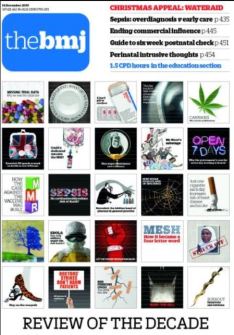
BMJ journal cover Dec 2019…primary care providers (general practice, paediatrics, and internal medicine) performed the best, giving a considerably lower percentage of antibiotic prescriptions without a documented indication (12%) than other specialists such as gynaecologists and urologists, who commonly prescribed antibiotics (24%), as well as those in all other specialties (29%).
As many as two in five antibiotic prescriptions (43%) provided in outpatient settings in the US could be inappropriate, a study published by The BMJ has found.1

Researchers from Oregon, USA, looked at prescriptions in ambulatory settings such as primary care and found that a quarter (25%) were deemed to be inappropriate, while a further 18% did not have an indication.

To read more: https://www.bmj.com/content/367/bmj.l6961

Diet Studies: Age-Related Macular Degeneration Linked To Processed, Refined And Fried Foods

From a Genetic Engineering & Biotechnology News release:

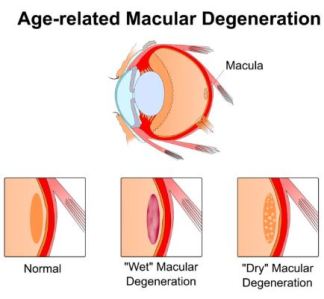
Age-Related Macular Degeneration“Our work provides additional evidence that that diet matters,” Millen added. “From a public health standpoint, we can tell people that if you have early AMD, it is likely in your best interest to limit your intake of processed meat, fried food, refined grains, and high-fat dairy to preserve your vision over time.”

Participants who ate a diet high in red and processed meat, fried food, refined grains, and high-fat dairy were three times more likely to develop an eye condition that damages the retina and affects a person’s central vision, according to the results of a study, “Diet patterns and the incidence of age-related macular degeneration in the Atherosclerosis Risk in Communities (ARIC) study,” from the University at Buffalo (UB) that appears in the British Journal of Ophthalmology.

The condition is called late-stage age-related macular degeneration (AMD), which is irreversible and affects a person’s central vision, taking away their ability to drive, among other common daily activities.

To read more: https://www.genengnews.com/news/age-related-macular-degeneration-linked-to-diet-high-in-refined-processed-and-fried-foods/?utm_medium=newsletter&utm_source=GEN+Daily+News+Highlights&utm_content=01&utm_campaign=GEN+Daily+News+Highlights_20191212&oly_enc_id=5678C5137845J4Z