Category Archives: Sleep Health

Health: 39% Of Americans Suffer Sleep Disorders

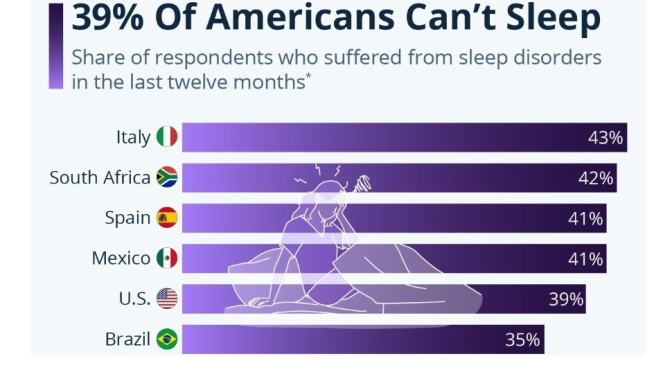
Infographic: 39% Of Americans Can’t Sleep | Statista

This Friday, March 17, is World Sleep Day, an annual event that aims to raise awareness of the importance of getting a good night’s sleep. This year’s campaign tagline is “Sleep is essential for health.” According to a study by the American College of Cardiology, up to 8 percent of deaths from any cause could be attributed to “poor sleep patterns”, while those with healthier sleep habits are less likely to die prematurely.

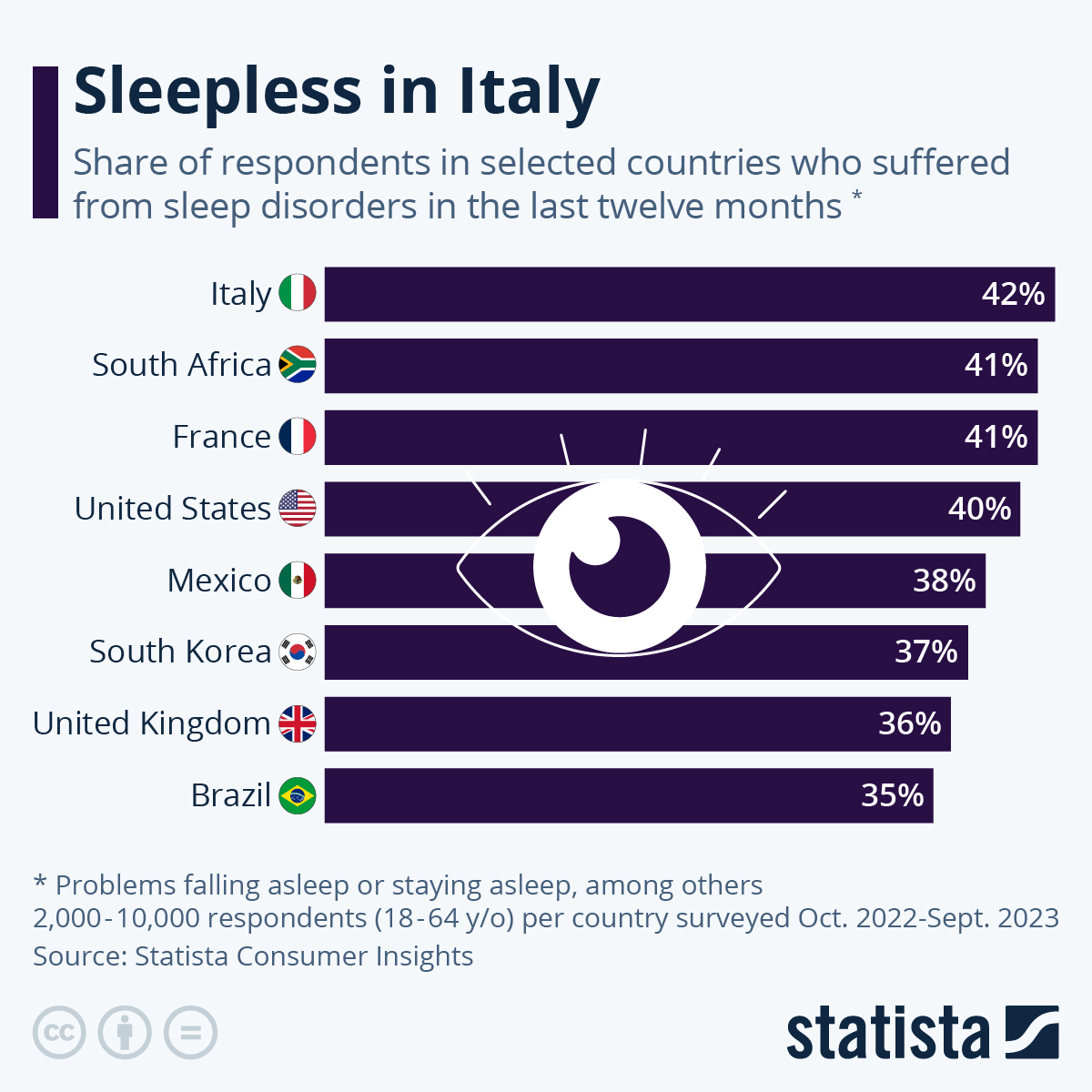
Data from Statista Consumer Insights shows that in the United States, 39 percent of respondents said they had suffered from a sleep disorder (problems falling asleep or staying asleep, insomnia, etc.) in the 12 months prior to the survey. Italians were among the worst sleepers in the survey at 48 percent reporting a sleep disorder, while India registered a higher share of good sleepers, with only 26 percent suffering from poor sleep.
Health: American Heart Association Updates Its ‘Optimal Checklist’ (2022)

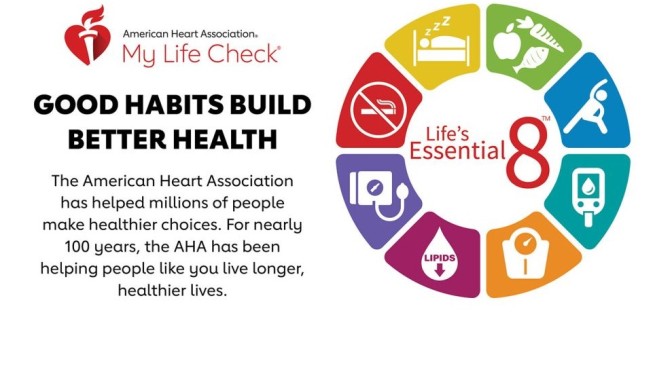
October 2022 – The American Heart Association (AHA) recently revised its checklist for achieving optimal heart health, introducing its new Life’s Essential 8. The list replaces the AHA’s decade-old Life’s Simple 7.

Sleep health is the new addition to the cardiovascular health scoring tool, which now advises that adults get seven to nine hours per night. The organization updated four of the categories:

  • Diet: More emphasis was given to following heart-healthy diets like the DASH and Mediterranean.
  • Nicotine exposure: Secondhand smoke and vaping were added as risk factors.
  • Blood lipids: People now can get a non-fasting blood sample that measures total, HDL, and non-HDL cholesterol. Non-HDL cholesterol can provide similar risk information as LDL cholesterol.
  • Blood sugar: Measurements now include hemoglobin A1c, a key component to assessing type 2 diabetes risk.
  • Three categories were unchanged:
  • Physical activity: The optimal weekly level is at least 150 minutes of moderate activity or 75 minutes of vigorous activity.
  • Body mass index (BMI): A BMI of 18.5 to 24.9 is ideal for heart health.
  • Blood pressure: Levels less than 120/80 millimeters of mercury (mm Hg) remain optimal. Stage 1 hypertension is 130 to 139 mm Hg for systolic pressure (the first number) or 80 to 89 mm Hg for diastolic pressure (the second number).
  • You can calculate your heart health score at mlc.heart.org. The guidelines were published online June 29, 2022, by Circulation.

Read more

Old Age: ‘Hyperexcitable Neurons’ Interrupt Sleep

For many older adults, a good night’s rest is elusive. The implications of chronically poor sleep can be far-reaching and include a decline in cognitive functioning and detrimental effects on health and general well-being. Fortunately, relief may be in sight.

A new study led by investigators at the Stanford University School of Medicine shows that neurons in the lateral hypothalamus, a brain region, play a pivotal role in sleep loss in old mice. More specifically, the arousal-promoting hypocretin neurons become hyperexcitable, driving sleep interruptions.

Read the full story: https://stan.md/3JQ7z77

Luis de Lecea, PhD, is a professor of psychiatry and behavioral sciences at Stanford Medicine. He is the study’s senior author and hopes the finding could pave the way to new drug treatments for age-related sleep problems in humans.

Shi-Bin Li, PhD, is an instructor in the Psychiatry and Behavioral Sciences department at Stanford Medicine. He is also a basic life research scientist in the de Lecea lab, and is the lead author of the study.

Science: How The Lack Of Sleep Makes You Hungrier

Did you know that not getting enough zzz’s can actually make you hungrier? According to sleep scientist Matt Walker, the relationship between what you eat and your sleep is a two-way street. Here’s why understanding it can help you improve your overall health.

Sleep — we spend one-third of our lives doing it, but what exactly do we get out of it? And how can we do it better? In this TED series, sleep scientist Matt Walker uncovers the facts and secrets behind our nightly slumber. (Made possible with the support of Oura) Check out more episodes on TED.com: https://go.ted.com/sleepingwithscience

Health: Consequences Of Too Little Sleep (Harvard)

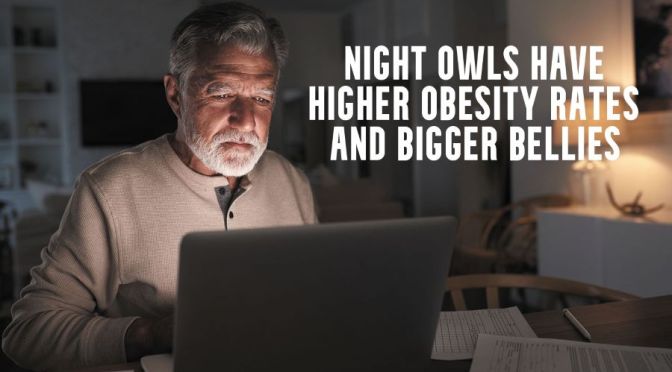
Sleep Studies: Night Owls Have Higher Obesity Rates & Bigger Bellies (Harvard)

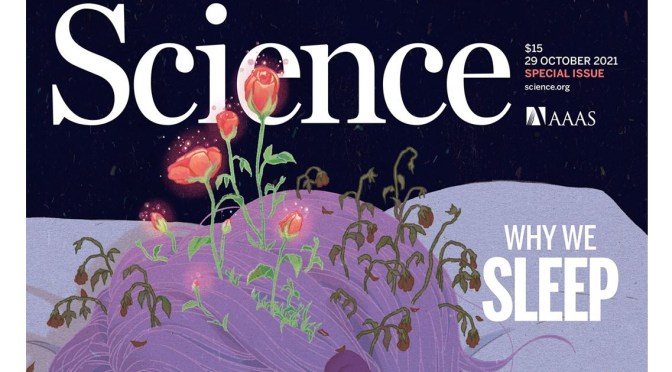
Science Magazine: “Why We Sleep” – October 29

Medicine: Adequate Sleep & Cardiovascular Health

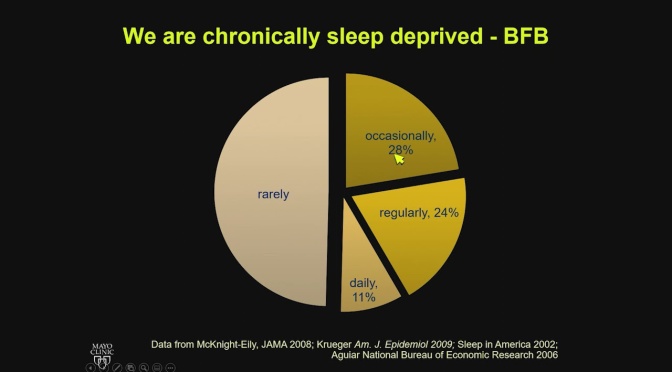
Mayo Clinic Division of Preventive Cardiology will be preparing a series of recordings focusing on Cardiovascular Disease states. This is the Sleep Series and this particular one focuses on what is adequate sleep and does it benefit Cardiovascular Health.

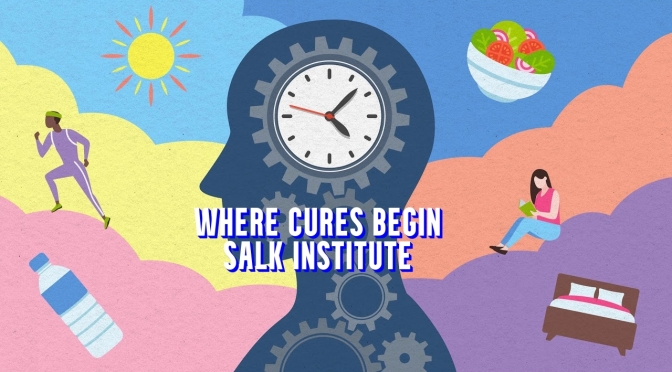
Healthy Lives: Living In Sych With Biological Clocks (Salk Institute)

Satchin Panda is a professor in Salk’s Regulatory Biology Laboratory. He explores the genes, molecules and cells that keep the whole body on the same biological clock, also known as a circadian rhythm. On this episode of Where Cures Begin, Panda talks about what a biological clock is, how living in sync with your clock can improve your health, and how growing up in India informed his research.