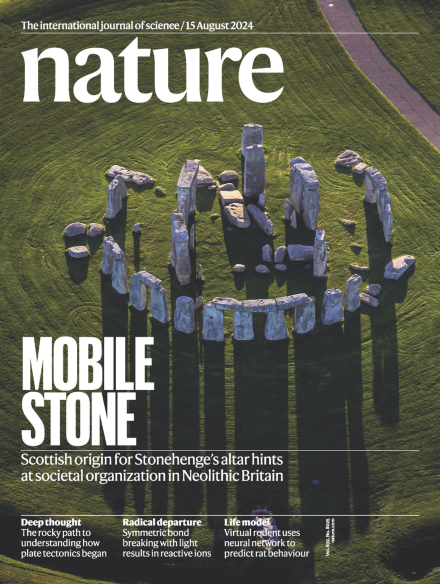
‘Science Magazine – August 15, 2024: The new issue features‘Transmission Event’ – Digital contact tracing for Covid-19; What kind of asteroid killed the dinosaurs; Access to safe drinking water is far from universal; Lessons from nonhuman primates on speech evolution…
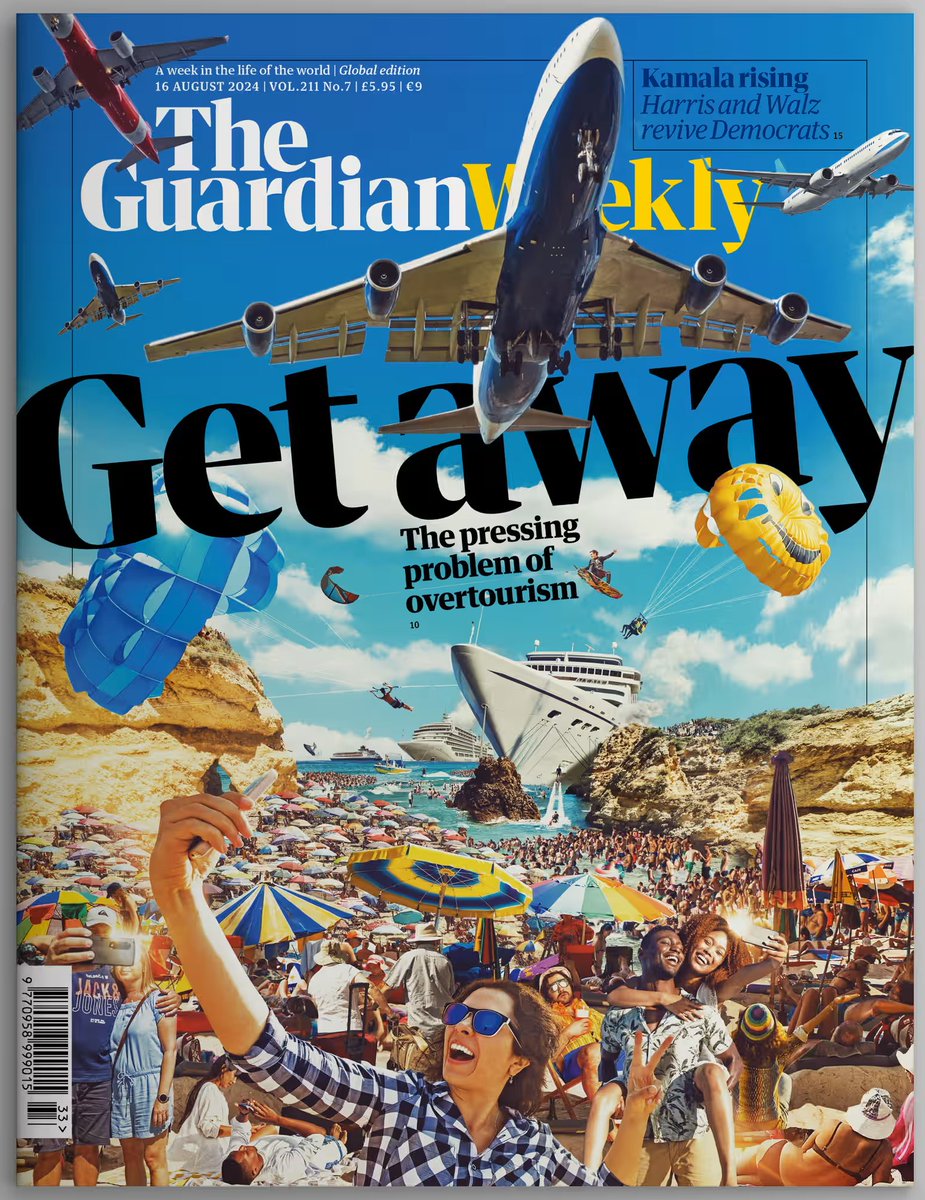
1 Spotlight | On the road: Kamala Harris and Tim Walz re-energise Democrats The US vice-president and her running mate have hit the ground running in their campaign for the White House. Can they keep the momentum going, asks Lauren Gambino.
2 Technology | The fragile world of underwater internet cables Deep-sea wires are the veins of the modern world. What if something were to happen to them? Jonathan Yerushalmy investigates.
3 Feature | Beautiful, bruising and complex female friendships Ahead of her new book examining women’s friendships, the Observer’s Rachel Cooke reflects on two pivotal ones of her own, as well as some notable literary attachments.
4 Opinion | The Olympics showed France’s far right what true patriotism is all about Despite a febrile political backdrop, the Paris Games reminded a nation of what it means to be proud of one’s country, says French sports writer Philippe Auclair.
5 Culture | The second act of Sam Neill He is one of the world’s most famous actors, but the New Zealander – whose cancer is thankfully in remission – can still go to Starbucks without anyone recognising him, finds Zoe Williams.
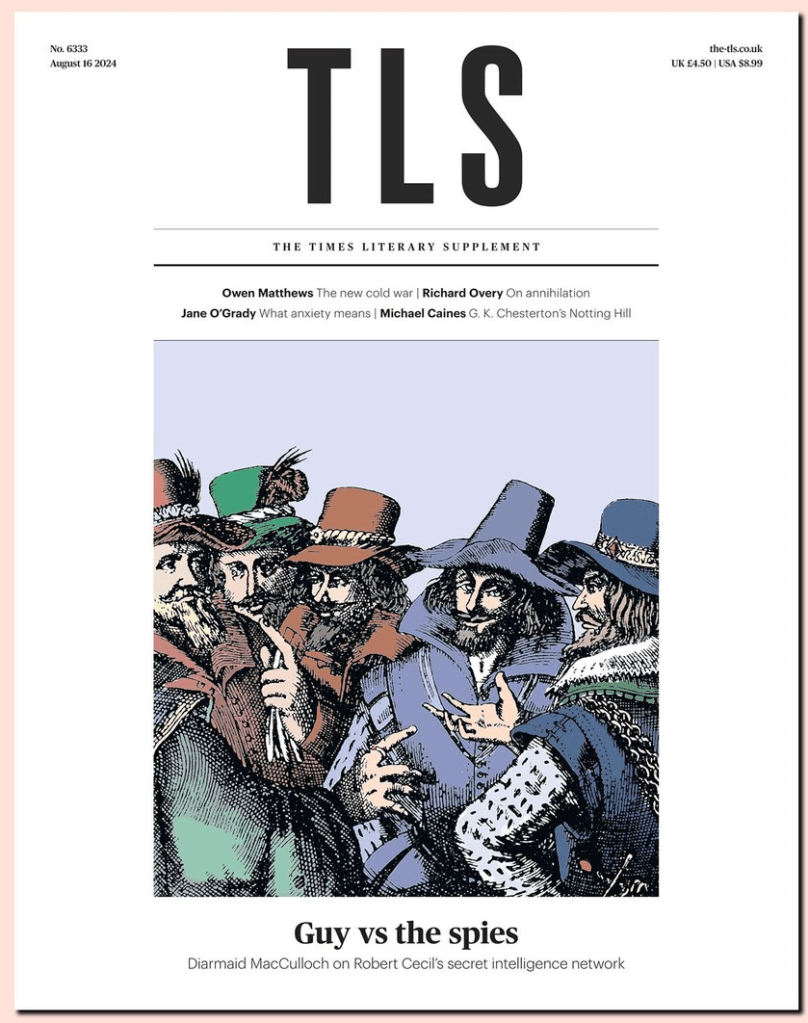
Times Literary Supplement (August 14, 2024): The latest issue features ‘Guy vs the Spies’ – Robert Cecil’s secret intelligence network; The new Cold War; On annihilation; What anxiety means; G.K. Chesterton’s Notting Hill…
This week’s @TheTLS, featuring Diarmaid MacCulloch on Tudor and Stuart espionage; @owenmatth on cold wars past and present; @TomCook24 on Shakespearean sexualities; Fiona Green on Emily Dickinson’s letters; Anna Katharina Schaffner on the Rhine; @suzifeay on Gayl Jones – and more pic.twitter.com/uHdRgW0dOs
Francesca Peacock roots through the archives for a deeper understanding of scandal and speech in an essay from the LARB Quarterly issue no. 42, “Gossip.”
Country Life Magazine (August 14, 2024): The latest issue features‘Save the Albion Cow’ – It’s rarer than a Giant Panda; Old houses, new technology; Hot and Steamy – Why the pressure cooker is back and Whizz kids – What made Elizabeth I, Brunel and Nelson special…
Breed for victory
Our treasured native livestock breeds are in danger of being lost, yet they have a crucial role to play, believes Kate Green
Levelling up
Anyone waiting with trepidations for the A-level results should take heart from the likes of Nelson and Brunel, says Alice Loxton
If walls could talk
Old houses with poor wifi need not be denied new gadgets, from wireless lighting to kettles that can be switched on remotely. Julie Harding taps her screen
What makes you click?
From a hollowed-out cow to autofocus and gyro-stabilised cameras, clever ideas continue to transform wildlife photography. Amie Elizabeth White takes a look down the lense.
Full steam ahead
Neil Buttery fires up the pressure cooker, back in our kitchens and tenderising those bones
Paint your wagon
Sturdy, hardworking and now prized for their rarity, farm wagons were key to rural life in times past. Jack Watkins rolls out the surviving examples.
Country Life’s tech commandments
Follow thou Toby Keel’s wise advice for digital life and thou shalt not be shunned in society
Planting for the future
The new generation is building on a fine legacy of gardening and travel at Bryngwyn Hall in Powys, where Caroline Donald wanders among trees gathered from far-flung countries
Foraging
John Wright sets off into the woods in search of meaty rot fungi, the magnificent chicken of the woods and its cousin, joy-inducing hen of the woods
Waiter! My soup is cold
It might be an acquired taste, but gazpacho — recipe of your choice — is worth tasting again. Tom Parker Bowles dips his spoon into a Spanish favourite
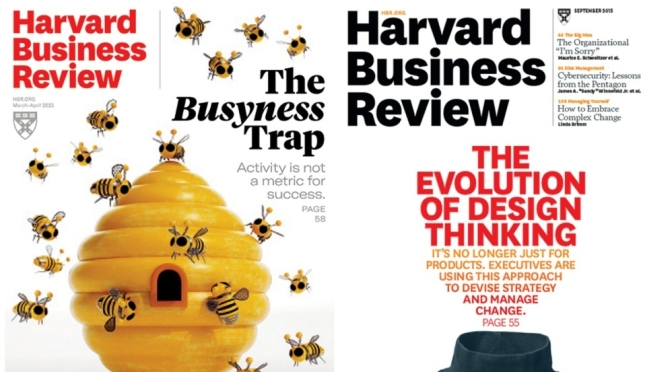
In this article, NFL great Tom Brady and Nitin Nohria, of Harvard Business School, present a set of principles that people in any realm can apply to help teams successfully work together toward common goals.close
When our society talks about success, we tend to focus on individual success. We obsess about who is the “greatest of all time,” who is most responsible for a win, or what players or coaches a team might add next season to become even better.
Let’s say you’re leading a meeting about the hourly pay of your company’s warehouse employees. For several years it has automatically been increased by small amounts to keep up with inflation. Citing a study of a large company that found that higher pay improved productivity so much that it boosted profits, someone on your team advocates for a different approach: a substantial raise of $2 an hour for all workers in the warehouse. What would you do?
History has shown that technological innovation can profoundly change how business is conducted. The steam engine in the 1700s, the electric motor in the 1800s, the personal computer in the 1970s—each transformed many sectors of the economy, unlocking enormous value in the process. But relatively few of these and other technologies went on to become direct sources of sustained competitive advantage for the companies that deployed them, precisely because their effects were so profound and so widespread that virtually every enterprise was compelled to adopt them. Moreover, in many cases they eliminated the advantages that incumbents had enjoyed, allowing new competitors to enter previously stable markets.
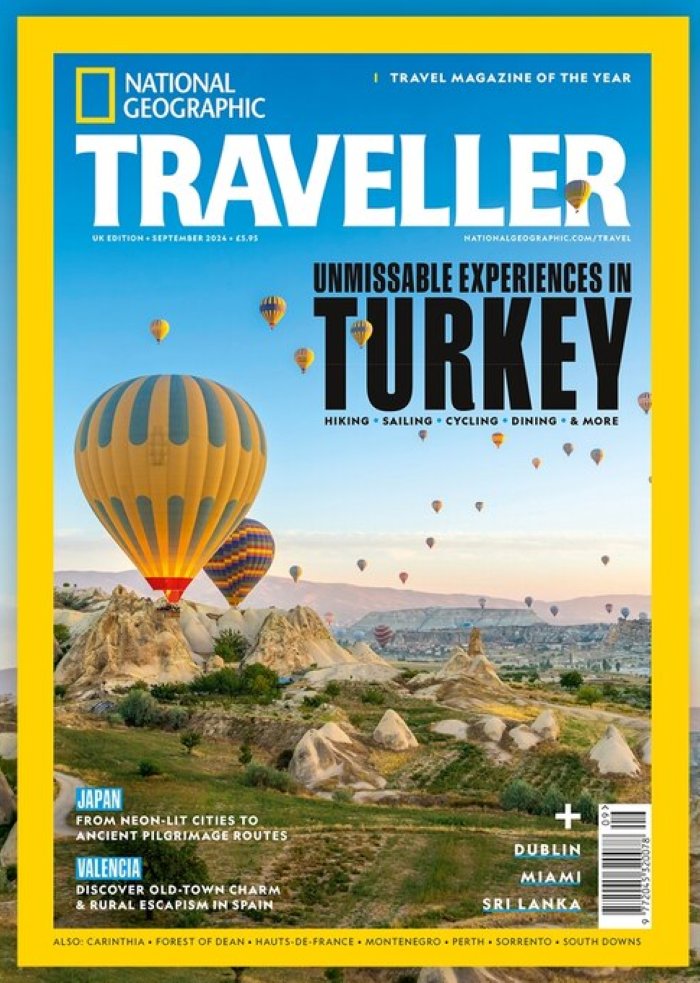
National Geographic Traveller Magazine (June 11, 2024): The September 2024 issue features a look beyond Istanbul and the Turquoise Coast in Turkey to descend into the subterranean cities of Cappadocia, a feast in the blossoming culinary region of Urla, and a marvel at Edirne’s age-old oil wrestling festival. Plus, trekking in Sri Lanka, a weekend in Montenegro and a guide to Miami.
Also inside this issue:
Sri Lanka: The Indigenous Vedda people are leading immersive treks in the jungled highlands Valencia:Journey through the parks, wetlands and groves of 2024’s European Green Capital Austria: Drink up the views from Carinthia’s lakeside restaurants and lofty mountain trails Japan: Itineraries to experience the archipelago’s urban life, scattered islands and more Miami: Explore the influences that have shaped Florida’s sun-soaked capital Dublin: A guide to the Irish capital, from big-ticket attractions to intimate audiophile bars Bay of Kotor: From medieval towns to national parks, this is Montenegro at its prettiest Perth: The capital of Western Australia is fresh out of an unprecedented hotel boom
Plus, a Silk Road adventure in London’s British Museum; Spain’s Parador hotels unveil new tours; the global influences behind Guyanese cuisine; fine dining in Sorrento; the inside scoop on St John’s, Canada; canal boating trips in the UK; a bucolic escape in the Forest of Dean; the best autumn literary festivals; and portable kit for your next adventure.
We talk with author Oliver Smith on finding peace at Britian’s holy sites, and former astronaut José Hernández on reaching for the stars. In our Ask the Experts section, the experts give advice on digital nomad visas, planning a music-themed road trip in the US and more. The Info sets sail for Venice’s historical regatta, while Hot Topic explores the rise of tiger mosquitos across Europe and the Report asks whether costlier safaris really mean more money for conservation initiatives. Finally, photographer and writer Simon Urwin discusses capturing the otherworldly landscapes of Algeria in How I Got the Shot.
News, Views and Reviews For The Intellectually Curious












 LA Review of Books (August 13, 2024) – The latest issue,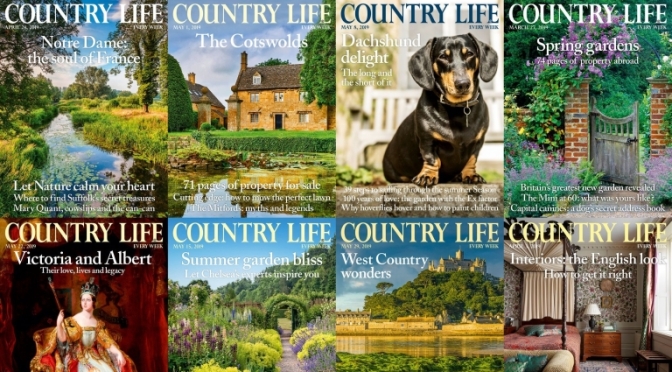






 National Geographic Traveller Magazine (June 11, 2024): The September 2024 issue
  Boomers Daily