
Category Archives: Museums

Reviews: ‘The Week In Art’

Ben Luke talks to Hannah McGivern, a correspondent for The Art Newspaper who has just been to Qatar, about the vast number of public art projects that will accompany the FIFA Men’s World Cup that begins there on Sunday 20 November.

She also discusses the museums that Qatar plans to open by 2030. How does this explosion of cultural initiatives sit with Qatar’s record on human rights and treatment of low-paid migrant workers in the building of its cultural venues and World Cup stadia? It has been a heady fortnight of auctions in New York.

Ben speaks to Georgina Adam, an editor-at-large at The Art Newspaper, about the highs and lows, and whether we can expect even more sales of blockbuster collections in the coming years.

And this episode’s Work of the Week is an untitled painting by Luis Meque, an artist born in Mozambique who came to fame in the 1980s and early-1990s in Zimbabwe. Tandazani Dhlakama, the curator of the exhibition When We See Us: A Century of Black Figuration in Painting at Zeitz Museum of Contemporary Art Africa in Cape Town, tells us about Meque’s painting and his brief and brilliant life.When We See Us: A Century of Black Figuration in Painting, Zeitz Museum of Contemporary Art Africa, Cape Town, South Africa, 20 November-3 September 2023 Hosted on Acast. See acast.com/privacy for more information.

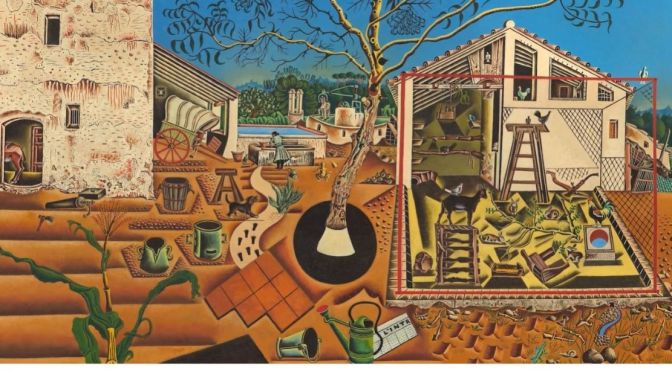
Art: Spanish Painter Joan Miró – ‘The Farm’ (1922)

National Gallery of Art – Joan Miró finished “The Farm,” his first masterpiece, 100 years ago. To celebrate, curator Harry Cooper and Joan Punyet Miró, Miró’s grandson, get together to tell the tale of this seminal painting from their perches at the National Gallery of Art in Washington, D.C. and Miró’s farm in Mont-roig del Camp, Spain. From Pablo Picasso in Paris to Earnest Hemingway in Cuba, you won’t want to miss the epic journey of Miró and his beloved “The Farm.”

Joan Miró i Ferrà was a Spanish painter, sculptor and ceramicist born in Barcelona. A museum dedicated to his work, the Fundació Joan Miró, was established in his native city of Barcelona in 1975, and another, the Fundació Pilar i Joan Miró, was established in his adoptive city of Palma in 1981. 

Travel Tours: Museum Of The Bavarian Kings (2022)

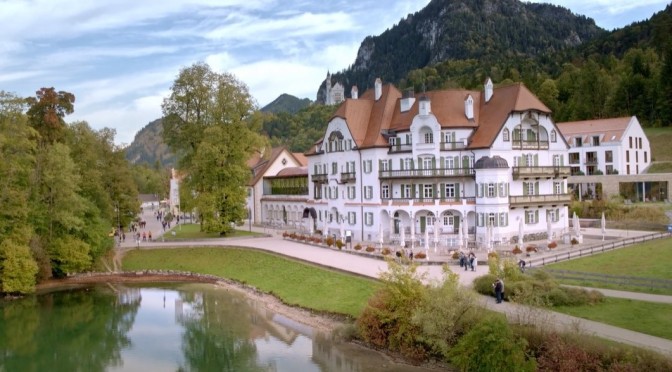
Many visitors to Schloss Neuschwanstein combine their visit with the Museum of the Bavarian Kings, also located in Hohenschwangau in the former Grandhotel Alpenrose. The museum that opened in 2011 offers more than 1000 m2 of exhibition on the history of the dynasty of the Bavarian Kings.

Old objects, interesting stories and interactive media take you into the history of the Wittelsbach dynasty. In particular King Maximilian II, who made the Hohenschwangau Castle into a summer residence, and King Ludwig II, who built Neuschwanstein , play a central role in the museum. From the first floor you have a magnificent panorama over the Alpsee lake.

Florida Design: Building The Salvador Dali Museum

The challenges of redesigning the Dali museum in Florida were two-fold: deliver an iconic design befitting of its subject, and defy conventional building methods to make it strong enough to withstand a hurricane. The result: a landmark structure, as enduring as the work of the great artist himself.

The original Dalí Museum opened in St. Petersburg in 1982, after community leaders rallied to bring the Morses’ superlative collection of Dalí works to the area. The Dalí’s stunning new building opened on January 11, 2011. Designed by architect Yann Weymouth of HOK, it combines the rational with the fantastical: a simple rectangle with 18-inch thick hurricane-proof walls out of which erupts a large free-form geodesic glass bubble known as the “enigma”.

The Enigma, which is made up of 1,062 triangular pieces of glass, stands 75 feet at its tallest point, a twenty-first century homage to the dome that adorns Dalí’s museum in Spain. Inside, the Museum houses another unique architectural feature – a helical staircase – recalling Dalí’s obsession with spirals and the double helical shape of the DNA molecule.

Top 2022 Art Exhibitions: “Van Gogh In America” – Detroit Institute Of Arts

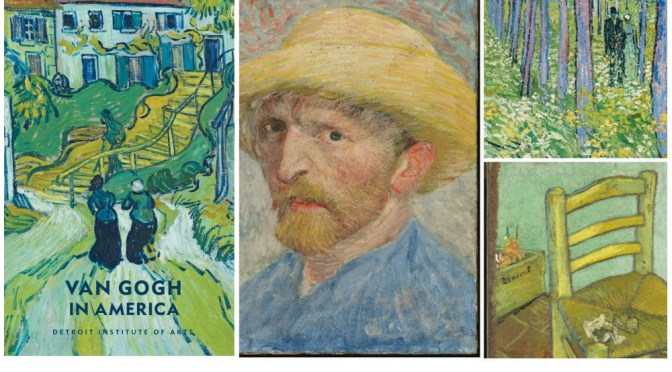
CBS Sunday Morning – One hundred years ago the Detroit Institute of Arts became the first museum in the U.S. to buy a work by Vincent Van Gogh, the Dutch Post-Impressionist who died in 1890. Now, the DIA honors the centenary of that landmark acquisition by presenting “Van Gogh in America,” featuring 74 works from around the world, which explores America’s introduction to the artist. Correspondent Rita Braver reports.

Detroit Institute of Arts – “Van Gogh in America celebrates the Detroit Institute of Art’s status as the first public museum in the United States to purchase a painting by Vincent van Gogh, his Self-Portrait (1887). On the 100th anniversary of its acquisition, experience 74 authentic Van Gogh works from around the world and discover the fascinating story of America’s introduction to this iconic artist, in an exhibition only at the DIA.

Arts Preview: The Getty Magazine – Fall 2022

Image

The Getty Magazine – Fall 2022: Featuring Conserving Black Modernism, our recently launched effort to conserve Modern Movement architecture by Black architects and designers, plus more behind-the-scenes info on all things Getty.

The Art of Exhibition Design

How to put on a really 16 great show

Egyptomania!

An international passion for Egypt fueled the discovery of King Tut’s 22 tomb

Paris Exhibitions: ‘Claude Monet – Joan Mitchell’

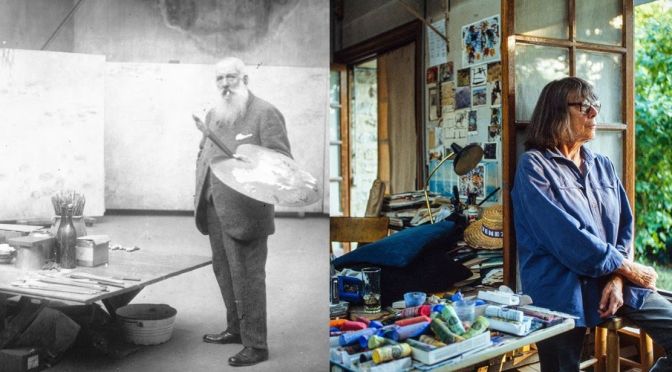
The exhibitions “Monet – Mitchell” create an unprecendented “dialogue” between the works of two exceptional artists, Claude Monet (1840-1926) and Joan Mitchell (1925-1992).

“The dialogue Claude Monet – Joan Mitchell” will be introduce by the “Joan Mitchell Retrospective”, enabling the public in France and Europe to discover her work.

The “Monet – Mitchell” exhibitions present each artist’s unique response to a shared landscape, which they illustrate in a particularly immersive and sensual manner. In his last paintings, the Water Lilies, Monet aimed to recreate in his studio the motifs he observed at length on the surface of his water lily pond in Giverny. Joan Mitchell, on the other hand, would explore a memory or a sense of the emotions she felt while in a particular place that was dear to her, perceptions that remained vivid beyond space and time. She would create these abstract compositions at La Tour, her studio in Vétheuil, a small French village.

Read and see more

MONET – MITCHELL

Exhibition – 05.10.2022 to 27.02.2023

Exhibits: ‘Edvard Munch – A Poem of Life, Love and Death’ (Musée d’Orsay)

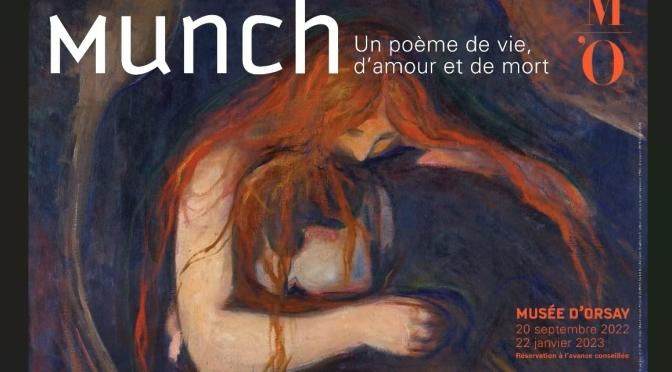
In collaboration with the Munch Museum in Oslo, the Musée d’Orsay is devoting an exhibition to the famous Norwegian painter Edvard Munch (1863-1944), whose work, in all its breadth – sixty years of creation – and complexity, remains partly unknown.

Munch’s work occupies a pivotal place in artistic modernity. It has its roots in the 19th century and would find its place firmly in the next one. Moreover, his entire work is permeated by a singular vision of the world, giving it a powerful symbolist dimension that is not limited to the few masterpieces he created in the 1890s. Moving beyond fin-de-siècle symbolism, Munch transcended this movement beyond its peak to make it the backbone of his work, giving it its great coherence.

Filmed on October 2, 2022.

Arts & History: ‘Winslow Homer – Force Of Nature’

Why is Winslow Homer a household name in the USA? And what makes his art so important? Follow Homer’s journey, at a time of great upheaval in American history, from magazine illustrator to sought-after artist in oil and watercolour.

Winslow Homer: Force of Nature Ground Floor Galleries Until 8 January 2023

2022 Museum Tours: Musée d’Orsay In Paris, France

Musée d’Orsay, (French: “Orsay Museum”) national museum of fine and applied arts in Paris that features work mainly from France between 1848 and 1914. Its collection includes painting, sculpture, photography, and decorative arts and boasts such iconic works as Gustave Courbet’s The Artist’s Studio (1854–55), Édouard Manet’s Le Déjeuner sur l’herbe (1863; Luncheon on the Grass), and Pierre-Auguste Renoir’s Dance at Le Moulin de la Galette (1876; Bal du moulin de la Galette).

The Musée d’Orsay is housed in the former Gare d’Orsay, a railway station and hotel that was designed by Victor Laloux and located on the Left Bank of the Seine River opposite the Tuileries Gardens. At the time of its completion in 1900, the building featured an ornate Beaux Arts façade, while its interior boasted metal construction, passenger elevators, and electric rails.

Because of changes in railway technology, however, the station soon became outdated and was largely vacant by the 1970s. Talks to transform the builing into an art museum began early in the decade and were finalized in 1977 through the initiative of Pres. Valéry Giscard d’Estaing. With government funds, the building was restored and remodeled in the early 1980s by ACT architecture group.

The interior was designed by Gaetana Aulenti, who created a complex layout of galleries that occupied three main levels surrounding the atrium beneath the building’s iconic iron-and-glass barrel vault. On the ground floor, formerly the building’s train platforms, extensive stone structures broke up the cavernous space and created a central nave for the sculpture collection and gallery spaces for painting and decorative arts.