
Category Archives: Literature
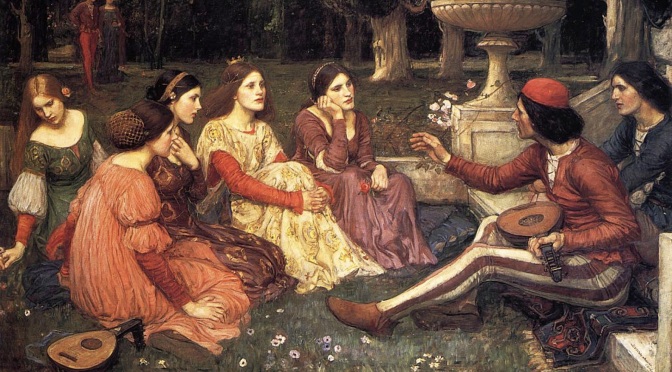
Literary Podcasts: “WHY THE DECAMERON IS GREAT QUARANTINE READING”
The latest episode of the Octavian Report – Rostrum coronavirus crisis podcast features Wayne Rebhorn. The latest episode of our coronavirus crisis podcast features Wayne Rebhorn of the University of Texas at Austin. Wayne is the author of an acclaimed translation of Giovanni Boccaccio’s Decameron, perhaps the paradigmatic work of pandemic literature.
The Decameron is set among a group of witty, earthy social isolators who have fled the plague ravaging Florence. We spoke with Wayne about Boccaccio and his most famous work, the conditions that helped birth it, and what we can learn from them in our current situation.

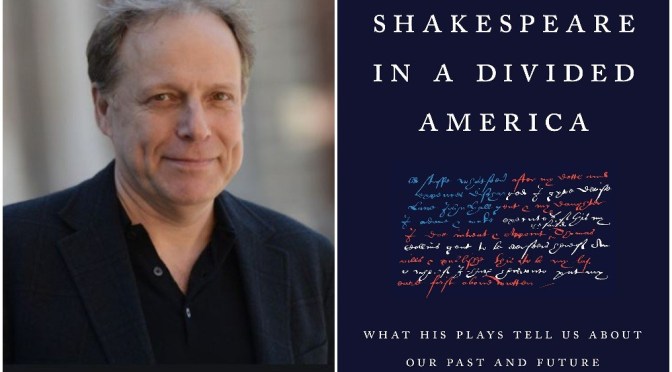
Interviews: “Shakespeare In A Divided America” Author James Shapiro
 In a year of plagues, power struggles and star-crossed lovers divided by lockdown, Anne McElvoy asks James Shapiro, author of “Shakespeare in a Divided America”, what the bard would make of it all. Shakespeare is claimed by Americans of all political stripes.
But how can a lad from 16th-century Stratford-upon-Avon illuminate the past and future of the republic now? Plus, what the president might teach the professor about Shakespeare’s work. And, Shapiro prescribes a verse for the trials and tribulations of 2020.
Poetry And Animation: “Singularity” Featuring Poem By Marie Howe (2020)
Directed by: Elizabeth and Matthew Boulton
Poem by Marie Howe.
Text and context: brainpickings.org/2020/04/23/singularity-marie-howe-animated
Created for The Universe in Verse: brainpickings.org/the-universe-in-verse
Produced by SALT Project (saltproject.org) with Maria Popova (brainpickings.org). Original music by Zoë Keating (zoekeating.com).
This has been a multi-woman labor of love, with everyone involved donating their time and talent.
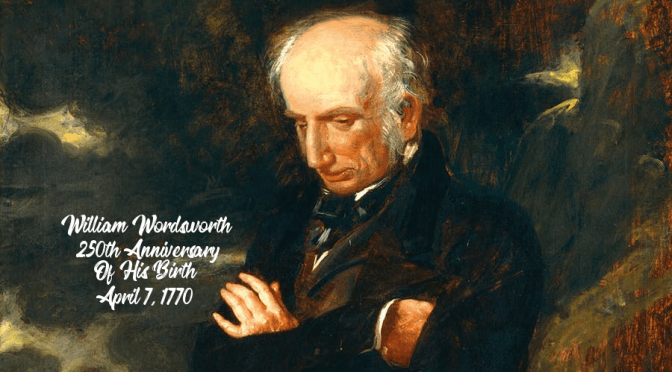
Today: 250th Anniversary Of William Wordsworth’s Birth – “That Inward Eye”
From an Apollo Magazine article (April 7. 2020):
‘They flash upon that inward eye
Which is the bliss of solitude’
.
 ‘We are fond of tracing the resemblance between Poetry and Painting,’ wrote William Wordsworth (1770–1850) in the famous ‘Preface’ to Lyrical Ballads (1800), ‘and, accordingly, we call them Sisters.’ To speak of the ‘sister arts’ was indeed a critical platitude of the age, though as it happens Wordsworth’s attitude towards painting wasn’t normally very sisterly.
 When, in 1840 or so, a well-meaning houseguest called Margaret Gillies made a drawing of the 70-year old Mrs Wordsworth, everyone agreed that it was an excellent likeness; but her kind act was rewarded with a testy and somewhat ungracious sonnet from the sitter’s husband. He preferred to visualise Mary in her salad days: ‘’tis a fruitless task to paint for me, / Who, yielding not to changes Time has made, / By the habitual light of memory see / Eyes unbedimmed, see bloom that cannot fade, / And smiles that from their birth-place ne’er shall flee / Into the land where ghosts and phantoms be’.
.
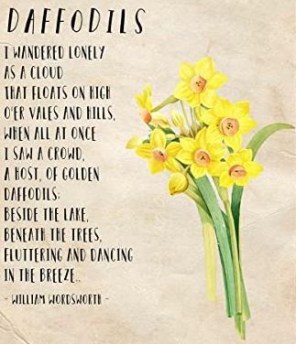
All she possesses, as a painter, is the outward eye: ‘that inward eye’ is the poet’s hallmark, as of course Miss Gillies would have known from Wordsworth’s most famous poem, the one about the daffodils – ‘They flash upon that inward eye / Which is the bliss of solitude’. By chance we know (because Wordsworth left it on record, saying they were the best thing in the poem) that those two lines were actually contributed by Mary, so the uxoriousness of the thing is double: not only does she evade the merely visual but she also possesses the innate genius to be able to name the imaginative power that so transcends it.
.
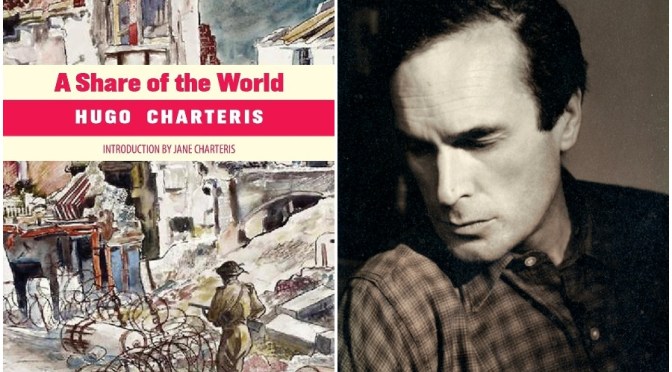
Profiles: The “Stylish” Legacy Of British Author Hugo Charteris (1922-1970)
From a New Criterion online article:
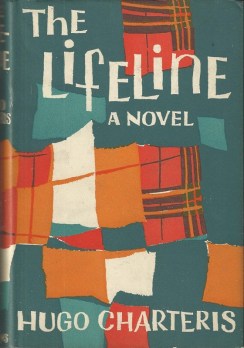 Alan Ross, for forty years The London Magazine’s editor, found Charteris “one of the most original, quirky and shrewd explorers of the behaviour of the landed gentry . . . and at a time when prose was plain, his was idiosyncratically stylish.”
When Hugo Charteris’s first novel, the haunting A Share of the World, was published in 1953 to the praise of Rosamond Lehmann (who helped to get it published), Peter Quennell, Evelyn Waugh, and Francis Wyndham (Charteris’s relation and consistent supporter), the author, just turned thirty-one, seemed set for lasting fame. It hasn’t worked that way in the  almost five decades since his death of cancer in 1970, aged only forty-seven.
Nowadays, few people seem to know his name. This is true among not only the ever-growing majority who pay little attention to novels and novelists, but also the enlightened minority who do.

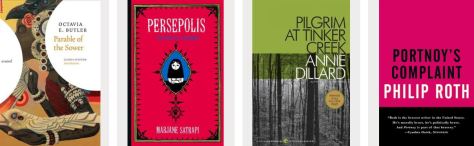
Reading: New York Public Library Celebrates 125 Years With “125 Books List”
 The New York Public Library is marking its 125th birthday this year—in part with this list of their favorite books written for adults from the past 125 years, which they hope will “inspire a lifelong love of reading.”

WWI Literature: A Reading Of “In Another Country” – Ernest Hemingway (1927)
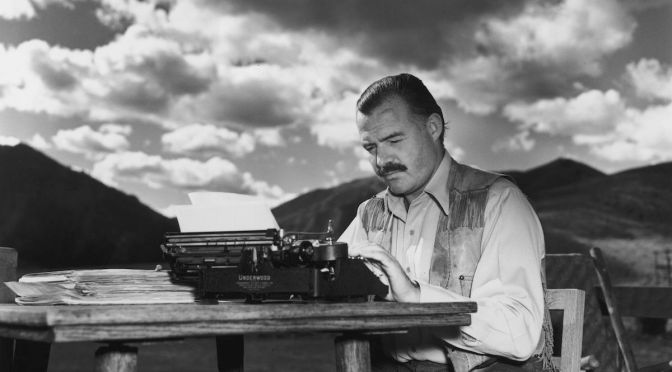
“In Another Country” is a poignant short story about the casualties of war, written by Noble Prize winner Ernest Hemingway, which deals with the experiences of an injured American army officer stranded and alienated in Italy who describes in first person narrative the events and the experiences of being rehabilitated during World War 1. It is a semi-autobiographical work of fiction.
Summary (Wikipedia)
The short story is about an ambulance corps member in Milan during World War I. Although unnamed, he is assumed to be Nick Adams, a character Hemingway made to represent himself. He has an injured knee and visits a hospital daily for rehabilitation. There the “machines” are used to speed the healing, with the doctors making much of the miraculous new technology. They show pictures to the wounded of injuries like theirs healed by the machines, but the war-hardened soldiers are portrayed as skeptical, perhaps justifiably so.
As the narrator walks through the streets with fellow soldiers, the townspeople hate them openly because they are officers. Their oasis from this treatment is Cafe Cova, where the waitresses are very patriotic.
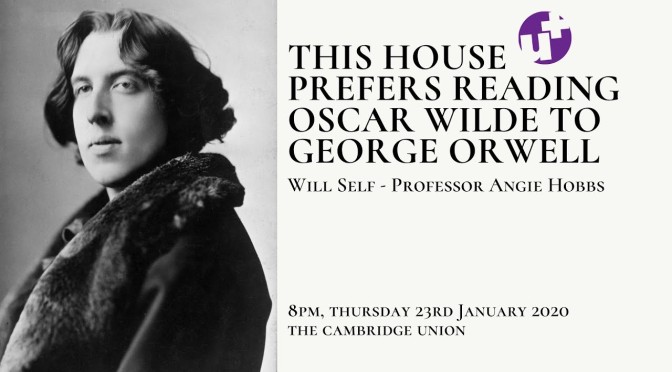
Literary Debates: “This House Prefers Reading Oscar Wilde To George Orwell” (Cambridge)
 ABOUT THE MOTION: This House Prefers Reading Oscar Wilde to George Orwell Do we prefer satire or comedy? Do we take refuge in the serious or the frivolous? Do we understand the importance of being earnest or would we rather be in room 101? These two authors demonstrate well two powerful traditions in British literature, the comic and the satirical. They both of course share in each other’s art. Some would argue that during our present global crises we should look to Orwell more than ever, others would reach for the escapism of Oscar Wilde. In a new enterprise for the Cambridge Union, we are beginning our cultural debates – and this is our first. At least for a while.
ABOUT OUR SPEAKER (Closing for the Proposition) Will Self is the author of 25 books, some of which have been translated into 25 languages. His Dorian: An Imitation is an adaptation of Oscar Wilde’s The Picture of Dorian Gray set during the AIDS crisis. He holds the Chair in Contemporary Thought at Brunel University, and lives in South London.
ABOUT OUR SPEAKER (Closing for the Abstention) Professor Angie Hobbs graduated in Classics and then a Ph.D. in Ancient Philosophy at the University of Cambridge. After a Research Fellowship at Christ’s College, she moved to the Philosophy Department at the University of Warwick. She was a judge of the Man Booker International Prize 2019 and is on the World Economic Forum Global Future Council 2018-9 for Values, Ethics and Innovation

Lyrical Essays: “Return To Tipasa” By Albert Camus (Poetry Channel Podcast)
Albert Camus’ lyrical essay… where he found In the midst of winter, there was, within himself, an invincible summer.
Excerpt from “Return To Tipasa” by Alber Camus
 You have navigated with raging soul far from the paternal home, passing beyond the sea’s double rocks, and you now inhabit a foreign land.
–Medea
For five days rain had been falling ceaselessly on Algiers and had finally wet the sea itself. From an apparently inexhaustible sky, constant downpours, viscous in their density, streamed down upon the gulf. Gray and soft as a huge sponge, the sea rose slowly in the ill-defined bay. But the surface of the water seemed almost motionless under the steady rain. Only now and then a barely perceptible swelling motion would raise above the sea’s surface a vague puff of smoke that would come to dock in the harbor, under an arc of wet boulevards. The city itself, all its white walls dripping, gave off a different steam that went out to meet the first steam. Whichever way you turned, you seemed to be breathing water, to be drinking the air.
 Boomers Daily