
Category Archives: History

Seaside Towns: A Tour Of Historic Whitby, England

MemorySeekers (December 2022) – Whitby is a seaside town in Yorkshire, northern England, split by the River Esk. On the East Cliff, overlooking the North Sea, the ruined Gothic Whitby Abbey was Bram Stoker’s inspiration for “Dracula”. Nearby is the Church of St. Mary, reached by 199 steps. The Captain Cook Memorial Museum, in the house where Cook once lived, displays paintings and maps. West of town is West Cliff Beach, lined with beach huts. 

Moon Exploration: 50th Anniversary Of Apollo 17

NASA Goddard – This video celebrates the 50th anniversary of Apollo 17 by talking with Lunar Module Pilot Jack Schmitt about the significance of that mission and how it laid the groundwork for future human exploration of the Moon.

Jack also discusses how the Lunar Reconnaissance Orbiter, which launched in 2009, has helped reinterpret Apollo-era data and given us new information about the lunar terrain that will help pave the way for the upcoming Artemis missions.

Apollo 17 was the sixth and final Apollo mission to land on the Moon. Following a 2-hour 40-minute delay, it launched at 11:33 p.m. CST on December 6, 1972, the only night launch of the Apollo program. Prior missions had explored the Moon’s early volcanic history and the role of large impact basins such as Imbrium. Accordingly, Apollo 17 was planned to collect ancient highlands crustal material far from the Imbrium basin and to search for possible young lunar volcanic activity, which would help to constrain our knowledge of the Moon’s thermal evolution.

  • Video Credit: NASA’s Goddard Space Flight Center
  • Produced and Edited by: David Ladd (AIMM)
  • Data Visualizations by: Ernie Wright (USRA)

Top New Books: ‘The Story Of Architecture’ – Witold Rybczynski (Nov 29, 2022)

An inviting exploration of architecture across cultures and centuries by one of the field’s eminent authors
 
In this sweeping history, from the Stone Age to the present day, Witold Rybczynski shows how architectural ideals have been affected by technological, economic, and social changes—and by changes in taste. The host of examples ranges from places of worship such as Hagia Sophia and Brunelleschi’s Duomo to living spaces such as the Katsura Imperial Villa and the Alhambra, national icons such as the Lincoln Memorial and the Sydney Opera House, and skyscrapers such as the Seagram Building and Beijing’s CCTV headquarters. Rybczynski’s narrative emphasizes the ways that buildings across time and space are united by the human desire for order, meaning, and beauty.

TAKE A LOOK INSIDE THE BOOK
 
This is the story of architecture’s physical manifestation of the universal aspiration to celebrate, honor, and commemorate, and an exploration of the ways that each building is a unique product of patrons, architects, and builders. Firm in opinion, even-handed, and rooted in scholarship, this book will delight anyone interested in understanding the buildings they use, visit, and pass by each day.

READ A REVIEW

Travel Tour: Top Medieval Towns In Germany (DW)

Come and join us as we explore the Middle Ages! Germany has a lot to offer when it comes to this time period: Historic city gates, church towers and half-timbred houses. In German cities and towns, you’ll find a lot of well-preserved Medieval architecture, much of it on the UNESCO World Heritage list.

From Lübeck in the North to Bamberg in the South – we show you seven cities and towns which will make you feel like you’re in a fairytale.

Video timeline: 00:00 Intro 00:30 Trier, Rhineland-Palatinate 01:24 Aachen, North-Rhine Westfalia 02:24 Quedlinburg, Saxony Anhalt 03:08 Erfurt, Thuringia 03:55 Lübeck, Schleswig-Holstein 04:49 Bamberg, Bavaria 05:40 Rothenburg ob der Tauber, Bavaria

Scotland Films: ‘The Spirit Of 1926’ – Macallan (2022)

The Macallan – Celebrating the extraordinary woman behind the most valuable bottle of spirit ever sold at auction, The Macallan has released a film biopic of former managing director, Janet Harbinson.

Paying homage to her quiet heroism, the film centres on the real-life story of Janet Harbinson, known as Nettie. Following her husband’s sudden death in 1918, Nettie assumed control of his whisky distillery and, through her sheer passion, unwavering commitment, and dedication to craftsmanship, she kept the business afloat and helped to rebuild the local area.

Without setting out to do so, she also crafted The Macallan Fine & Rare 1926, which achieved legendary status after it fetched £1.5m at Sotheby’s 2019. Several years on, it continues to be the world’s most valuable bottle of spirit ever sold at auction. Its very existence is a direct legacy of Janet Harbinson’s commitment to doing the right thing for her family, her community and The Macallan.

The beautiful wardrobe worn by the characters in the film is the work of Scottish fashion designer Christopher Kane, who created a series of 1920s outfits using historic, luxury fabrics from artisan suppliers, including hand-crafted lace and bespoke The Macallan tweed.

Mexico Archaeology: Lost Sak Tz’i’ Dynasty Unveiled

National Geographic UK – Modern technology has enabled archaeologists to virtually peel back a forest to discover the lost Maya city, an ancient civilisation that existed for up to 3,000 years and stretched from the pacific coast to the gulf coast of Mexico.

The technology, known as LIDAR, shot lasers from a plane through the tree canopy which bounced off of the ground to create an image of the earth below. The images were then used to map and uncover the hidden historical structures that make up the ancient Maya city.

According to a report in The New York Times, a fortified Maya settlement thought to be the capital of the Sak Tz’i’ dynasty is being investigated on private land in southern Mexico by a team of researchers including Charles Golden of Brandeis University. The site is thought to have been occupied as early as 750 B.C. until the end of the Classic period, around A.D. 900.

Golden said that the ruins cover about 100 acres and include an acropolis dominated by a 45-foot-tall pyramid, temples, plazas, reception halls, a palace, ceremonial centers, and a ball court measuring about 350 feet long by 16 feet wide. Inscriptions from other sites had linked the kingdom of Sak Tz’i’ to the Maya cities of Piedras Negras, Bonampak, Palenque, Tonina, and Yaxchilan.

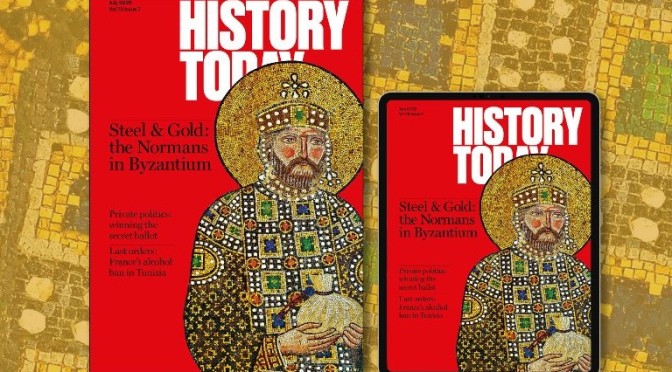
Preview: History Today Magazine – December 2022

December issue

Inside December 2022 issue:

Age of Doubt: Saints and Sceptics

The medieval period was a golden age of saints and miracles, but they were met with a healthy dose of scepticism.

‘A Baptism of Blood’

Fighting for the Union in the US Civil War, Welsh soldiers discovered that the cost of assimilation was the loss of their native language.

Renaissance Wonder Women

To Renaissance audiences, the mythical Amazons were exotic, mysterious and revealed hidden truths about their own society.

Art: Spanish Painter Joan Miró – ‘The Farm’ (1922)

National Gallery of Art – Joan Miró finished “The Farm,” his first masterpiece, 100 years ago. To celebrate, curator Harry Cooper and Joan Punyet Miró, Miró’s grandson, get together to tell the tale of this seminal painting from their perches at the National Gallery of Art in Washington, D.C. and Miró’s farm in Mont-roig del Camp, Spain. From Pablo Picasso in Paris to Earnest Hemingway in Cuba, you won’t want to miss the epic journey of Miró and his beloved “The Farm.”

Joan Miró i Ferrà was a Spanish painter, sculptor and ceramicist born in Barcelona. A museum dedicated to his work, the Fundació Joan Miró, was established in his native city of Barcelona in 1975, and another, the Fundació Pilar i Joan Miró, was established in his adoptive city of Palma in 1981. 

Architecture: A Tour Of Downtown Chicago

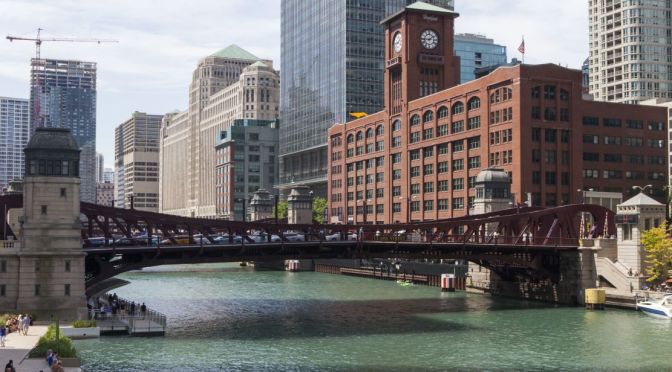
Architectural Digest – Today on AD Architect Lynda Dossey leads us on a walking tour of Chicago, highlighting the captivating details found in its storied architecture.

From exploring The Loop and Marina City to detailing the history of The Thompson Center and iconic Willis Tower, discover the history behind Chicago’s most famous buildings and neighborhoods through Lynda Dossey’s expert eye.

Florida Design: Building The Salvador Dali Museum

The challenges of redesigning the Dali museum in Florida were two-fold: deliver an iconic design befitting of its subject, and defy conventional building methods to make it strong enough to withstand a hurricane. The result: a landmark structure, as enduring as the work of the great artist himself.

The original Dalí Museum opened in St. Petersburg in 1982, after community leaders rallied to bring the Morses’ superlative collection of Dalí works to the area. The Dalí’s stunning new building opened on January 11, 2011. Designed by architect Yann Weymouth of HOK, it combines the rational with the fantastical: a simple rectangle with 18-inch thick hurricane-proof walls out of which erupts a large free-form geodesic glass bubble known as the “enigma”.

The Enigma, which is made up of 1,062 triangular pieces of glass, stands 75 feet at its tallest point, a twenty-first century homage to the dome that adorns Dalí’s museum in Spain. Inside, the Museum houses another unique architectural feature – a helical staircase – recalling Dalí’s obsession with spirals and the double helical shape of the DNA molecule.