Category Archives: Health

Studies: Depression Diagnosis Increases Risk Of Dementia For Decades

From a PLOS Medicine online study:

Depression is associated with increased odds of dementia, even more than 20 years after diagnosis of depression, and the association remains after adjustment for familial factors. Further research is needed to investigate whether successful prevention and treatment of depression decrease the risk of dementia.

The risk of dementia is increased for decades after a diagnosis of depression, where those diagnosed with especially severe depressions are at increased risk.
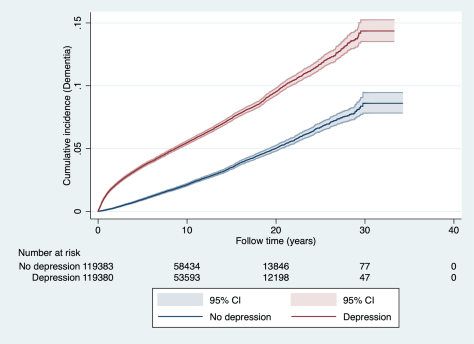
Risk of Dementia increased after diagnosis of Depression chart 2020

Dementia is common among the elderly, causing severe individual suffering as well as societal strain. As the proportion of people aged 65 years and above is rapidly increasing in the world population, the number of individuals with dementia is expected to double within 20 years, and this condition was estimated to have a worldwide cost of US$604 billion in 2010. Effective treatments for dementia remain scarce; however, a preventive approach may be possible through the identification of high-risk individuals and potentially modifiable risk factors.

Read full study

Heathcare Podcasts: An Inside Look At Benefits & Costs Of Hospice (NPR)

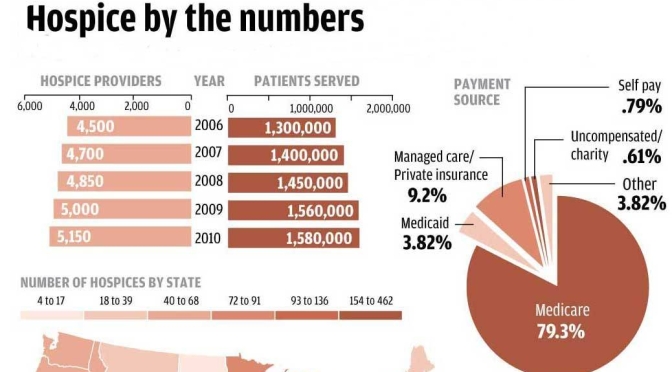
NPR logoAccording to a recent Kaiser Family Foundation poll, seven in 10 Americans say they would prefer to die at home. And that’s the direction the health care system is moving, too, hoping to avoid unnecessary and expensive treatment at the end of life.

Hospice allows a patient deemed to have fewer than six months to live to change the focus of their medical care — from the goal of curing disease to a new goal of using treatments and medicines to maintain comfort and quality of life. It is a form of palliative care, which also focuses on pain management, but can be provided while a patient continues to seek a cure or receive treatments to prolong life.

Website

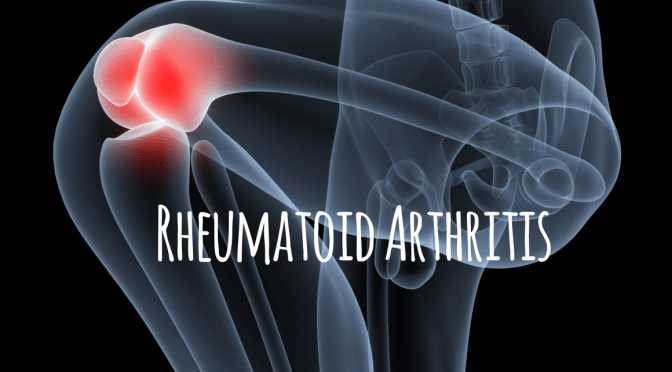
Research: Scientists Find Protein To Regulate Immune Attacks, Reduce Rheumatoid Arthritis

From a New Atlas online article:

1200px-Karolinska_Institutet_seal.svgScientists have just discovered a new mechanism that can be key in regulating these immune attacks, raising new hopes of drugs that can protect against joint inflammation and the ailments it can bring.
Through the use of the CRISPR gene-editing tool, the Karolinska Institutet scientists have now shed further light on the role they play in inflammation. The technology enabled the team to make adjustments to a set of hand-picked immune cell genes as a way of learning how those tweaks can impact the behavior of the cells.

“The results we obtained using CRISPR were key to quickly understanding how the system under study is regulated,” says Dr Wermeling. “I have high hopes that the experimental use of CRISPR will be hugely important to our understanding of how immune-cell behavior is regulated, and that this can guide us in the development of new efficacious drugs.”

https://newatlas.com/medical/newly-understood-protein-raises-hopes-of-advanced-arthritis-treatments/?utm_source=New+Atlas+Subscribers&utm_campaign=68b0bd3225-EMAIL_CAMPAIGN_2020_01_21_02_40&utm_medium=email&utm_term=0_65b67362bd-68b0bd3225-93002753

Health Studies: Marijuana Use Associated With Rise In Cardiovascular Disease

From a Journal of the American College of Cardiology:

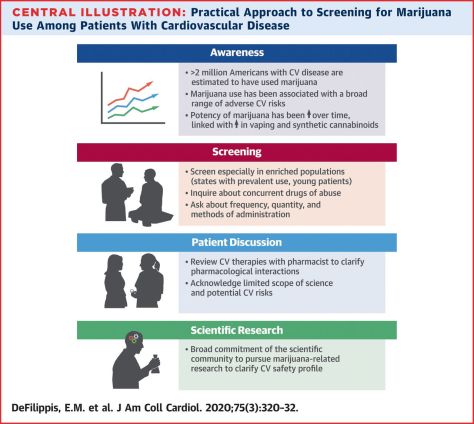
Observational data suggest associations between marijuana and a broad range of adverse cardiovascular risks. Marijuana is becoming increasingly potent, and smoking marijuana carries many of the same cardiovascular health hazards as smoking tobacco. Synthetic cannabinoids have been linked to more sustained and deleterious pharmacodynamic effects.

Marijuana Use and Cardiovascular Disease Infographic

Marijuana use is increasing as more states are legalizing cannabis for both medicinal and recreational purposes. National survey data estimate that >2 million Americans with established cardiovascular diseases currently use or have used marijuana in its variety of forms, including inhalation and vaping. Cannabinoid receptors are distributed in multiple tissue beds and cells, including platelets, adipose tissue, and myocytes.

Highlights

  • • We estimate that >2 million U.S. adults who have reported ever using marijuana have cardiovascular disease.

  • • Observational studies have suggested an association between marijuana use and a range of cardiovascular risks.

  • • Marijuana is becoming increasingly potent, and smoking marijuana carries many of the same cardiovascular health hazards as smoking tobacco.

  • • Few randomized clinical trials have been conducted or are planned to explore the effects of marijuana on cardiovascular risk.

  • • Screening and testing for use of marijuana are encouraged in clinical settings, especially in the care of young patients presenting with cardiovascular disease.

Read more

World Economic Forum: “Building Resilient Health Systems” (Davos 2020)

The World Economic Forum is the International Organization for Public-Private Cooperation. The Forum engages the foremost political, business, cultural and other leaders of society to shape global, regional and industry agendas. We believe that progress happens by bringing together people from all walks of life who have the drive and the influence to make positive change.

Studies: Openly Given “Placebos” Are Effective For Chronic Pain Relief

From a Wall Street Journal online article:

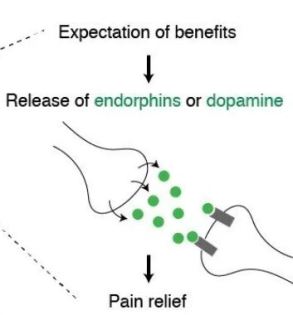
Researchers in Germany published a study in the journal Pain in December showing that open-label placebos can help relieve chronic lower-back pain, Placebo Expectation of Benefitsreplicating a 2016 study. A similar study by University of Colorado, Boulder researchers found that placebo saline injections reduce chronic lower-back pain.

Two other recent studies showed placebos openly given to cancer patients helped relieve cancer-related fatigue. And a forthcoming study by German researchers found openly giving placebo to elderly patients helped improve knee pain.

More researchers are looking at the idea of placebos—substances that have no actual pharmaceutical effect—as an alternative to traditional pain medications, which can be ineffective and carry significant side effects. Placebos might have particular potential for difficult-to-treat conditions like chronic back pain, cancer-related fatigue and symptoms of irritable bowel syndrome, researchers hope.

As many as 30% to 50% of chronic pain patients will respond to placebos, research suggests. And new studies are helping to identify genetic and brain differences that make certain people more likely to respond.

Read more

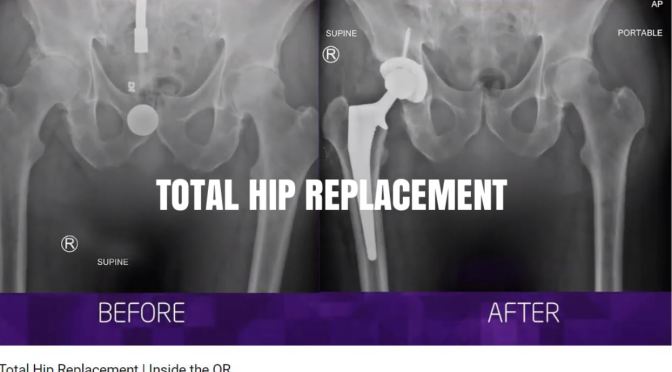
Medical Procedures: Inside Look At “Total Hip Replacement” Surgery

Head “Inside the OR” with Michael D. Stover, MD, and see what it takes to tackle a total hip replacement. Sound on for this one!

Website