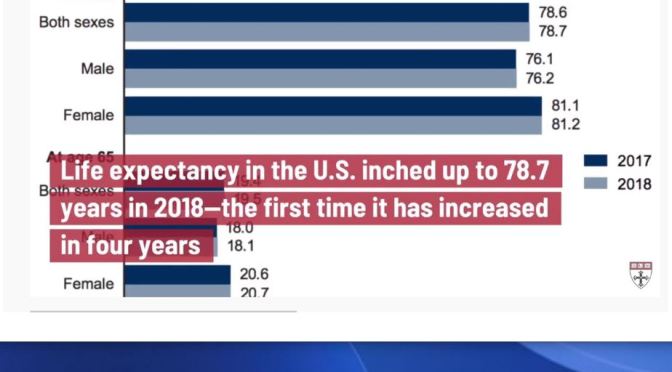
A slight uptick in U.S. life expectancy in the U.S. in 2018 was due partly to a decrease in overdose deaths, but mostly to decreasing cancer deaths.

A slight uptick in U.S. life expectancy in the U.S. in 2018 was due partly to a decrease in overdose deaths, but mostly to decreasing cancer deaths.
 In this edition of Backchat we take a deep dive into Nature’s coverage of coronavirus. As cases climb, what are some of the challenges involved in reporting on the virus?
 In public health, honesty is worth a lot more than hope. It has become clear in the past week that the new viral disease, covid-19, which struck China at the start of December will spread around the world. Many governments have been signalling that they will stop the disease. Instead, they need to start preparing people for the onslaught
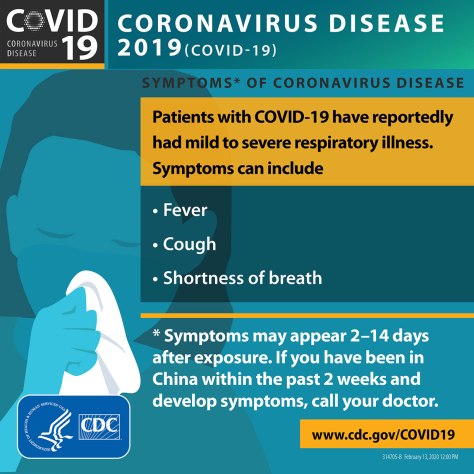
“Drive-thru” coronavirus testing is to be introduced on the NHS – with suspected cases swabbed in their own cars.
The new scheme is part of efforts to relieve pressure on ambulance and hospital services, amid concern they could soon be overwhelmed by the number of tests they are carrying out.

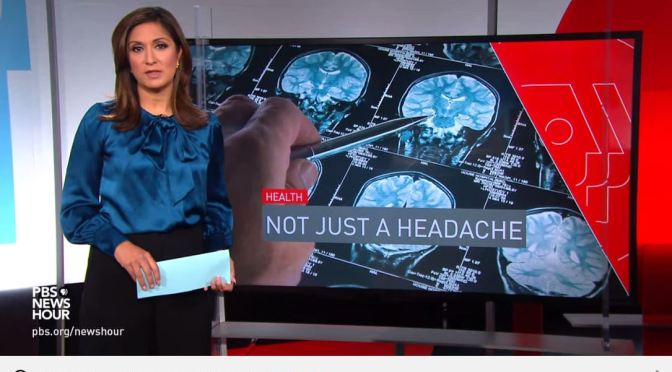
Migraine disease affects 47 million Americans — 75 percent of whom are women. Although headache is one symptom, attacks can include visual disturbances, nausea, extreme light and sound sensitivity, brain fog and debilitating pain. Stigma and gender stereotypes may complicate the medical response, treatments aren’t one-size-fits-all and federal funding is minimal. Stephanie Sy reports.
From a “Circulation: Heart Failure” Journal study (Feb 25, 2020):
 The study shows that wearable sensors coupled with machine learning analytics have predictive accuracy comparable to implanted devices.
We demonstrate that machine learning analytics using data from a wearable sensor can accurately predict hospitalization for heart failure exacerbation…at a median time of 6.5 days before the admission.
Heart failure (HF) is a major public health problem affecting >23 million patients worldwide. Hospitalization costs for HF represent 80% of costs attributed to HF care. Thus, accurate and timely detection of worsening HF could allow for interventions aimed at reducing the risk of HF admission.

Several such approaches have been tested. Tracking of daily weight, as recommended by current HF guidelines, did not lead to reduction of the risk of HF hospitalization, most likely because the weight gain is a contemporaneous or lagging indicator rather than a leading event. Interventions based on intrathoracic impedance monitoring also did not result in reduction of readmission risk. The results suggest that physiological parameters other than weight or intrathoracic impedance in isolation may be needed to detect HF decompensation in a timely manner. In fact, 28% reduction of rehospitalization rates has been shown with interventions based on pulmonary artery hemodynamic monitoring. More recently, in the MultiSENSE study (Multisensor Chronic Evaluation in Ambulatory HF Patients), an algorithm based on physiological data from sensors in the implantable cardiac resynchronization therapy defibrillators, was shown to have 70% sensitivity in predicting the risk of HF hospitalization or outpatient visit with intravenous therapies for worsening of HF.
 As we head into South Carolina’s primary and gear up for Super Tuesday, the 2020 candidates are looking to stand out to voters. But perhaps no policy proposal has marked this election more than Sen. Bernie Sanders’s push for Medicare for All.
While the Democratic candidates agree on expanding health coverage, they’re divided on how to insure everyone, whether to insure everyone, and, of course, how to pay for it all.
So how are they similar? How are they different? And how does that compare to President Trump?
Rachana Pradhan, correspondent for Kaiser Health News; Noam Levey, national healthcare reporter for The LA Times; and Dan Diamond, health reporter for Politico and host of the “Pulse Check” podcast helped us break down where each candidate stood on health care.
Taking a statin helps keep your cholesterol levels in check. How can that be?
 Dr. Stephen Kopecky explains that some people ask to be put on a statin. That’s because statins, while important and effective, are just one part of the whole heart-healthy picture. When you combine a statin with regular exercise, maintaining a healthy weight, controlling stress, not smoking and eating foods based on the Mediterranean diet, you can improve your heart health.
Dr. Kopecky says if you work in lifestyle changes slowly over time, you’ll be on your way to better heart health.
Statins are drugs that can lower your cholesterol. They work by blocking a substance your body needs to make cholesterol. Statins may also help your body reabsorb cholesterol that has built up in plaques on your artery walls, preventing further blockage in your blood vessels and heart attacks.
Several statins are available for use in the United States. They include:
Sometimes, a statin is combined with another heart health medication. Examples are atorvastatin/amlodipine (Caduet) and simvastatin/ezetimibe (Vytorin).
Increasing evidence suggests that statins do more than just lower bad cholesterol. Research has found that the medicines can safely prevent heart disease in certain adults ages 40 to 75. But the benefits aren’t entirely clear for the elderly. And doctors still want to know more about the side effects of statins.
 The National Diabetes Statistics Report is a periodic publication of the Centers for Disease Control and Prevention (CDC) that provides updated statistics about diabetes in the United States for a scientific audience. It includes information on prevalence and incidence of diabetes, prediabetes, risk factors for complications, acute and long-term complications, deaths, and costs. These data can help focus efforts to prevent and control diabetes across the United States.





 Boomers Daily