Category Archives: Exhibitions

Art: ‘After Raphael. 1520 -2020’ – State Hermitage Museum, Russia (Video)

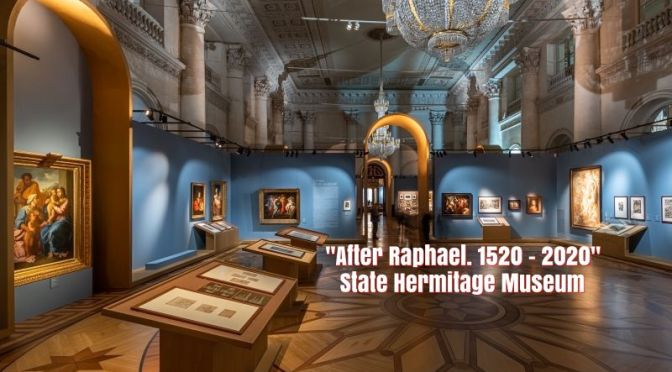
A film about the Exhibition “After Raphael. 1520 – 2020” at the State Hermitage Museum. Director of the film – Manas Sirakanyan. The film was made with the support of the U.S. Ambassadors Fund for Cultural Preservation, U.S. Embassy Moscow and the Hermitage Museum Foundation (USA)

Raphael is the most influential artist of the Modern Era. Over the course of five centuries, exponents of Mannerism and Academicism, Caravaggisti and masters of the Baroque, Romantics and Modernists have invariably compared their own work with Raphael’s legacy. What is the cause of such fame? What did his name represent in this or that historical period, and what does it represent today? What connects the artist’s followers in different centuries? The exhibition in the Hermitage is an attempt to answer those questions and to look at the art of the past 500 years through the lens of Raphael’s influence.

The large-scale display includes more than 300 exhibits – paintings, graphic art, sculpture and applied art from the Hermitage’s own stocks and twelve other collections in Russia and Western Europe. They include both famous masterpieces and previously unknown works. Dozens of paintings and pieces of graphic art are leaving the museum’s storerooms and being presented to the public for the first time, while a whole number of the exhibits are going on show after painstaking restoration in the Hermitage’s workshops.

The display opens with works by the master himself: a painting and drawings from European collections. Without claiming to be a full representation of the artist’s oeuvre, they serve to set the tone, as it were, and after viewers have “tuned themselves in” it will be easier for them to identify echoes of Raphaelesque harmony in the works from later centuries. The choice of graphic art for this purpose reveals another dimension to the main metaphor: it is specifically the beauty of the clear, precise line, so evident in the drawings made by the master’s own hand, that lies at the foundation of the aesthetics of Raphael himself and many of his followers.

Art Exhibitions: ‘Hockney & Van Gogh – The Joy Of Nature’ (MFA Houston)

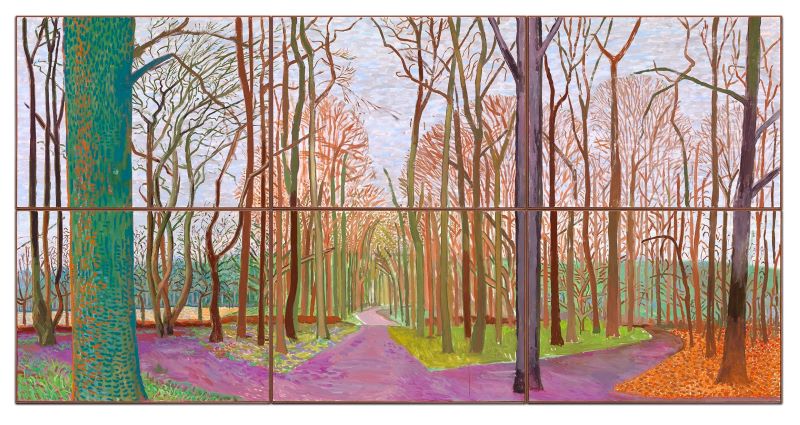
Two visionary artists, separated in time and space, are united by a shared fascination with nature. See the work of David Hockney and Vincent van Gogh side by side in Hockney – Van Gogh: The Joy of Nature.

This exhibition examines the common ground between British artist Hockney (born 1937) and Dutch artist Van Gogh (1853–1890). Both expressed their profound love of nature through brilliant color and the capacity to see the world with fresh eyes. The Joy of Nature reveals Van Gogh’s unmistakable influence on Hockney in a selection of carefully selected landscape paintings and drawings.

Through a bold use of color and experimentation with perspective, each artist crafts a painterly world that is utterly individual and true to themselves, yet offers immense universal appeal. The Joy of Nature brings together nearly 50 of Hockney’s vibrant works—ranging from intimate sketchbook studies to monumental paintings, as well as his experimental videos and iPad drawings—with 10carefully chosen paintings and drawings by Van Gogh.

Hockney – Van Gogh: The Joy of Nature premiered at the Van Gogh Museum in Amsterdam, and the Houston presentation marks the first time the two renowned artists have been paired in an American museum exhibition. The MFAH is the only U.S. venue.

Read more

Art Exhibition Tours: ‘A New Look At Old Masters’ The MET, New York (Video)

Join curators Keith Christiansen, Stephan Wolohojian, and Adam Eaker on a tour through the newly installed European Paintings galleries and explore new dialogues and themes among the works. A New Look at Old Masters is part of the European Paintings Skylights Project and is a prelude to the final, expansive re-installation of the European Paintings galleries that will take place after the project is completed.

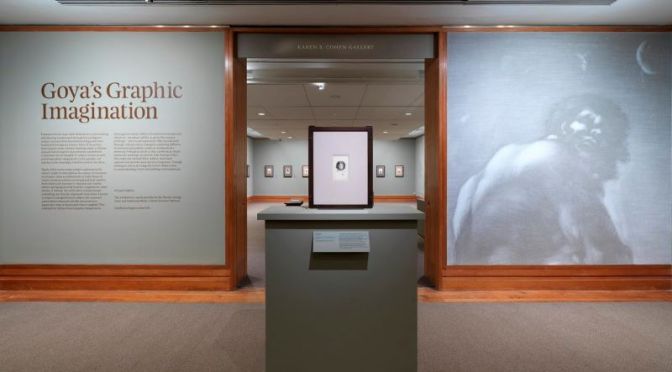
Exhibition Tours: ‘Goya’s Graphic Imagination’

Mark McDonald, Curator in the Department of Drawings and Prints, takes us on a virtual tour of Goya’s Graphic Imagination to explore how Goya’s drawings and prints allowed him to share his complex ideas and respond to the turbulent social and political changes occurring in the world around him.

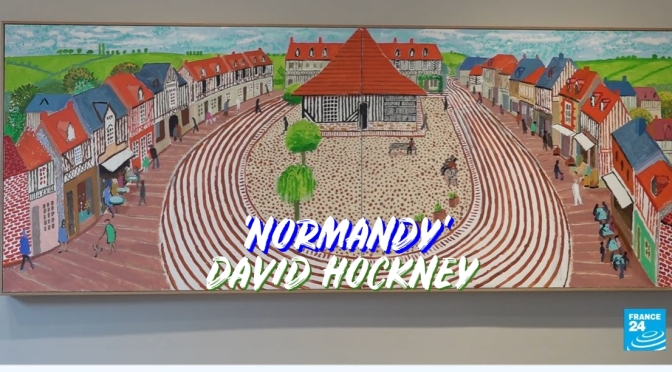
Gallery Views: ‘Normandy’ – The Lockdown Paintings Of David Hockney In Paris

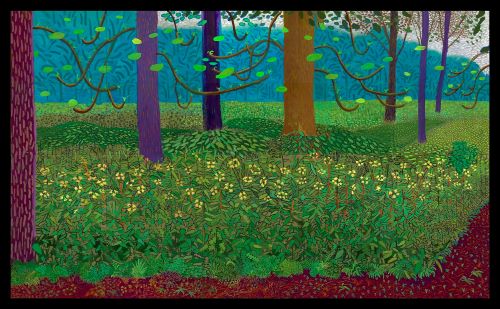
While museums in France are shut due to Covid-19 restrictions, private galleries are allowed to remain open and have become a haven for art enthusiasts. British artist David Hockney’s “Ma Normandie” (“My Normandy) show, which opened at a Paris gallery last year, has been the sensation of the season.

David Hockney, OM, CH, RA is an English painter, draftsman, printmaker, stage designer, and photographer. As an important contributor to the pop art movement of the 1960s, he is considered one of the most influential British artists of the 20th century.

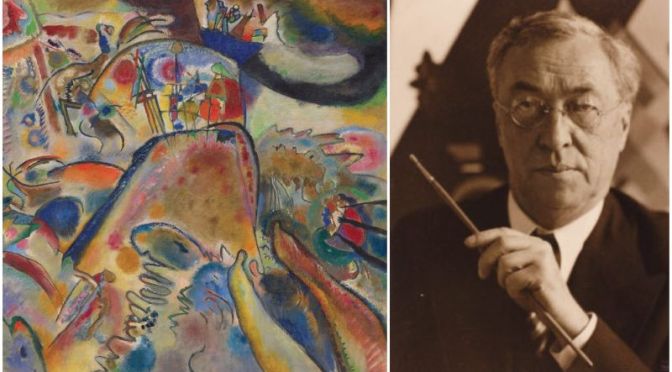
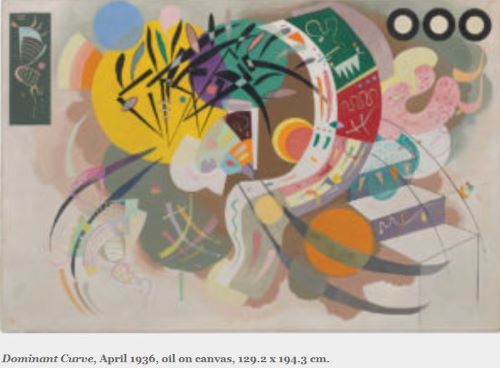
Exhibitions: ‘Kandinsky’ At The Guggenheim Bilbao In Spain (Nov ’20 To May ’21)

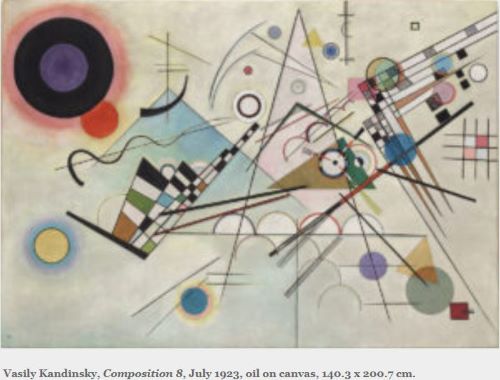
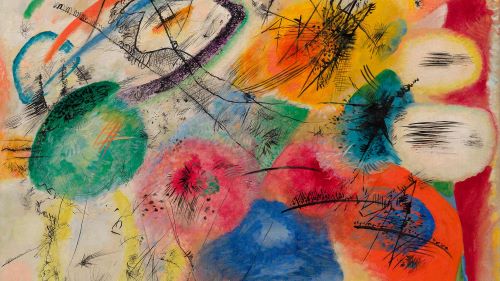
As a pioneer of abstraction and a renowned aesthetic theorist, Vasily Kandinsky (b. 1866, Moscow; d. 1944, Neuilly-sur-Seine, France) is among the foremost artistic innovators of the early twentieth century.

In his endeavor to free painting from its ties to the natural world, Kandinsky discovered a new subject matter based solely on the artist’s “inner necessity” that would remain his lifelong concern.

In Munich in the 1900s and early 1910s, Kandinsky began exploring the expressive possibilities of color and composition, but he was abruptly forced to leave Germany with the outbreak of World War I, in 1914. The artist eventually returned to his native Moscow, and there his pictorial vocabulary started to reflect the utopian experiments of the Russian avant-garde, who emphasized geometric shapes in an effort to establish a universal aesthetic language. Kandinsky subsequently joined the faculty of the Bauhaus, a German school of art and applied design that shared his belief in art’s ability to transform self and society. Compelled to abandon Germany again when the Bauhaus closed under Nazi pressure in 1933, he settled outside Paris, where Surrealism and the natural sciences influenced Kandinsky’s biomorphic imagery.

More so than any other artist, Kandinsky is intertwined with the history of the Solomon R. Guggenheim Foundation, established in New York in 1937. Industrialist and museum founder Solomon R. Guggenheim began collecting Kandinsky’s work in 1929 and met him at the Dessau Bauhaus the following year. This exhibition draws from the foundation’s extensive holdings to illustrate the full arc of Kandinsky’s seminal career.

Curator: Megan Fontanella

Organized by The Solomon R. Guggenheim Foundation, New York

Wassily Wassilyevich Kandinsky was a Russian painter and art theorist. Kandinsky is generally credited as the pioneer of abstract art. Born in Moscow, Kandinsky spent his childhood in Odessa, where he graduated at Grekov Odessa Art school. He enrolled at the University of Moscow, studying law and economics.

Website

Fashion: ‘Making A Mulberry Bag’ (Video)

Bag making is a complex process. From creative sketches and precise technical drawings, to prototypes and catwalk shows, every stage requires careful thought. Historically and globally, bags have been constructed and embellished in an enormous variety of ways.

Originally hand-stitched at home or crafted in small workshops, today’s mass-produced bags are assembled in factories. Each procedure requires special skills, from pattern-making, cutting and dyeing, to sewing, polishing and finishing.

Take a look behind-the-scenes at Mulberry with Development Team Leader, Alice Gouldbourne to discover more about the precision and technical skill required to produce each one of their iconic bags. Find out more: vam.ac.uk/exhibitions/bags

Top Exhibitions: ‘Pollès – Monumental Sculptures’, Abbaye des Vaux de Cernay, France (Cinematic Video)

Dominique Pollès, called Pollès, is a French sculptor born in Paris in 1945. He is considered as the inventor of “organic cubism”.

Like Leonard de Vinci in an anatomical search of perfection, of representation of movement,with an almost scientifical or medical glance, Pollès holds the utmost passion of anatomy: he learns about the human body, the complicated hank of muscles, movements of members and all the bodily mechanics.

That’s why in 1964 he starts medicine school and along side goes to the Charpentier Academy where he follows art lessons. In 1966, he encountered sculpture in London where he was invited by his friend Enzo Plazota. This final step teaching him all the bases of sculpture. Pollès then decides to go to live in Italy, in Carrare, an important art place. He moved in 1970 and settled in Pietrasanta where he still lives. ​

His sculptures, by creating a vision of the moving being, polished and smoothed, break the pureness of aestheticism. He just knows one theme, one model: the female form. According to Pollès, this is the most beautiful one, the most harmonious one. “When we are looking at a feminine body, it is splendid, it is musical”.

His love of women, the sensuality, the complexity, the shapes and passions, brought him to explore the female form. Since the beginning he has created a singularly stylized cubist form; this becoming his signature form. ​ All are cast in bronze by Pollès himself and made in a series of four with one artist’s proof. His masterliness of the patina is considered unparalleled. The world’s recognition of his craft is evidenced by the many awards he has won, the unique places he has shown and the prestigious private collections he is in, including that of Princess Caroline of Monaco. ​

Pollès was recently honored in an exhibition outside Paris, sponsored by the French Government, called “Sculptors From Rodin to The Present”. He was one of the few living sculptors to be so honored; the others include Abakanowicz, Arman, Saint-Phalle & Wesselmann. Maurice Rheims, a respected Art Critic, and a member of The French Academy, has said “I consider Pollès to be one of the outstanding sculptors of our time.”

His show in the Bagatelle Gardens in Paris in 1998 was a major honor as he was one of only two artists who have ever been allowed to present their work in the Bagatelle. The other artist is Henry Moore. – Galerie Philia is an internationally recognized contemporary design and modern fine arts gallery representing worldwide known designers and artists.

The Galerie Philia attempts in this way to build bridges between different artistic continents in order to enlighten artworks endowed with a marked artistic depth.

Website

Top Online Exhibitions: The ‘Wayne Thiebaud 3D Viewing Experience’ At The Berggruen Gallery (2020)

A monumental survey, Wayne Thiebaud features over fifty paintings, works on paper, and limited-edition prints—many of which are rarely exhibited works from private collections and museums. Among the early works in the exhibition is the iconic Three Machines (1963)—courtesy of the Fine Arts Museums of San Francisco—a dynamic painting of three gumball machines filled with colorful candy orbs in which “tangible reality and abstraction intermix as one.”

image

Click Here to Launch 3D Online Exhibition

Berggruen Gallery is honored to present Wayne Thiebaud, an exhibition of paintings, works on paper, and prints from 1961 to present by one of the preeminent living American artists, Wayne Thiebaud. This show marks the gallery’s seventh solo exhibition of Thiebaud’s work since his first show with John Berggruen Gallery in 1973. The gallery is especially proud to hold this exhibition in honor of two very special occasions: Wayne Thiebaud’s 100th birthday and Berggruen Gallery’s 50th anniversary. Wayne Thiebaud will be on view October 16 through November 28, 2020.

Spanning six decades, Wayne Thiebaud highlights the artist’s most quintessential, significant, and compelling work from the near entirety of his career. Thiebaud is most often recognized for his delectable still life paintings of confections, from slices of pie arranged in rows to bakery cases filled with intricately decorated cakes to dishes of colorful lollipops and candies. With paint as thick as frosting, Thiebaud’s illustrative depictions emphasize his subject matter’s physicality. Ornately decorated, densely outlined, and starkly shadowed, Thiebaud’s treats sit for the viewer masterfully rendered and enticing. Though the artist rose to prominence for such paintings, Thiebaud is now renowned for a vast breadth of subject matter—steep and winding cityscapes, saturated expanses of the Sacramento Valley, and attentive portraiture of friends or everyday figures. Art critics have connected his work to a breadth of art movements, analogizing his figurative work to that of esteemed American painter Edward Hopper and his aptitude for still life painting to that of 18th century French artist Jean-Baptiste-Siméon Chardin. Yet overall, Thiebaud’s prolific career defies singular movements and art historical references. Altogether, he simply reflects something authentically, emotionally, and uniquely American.CNiMdewz