
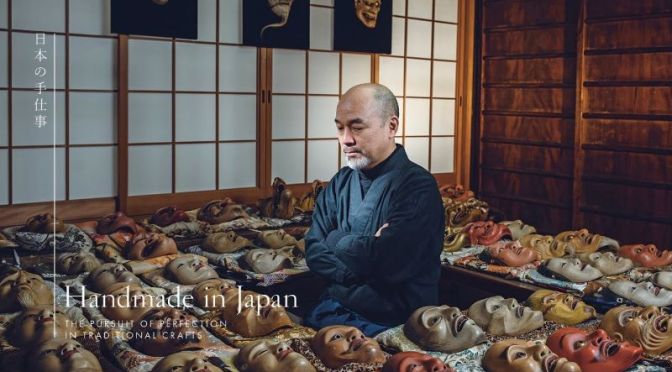
After documenting the crafts makers and traditional artisans of Japan for years, Irwin Wong assembled this wealth of unique knowledge and culture in a book. Handmade in Japan is a look into the endless pursuit of excellence, and this film represents some of the individuals featured in the book.
Category Archives: Culture

Culture Podcast: “Wine Windows Of Florence” Date Back To 17th Century
In the era of social distancing, Italians in Florence have revived the custom of serving wine through pint-size windows in centuries-old buildings.
Year 2020: The covid-19 pandemic arrives. Italy is under lockdown starting March 8th. Everyone is confined to home for two months and then the government permits a gradual reopening. During this time, some enterprising Florentine Wine Window owners have turned back the clock and are using their Wine Windows to dispense glasses of wine, cups of coffee, drinks, sandwiches and ice cream—all germ-free, contactless!
Year 1634: The Black Death or Plague has passed through the city of Florence, leaving death and havoc in its wake. The Florentine scholar, Francesco Rondinelli, writes a report about disease contagion and describes the use of the abundant Wine Windows in the city for the safe sale of wine, without direct contact between client and seller. Diletta Corsini describes this important document regarding Wine Windows and their uses almost 400 years ago.

Travel & Culture Videos: Germany Celebrates 250th Birthday Of Beethoven
The celebration of Ludwig van Beethoven’s 250th birthday this year is reaching a crescendo in Germany. The composer and pianist was born in Bonn on December 16, 1770, and his musical legacy carries on. In this reel, we meet concert pianists putting a new spin on Beethoven’s work. Susanne Kessel, for one, put out a call to composers for 250 new piano pieces inspired by Beethoven and is now in the midst of performing them. Elsewhere, the duo known as Pianotainment is using humor and serious piano chops to make the work of the likes of Beethoven accessible to all. We wrap up this ode to Beethoven with a visit to a museum full of self-playing musical instruments. And, yes, some of them even play Beethoven.
This Great Big Story was made possible by the German National Tourism Board and BTHVN2020: https://www.germany.travel/beethoven2020

Travel Videos: “Bordeaux, France – A Cultural Guide”
Bordeaux is best known as France’s wine HQ. But over the past decade, this wonderful old metropolis ten times smaller than Paris has been enjoying a new lease of life thanks to huge investment in culture and transport – that includes a whopping great wine museum. Eve Jackson travels to this UNESCO-listed city to discover its buzzing arts scene with a visit to the Cité du Vin and a tour of the regenerated banks of the Garonne river.
Travel Videos: Pyongyang, North Korea – “A Rare Look Inside At Daily Life”
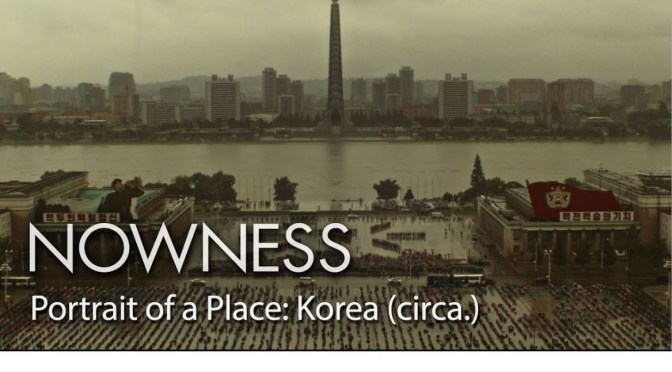
It is another rainy day in Pyongyang and the long boulevards of utilitarian buildings have taken on a misty shade of grey. School children do daily exercises before saluting a portrait of Kim Jong-un and adults don lapel pins depicting their leader before a day’s work at the farm or factory. Tracing a form of cultural uniformity that is unfamiliar to many in the West, two Brazilian directors ventured to the capital to paint an evocative portrait of life behind the world’s last iron curtain…

Podcast Interviews: Lego Foundation CEO John Goodwin – “Reimagining”

Monocle’s editor in chief, Tyler Brûlé, is joined by John Goodwin, the CEO of the Lego Foundation, from its home city of Billund in Denmark. We learn why the global crisis in education might be an opportunity to reimagine learning and to rediscover the value of play.

Top New Culinary Books: “Sushi Shokunin” – Andrea Fazzari -“Stunning Images”
In this stunning monograph, James Beard Award-winning photographer and author Andrea Fazzari profiles twenty of the most celebrated sushi masters on the Japanese food scene. Through a combination of striking photography and intimate essays, each chapter introduces readers to a new master and restaurant, capturing the aesthetics, philosophy, and level of dedication that illustrates their status as the world’s finest culinary shokunin.


In Japan, cooking often bears aesthetic value, and the making of sushi is exalted as one of the finest culinary crafts. In line with this ideal of food as art, the Japanese often employ the word shokunin, loosely defined as “artisan”, to refer to highly skilled sushi masters. Connoting excellence and devotion to one’s craft, this title is reserved for those who approach their work with an artistic eye and seemingly spiritual sense of purpose, or ikigai.
A must-have for sushi enthusiasts—and for anyone interested in fine food culture—Sushi Shokunin is the first book of its kind to the most revered sushi masters and restaurants. Fazzari invites readers to explore the rarefied world of top shokunin who view sushi making not only as a career, but also as a way of life.
Andrea Fazzari is a Tokyo-based James Beard Award-winning photographer and author specializing in travel and the culinary world. Her previous book was Tokyo New Wave. She was chosen as one of “30 Photographers to Watch” by Photo District News in 2004. Her editorial and advertising clients include Travel + Leisure, Departures, Saveur, Cathay Pacific Airlines, and Four Seasons Hotels.
Nostalgia: “Gas And Glamour” In Los Angeles
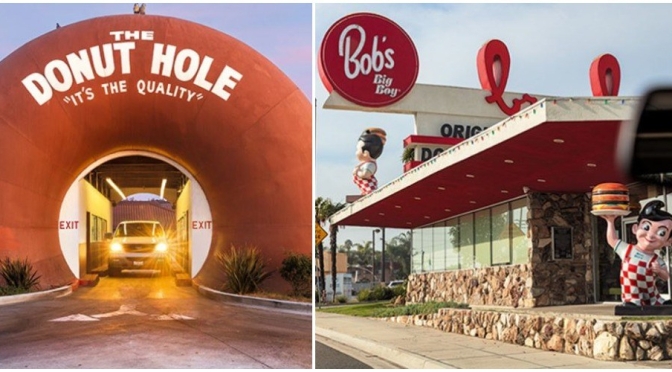
“I love cars and I love Los Angeles for being a city of cars. Over the last decade or so, I have been intrigued by L. A.’s love affair with the automobile, tracing back to a time when cars themselves were objects of beauty.“
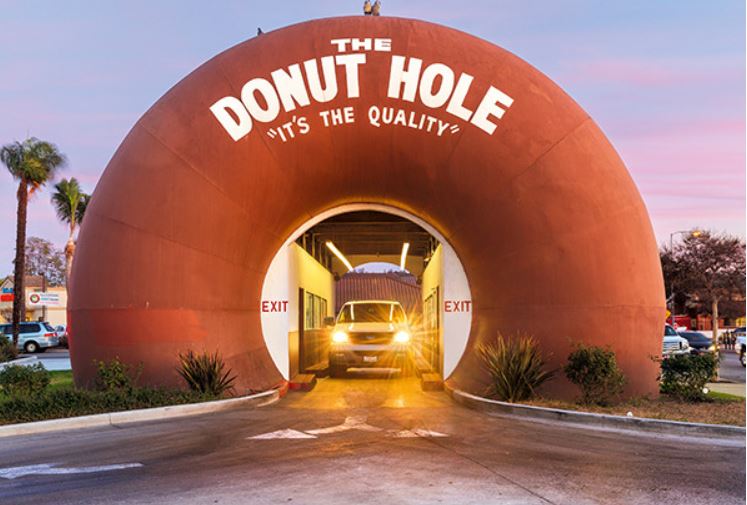

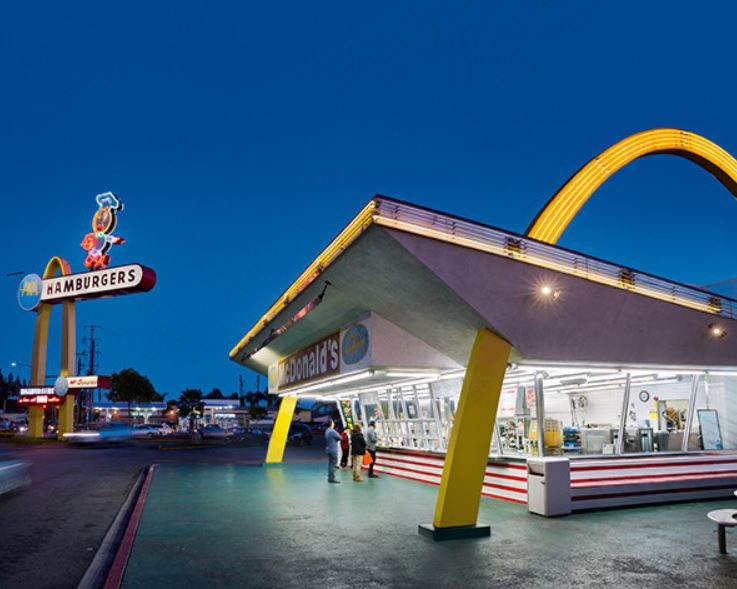
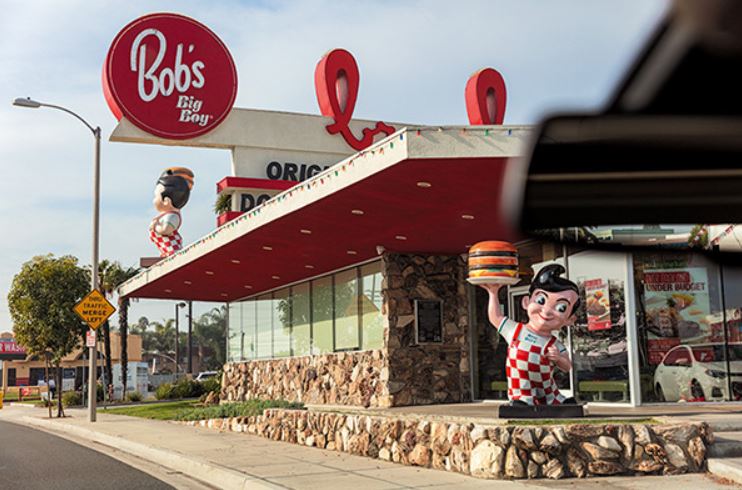
“Those cars are no longer on the streets today but the buildings from that era remain. As an architectural photographer, I wanted to capture L. A.’s car-culture-induced optimism and ambition reflected in polychromatic, starspangled coffee shops, gas stations, and car washes, that once lured the gaze of passing motorists.” (Ashok Sinha)
Ashok Sinha is an architectural and fine art photographer whose large-scale photographs capture a sense of place tied to both natural landscapes and built environments. His photographs have been published by editorial outlets such as The New York Times, Architectural Digest, Interior Design, and exhibited at The Museum of the City of New York, the International Center of Photography, and The Royal Photographic Society.

Travel & Culture: “The Natural Beauty Of Rwanda” (NatGeo Video)
Rwanda is home to abundant nature and wildlife, but the country’s people also make it a vibrant place to visit. Partner Content for Rwanda.
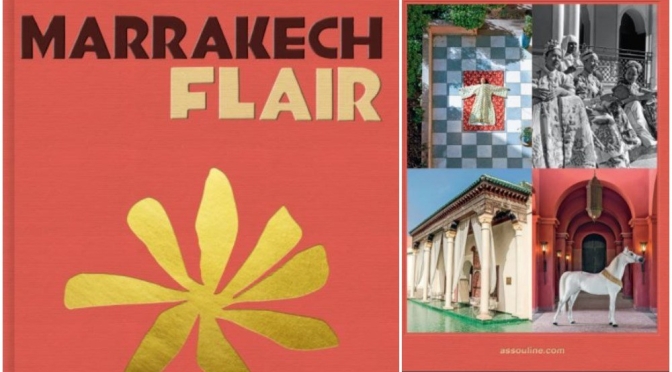
Travel & Culture Books: “Marrakech Flair” By Marisa Berenson (2020)
It has been said that Marrakech awakens all of the senses. Whether it is seeing the intricate zellige tilework; smelling the various spices sold at the souks; hearing the call to prayer emanate from the nearby mosques; touching the supple leather used to make a pair of babouches (leather sandals); tasting a flavorful tagine, Marrakech never fails to excite.


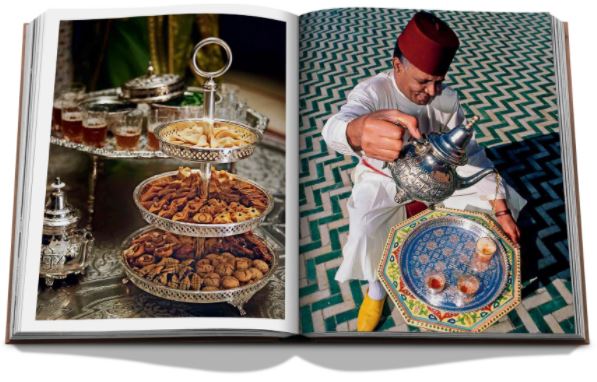

Located just west of the Atlas Mountains, the city has been inhabited by Berber farmers for centuries. It has been dubbed the “Ochre City” because of the proliferation of red sandstone buildings and the red city walls, which now enclose the Medina, home to Jemaa el-Fnaa, one of the busiest squares in Africa.
Marrakech overflows with culture and has been inspiring visitors for decades. From Yves Saint Laurent to Talitha Getty, Winston Churchill to Mick Jagger, Marrakech has attracted great icons inspired by its eternal spirit as well as its sweet, beautiful life. Yves Saint Laurent’s intimate relationship to this city lead to the opening of a museum dedicated to his legendary work.
The annual Marrakech International Film Festival draws a prominent crowd. Museums abound, exhibiting Moroccan arts, photography, carpets, and the Andalusian design aesthetic that permeates the city’s architecture. La Mamounia hotel, opened in 1923, offers a storied history, which includes hosting guests such as Winston Churchill.
Vanessa Branson’s El Fenn is a collection of traditional riads that form a stunning boutique hotel. There are countless ways to be immersed in the culture of Marrakech, but perhaps the best place to start is with a simple glass of mint tea.
Dubbed the “It Girl” by Yves Saint Laurent in the early 1970s, Marisa Berenson is the original modern muse. Berenson transitioned into acting and delivered dazzling performances in iconic films including Cabaret directed by Bob Fosse and Stanley Kubrick’s production of Barry Lyndon. She has written several books, including Moments intimes, A Life in Pictures and Elsa Schiaparelli’s Private Album. Berenson fell in love with Marrakech eight years ago and once she found the perfect riad, she decided to call it home.
 Boomers Daily