

Constantine’s death would drive a crack through the Roman Empire, splitting it into West and East. Over the next several hundred years, parts of it would even fall to foreign invaders. But a new capital would rise to take its place: Constantinople.
Category Archives: Culture

Travel & Culture Video: ‘Wuhan, China – Epicenter Turned Tourism Hot Spot’
Wuhan, the city at the center of the coronavirus pandemic, had the most tourists of any Chinese city during a public holiday in October. Wuhan is overcoming its pandemic past and benefiting from its hero-city status to become a top travel destination.
Photo: Getty Images
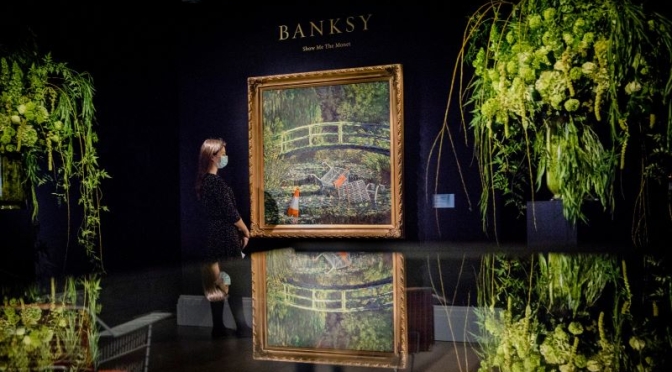
Arts & Culture: ‘Paris Vs London – A Tale Of Two Capitals’ (Sotheby’s Video)
Pick your favourite between Paris and London as we pit Europe’s premier art capitals against each other in a tongue-in-cheek battle. Compare and contrast the allure of each location as we build-up to our marquee evening auctions on Modernités/Contemporary (21 October | Paris/London).
Discover some of defining moments of the 20th and 21st centuries by the greatest artists working in Europe and beyond. From the birth of the avant-garde and modernism, to seminal contemporary works, the artists represented all forged a distinct path.
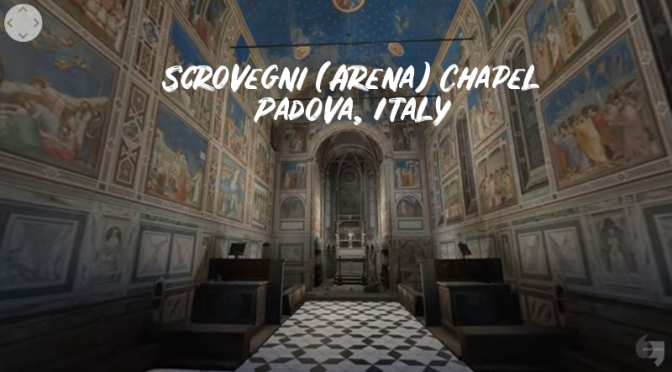
Italian Culture Tours: ‘Scrovegni (Arena) Chapel’ In Padova – Spectacular 360 Virtual Reality Video
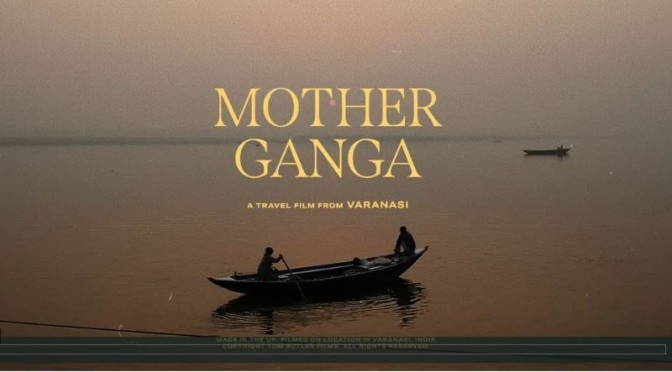
Travel & Culture Video: ‘Mother Ganga’ – Ganges River, Varanasi, India (2020)
Filmed and Edited by: Tom Butler
Varanasi is chaotic, intense, and beautiful. The ancient city is situated on the banks of the River Ganges and is often considered the spiritual home of India. A place where you see and feel the morning and evening rituals, where pilgrimages are made to bathe in the holy waters at sunrise to purify, where many cremations take place along the river’s edge, and where it is believed moksha — an escape from the cycle of reincarnation — can be achieved. It was truly mesmerising to be in the presence of Mother Ganga and experience the weight of Varanasi first hand.
The Ganges (or Ganga is a trans-boundary river of Asia which flows through India and Bangladesh. The 2,704 km (1,680 mi) river originates from the Gangotri Glacier of western Himalayas in the Indian state of Uttarakhand, and flows south and east through the Gangetic Plain of India and Bangladesh, eventually emptying into the Bay of Bengal.
Varanasi is a city in the northern Indian state of Uttar Pradesh dating to the 11th century B.C. Regarded as the spiritual capital of India, the city draws Hindu pilgrims who bathe in the Ganges River’s sacred waters and perform funeral rites. Along the city’s winding streets are some 2,000 temples, including Kashi Vishwanath, the “Golden Temple,” dedicated to the Hindu god Shiva.
This film was shot back in February 2020, before the travel restrictions were in place due to the pandemic.

Sunday Morning Podcast: News From Athens, Zurich, London, Tokyo (Monocle)

Monocle’s Emma Nelson speaks to Vincent McAviney and Rob Cox, plus we hear from The Saturday Paper’s Karen Middleton, and check in with Tokyo and Ljubljana.
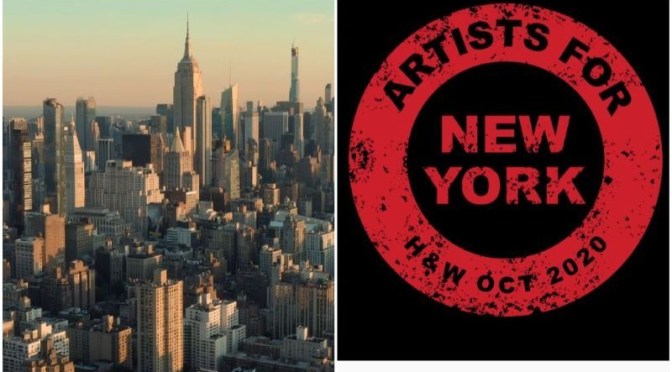
Arts & Culture Video: ‘Artists For New York’
‘As New Yorkers, we’re thrivers … We just keep coming back. We keep surviving.’
Our introductory film features the voices of some of our ‘Artists for New York’ partner organizations on why New York is and will always be a vital place for art, and all those that love, celebrate and need it.
Explore our ‘Artists for New York’ editorial page: https://bit.ly/34gIq24
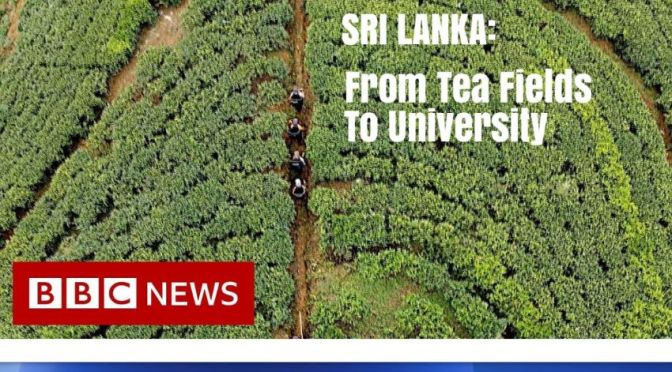
Travel & Culture Video: ‘Sri Lanka – From Tea Fields To University’ (BBC News)
Sri Lanka is one of the world’s top exporters of tea. It’s picked by women whose ancestors came from southern India and who live and work on isolated plantations, often in poor conditions. Their children are given limited access to higher education. But in a remote hillside plantation in Kandaloya, a group of girls have become the first in their estate to go to university.
Sri Lanka, officially the Democratic Socialist Republic of Sri Lanka, is an island country in South Asia, located in the Indian Ocean southwest of the Bay of Bengal and southeast of the Arabian Sea. It is geographically separated from the Indian subcontinent by the Gulf of Mannar and the Palk Strait.

Travel & Culture Video: ‘Equatorial Guinea’ In Central Africa (2020)
Filmed and Edited by: Displore
Equatorial Guinea is a Central African country comprising the Rio Muni mainland and 5 volcanic offshore islands. Capital Malabo, on Bioko Island, has Spanish colonial architecture and is a hub for the country’s prosperous oil industry. Its Arena Blanca beach draws dry-season butterflies. The tropical forest of the mainland’s Monte Alen National Park is home to gorillas, chimpanzees and elephants.
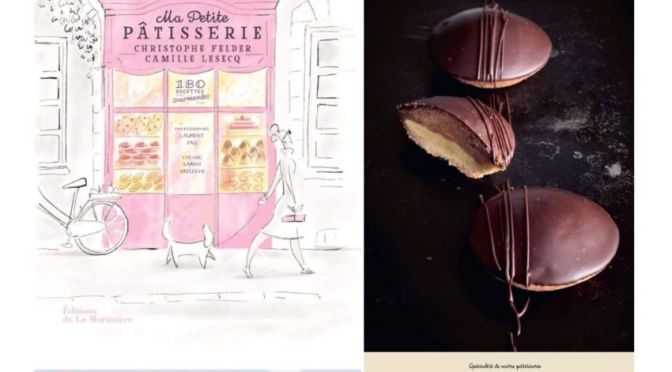
New Food Books: ‘Petite Patisserie: 180 Easy Recipes – Elegant French Treats’
Christophe Felder, along with his longtime collaborator, Camille Lesecq, are back with a new volume that focuses upon the delightful small pastries that are one of the highlights of the art of French baking. Both children and adults adore these often bite-size indulgences. Included here are all the fundamental recipes–the classics and the traditional favorites–along with original, inventive creations.


A delightful volume devoted to the delicate, charming treats that are the soul of France’s neighborhood patisseries. With Felder’s expert guidance, any home cook can now re-create the sweet enchantments and small indulgences that are the hallmark of many a holiday in France.
Recipes include amandines, babas, biscuits, bostocks, creams, croquantes, croustillons, financiers, flans, madeleines, Alsatian manderlis, Napoleans, petits fours, sablés, tartlets, and much more.
The book opens with a section on twenty-seven base recipes from which all others can be made, including pâte brisée, pâte sucrée, sablé breton, dacquoise, pâte á choux, feuilletée rapide, and crème pâtissière. It is then divided into chapters of increasing complexity, with a final chapter on “funny” cakes–playfully decorated small cakes designed to delight children or for parties.
Each recipe comes with precise preparation and cooking times, step-by-step decorating tips, and suggestions for vegan and gluten-free alternatives–this seemingly petite package contains a wide range of sweet and simple pleasures to delight big and small gourmets alike.
About The Author
Christophe Felder is one of the most respected pastry masters in the world, having achieved fame during his fifteen-year tenure as the pastry chef at the Michelin-starred Hôtel de Crillon in Paris. In 2009, he founded Studio Christophe Felder, a pastry school open to the public and located in Strasbourg in his native Alsace. Together with Camille Lesecq, former pastry chef at Le Meurice, they operate a patisserie, Les Pâtissiers, in Mutzig, Alsace.
 Boomers Daily