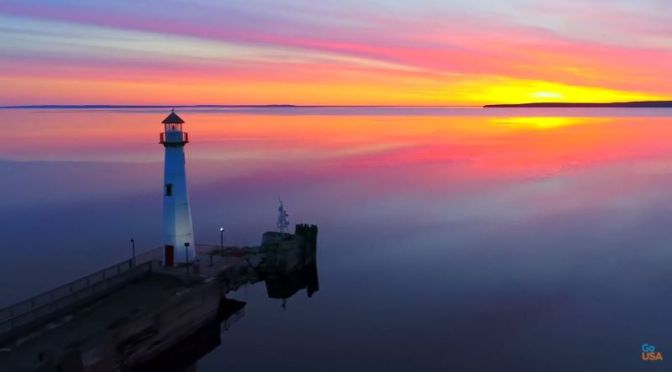
From forests and farms to taverns and cafes, upstate Michigan will take you back to the old ways of life.
Northern Michigan, also known as Northern Lower Michigan or Upper Michigan, is a region of the U.S. state of Michigan. A popular tourist destination, it is home to several small- to medium-sized cities, extensive state and national forests, lakes and rivers, and a large portion of Great Lakes shoreline.
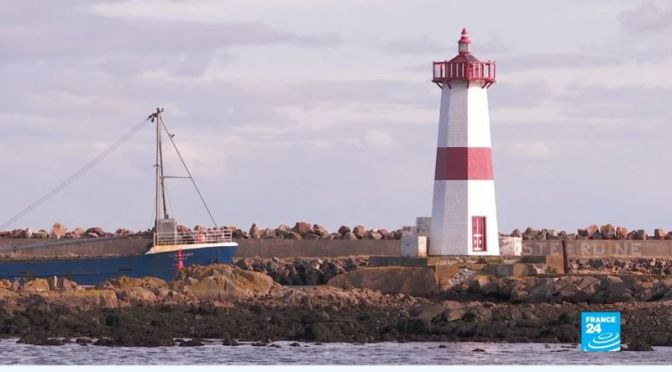
It’s a scattering of French soil off the coast of #Canada. For two centuries, the archipelago of Saint-Pierre and Miquelon, with its fish-rich waters, attracted people from Brittany, Normandy but above all from France’s Basque country. Their descendants still keep Basque heritage alive, such as pelota and traditional songs. FRANCE 24 takes you to discover these islands with their pretty seascapes and rich biodiversity. We also set sail with some fishermen to catch halibut.
Saint Pierre and Miquelon is a French archipelago south of the Canadian island of Newfoundland. Sparsely populated Miquelon-Langlade island contains the Grand Barachois lagoon, home to seabirds and seals. The busier Saint Pierre island has a distinct French atmosphere, with a cathedral and the Musée Heritage, which celebrates regional history. An island nearby, Île-aux-Marins, features an abandoned fishing village.
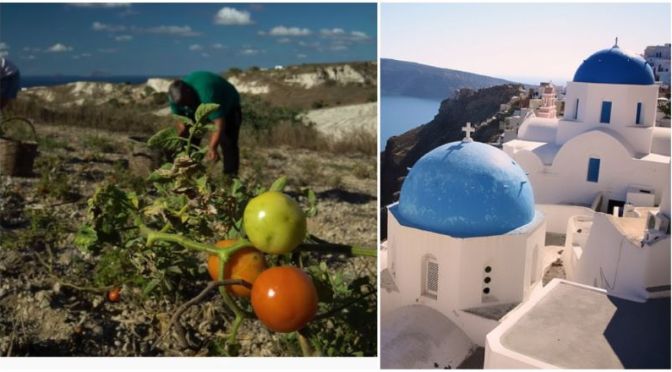
Santorini used to be known for its tomatoes. Petros Oikonomou has dedicated more than 20 years to reviving the crop and the heritage agriculture of the Greek island chain.
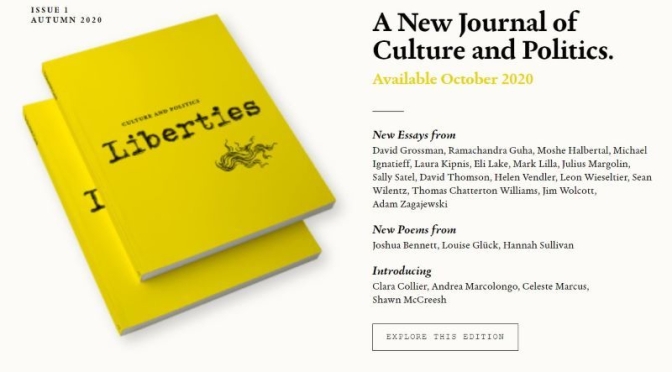
Each issue of Liberties, the Foundation’s decidedly analog quarterly publication, will feature a combination of essays from prominent writers and introduce new talent. Contributors already signed include leading voices from this country and abroad in the worlds of culture, business, entertainment, government, politics, and technology. Each edition of Liberties will also publish new poetry from both highly awarded and up-and-coming poets.
LISTEN TO INTERVIEW WITH PUBLISHER BILL REICHBLUM:
FROM “THE STACK” (MONOCLE 24 PODCAST)
To advance independent thinking and propel new ideas, well-known figures from the worlds of arts, business, government, higher education and philanthropy today announced the formation of the Liberties Journal Foundation. Based in Washington, D.C., the Foundation is a non-partisan, not-for-profit organization that seeks to inform today’s cultural and political leaders, deepen the understanding of citizens, and inspire the next generation to participate in the democratic process and public service. The Foundation’s first initiative is a new quarterly journal, Liberties – A Journal of Culture and Politics, slated for October 2020 debut.
Founding members of the Foundation include the well-known Washington attorney, philanthropist, and former diplomat, Alfred H. Moses; chairman and CEO of cross-border trade company Quberu, Peter Bass; and, respected arts, education, and business leader, Bill Reichblum.
A book for the coat pocket, Liberties’ diverse voices celebrate one commonality: freedom of inquiry and thought.
Liberties’ editorial team reflects the mission of the Journal pairing acclaimed literary critic Leon Wieseltier as editor with Celeste Marcus, a new talent, as managing editor. Bill Reichblum is the publisher. The book will be available as a soft-cover edition, by subscription or single copy, in bookstores and online.
“The Foundation exists to meet the thirst in our country for ideas and serious thinking at a time when the daily news dominates the media and overwhelms our lives,” says Moses. “The Foundation will provide an outlet for world-renowned writers on culture and politics to reach a readership that is looking for stimulation and inspiration at a time when our lives are increasingly assailed by ephemeral trivia.”
“We believe there is a genuine need to take time to listen, to actively absorb in-depth thinking of both those with accomplished experience and the inventive new generation at the beginning of their careers,” says Reichblum. “Their creativity, insights, and perceptions can individually and collectively inspire culture and impact politics.”
The oldest continuously-running Chinese restaurant in the United States, the Pekin Noodle Parlor, has been feeding customers in Butte, Montana, since 1911. Correspondent Luke Burbank visits the multi-generational family business and takes a step into culinary history.
In their quest to catch the elusive Wakasagi [ワカサギ/Pond Smelt], anglers experience a myriad of escapades on ice, relying on everything from custom-built poles to complicated robots.
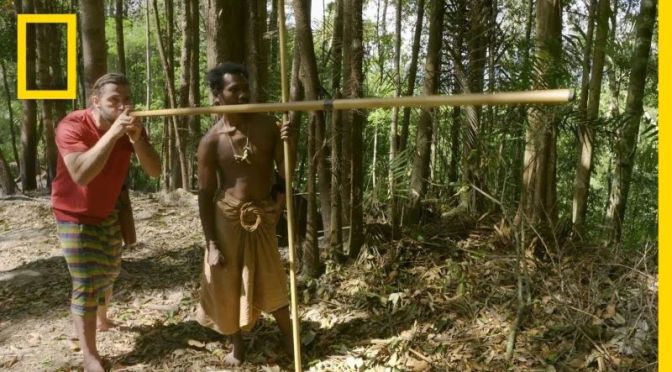
Hazen travels to the Malay Peninsula and meets with members of the Mani tribe, a group of hunter-gathers who have lived for the land for centuries. Hazen learns how to use their trademark tool for hunting, the blowgun.
The Maniq or Mani are an ethnic group of Thailand. They are more widely known in Thailand as the Sakai (Thai: ซาไก), a controversial derogatory term meaning ‘slave’ or ‘barbarism’.[2] They are the only Negrito group in Thailand and speak a variety of related Aslian languages, primarily Kensiu and Ten’edn. The Lisu have their own language, culture, and no alphabet.[3]
In Thailand, the Maniq minority live in the southern provinces of Yala, Narathiwat, Phatthalung, Trang, and Satun.[2]
The Maniq are a hunting and gathering society. They build temporary huts of bamboo with roofs made of banana leaves. They hunt many types of animals and consume many different kinds of vegetables and fruits. They wear simple clothes made of materials such as bamboo leaves. They are familiar with many different species of medicinal herbs.[4]
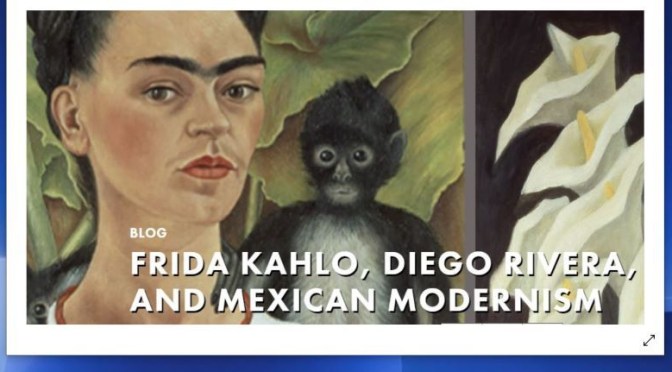
“Frida Kahlo, Diego Rivera, and Mexican Modernism from the Jacques and Natasha Gelman Collection” is on view at the Denver Art Museum through January 24, 2021.
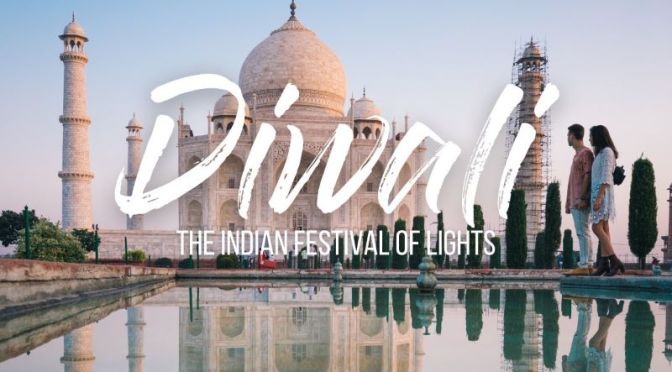
Diwali is India’s biggest and most important holiday of the year, observed by more than a billion people across faiths. Known as the Festival of Lights, it is a 5-day celebration bringing prayer, feasts, fireworks, family gatherings and, for some, a new year.
Derived from the Sanskrit “dipavali”, which means “row of lights,” Diwali is known for the brightly burning clay lamps that celebrants line up outside their homes to cherish the victory of good over evil. With this year’s coronavirus pandemic affecting the celebration, may we be able to derive comfort from the spirit of the holiday—the belief that, eventually, light will triumph over darkness.
Surrounded by 16 peaks, the cirque de Gavarnie is a must-see for lovers of hiking. Listed as a UNESCO World Heritage site, it’s one of the natural wonders of France’s Pyrenees. Philippe loves these mountains and spends all his time here. He appreciates the peace and quiet that nature offers. Philippe is also the manager of one of the region’s hostels, where he welcomes passing hikers. Next door, we meet farmer Pascal and his flock of sheep.
News, Views and Reviews For The Intellectually Curious





 Boomers Daily