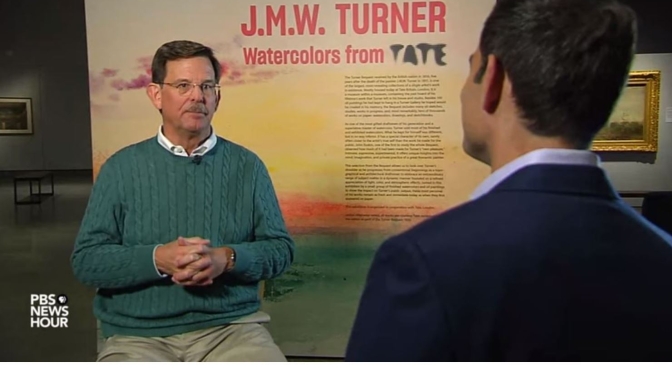
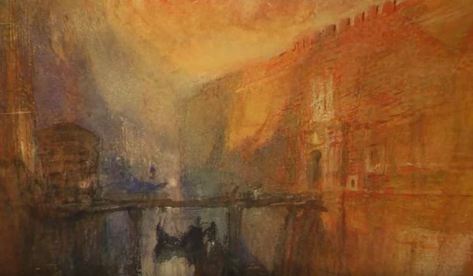
British painter J.M.W. Turner was both prolific and peripatetic, producing more than 30,000 watercolors during a lifetime in which he traveled throughout Europe.
But these works are extremely susceptible to light damage and can be shown only once in a generation. Now, they’re on view at the Mystic Seaport Museum in Connecticut — their only North American stop. Jared Bowen of WGBH reports.
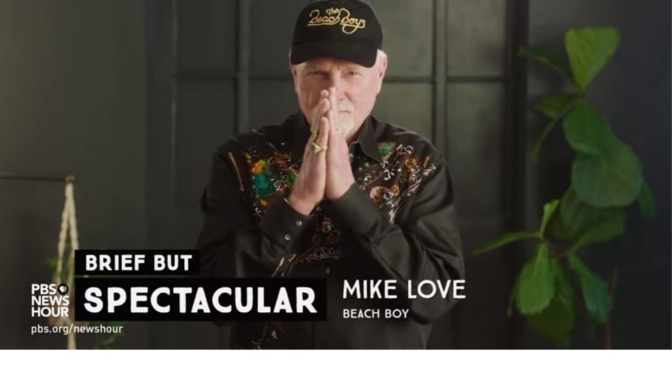
Singer and songwriter Mike Love is best known as one of the founding members of the Beach Boys, whose infectious harmonies and unique California sound first hit the airways nearly 60 years ago, in 1961. Through the ups and downs of a long career, Love still considers it a “precious miracle” the way fans connect with his music. He shares his Brief But Spectacular take on his life as a Beach Boy.
Vincent van Gogh (1853-1890) is one of the world’s most loved artists. His paintings, drawings and letters inspire people of all ages. His work can be admired in numerous museums around the world. Many places where the artist lived and worked can be visited, from the Netherlands to the South of France. About 25 organisations and museums in the Netherlands, Belgium and France have joined forces under the name Van Gogh Europe. Together they are actively engaged in maintaining and promoting Van Gogh’s heritage.
The Surrealist eye informed everything Miller did, and her work presents the world in a way that encourages us to view it in a different manner. Written and collected by her son Antony, Surrealist Lee Miller amasses more than one hundred full-page images from throughout the artist’s life as an attestation to her wonderful way of seeing.
A Surrealist before she even knew of the movement, Lee Miller was one of the most original photographic artists of the twentieth century. David E. Scherman, LIFE photographer and Miller’s close friend, described her as “caustically brilliant, yet totally loyal, unpretentious, human and intolerant of sham.
She was a consummate artist and a consummate clown; at once an upstate New York hick and cosmopolitan grande dame; a cold, soignée fashion model and a hoyden. . . . She was the nearest thing I knew to a mid-20th century renaissance woman.”
In the 2000s, California-based painter Wayne Thiebaud began focusing on a series of mountain paintings, a subject he had first addressed in the 1960s and 1970s. Rendered in his signature confectionary palette, these colorful works combine memories of mountains he had seen in childhood and observations of the summits of the Sierra Nevada Range in Yosemite. With their heroic, exaggerated proportions and unusual perspectives, these paintings seem to combine fiction and reality. Conveying a sense of the sublime and the vast magnitude of our surroundings, they draw upon the history of landscape painting of the American West.
About The Author
Michael M. Thomas is a former curator at the Metropolitan Museum of Art and former investment partner of Lehman Brothers. He lives in Brooklyn, New York. Margaretta Lovell is professor of American Art at UC Berkeley.
90 years ago today, Maie Bartlett Heard, curator Allie Walling BraMé along with a small group of friends and volunteers spent Christmas Day making final preparations for the opening of the Heard Museum. The next day, December 26, 1929, the Heard Museum began our now nine decade long and ongoing legacy of advancing American Indian Art.
This short video poem written, recorded and edited by longtime artist and friend of the Heard Museum, Steven J. Yazzie (Diné) is our very sincere thank you to you.
Heard Museum 90th Celebration Poem, December 2019
“Home” By Steven J. Yazzie (Diné)
Voiced by: Jenn Henry
Music: Better Now, Phillip Daniel Zach
Why do we come here to these walls painted shades of off white In search of beauty or memory or place Where the sounds of children can be heard echoing in these vast and intimate spaces And where everyone has just arrived here from a journey What brings us to the feet of stone or textile or dried paint In the galleries of our hearts and truths Our histories are revealed and our humanity ensured This place of my youth and older age This place of beauty stewardship and celebration Is home
Gweilo is a new collection of custom lights by PARTISANS. Inspired by the idea that light itself could be harnessed and manipulated to create a physical sculpture, PARTISANS developed a design that alters light at its source. Gweilo reimagines illumination to architectural effect.
As spectral sculptures that fold and bend like light rays themselves, the pieces function as accents, dividers, or centerpieces, gracefully delineating space to create an
ethereal atmosphere.
Each Gweilo light is handmade using thermoforming, a technique that allows etched optical grade acrylic sheets to be custom-shaped while they are still in their hot plastic
state. The sheets are heated to just under 400°C, at which point they become molten and pliable. They are immediately removed from the heat source and sculpted to produce a
variety of distinct folds and curves. When the metal extrusion containing an embedded LED strip is affxed to the cooled sheet’s edge, light is diffused across the etchings, amplifying the luminescent output. The result is an infnite set of silhouettes and sizes that emulate the vital movement of light.
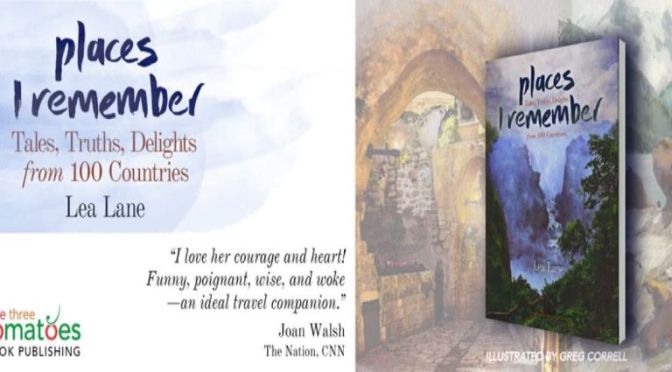
Joyful and informative Places I Remember: Tales, Truths, Delights from 100 Countries presents writings and illustrated photos in a memoir covering over 50 years of travel throughout the world. You’ll find a range of unforgettable people and places through vivid personal experiences—good, bad and often, laugh-out-loud funny.
Lea Lane is an award-winning author of eight books, and has contributed to a dozen guidebooks. She has written for magazines, websites, and newspapers, including The New York Times and The Miami Herald. She is currently a regular contributor to forbes.com.
Greg Correll, former illustrator for The New Yorker and CLIO winner, has created stunning fine-art illustrations, based on her photos.
In a special Christmas edition, Sir Paul McCartney tells Nihal about persuading John Lennon to believe in himself, the one famous person that even he feels nervous around, and his new children’s book ‘Hey Grandude’ and how being a grandad inspires him.
News, Views and Reviews For The Intellectually Curious

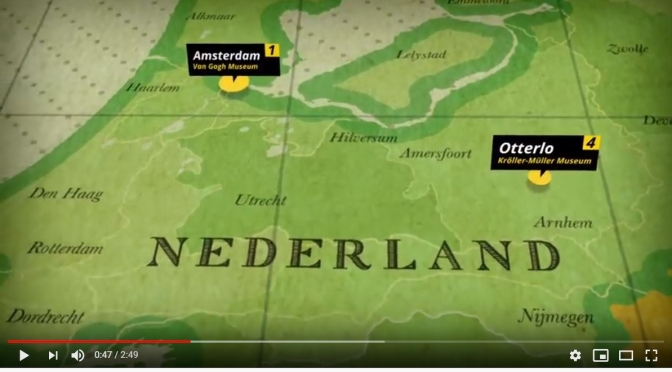
 Vincent van Gogh (1853-1890) is one of the world’s most loved artists. His paintings, drawings and letters inspire people of all ages. His work can be admired in numerous museums around the world. Many places where the artist lived and worked can be visited, from the Netherlands to the South of France. About 25 organisations and museums in the Netherlands, Belgium and France have joined forces under the name Van Gogh Europe. Together they are actively engaged in maintaining and promoting Van Gogh’s heritage.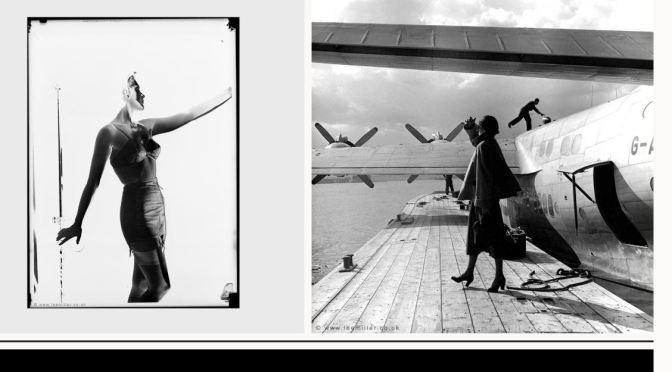
 The Surrealist eye informed everything Miller did, and her work presents the world in a way that encourages us to view it in a different manner. Written and collected by her son Antony, Surrealist Lee Miller amasses more than one hundred full-page images from throughout the artist’s life as an attestation to her wonderful way of seeing.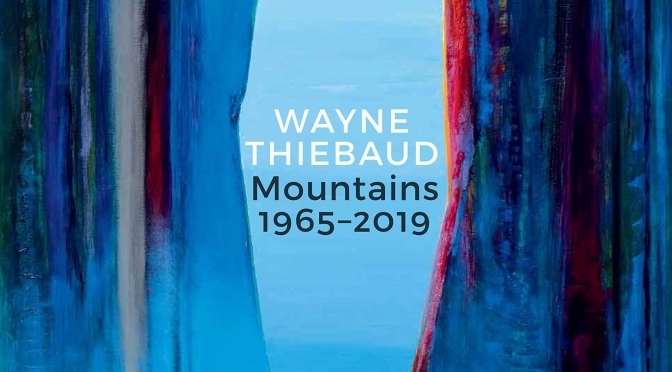
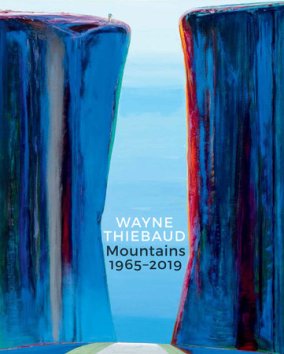 In the 2000s, California-based painter Wayne Thiebaud began focusing on a series of mountain paintings, a subject he had first addressed in the 1960s and 1970s. Rendered in his signature confectionary palette, these colorful works combine memories of mountains he had seen in childhood and observations of the summits of the Sierra Nevada Range in Yosemite. With their heroic, exaggerated proportions and unusual perspectives, these paintings seem to combine fiction and reality. Conveying a sense of the sublime and the vast magnitude of our surroundings, they draw upon the history of landscape painting of the American West.


 Times Critics Talk About Their Year-End Lists
 Boomers Daily