Rossini’s 1829 opera “William Tell” is rarely performed today, but its Overture lives on as one of the most popular works in the classical repertoire. The Overture is essentially an instrumental suite written in four parts and performed without pause. The best-known section is the last, the allegro vivace, famously used as the rousing theme music for “The Lone Ranger” radio and TV series (and notoriously so in “A Clockwork Orange).
Did you too see it, drifting, all night, on the black river? Did you see it in the morning, rising into the silvery air – An armful of white blossoms, A perfect commotion of silk and linen as it leaned into the bondage of its wings; a snowbank, a bank of lilies, Biting the air with its black beak? Did you hear it, fluting and whistling A shrill dark music – like the rain pelting the trees – like a waterfall Knifing down the black ledges? And did you see it, finally, just under the clouds – A white cross Streaming across the sky, its feet Like black leaves, its wings Like the stretching light of the river? And did you feel it, in your heart, how it pertained to everything? And have you too finally figured out what beauty is for? And have you changed your life?
Has comedy evolved since you started? I think a lot more is allowed. When I was first starting out and was on “Laugh-In,” around ’71, I was trying to keep a low profile when I’d be working on something new.
Did you have that sense early in your career that your approach to comedy was different from most comedians? No. I just wanted to do the person, and more than likely the character would be self-confident and secure in her world. for instance. She mostly was looking out for herself and skewering pomposity, if I was going to be true to a child, the humor would take on a different quality.
Later this month, Jacques-Louis David’s Neoclassical masterpiece of Napoleon crossing the alps will travel to New York for the very first time. Displayed at the Brooklyn Museum alongside Kehinde Wiley’s contemporary reinterpretation, both works in this unprecedented pairing reflect the unique conditions of their respective times.
.
It’s just one of January’s must-see exhibitions, chosen by Tim Marlow, the Design Museum in London’s new director and CEO. Don’t miss this and other exhibitions opening this month in Basel, Cornwall, and Los Angeles.
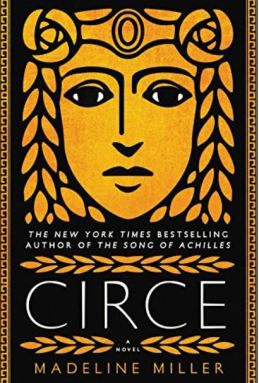
Madeline Miller, author of our December pick for the NewsHour-New York Times book club, Now Read This, joins Jeffrey Brown to answer reader questions on “Circe,” and Jeff announces the January book selection.
About the book:
In the house of Helios, god of the sun and mightiest of the Titans, a daughter is born. But Circe is a strange child–not powerful, like her father, nor viciously alluring like her mother. Turning to the world of mortals for companionship, she discovers that she does possess power–the power of witchcraft, which can transform rivals into monsters and menace the gods themselves.
Threatened, Zeus banishes her to a deserted island, where she hones her occult craft, tames wild beasts and crosses paths with many of the most famous figures in all of mythology, including the Minotaur, Daedalus and his doomed son Icarus, the murderous Medea, and, of course, wily Odysseus.
But there is danger, too, for a woman who stands alone, and Circe unwittingly draws the wrath of both men and gods, ultimately finding herself pitted against one of the most terrifying and vengeful of the Olympians. To protect what she loves most, Circe must summon all her strength and choose, once and for all, whether she belongs with the gods she is born from, or the mortals she has come to love.
With unforgettably vivid characters, mesmerizing language and page-turning suspense, Circe is a triumph of storytelling, an intoxicating epic of family rivalry, palace intrigue, love and loss, as well as a celebration of indomitable female strength in a man’s world.
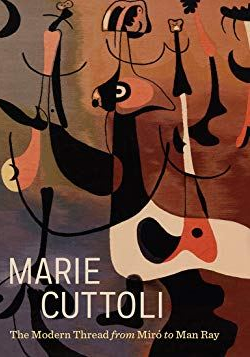
In 1930s Paris, leading modern artists experimented with tapestry design, thanks to pioneering entrepreneur Marie Cuttoli (1879–1973). Cuttoli lived between Algeria and Paris and collected work by artists such as Pablo Picasso, Joan Miró, and Georges Braque.
This exhibition traces her career, from her early work in fashion and interiors to her revival of the French tapestry industry. She commissioned the most celebrated artists of her time—Rouault, Léger, Picasso, Braque, Le Corbusier, Man Ray, and Miró, among others—to create designs for the historic tapestry workshops in Aubusson. By uniting these important paintings and drawings with the resulting tapestry, this exhibition shows their true purpose, revealing modernism’s profound dialogue with the decorative arts.
Memory sits at the core of both literature and lives. Yet forgetting is also a part of our brains’ daily working, bringing its own human truths and a necessary path for moving forward. Lewis Hyde’s new _A Primer for Forgetting: Getting Past the Past_, provides inspiration for a deep-dive discussion of memory’s other side, with this august panel of writers and neuroscientists: poets Jane Hirshfield and Margaret Gibson, author Lewis Hyde, and UCSF neuroscientists Aimee Kao, Bruce Miller, and Virginia Sturm.
Co-hosted by Litquake, San Francisco’s Literary Festival
Jane Hirshfield’s ninth poetry collection, Ledger (Knopf), appears in 2020. Chancellor emerita of the Academy of American Poets and recently elected into the American Academy of Arts & Sciences, she works frequently at the intersection of poetry and science. Her work appears in The New Yorker, Atlantic, Poetry, et al.
Listen to Poet and Professor Margaret Gibson below:
Margaret Gibson, current Connecticut Poet Laureate, is the author of 12 books of poetry, including Not Hearing the Wood Thrush (2018) and Broken Cup (2014), centered on memory loss from Alzheimer’s disease and the gifts of sustaining presence through lament, acceptance, and love. She is Professor Emerita at the University of Connecticut.
Listen to author Lewis Hyde below:
Lewis Hyde’s recent book, A Primer for Forgetting (FSG, 2019), explores the many situations in which forgetfulness is more useful than memory—in myth, personal psychology, politics, art and spiritual life. A MacArthur Fellow, Hyde taught for many years at Kenyon College.
It may be yet another “comeback” for the former star of “Saturday Night Live,” but it may be his biggest, as he gets acclaim for his starring role in the Netflix comedy “Dolemite Is My Name.” Tracy Smith reports.
Her work explores gastronomy, travel, lifestyle, architecture and pop culture for selected clients including Vogue, The New York Times, Wall Street Journal, Tmag, Afar, Vanity Fair France, M le Magazine du Monde, LVMH, Nespresso, Free People, and Penguin Press among many others.
Jessie Kanelos Weiner is a Franco-American illustrator, author and food stylist based in Paris and New York. Born and raised in Chicago, she was a costume designer in a previous life when picking up watercolor for the first time, developing her highly detailed, whimsical and instantly recognizable style. She is the coauthor of “Paris In Stride” (Rizzoli), author of “Edible Paradise”: A Coloring Book of Seasonal Fruits and Vegetables” (Universe) and 8 cookbooks published by Editions Marabout.She is currently working on the next book in the “In Stride” series.
Located in Bordeaux’s former submarine base, the BASSINS DE LUMIÈRES will present monumental immersive digital exhibitions devoted to the major artists in the history of art and contemporary art. The submarine base’s surface area is three times the size of that of the Carrières de Lumières in Les Baux-de-Provence and five times that of the Atelier des Lumières in Paris.
The digital exhibitions will be perfectly adapted to the monumental architecture of the submarine base and will be reflected in the water of the four enormous basins, thereby adding a new dimension to the immersive experience. Visits will be conducted on gangways above the water and along the quays of the enormous basins.
On 17 April 2020, Culturespaces will open the largest digital art centre in the world: the Bassins de Lumières. France’s leading private operator in the management and promotion of monuments, museums, and art centres, Culturespaces is pursuing the creation of digital art centres and immersive exhibitions.

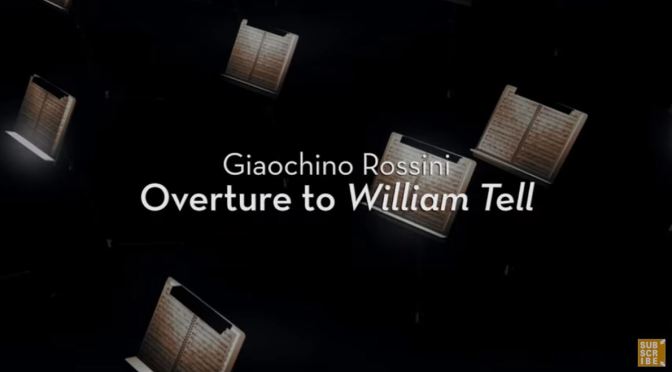
 Rossini’s 1829 opera “William Tell” is rarely performed today, but its Overture lives on as one of the most popular works in the classical repertoire. The Overture is essentially an instrumental suite written in four parts and performed without pause. The best-known section is the last, the allegro vivace, famously used as the rousing theme music for “The Lone Ranger” radio and TV series (and notoriously so in “A Clockwork Orange).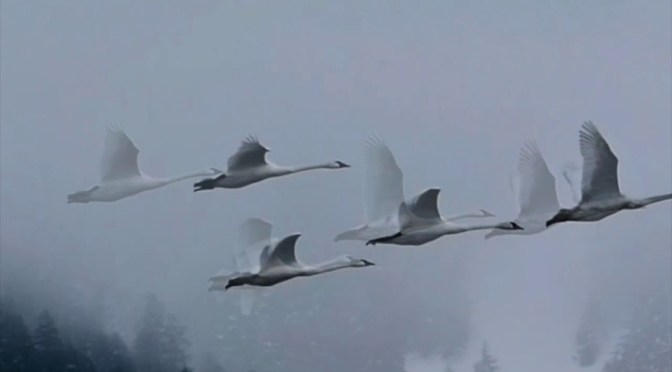
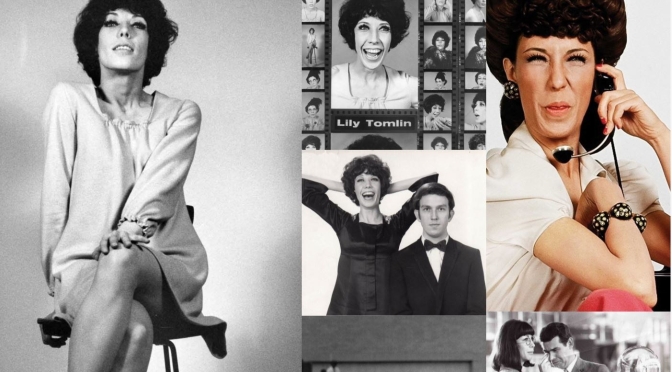
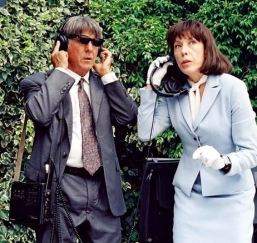 Has comedy evolved since you started? I think a lot more is allowed. When I was first starting out and was on “Laugh-In,” around ’71, I was trying to keep a low profile when I’d be working on something new.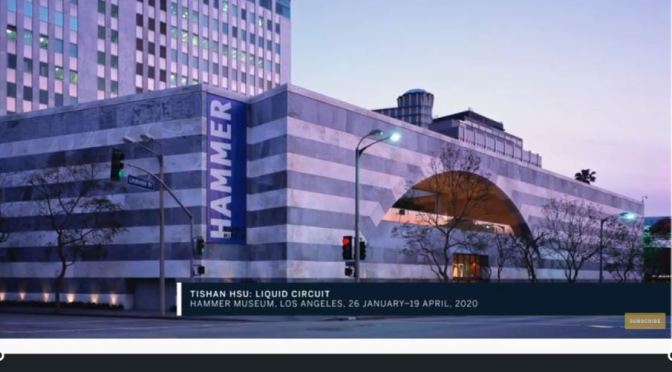

 In the house of Helios, god of the sun and mightiest of the Titans, a daughter is born. But Circe is a strange child–not powerful, like her father, nor viciously alluring like her mother. Turning to the world of mortals for companionship, she discovers that she does possess power–the power of witchcraft, which can transform rivals into monsters and menace the gods themselves.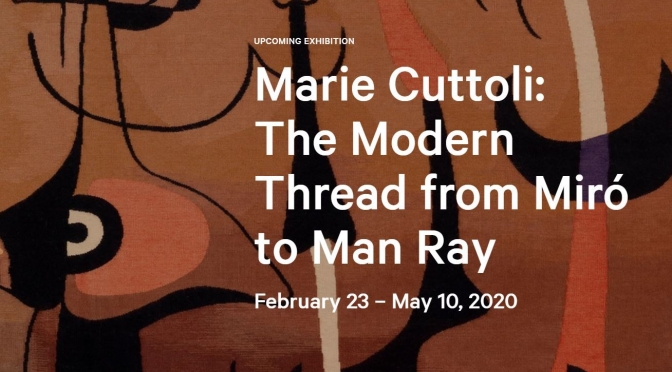

 and Paris and collected work by artists such as Pablo Picasso, Joan Miró, and Georges Braque.
 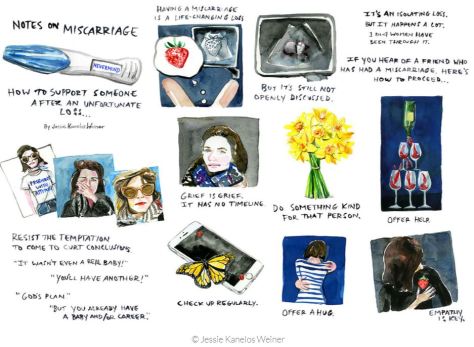 Jessie Kanelos Weiner is a Franco-American illustrator, author and food stylist based in Paris and New York. Born and raised in Chicago, she was a costume designer in a previous life when picking up watercolor for the first time, developing her highly detailed, whimsical and instantly recognizable style. She is the coauthor of “Paris In Stride” (Rizzoli), author of “Edible Paradise”: A Coloring Book of Seasonal Fruits and Vegetables” (Universe) and 8 cookbooks published by Editions Marabout.
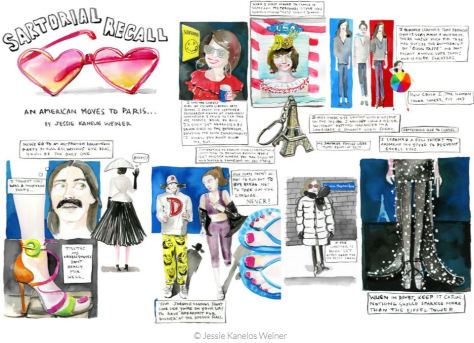 She is currently working on the next book in the “In Stride” series.
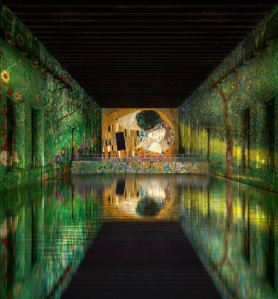 Located in Bordeaux’s former submarine base, the BASSINS DE LUMIÈRES will present monumental immersive digital exhibitions devoted to the major artists in the history of art and contemporary art. The submarine base’s surface area is three times the size of that of the Carrières de Lumières in Les Baux-de-Provence and five times that of the Atelier des Lumières in Paris.
 Boomers Daily