Category Archives: Arts & Literature

Profiles: 76-Year Old Country Singer Terry Allen Releases New Album “Just Like Moby Dick”

The connections to Melville’s masterpiece are metaphorical and allusive, as elusive as the White Whale. The masterly spiritual successor to Lubbock (on everything)Just Like Moby Dick casts its net wide for wild stories, depicting, among other monstrous things, Houdini in existential crisis, the death of the last stripper in town, bloodthirsty pirates (in a pseudo-sequel to Brecht and Weill’s “Pirate Jenny”), the wars in Iraq and Afghanistan (in the “American Childhood” suite), a vampire-infested circus, mudslides and burning mobile homes, and all manner of tragicomic disasters, abandonments, betrayals, bad memories, failures, and fare-thee-wells.

Iconic and iconoclastic Texan songwriter and visual artist Terry Allen’s heartbreaking, hilarious new album, his first set of new songs since 2013’s Bottom of the World, features the full Panhandle Mystery Band, including co-producer Charlie Sexton (Dylan, Bowie, Blaze), Shannon McNally, and Jo Harvey Allen; mainstays Bukka AllenRichard Bowden, and Lloyd Maines; and co-writes with Joe Ely and Dave Alvin

Album Website

Terry Allen (born May 7, 1943 in Wichita, Kansas) is an American Texas country and outlaw country singer-songwriter, painter and conceptual artist from Lubbock, Texas. He currently lives in Santa Fe, New Mexico. He has recorded twelve albums of original songs, including the landmark releases Juarez (1975) and Lubbock (on everything) (1979). His song “Amarillo Highway” has been covered by Bobby Bare, Sturgill Simpson and Robert Earl Keen. Other artists who have recorded Allen’s songs include Guy Clark, Little Feat, David Byrne, Doug Sahm, Ricky Nelson, and Lucinda Williams. Rolling Stone magazine describes his catalog, reaching back to Juarez as “..uniformly eccentric and uncompromising, savage and beautiful, literate and guttural.”

From Wikipedia

Interviews: 72-Year Old Artist James Wrayge

Excerpts from a NextAvenue.org online article interview:

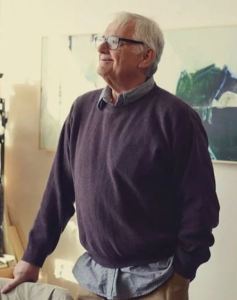
While Wrayge’s work has appeared in galleries and been bought across the globe, he prefers to focus on creating, not selling Photo by Elle Moulin in NextAvenue

“I don’t like the word ‘evolve,’” he says. “Art means the same thing today as it always has. Styles change, but art doesn’t.”

Hesitant to put too defining a label on his work, Wrayge claims his paintings have “a landscape feel.” He doesn’t consider them to be abstract. “That’s a word invented by the press, not by painters,” he says. “What I prefer to say [about my paintings] is that they are a visual manifestation of my values.”

James Wrayge Fine Artist website pageIn James Wrayge’s quiet studio on an early winter afternoon, there is a tangible sense of  purpose. Wrayge’s paintings line the walls along the portion of the space he shares with another artist at the Northrup King Building in Minneapolis. There are also some paintings on the floor propped up against the same walls. And there is one — in progress — set on an easel in the corner.

James Wrayge website

NextAvenue logo

To read more

History & Literature: “Homer and the Epics”

The bard and the visual artists he inspired.

Phoebe C. Segal, Mary Bryce Comstock Curator of Greek and Roman Art

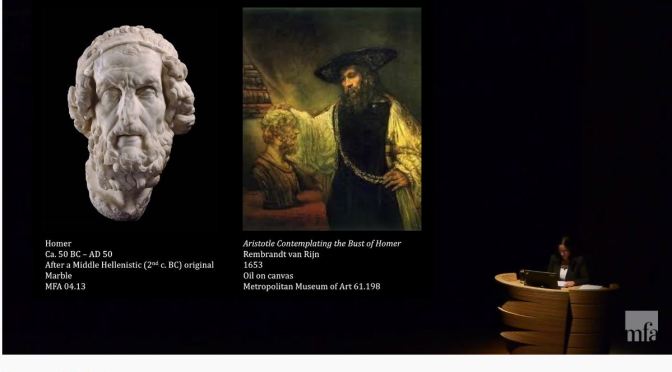
Homer is the legendary author of the Iliad and the Odyssey, two epic poems that are the central works of ancient Greek literature. The Iliad is set during the Trojan War, the ten-year siege of the city of Troy by a coalition of Greek kingdoms. It focuses on a quarrel between King Agamemnon and the warrior Achilles lasting a few weeks during the last year of the war. The Odyssey focuses on the ten-year journey home of Odysseus, king of Ithaca, after the fall of Troy. Many accounts of Homer’s life circulated in classical antiquity, the most widespread being that he was a blind bard from Ionia, a region of central coastal Anatolia in present-day Turkey. Modern scholars consider these accounts legendary.

From Wikipedia

Video Interviews: 61-Year Old Director Tim Burton – Value Of Music In His Films

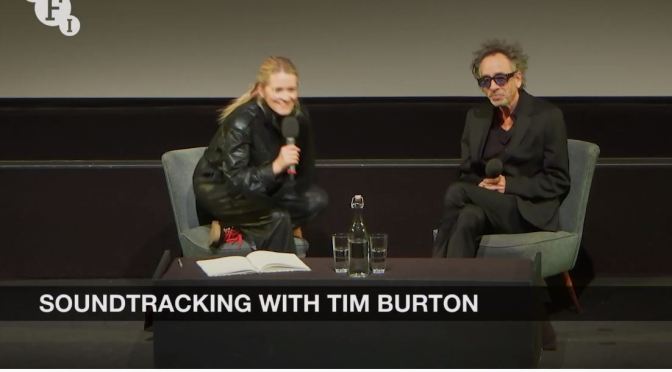
BFI logoIn an interview filmed just before Christmas, Tim Burton joins Soundtracking podcast host Edith Bowman to talk in depth about his work and the importance of music in his films.
In 1985, Pee-wee’s Big Adventure brought together Burton and a then-unknown composer called Danny Elfman, a collaboration that’s produced 16 films – and counting. With classics such as Batman, Beetlejuice and Edward Scissorhands, audiences have grown up with a creative partnership that’s formed an unmistakable and formidable artistic voice, spanning over 30 years.

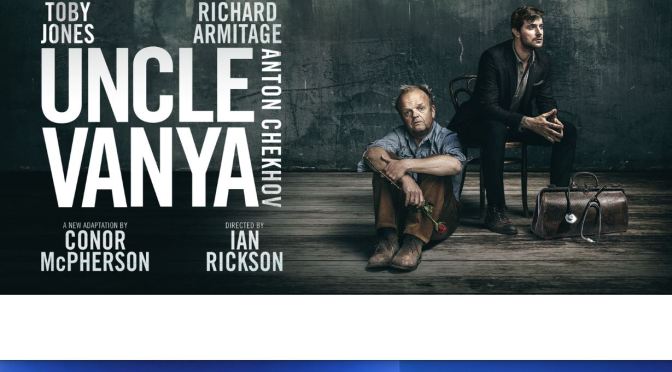
Great Plays: Chekhov’s “Uncle Vanya” Explores Aging & Disappointment (London Theater Review)

Monocle 24 podcast Monocle on Culture logoTheatre critics Matt Wolf and Lyn Gardner join Robert Bound to give their verdict on the new production of Chekhov’s ‘Uncle Vanya’ at the Harold Pinter Theatre, starring Toby Jones and Ciarán Hinds.
Uncle Vanya is a play by the Russian playwright Anton Chekhov. It was first published in 1898 and received its Moscow première in 1899 in a production by the Moscow Art Theatre, under the direction of Konstantin Stanislavski.

The play portrays the visit of an elderly professor and his glamorous, much younger second wife, Yelena, to the rural estate that supports their urban lifestyle. Two friends—Vanya, brother of the professor’s late first wife, who has long managed the estate, and Astrov, the local doctor—both fall under Yelena’s spell, while bemoaning the ennui of their provincial existence. Sonya, the professor’s daughter by his first wife, who has worked with Vanya to keep the estate going, suffers from her unrequited feelings for Dr. Astrov. Matters are brought to a crisis when the professor announces his intention to sell the estate, Vanya and Sonya’s home, with a view to investing the proceeds to achieve a higher income for himself and his wife.

From Wikipedia

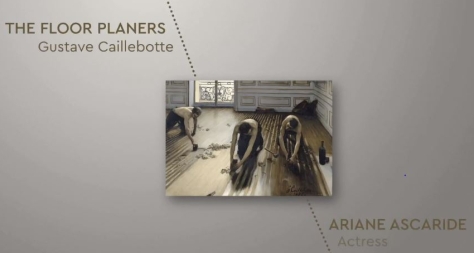
Art Review: “The Floor Planers” By Impressionist Gustave Caillebotte (1875) (Musée d’Orsay Video)

For her performances in over sixty films and forty theatrical productions, Ariane Ascaride has notably been awarded the César for best actress in Marius and Jeannette (1998) and the Coppa Volpi for lead actress at the Venice mostra for Gloria Mundi (2019), two films directed by Robert Guédiguian. She is also a director and a screenwriter.

The Floor Planers by Gustave Caillebotte 1875 video by Musée d'Orsay Januaary 2020

Les raboteurs de parquet (English title: The Floor Scrapers) is an oil painting by French Impressionist Gustave Caillebotte. The canvas measures 102 by 146.5 centimetres (40.2 in × 57.7 in). It was originally given by Caillebotte’s family in 1894 to the Musée du Luxembourg, then transferred to the Musée du Louvre in 1929. In 1947, it was moved to the Galerie nationale du Jeu de Paume, and in 1986, it was transferred again to the Musée d’Orsay in Paris, where it is currently displayed.

Musée d’Orsay website

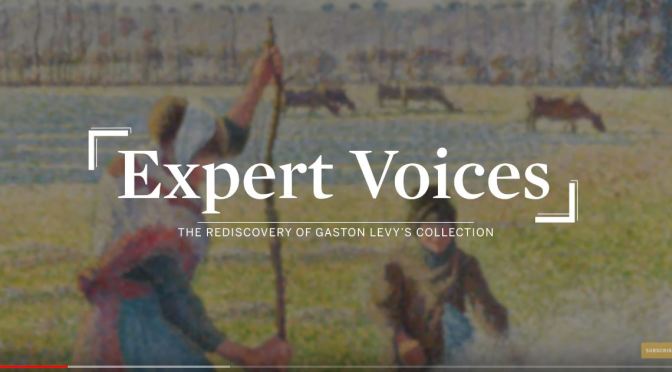
Art: “The Rediscovery Of Gaston Lévy’s Collection” Of Paul Signac & Camille Pissarro (Sotheby’s Video)

Known best as the author of Paul Signac’s first catalog raisonné, Gaston Lévy was perhaps the most remarkable art collector in pre-war Paris. After the Nazi regime seized his properties and dispersed his paintings, masterpieces were thought to have been lost to the Lévy family forever.

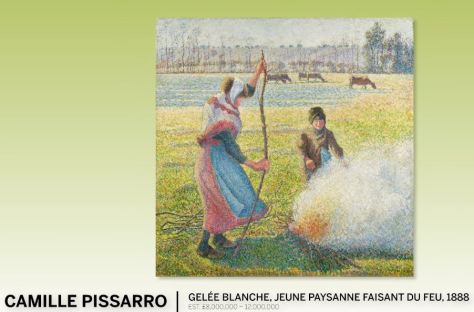
Camille Pissarro Gelée blanche Jeune Paysanne Faisant Du Feu 1888

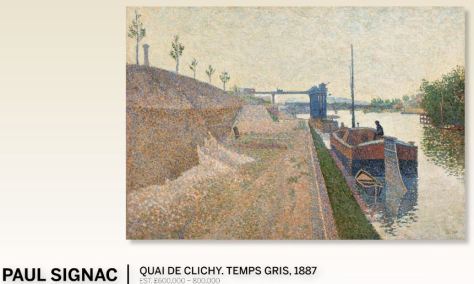
However, This February Sotheby’s is proud to offer three recently restituted masterworks from the Lévy collection in our Impressionist & Modern Art Evening Sale. In this episode of Expert Voices, Sotheby’s Head of Restitution Lucian Simmons chronicles the story of Gaston Lévy’s collection and explores the extraordinary talent of Paul Signac and Camille Pissarro through their works Gelee Blache, Quai de Clichy and La Corne D’or.

Paul Signac Quai De Clichy Temps Gris 1887

(4 February | London)

Top Documentaries: “Honeyland” Is An “Oscar Game-Changer” (NY Times)

The film… “is nothing less than a found epic, a real-life environmental allegory and, not least, a stinging comedy about the age-old problem of inconsiderate neighbors.”

“Honeyland” is the first film to be nominated for best documentary and best international feature (the category formerly known as best foreign-language film). It follows Hatidze Muratova, a middle-aged beekeeper whose peaceful life in the North Macedonian countryside is disrupted when a chaotic family moves in next door.

The movie premiered at the Sundance Film Festival last year and came out on top with three awards, including the grand jury prize for documentary in the world cinema showcase.

From a New York Times online review

New Exhibitions: Painter Andrew Wyeth (1917-2009) – The Forum Gallery NYC

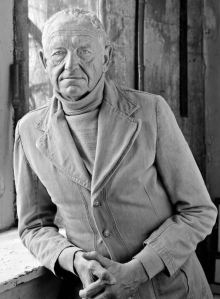
Photo of Andrew Wyeth by Peter Ralston In the Studio Courtesy of Ralston Gallery

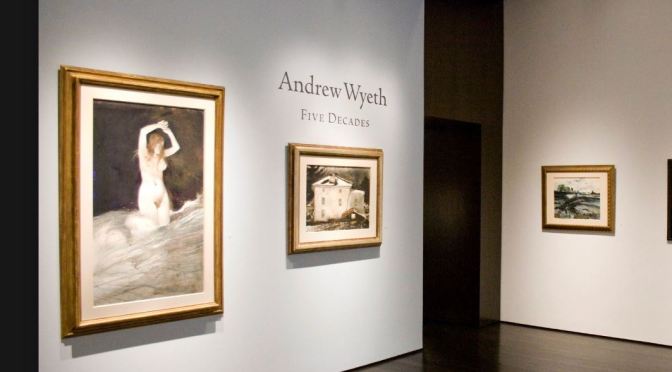
Forum Gallery, New York, presents an exhibition of works by Andrew Wyeth (1917-2009), who set the standard for American figurative art in the second half of the Twentieth Century. Working in pencil, watercolor, egg tempera and his much-beloved personal medium of drybrush, Wyeth, throughout his life, was a resolute champion of the universal life force of each person he chose to paint, and of the unique, difficult, ever-changing rural American world in which he chose to live. His art was controversial as it was popular, and he remains one of very few living artists to be celebrated by important single-person exhibitions at The Metropolitan Museum of Art in New York (1976) and the National Gallery of Art, Washington, DC (1987).

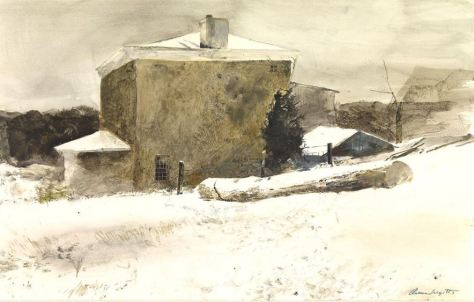
Firewood Study for Groundhog Day 1959 Andrew Wyeth
Firewood Study for Groundhog Day 1959 Andrew Wyeth (The Forum Gallery NYC)

“Andrew Wyeth: Five Decades” at Forum Gallery features paintings dated from 1940 through 1994, including landscapes that imply personal struggle and portray great beauty; and provocative figurative works, including examples from The Helga Pictures.

Forum Gallery NYC LogoWebsite


Artists: Belgian Surrealist Painter René Magritte Linked “Consciousness And The External World”

From a Christies.com online article:

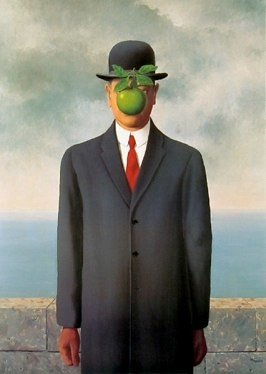
René Magritte, The Son of Man, 1964

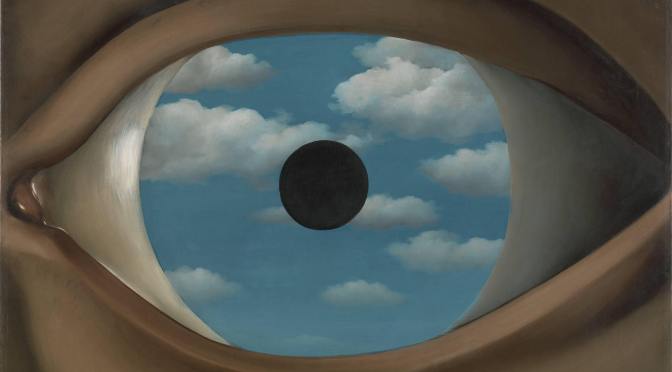
‘The creation of new objects, the transformation of known objects; a change of substance in the case of certain objects: a wooden sky, for instance; the use of words in association with images; the misnaming of an object… the use of certain visions glimpsed between sleeping and waking, such in general were the means devised to force objects out of the ordinary, to become sensational, and so establish a profound link between consciousness and the external world.’

René François Ghislain Magritte (1898-1967) was born in Lessines, Belgium. His father was a tailor and textile merchant; his mother committed suicide in 1912, drowning herself in the River Sambre.

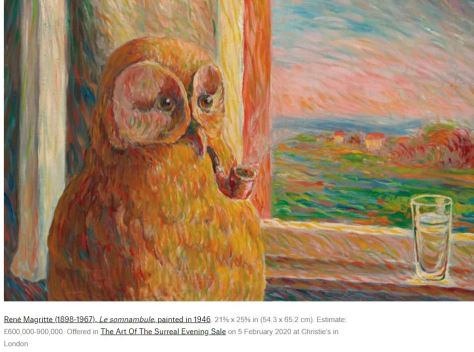
René Magritte 1898 - 1967 Le Somnambule 1946

From the 1930s, Magritte sought to find ‘solutions’ to particular ‘problems’ posed by different types of objects, a method that enabled him to challenge and reconfigure the most ubiquitous and commonplace elements of everyday life. These problems obsessed him until he was able to conceive of an image to solve them.

This philosophical method had come to him after waking from a dream in 1932. In his semi-conscious state, he looked over at a birdcage that was in his room but saw not the bird that inhabited the cage, but instead an egg. This ‘splendid misapprehension’ allowed him to grasp, in his own words, ‘a new and astonishing poetic secret.’

Read full article