“Imagine all the people” is a project by Turin-based artist and illustrator Pierpaolo Rovero that fantasizes about the way people around the word spend their time in quarantine. Depicting a diverse range of metropolitan panoramas, from New York and Paris, to Jerusalem, to Tokyo, Rovero imagines the citizens of each city indulging in the same activity while stuck at home, allowing viewers to catch glimpses through windows, balconies and skylights.
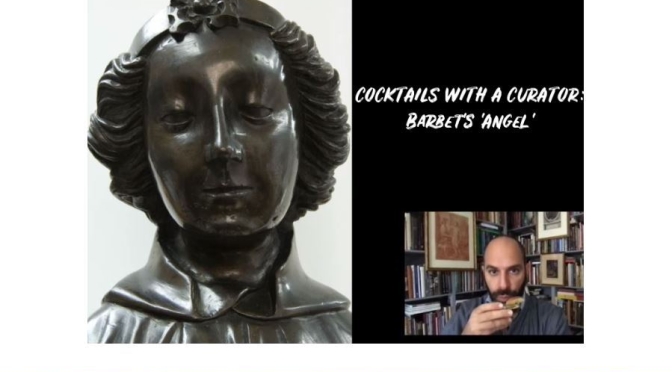
In this week’s episode of “Cocktails with a Curator,” discover the fascinating history of Jean Barbet’s Angel, an incredibly rare bronze from fifteenth-century France whose origins are shrouded in mystery. Xavier F. Salomon, Peter Jay Sharp Chief Curator, discusses the royal cannon-maker who cast the sculpture and the possibility that it once resided in Paris’s Sainte-Chapelle. This week’s complementary cocktail is the Angel Face, customarily garnished with an apple slice.
Painted in 1996, David Hockney’s “30 Sunflowers” is a bold and luscious still life of contemporary times. In this episode of Expert Voices, discover how Hockney was inspired to paint “30 Sunflowers” after a decade hiatus, and hear Hockney himself explain the influence of the Old Masters in this vivid work.
Hosted in the Andito degli Angiolini space at Palazzo Pitti, “The Immensity of the Universe in the Art of Giovanna Garzoni” exhibition encompasses 100 floral compositions, still lives and miniatures by the Baroque, Marche-born painter friend of Artemisia Gentileschi.
The show has been curated by Sheila Barker of The Medici Archive Project and the Advancing Women Artists foundation is running a challenge to inspire the creation of contemporary art based on Garzoni’s oeuvre. While her role in the evolution of scientific illustration is widely acknowledged, Giovanna Garzoni is less familiar as an illustrator of geographical fantasy in the age of the Baroque.
In harmonic and often relatively small compositions, the painter combines exotic objects of extremely varied provenance such as Chinese porcelain, Pacific nautili, Mexican marrows and flowers, South American plants and English lapdogs, in an effort both to astonish and to amuse.
Turning her back on the conventional role reserved for women in her day, Garzoni travelled in Italy, and possibly also in France, gaining access to the most important collections of curios of her era. The exhibition showcases her works collected by the Medici and still owned by the Gallerie degli Uffizi, alongside targeted loans illustrating the artist’s field of action and her prowess as a portraitist.
On the basis of a previously untapped inventory, a section of the exhibition reconstructs Vittoria della Rovere’s Wunderkammer, once hosted in the Sala dell’Aurora in the villa of Poggio Imperiale, thus indirectly shedding light also on a leading member of the grand ducal family.
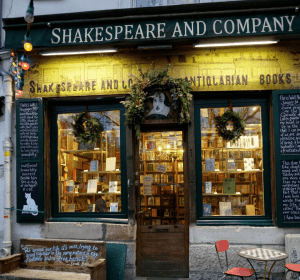
What do these writers have in common? They were all members of the Shakespeare and Company lending library.
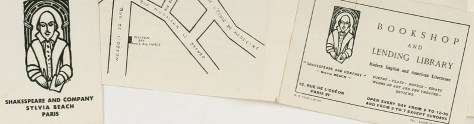
In 1919, an American woman named Sylvia Beach opened Shakespeare and Company, an English-language bookshop and lending library in Paris. Almost immediately, it became the home away from home for a community of expatriate writers and artists now known as the Lost Generation. In 1922, she published James Joyce’s Ulysses under the Shakespeare and Company imprint, a feat that made her—and her bookshop and lending library—famous around the world. In the 1930s, she increasingly catered to French intellectuals, supplying English-language publications from the recently rediscovered Moby Dick to the latest issues of The New Yorker. In 1941, she preemptively closed Shakespeare and Company after refusing to sell her last copy of Joyce’s Finnegans Wake to a Nazi officer.
The Shakespeare and Company Project uses sources from the Beach Papers at Princeton University to reveal what the lending library members read and where they lived. The Project is a work-in-progress, but you can begin to explore now. Search and browse the lending library members and books. Read about joining the lending library. Download a preliminary export of Project data. In the coming months, check back for new features and essays.
Peter Paul Rubens was among the most influential artists in 17th-century Europe. Despite a childhood marred by a scandal that landed his father in prison, Rubens rose to become not only a prominent court painter in the Spanish Netherlands but also a lauded diplomat who worked across Western Europe.
With countless biographies written about the artist and exhibitions of his work continuing into the present day, the legacy of this Flemish Baroque artist is hard to overstate.
In this episode, Getty curator Anne Woollett discusses the life of Rubens through 17th-century biographies by three authors: Giovanni Baglione, Joachim von Sandrart, and Roger de Piles.
Sir Peter Paul Rubens was a Flemish artist and diplomat. He is considered the most influential artist of Flemish Baroque tradition. Rubens’s highly charged compositions reference erudite aspects of classical and Christian history.
In this episode of “Travels with a Curator,” Xavier F. Salomon, Peter Jay Sharp Chief Curator, brings us to the church of Santa Maria delle Carceri in Prato, Italy, to explore the original home of one of the Frick’s spectacular bronzes, “St. John Baptizing” by Francesco da Sangallo. Discover the family connections that link this important sculpture to the church and retrace the history of the bronze from its creation in the sixteenth century to its acquisition by Henry Clay Frick in 1916.
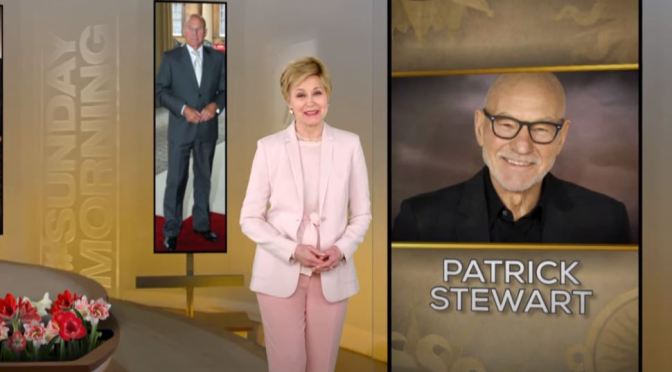
The Shakespearean actor, most recognized for his performances in the sci-fi franchises “X-Men” and “Star Trek,” recently returned to the role of Captain Jean Luc Picard in the CBS All Access series “Star Trek: Picard.” But as “CBS This Morning” co-host Tony Dokoupil found out, Sir Patrick Stewart is much more down-to-earth than his title might imply.
Sir Patrick StewartOBE (born 13 July 1940) is an English actor, director and producer whose work has included roles on stage, television and film, in a career spanning six decades. He has been nominated for Olivier, Golden Globe, Emmy, Screen Actors Guild, and Saturn Awards.
Beginning his career with a long run with the Royal Shakespeare Company, Stewart received the 1979 Laurence Olivier Award for Best Actor in a Supporting Role for his performance in Antony and Cleopatra in the West End. Stewart’s first major screen roles were in BBC-broadcast television productions during the mid-late 1970s, including Hedda, and the I, Claudius miniseries.
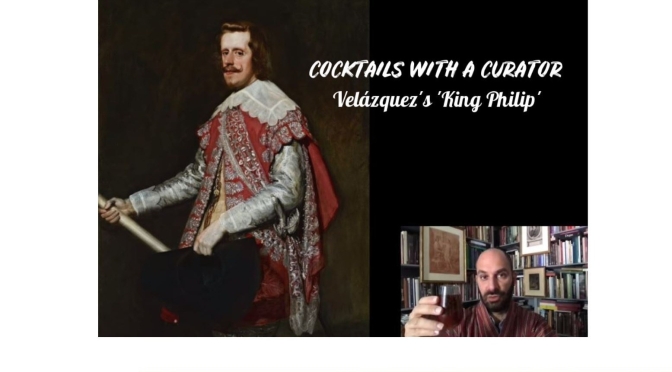
In this week’s episode of “Cocktails with a Curator,” join Xavier F. Salomon, Peter Jay Sharp Chief Curator, as he discusses the sole Velázquez painting at the Frick, “King Philip IV of Spain,” while enjoying a Fitifiti, the popular Spanish cocktail. Examine the extraordinary details and painterly skills that illustrate why the artist is regarded by many (including Xavier) as the greatest European painter who ever lived, and why this work was Henry Clay Frick’s favorite
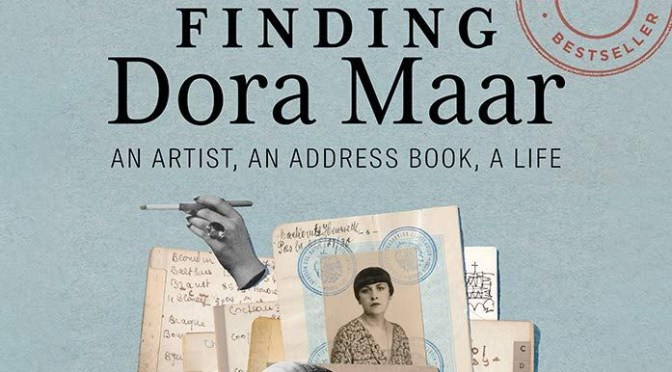
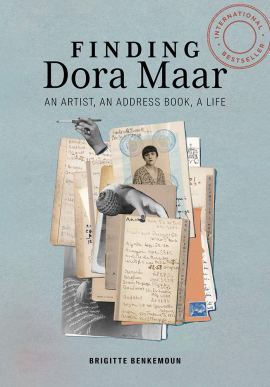
In search of a replacement for his lost Hermès agenda, Brigitte Benkemoun’s husband buys a vintage diary on eBay. When it arrives, she opens it and finds inside private notes dating back to 1951—twenty pages of phone numbers and addresses for Balthus, Brassaï, André Breton, Jean Cocteau, Paul Éluard, Leonor Fini, Jacqueline Lamba, and other artistic luminaries of the European avant-garde.
After realizing that the address book belonged to Dora Maar—Picasso’s famous “Weeping Woman” and a brilliant artist in her own right—Benkemoun embarks on a two-year voyage of discovery to learn more about this provocative, passionate, and enigmatic woman, and the role that each of these figures played in her life.
Longlisted for the prestigious literary award Prix Renaudot, Finding Dora Maar is a fascinating and breathtaking portrait of the artist.
Brigitte Benkemoun is a journalist and writer. She is the author of La petite fille sur la photo (2012) and Albert le Magnifique (2016). Jody Gladding is a poet and translator. She has translated some thirty books from French, including, most recently, Roland Barthes’s Album: Unpublished Correspondence and Texts (2018), Michel Pastoureau’s Yellow: The History of a Color (2019), and Jean Giono’s Occupation Journal (2020).

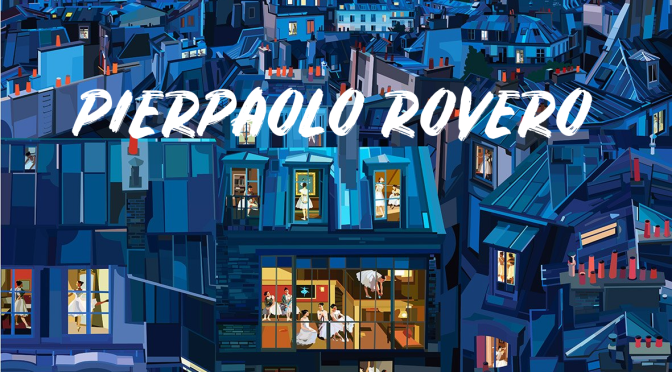
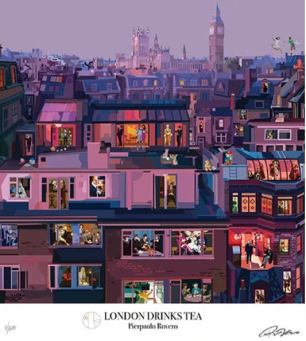 “Imagine all the people” is a project by Turin-based artist and illustrator Pierpaolo Rovero that fantasizes about the way people around the word spend their time in quarantine. Depicting a diverse range of metropolitan panoramas, from New York and Paris, to Jerusalem, to Tokyo, Rovero imagines the citizens of each city indulging in the same activity while stuck at home, allowing viewers to catch glimpses through windows, balconies and skylights.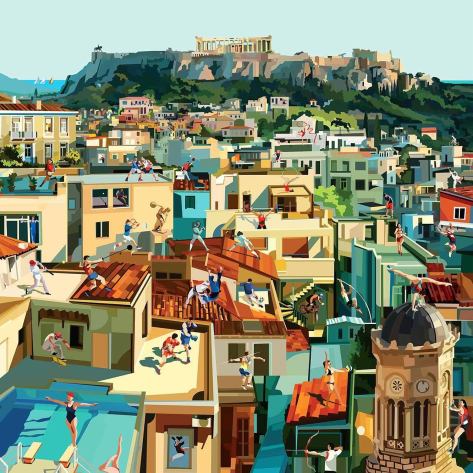
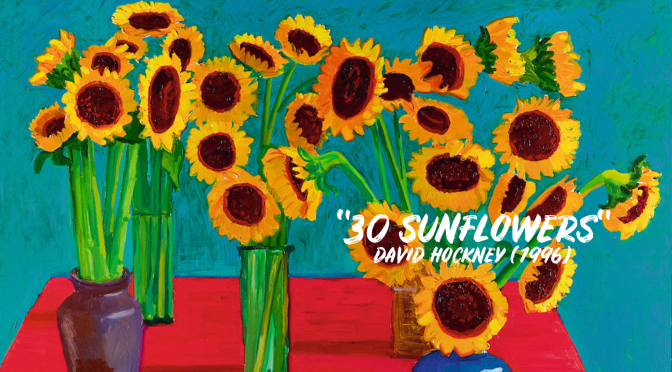
 Painted in 1996, David Hockney’s “30 Sunflowers” is a bold and luscious still life of contemporary times. In this episode of Expert Voices, discover how Hockney was inspired to paint “30 Sunflowers” after a decade hiatus, and hear Hockney himself explain the influence of the Old Masters in this vivid work.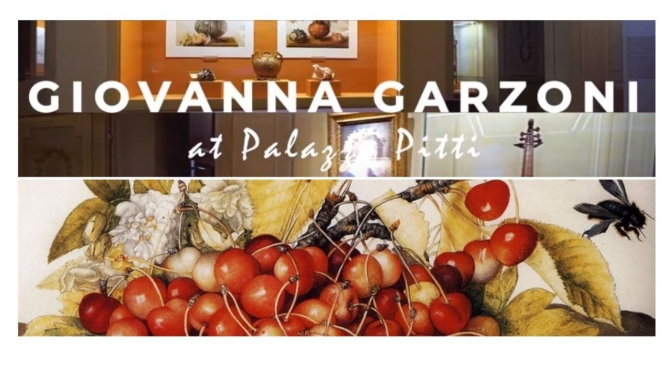
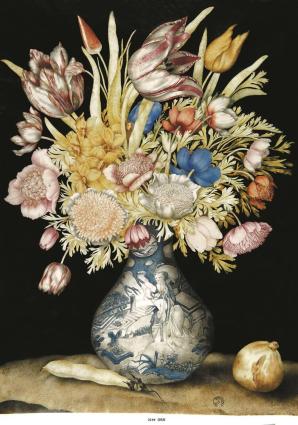 The show has been curated by Sheila Barker of The Medici Archive Project and the Advancing Women Artists foundation is running a challenge to inspire the creation of contemporary art based on Garzoni’s oeuvre. While her role in the evolution of scientific illustration is widely acknowledged, Giovanna Garzoni is less familiar as an illustrator of geographical fantasy in the age of the Baroque.
 Gertrude Stein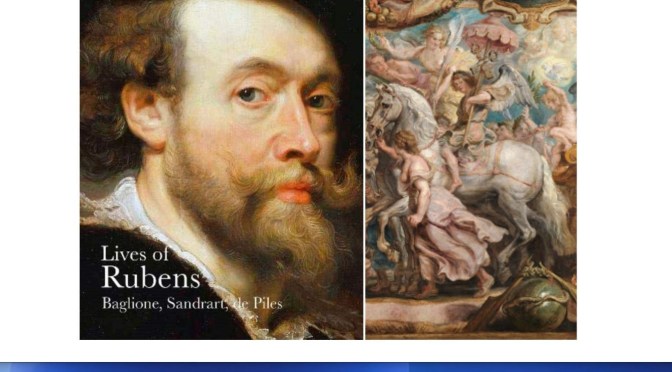
 Peter Paul Rubens was among the most influential artists in 17th-century Europe. Despite a childhood marred by a scandal that landed his father in prison, Rubens rose to become not only a prominent court painter in the Spanish Netherlands but also a lauded diplomat who worked across Western Europe.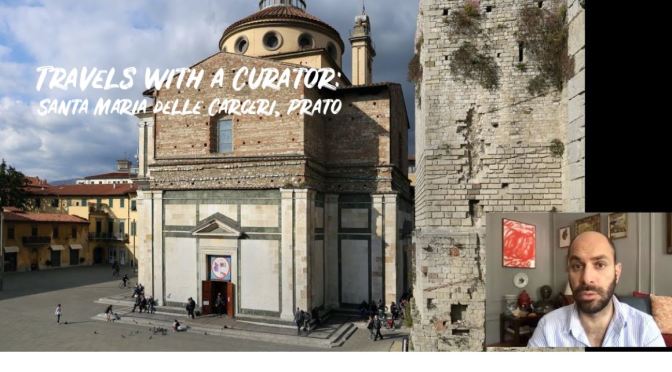
 In search of a replacement for his lost Hermès agenda, Brigitte Benkemoun’s husband buys a vintage diary on eBay. When it arrives, she opens it and finds inside private notes dating back to 1951—twenty pages of phone numbers and addresses for Balthus, Brassaï, André Breton, Jean Cocteau, Paul Éluard, Leonor Fini, Jacqueline Lamba, and other artistic luminaries of the European avant-garde.
 Boomers Daily