
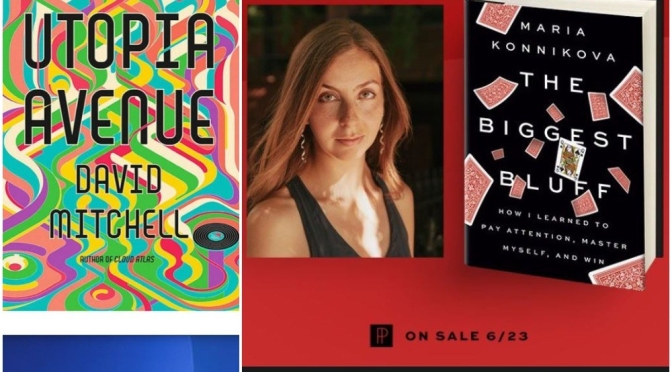
 Daniel Mendelsohn discusses Mitchell’s career and new novel, “Utopia Avenue,” and Maria Konnikova talks about “The Biggest Bluff.”
Category Archives: Arts & Literature
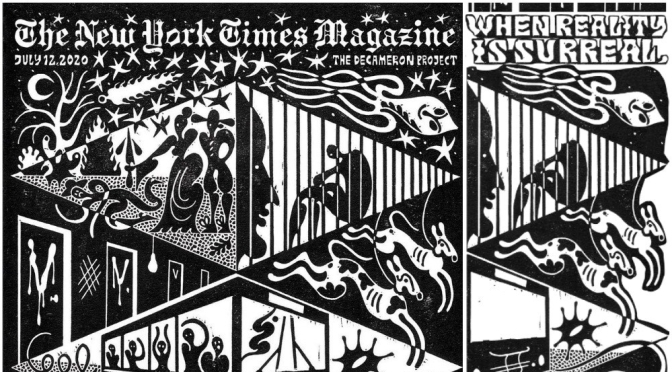
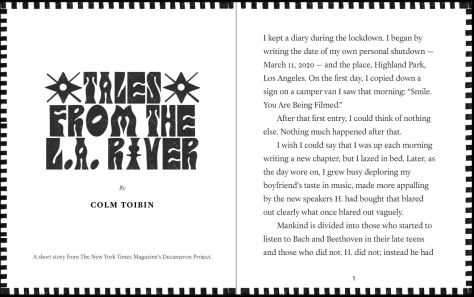
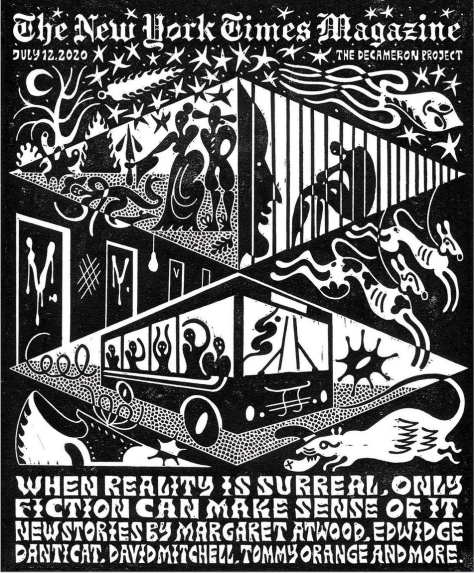
Best New Fiction 2020: “The Decameron Project – The New York Times Magazine”
AS THE COVID-19 PANDEMIC SWEPT THE WORLD, WE ASKED 29 AUTHORS TO WRITE NEW SHORT STORIES INSPIRED BY THE MOMENT. WE WERE INSPIRED BY GIOVANNI BOCCACCIO’S “THE DECAMERON,” WRITTEN AS THE PLAGUE RAVAGED FLORENCE IN THE 14TH CENTURY. 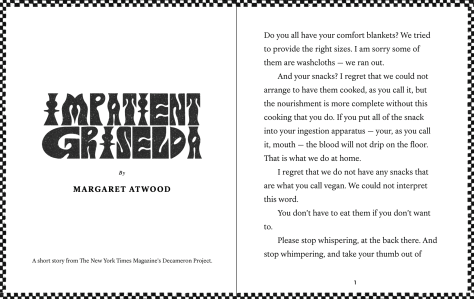
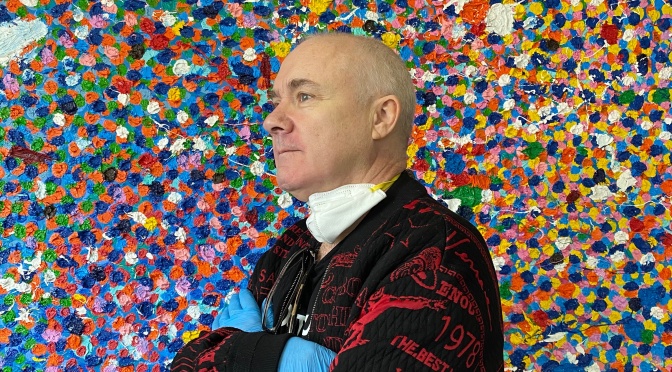
Art Profile: 55-Year Old British Painter Damien Hirst – “Veil Paintings”
“I wanted to make paintings that were a celebration, and that revealed something and obscured something at the same time.” —Damien Hirst
 Damien Steven Hirst (born 1965) is an English artist, entrepreneur, and art collector. He is one of the Young British Artists, who dominated the art scene in the UK during the 1990s. He is reportedly the United Kingdom’s richest living artist, with his wealth valued at £215m in the 2010 Sunday Times Rich List.
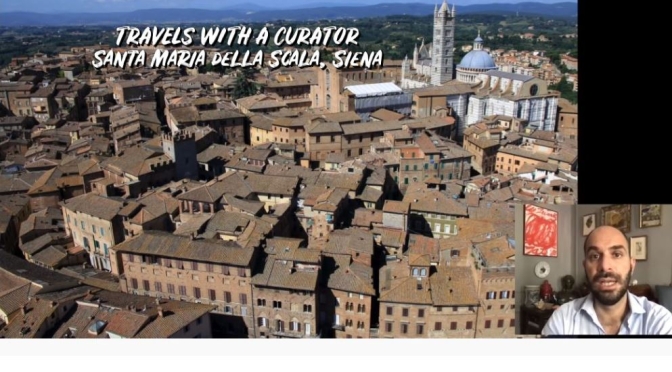
Travels With A Curator: Santa Maria Della Scala In Siena (The Frick Video)
In this week’s episode of “Travels with a Curator,” Xavier F. Salomon, Deputy Director and Peter Jay Sharp Chief Curator, journeys to Siena to explore Santa Maria della Scala, an eleventh-century complex across from the steps of the cathedral. Behind the modest exterior of this hospital turned museum are a variety of magnificent frescoes and sculptures by Lorenzo di Pietro, better known as Vecchietta. The Frick’s “Resurrection” is the only signed and dated work by the artist in the United States.
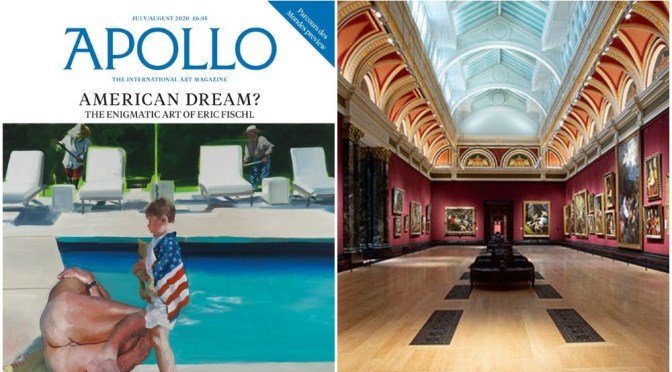
Arts & Literature: “Apollo Magazine – July 2020”

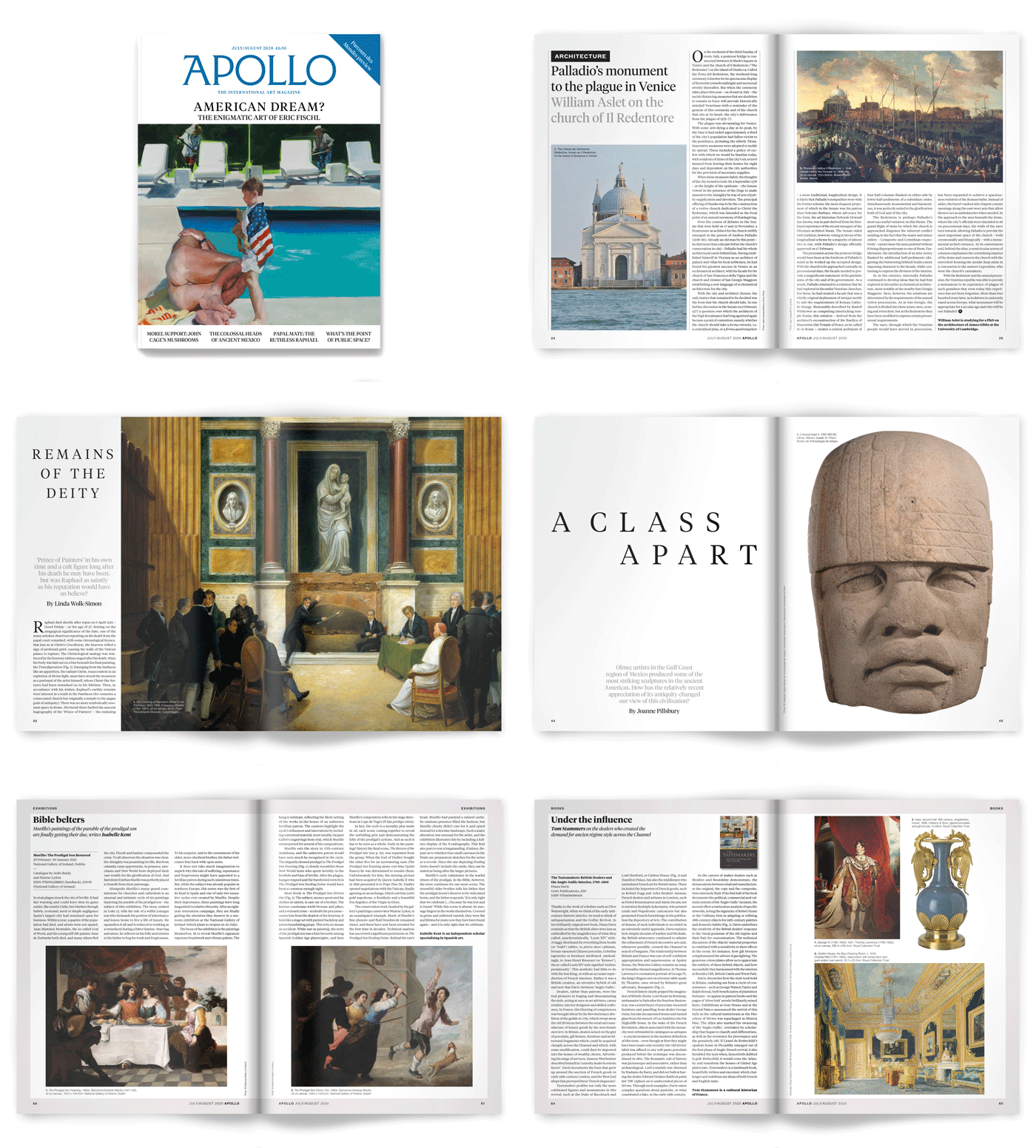
| INSIDE THE ISSUE |
| FEATURES | Eric Fischl interviewed by Thomas Marks; Linda Wolk-Simon on the life and legacy of Raphael; Joanne Pillsbury on the art of the Olmecs; Samuel Reilly on private restitution of colonial-era artefacts; Christopher Turner on shopfronts and gallery facades; Josie Thaddeus-Johns on John Cage’s mushrooms |
| REVIEWS | Isabelle Kent on Murillo at the National Gallery of Ireland; Tom Stammers on the British fashion for French interiors; James Lingwood on Stephen Shore’s photographs; Robert O’Byrne on The Buildings of Ireland |
| MARKET | Melanie Gerlis on art businesses after lockdown; a preview of Parcours des Mondes; and the latest art market columns from Susan Moore and Emma Crichton-Miller |
| PLUS | Rowan Moore and Tamsin Dillon on the future of public spaces; Susan Moore on the mysterious ‘Barbus Müller’ sculptures; William Aslet on Palladio’s monument to the plague in Venice; Robert O’Byrne on Apollo and the Second World War |
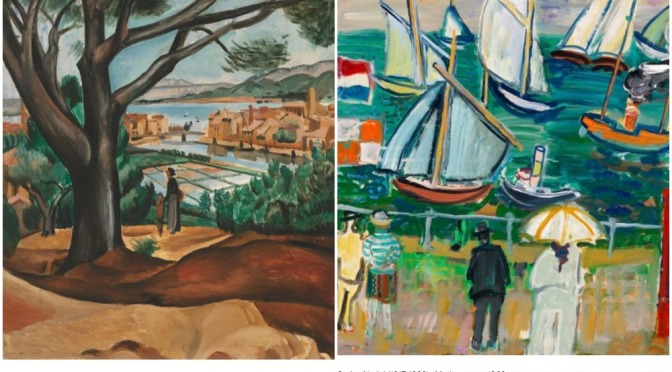
Art History: How The Impressionists Elevated The “French Riviera”
From Christie’s (July 3, 2020):
 It was the Impressionists, Claude Monet and Pierre-Auguste Renoir, who first discovered the artistic potential of the south coast, finding an unspoilt landscape that perfectly matched their aims. ‘It is so beautiful,’ Monet wrote, ‘so bright, so luminous. One swims in blue air and it is frightening.’
Vincent van Gogh captured the landscape in and around Arles and Saint-Rémy in the final years of his life, while the Master of Aix, Paul Cézanne, used the rugged landscape of his native Provence to radically reconceive the very nature of art-making.
Long before the South of France became synonymous with glamour and sun-drenched seduction — think of Cary Grant and Grace Kelly in the 1955 film To Catch a Thief, or Brigitte Bardot and Alain Delon on the beaches of Saint-Tropez — this corner of Europe attracted a very different kind of tourist.
 Since the turn of the century, the sleepy fishing villages and remote towns of the Provençal hills had lured artists from Paris and beyond — the bright light, dazzling colours and palpable presence of the classical past all serving to inspire and revive jaded spirits.
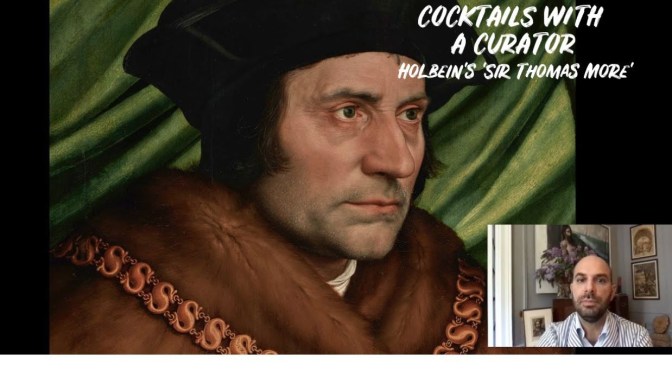
Cocktails with a Curator: Hans Holbein’s ‘Sir Thomas More’ Of 1527 (Video)
In this week’s episode of “Cocktails with a Curator,” Xavier F. Salomon, Deputy Director and Peter Jay Sharp Chief Curator, examines one of the Frick’s most beloved paintings, Hans Holbein’s “Sir Thomas More.” Xavier considers More’s relationship to humanist circles and the role of “friendship portraits” in making the absent present. In the words of More’s devoted friend, Desiderius Erasmus, “life without a friend is no life.” As a nod to the turbulent times of Tudor England, Xavier pairs this episode with a Bloody Mary cocktail.
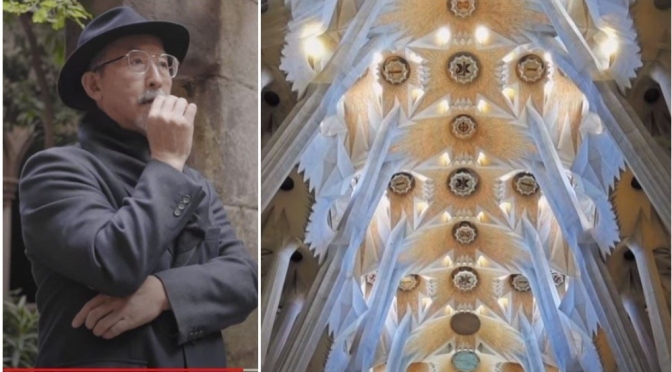
Art Video: “Stone Cut” – A Japanese Sculptor’s Quest With “La Sagrada Familia”
An architectural marvel has sat incomplete in a residential corner of Barcelona since its architect, Antoni Gaudí, died during construction in 1926. For decades, La Sagrada Familia has been an example of Christian fealty and Catalan ingenuity wrought in granite and sandstone; but little could anyone have guessed that ninety-four years after Gaudí’s death a Japanese sculptor would dedicate his life to completing the architect’s colossal work…
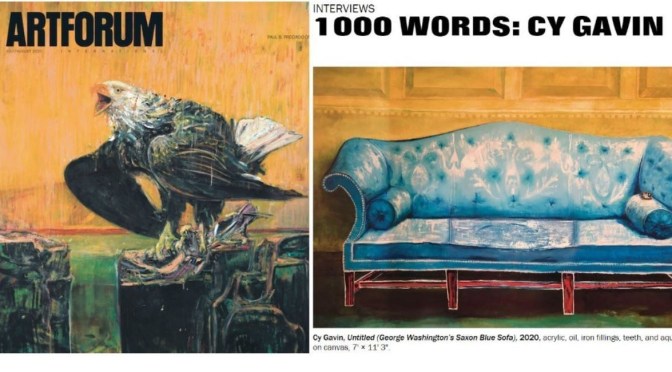
Top New Art Magazines: “ARTFORUM – July/August”
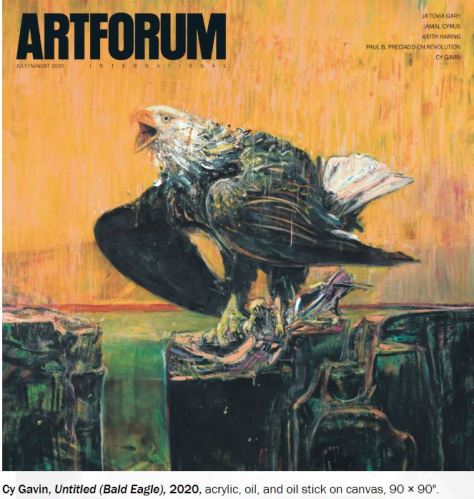
I WAS A COMPETITIVE BIRDER in high school. My family drove all around the countryside, so I spent a lot of time in the car, and I had to keep myself busy and project my brain somewhere. I would bring sketchbooks and field guides that I got from the library. I had started an Envirothon team at my school, to compete in the national decathlon pitting nerdy teens against each other in their knowledge of soil surveys, forestry, wildlife, and aquatic ecology.

I was the birding specialist. I learned more than two hundred birdsongs and birdcalls from CDs and from the field. I participated in other competitions where I would win binoculars and forty-pound bags of birdseed. I didn’t even have a bird feeder—I’d just become obsessed.
Unlike bird-watchers, birders often rely first on auditory cues to identify a species. You immediately know so much about the bird—its seasonal plumage, age, sex, if it’s making a courtship call or a warning call—from listening. The second thing you cultivate is an idea of where the call is coming from, so you can zero in on it. You develop a spatial awareness, so even with your eyes closed the woods become a vivid visual experience.
A steward of the Susquehanna River in Pennsylvania once took me out in a canoe to this extremely remote location to see a bald eagle’s ten-foot nest. Eagle populations had been devastated by the use of DDT. At the time, all nest sites had to be reported to the government and kept secret. In 2007, the bald eagle was removed from the list of threatened and endangered species, and ever since, I would catch myself looking out for them whenever I’d pass a lake or river. Where I work, in upstate New York, I see bald eagles all the time. Two years ago, I found a nesting pair in Poughkeepsie near a waste-treatment plant on the Hudson River. I just spent time watching and drawing them. It was very unglamorous. They eat garbage. They’re like pigeons. The river freezes in the winter, and I have a vivid memory of watching this wet, bedraggled eagle on a chunk of ice.
Cy Gavin is an American artist that lives and works in New York. Gavin often incorporates unusual materials in his paintings such as tattoo ink, pink sand, diamonds, staples, Bermudiana seeds, and cremains. Gavin also works in sculpture, performance and video.

Travels With A Curator: “Japanese Palace Dresden” (Frick Collection Video)
 Boomers Daily