The Courtauld is delighted to have received a @GettyFoundation grant to investigate the last major manuscript by Paul Gauguin 'Avant et après (Before and After)'
— The Courtauld Research Forum (@CourtauldRes) August 17, 2022
Explore Paul Gauguin’s final manuscript
Below, you can explore Avant et après, the final manuscript of the highly influential French Post-Impressionist artist Paul Gauguin. It is available both in its original form, as well as translated.
Part-memoir and part-manifesto, Avant et après reveals important insights into Gauguin’s life, relationships and thoughts. It includes numerous drawings and monotype prints by the artist.
Avant et après is an important addition to what is already the most significant collection of works by Gauguin in the UK – joining amongst other works the masterpieces from his Tahitian period, Nevermore and Te Rerioa – and further strengthens The Courtauld’s resources for Gauguin scholarship.
Unpronounceable volcanoes, Björk, Vikings, Game of Thrones – these are some of the things you might think of relating to Iceland. This remote and fascinating island, located in the middle of the Atlantic Ocean with a population of 360,000 people, is one of the most creative nations in the world. Is it due to isolation, the inspiration from nature or its centuries-old folklore legends? Eve Jackson goes to the land of ice and fire to find out why Iceland has such an exceptional and disproportionate amount of artists.
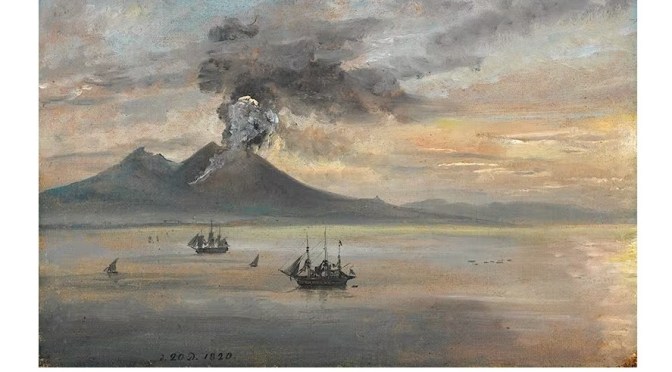
‘It is desirable for a Painter, at least once in his life, to witness the Eruption of a volcano.’ – Pierre-Henri de Valenciennes (1799). Join exhibition contributor Clive Oppenheimer, Professor of Volcanology at the Department of Geography at the University of Cambridge, and explore the ‘Volcanoes’ section of True to Nature. #TrueToNature is open at the Fitzwilliam Museum until 29 August 2022 https://fitz.ms/ttn
“The underworld, the afterlife, is fairly dank, dark, shadowy; quite frankly, it’s a bit boring. Somewhat like waiting at a bus depot.”
Homer’s Odyssey depicts an afterlife that is relatively dull, with heroic actions and glory reserved for the living. Nonetheless, people in Southern Italy in the fourth century BCE were captivated by the underworld and decorated large funerary vases with scenes of the afterlife—the domain of Hades and Persephone, where sinners like Sisyphus are tortured for eternity and heroes like Herakles and Orpheus performed daring feats.
Little is known about precisely how these vases were used and seen in death rituals. A new book by Getty Publications, Underworld: Imagining the Afterlife in Ancient South Italian Vase Painting, brings together 40 such vases and explores new research on them.
In this episode, Getty Museum curator of antiquities David Saunders discusses these enormous and often elaborate vases, explaining the myths they depict and what is known about the ways in which they were used. Saunders is editor of Underworld.
‘Je vois red’ raged Louise Bourgeois (1911–2010) on one of the loose sheets of paper that she made notes on, most often about herself and her work and, in this case, about the painting Natural history #2 (1944; Easton Foundation, New York), which struck her as all going wrong. Slipping between two languages, Bourgeois’s fury conforms to the themes of rage, the death drive and childhood aggression that the art historian Mignon Nixon has traced in the artist’s work in reference to the ideas of the psychoanalyst Melanie Klein.
On 29 June, Frieze announced the details of the first edition of its art fair in Seoul, South Korea. So for this last episode of the current season, we’re exploring the art scene and market in the Korean capital.
Ben Luke talks to the art historian and curator Jiyoon Lee about contemporary art in Seoul and beyond, and the origins of the current art scene in 1990s globalisation. The Art Newspaper’s associate editor, Kabir Jhala, speaks to two gallerists—Joorhee Kwon, deputy director at the Kukje Gallery and Emma Son, senior director at Lehmann Maupin, about the growing market and collector base, and the effect Frieze may have on the existing scene.
And this episode’s Work of the Week is Dahye Jeong’s A Time of Sincerity, a basket made with horsehair that this week won the Loewe Foundation Craft Prize. Kabir talks to the creative director at the fashion brand Loewe, Jonathan Anderson, about Jeong’s piece.
Frieze Seoul, COEX, Seoul, 2-5 September.
The Space Between: The Modern in Korean Art, Los Angeles County Museum of Art, 11 September-19 February 2023.
The 2022 Loewe Foundation Craft Prize, Seoul Museum of Craft Art, until 31 July.
This week: our associate editor, Kabir Jhala, and editor-at-large, Jane Morris, have been in Kassel, Germany, to see Documenta, the quinquennial international art exhibition.
They review the show and respond to the escalation of a long-running row over antisemitism and broader racism, which has resulted in a work being removed from the exhibition. Virginia Rutledge, an art historian and lawyer, discusses the dispute over Andy Warhol’s appropriation of a photograph by Lynn Goldsmith of the pop icon Prince. The case will be heard in the US Supreme Court this autumn and has potentially huge implications for artistic freedom. And this episode’s Work of the Week is An Outpost of Progress (1992), a drawing by the late Spanish artist Juan Muñoz, inspired by Joseph Conrad’s short story of the same name.
Documenta 15, Kassel, Germany, until 25 September.
Juan Muñoz: Drawings 1982-2000, Centro Botín, Santander, Spain, 25 June-16 October.
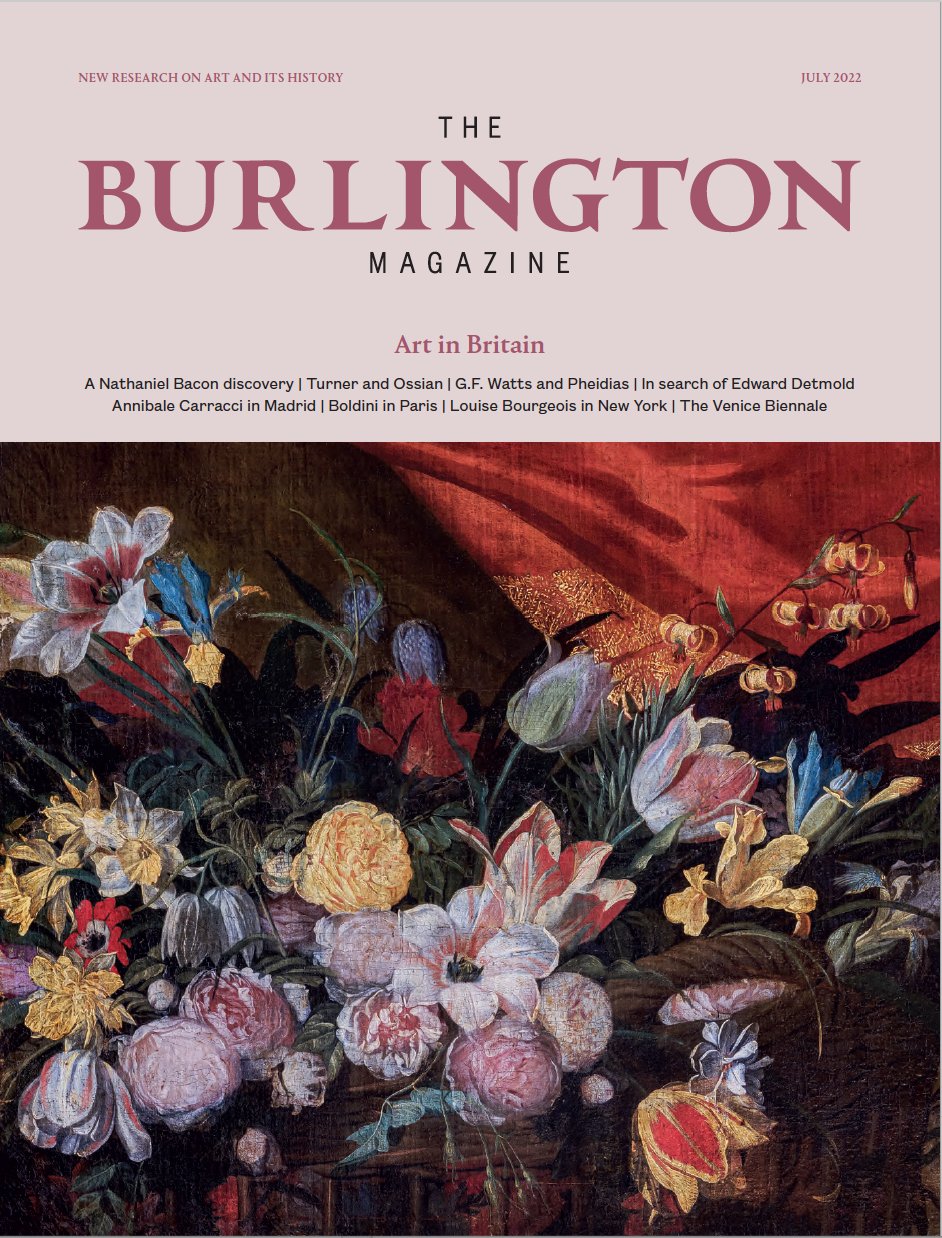
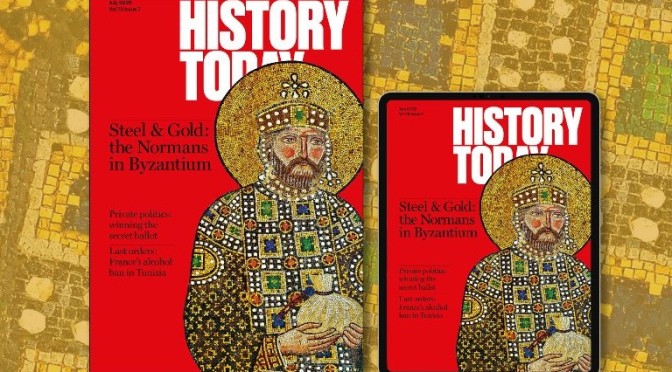
In the July issue: The Normans in Byzantium, the Secret Ballot, Prohibition in North Africa, a Soviet Embassy in Dublin, the Algerian War of Independence, Anatomical pop-up books.
Plus: reviews and much more.
Buy from our website, at newsstands across the UK or read on our app:
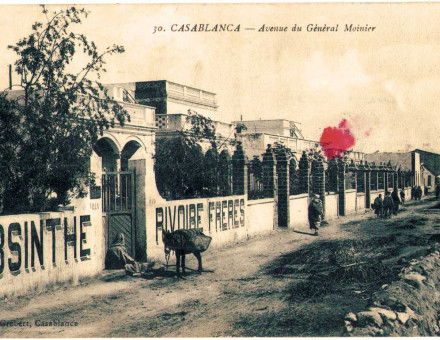
Alcohol was part of daily life in the colonial Maghreb. In 1913 the French banned alcohol in Tunisia, revealing a deep distrust of local drinks and their Jewish and Muslim makers.
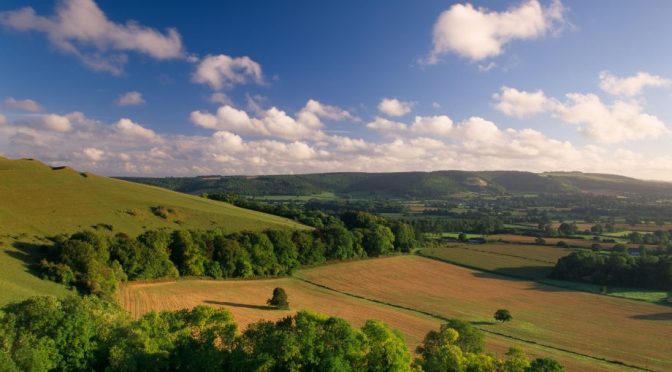
Thomas Hardy’s depictions of a fictional Wessex and his own dear Dorset are more accurate than they may at first appear, says Susan Owens.
We feel a frisson when a real place plays a key part in a novel. The Cobb at Lyme Regis will always be associated with silly Louisa Musgrove and her tumble in Jane Austen’s Persuasion and Knole in Kent with Virginia Woolf’s hero-heroine Orlando. Thomas Hardy, however, took the use of known locations to another level. He may have invented the characters in his novels, but he made them walk along actual roads, look across valleys at real views and live in recognisable villages and towns — sometimes, even in identifiable buildings.
For all its operatic symbolism, Tess of the d’Urbervilles (1891) is a novel in which practical footwear matters. Among its heart-breaking moments is when Tess’s walking boots are discovered stuffed in a hedge where she had hidden them, mistaken for a tramp’s pair and taken away, forcing her to walk many miles back home along a rough road in pretty, but thin-soled, patent-leather ones.
A map depicting Hardy’s Wessex by Emery Walker, drawn for Tess of the d’Urbervilles. Credit: BBC / Album
Those who live in the country come to know land by ear as much as by eye. Hardy’s characters are expert in this — even in the dark and when drunk, as in Desperate Remedies (1871): ‘Sometimes a soaking hiss proclaimed that they were passing by a pasture, then a patter would show that the rain fell on some large-leafed root crop, then a paddling plash announced the naked arable.’
News, Views and Reviews For The Intellectually Curious




 Boomers Daily