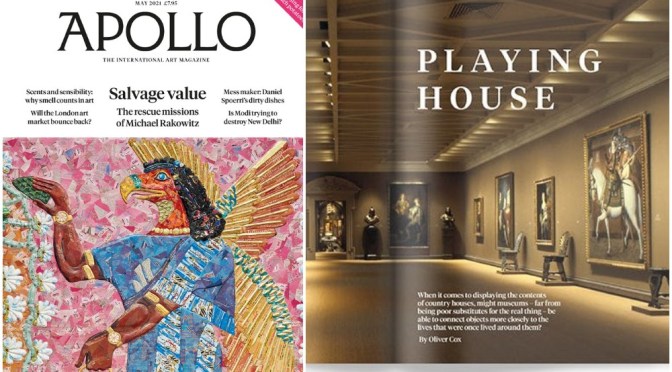
FEATURES | Michael Rakowitz interviewed by Daniel Trilling; Jon Day on smell and the visual arts; Susan Moore catches up with art collector and former Louvre director Pierre Rosenberg; Oliver Cox on country-house exhibitions in museums; Debika Ray assesses Narendra Modi’s architectural shake-up of New Delhi
REVIEWS | Kitty Hauser on new Australian art in Sydney; Matt Stromberg evaluates LACMA’s experimental rehang; Tom Fleming on the life of John Craxton; Clare Bucknell on a study of women’s self-portraits; Glenn Adamson on a history of Western ceramics; Mark Francis on Richard Hamilton, Pop pioneer
PLUS | Xavier F. Salomon finds a lost Valadier masterpiece in Nicaragua; Isabella Smith visits imperial China through her TV screen; Samuel Reilly on Joan Eardley in Glasgow; Charles Holland on the post-war buildings of Raymond Erith; Thomas Marks on Daniel Spoerri’s tableaux of tables; and Robert O’Byrne picks over Apollo’s wartime diet
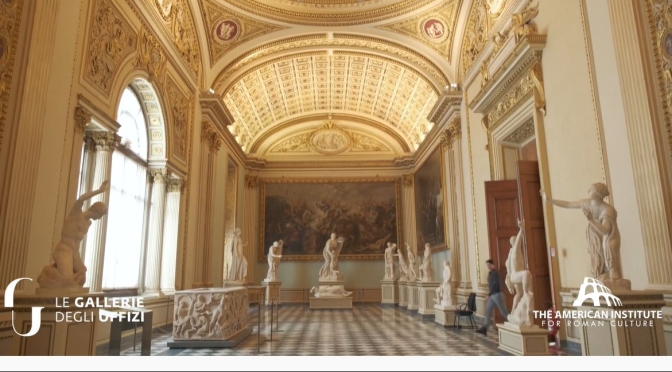
Here is the first episode of the series about archaeology at the Uffizi Galleries, realized by the American Institute for Roman Culture. Darius Arya today speaks about some masterpieces of the Uffizi and the Boboli Gardens.
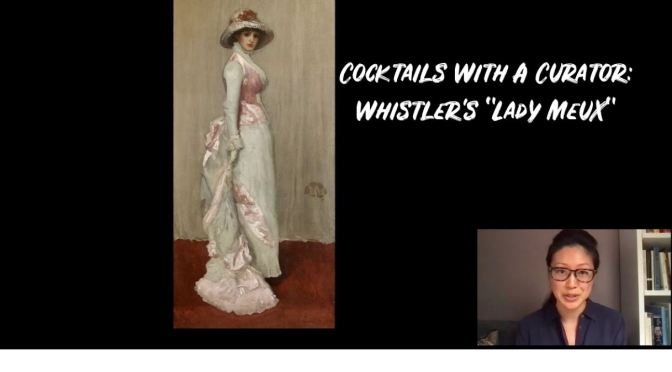
In this week’s episode of “Cocktails with a Curator,” Curator Aimee Ng explores the turbulent life of the woman portrayed in James McNeill Whistler’s serene “Harmony in Pink and Gray: Portrait of Lady Meux,” currently on view on the fourth floor of Frick Madison. A former bartender and actress, Lady Meux was shunned by London polite society even after she married Sir Henry Bruce Meux, heir to a huge brewery fortune. This week’s complementary cocktail is a refreshing Mummy, a nod to her extensive collection of some 1,800 Egyptian and Assyrian objects, including an infamous mummy of Nesmin.
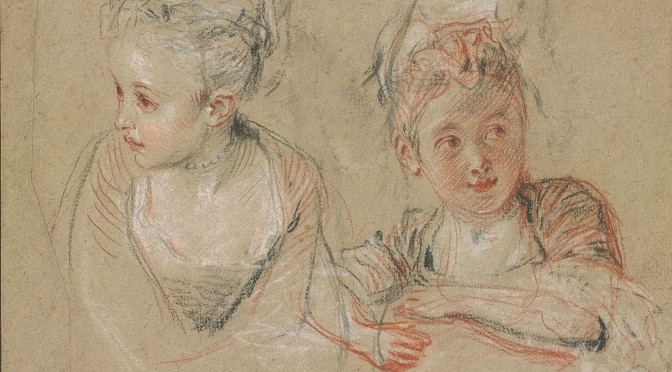
Director Colin B. Bailey takes a close look at three drawings by Jean-Antoine Watteau (1684–1721), considered some of the finest drawings in the Morgan’s collection: Seated Young Woman (ca. 1716), Young Woman Wearing a Chemise (ca. 1718), and Two Studies of the Head and Shoulders of a Little Girl.
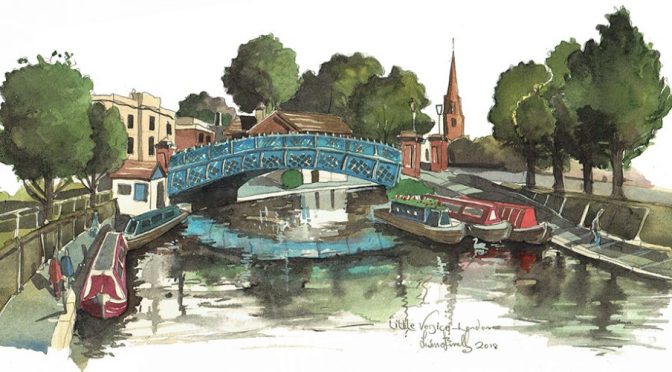
The new crop of Italianate villas, iced white with stucco like giant cakes, and the rows of brick terraces and mansion blocks that followed them soon became home to publishers (Charles Ollier), artists (Sir John Tenniel) and poets: Robert Browning lived at 19, Warwick Crescent for more than 20 years and the pool where the Grand Union and Regent’s canals meet is now called after him.
Although Browning has been credited with naming the canal area Little Venice, it was Byron that first (facetiously) compared the basin to the Italian lagoon.
Story has it that the poet used to walk along the Paddington arm of the Grand Union Canal with his publisher, John Murray — helpfully pointing to the bridge where another publisher had once drowned himself — and was inspired to write that ‘there would be nothing to make the canal of Venice more poetical than that of Paddington, were it not for its artificial adjuncts’; a fair point, considering that, at the time, the London canals were lined with warehouses and wrapped in soot.
Even today, however, the elegant terraces halfway up Randolph Avenue, with their tripartite arched windows, are far more reminiscent of the Italian city than Little Venice itself, where the serene buildings and tree-lined banks have a rather more bucolic feel.
In this week’s episode of “Cocktails with a Curator,” Deputy Director and Peter Jay Sharp Chief Curator Xavier F. Salomon focuses on Francesco da Sangallo’s “St. John Baptizing,” which can be found at the very center of the third floor of Frick Madison. Commissioned in the 16th century for a church in the Tuscan town of Prato, the bronze statuette has been installed atop a facsimile of the marble holy water font on which it was originally displayed, allowing visitors to see it as it was meant to be viewed. This week’s complementary cocktail is the White Negroni, a modern twist on a classic Florentine cocktail.
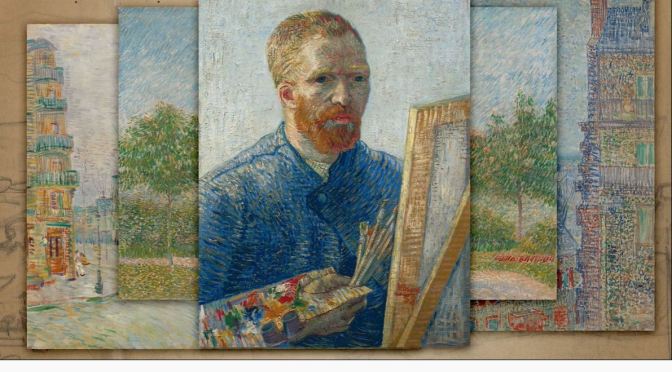
Vincent Willem van Gogh was a Dutch post-impressionist painter who posthumously became one of the most famous and influential figures in the history of Western art. In a decade, he created about 2,100 artworks, including around 860 oil paintings, most of which date from the last two years of his life.
In this week’s episode of “Cocktails with a Curator,” join Deputy Director and Peter Jay Sharp Chief Curator Xavier F. Salomon as he delves into the mystery of three rare Saint-Porchaire objects currently on view in a room featuring enamels and clocks on the third floor of Frick Madison. Much remains unknown about 16th-century Saint-Porchaire ware—exquisite pieces inlaid with colored clay and embellished with three-dimensional reliefs—but an ongoing Frick research project recently identified an exciting potential link between the great French ceramicist Bernard Palissy and a lizard on one of the ewers at the Frick. This week’s complementary cocktail is a classic French American drink, the Boulevardier.
Artificial intelligence is helping humans make new kinds of art. It is more likely to emerge as a collaborator than a competitor for those working in creative industries.
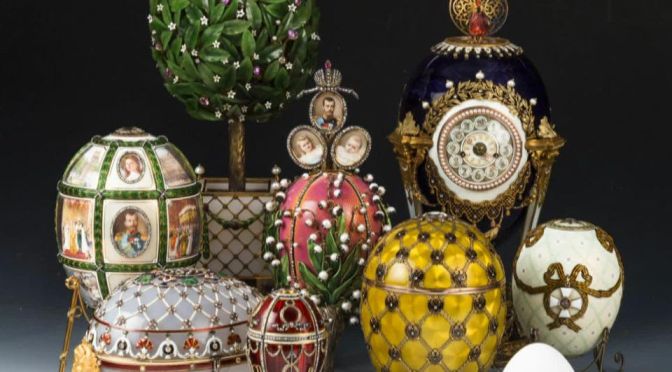
In the era of the Russian tsars, Peter Carl Fabergé’s jewel-studded objets d’art were a royal riff on a much humbler Easter tradition of ordinary folk giving each other colored hens’ eggs. Correspondent Elizabeth Palmer reports on the lore of Fabergé eggs, from opulent originals to sparkling counterfeits.
The celebrated series of 50 Imperial Easter eggs was created for the Russian Imperial family from 1885 to 1916 when the company was run by Peter Carl Fabergé. These creations are inextricably linked to the glory and tragic fate of the last Romanov family. They were the ultimate achievement of the renowned Russian jewellery house and must also be considered the last great commissions of objets d’art . Ten eggs were produced from 1885 to 1893, during the reign of Emperor Alexander III; 40 more were created during the rule of his dutiful son, Nicholas II, two each year, one for his mother, the dowager, the second for his wife.
News, Views and Reviews For The Intellectually Curious








 Boomers Daily