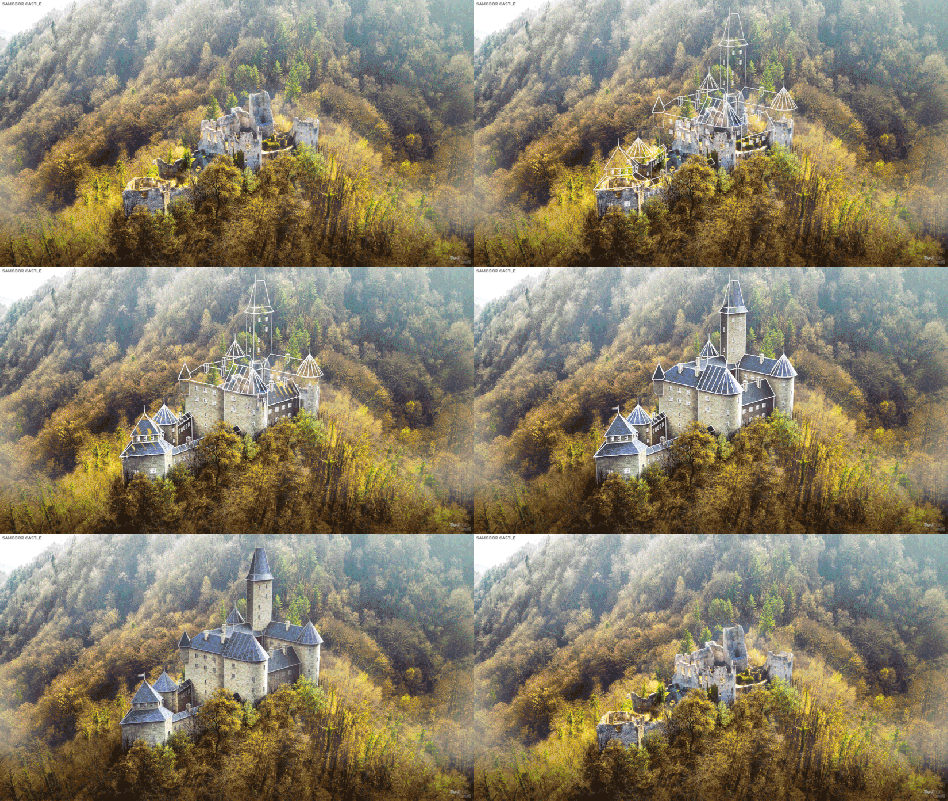
…a team of designers recently looked at the now-ruined castles of Middle Ages Europe, lifting the fortifications up from their dilapidated states and digitally reimagining the structures as they were in their heyday.
Seven European castles were virtually rebuilt, restoring them from their keeps to their baileys. Architects pored over old paintings, blueprints, and other research documents that describe the strongholds, then offered their opinions to the NeoMam Studios design team, which digitally revived the structures from the ground up.
From a Dezeen.com online article (March 28, 2020):
“The detached homes have been conceptualised to visually appear as one single volume defined by its traditional triangular architecture,” said the studio. “Only from up close will the observer notice a crisp breakpoint between the properties.”
Canadian firm Ancerl Studio has designed a pair of houses in Toronto to make them look like a single building.
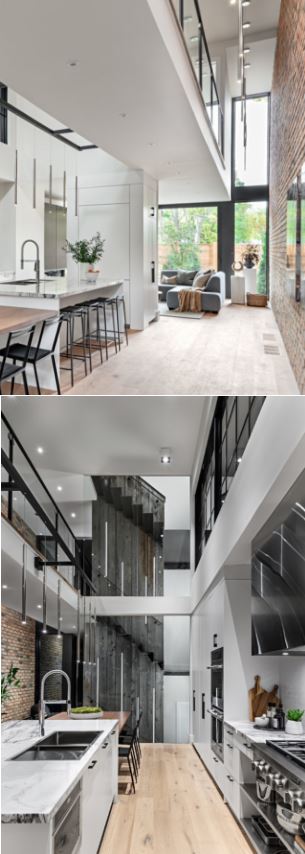
Both properties include three bedrooms. In Sorauren 116, the master suite occupies the entire top floor of the house. A balcony opens from the bedroom towards the backyard, and the bathroom is separated from the bedroom by a spacious walk-through closet.
The two houses are located on very tight lots on Sorauren Street in the city’s Parkdale neighbourhood, as is typical in Toronto’s residential neighbourhoods.
Striking, innovative, and dramatically sited, the twenty-nine projects in Tom Kundig: Working Title reveal the hand of a master of contextually astute, richly detailed architecture. As Kundig’s work has increased in scale and variety, in diverse locations from his native Seattle to Hawaii and Rio de Janeiro, it continues to exhibit his signature sensitivity to material and locale and to feature his fascinating kinetic “gizmos.”
Projects range from inviting homes that integrate nature to large-scale commercial and public buildings: wineries, high-performance mixed-use skyscrapers, a Visitor Center for Tillamook Creamery, the Burke Museum of Natural History and Culture, and the Wagner Education Center of the Center for Wooden Boats, among others. Tom Kundig: Working Title includes lush photography, sketches, and a dialogue between Tom Kundig and Michael Chaiken, curator of the Kundig-designed Bob Dylan Archive at the Helmerich Center for American Research.
Today we visit Fayetteville, Arkansas to tour a tiny house capable of booming sound. When Asha Mevlana isn’t on tour with the Trans-Siberian Orchestra, she hosts neighborhood concerts from her compact custom home. Situated between her living quarters and the trailer devoted to her instruments, Asha’s porch has enough room for performers to fill the street with music, courtesy of the built-in, wall-sized outdoor amplifier. The innovations don’t end there, though, as living in a tiny house presents plenty of design challenges to overcome. Watch and learn about the ins and outs of this peculiar property on today’s episode of Unique Spaces.
Enjoy this 360° video view of the Garden Court of The Frick Collection. Available through your phone with Google Cardboard or other viewer as a 360° VR video. Right click or control + click (on a Mac) to select loop and enjoy the soothing sounds of the fountain. Shot during the exhibition, Canova’s George Washington, on view at The Frick Collection from May 23, 2018 to September 23, 2018.
In a leafy Boston suburb, a place to park cars and repair vintage scooters grows into a bucolic sanctuary.
.
To call architect Colin Flavin’s three-story steel-frame structure with mahogany slat screens a “garage” would be misleading. While there’s room for parking and a Vespa workshop behind the double-wide red door on the ground floor, the spaces above feel and function more like a country retreat. “The clients wanted something innovative to complement their traditional Dutch Colonial,” says Flavin, principal of Flavin Architects.
Underappreciated in her lifetime, the career of late Irish architect and designer Eileen Gray is the subject of a timely new exhibition at The Bard Graduate Center Gallery in New York. Jennifer Goff, curator of the Eileen Gray collection at the National Museum of Ireland, tells us more.
Eileen Gray (born Kathleen Eileen Moray Smith; 9 August 1878 – 31 October 1976) was an Irish architect and furniture designer and a pioneer of the Modern Movement in architecture. Over her career, she was associated with many notable European artists of her era, including Kathleen Scott, Adrienne Gorska, Le Corbusier, and Jean Badovici, with whom she was romantically involved. Her most famous work is the house known as E-1027 in Roquebrune-Cap-Martin, France.
From 1922/1923 to 1926 Gray created an informal architectural apprenticeship for herself as she never received any formal training as an architect. She studied theoretical and technical books, took drafting lessons, and arranged to have Adrienne Gorska take her along to building sites. She also traveled with Badovici to study key buildings and learned by reworking architectural designs.
In 1926, she started work on a new holiday home near Monaco to share with Badovici. Because a foreigner in France couldn’t wholly own property, Gray bought the land and put it in Badovici’s name, making him her client on paper. Construction of the house took three years and Gray remained on site while Badovici visited occasionally.
Renewed interest in Gray’s work began in 1967 when historian Joseph Rykwert published an essay about her in the Italian design magazine Domus. After the publishing of the article many “students began to ring at her door” as eager to learn from the now famous designer.
At a Paris auction of 1972, Yves Saint Laurent bought ‘Le Destin’ and revived interest in Gray’s career.
The first retrospective exhibition of her work, titled ‘Eileen Gray: Pioneer of Design’, was held in London in 1972. A Dublin exhibition followed the next year. At the Dublin exhibit, the 95 year old Gray was given an honorary fellowship by the Royal Institute of the Architects of Ireland.
In 1973 Gray signed a contract to reproduce the Bibendum chair and many of her pieces for the first time. They remain in production.
Eileen Gray died on Halloween 1976. She is buried in the Père Lachaise cemetery in Paris, but because her family omitted to pay the licence fee her grave is not identifiable.
The Architizer A+Awards represent 2019’s best architecture and products, celebrated by a diverse group of influencers within and outside the architectural community. Entries are judged by more than 400 luminaries from fields as diverse as fashion, publishing, product design, real-estate development, and technology, and voted on by the public, culminating in a collection of the world’s finest buildings.
Each year, winners are honored in this fully illustrated compendium, and on Architizer.com, the largest online architecture community on the planet. Featuring select A+Award winners, this is the definitive guide to the year’s best buildings and spaces.
Architizer is the leading online resource for architecture. Through its vast building database, daily content, ‘Source’ marketplace, and A+Awards, it is revolutionizing the way architects connect with building-product manufacturers and the world beyond.
Composed of three pavilions connected by a series of glass hallways, the single-story residence seeks to create a residential oasis in the heart of Los Angeles.
The Western Red Cedar lined guest house/garage pavilion establishes a datum line that carves and connects the two larger volumes of the living and sleeping pavilions, comprised of oversized charcoal-colored board, batten extira and cement board siding. A deep overhang mitigates solar heat gain and shields from the sun exposure.
A walkway of concrete pavers, lined by wild grasses leads to the front door, passing a tranquil courtyard with olive trees. The entry to the house is located within a glass hallway connecting the living pavilion to the west and the sleeping pavilion to the east, establishing a sense of intimate scale before engaging with the other parts of the house.
The fluidity between the kitchen, breakfast room and family room, designed for uninterrupted entertainment, creates a harmony of transparency and lightness.


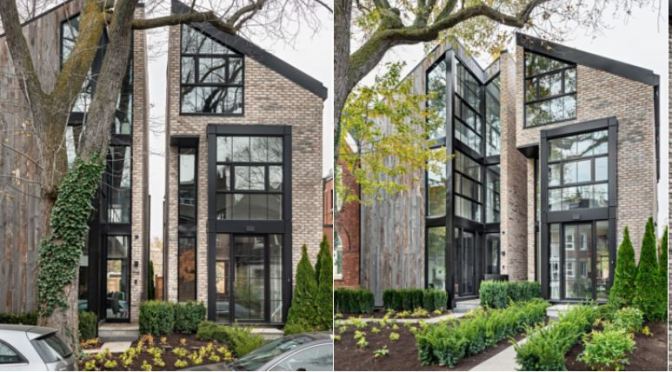
 “The detached homes have been conceptualised to visually appear as one single volume defined by its traditional triangular architecture,” said the studio. “Only from up close will the observer notice a crisp breakpoint between the properties.”
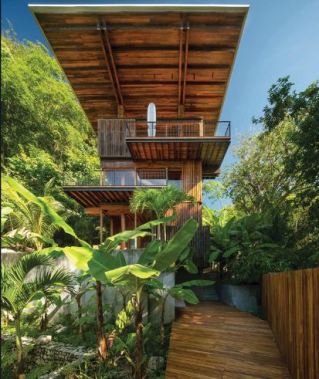 Striking, innovative, and dramatically sited, the twenty-nine projects in Tom Kundig: Working Title reveal the hand of a master of contextually astute, richly detailed architecture. As Kundig’s work has increased in scale and variety, in diverse locations from his native Seattle to Hawaii and Rio de Janeiro, it continues to exhibit his signature sensitivity to material and locale and to feature his fascinating kinetic “gizmos.”


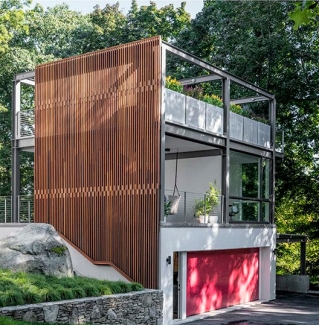 In a leafy Boston suburb, a place to park cars and repair vintage scooters grows into a bucolic sanctuary.
 Underappreciated in her lifetime, the career of late Irish architect and designer Eileen Gray is the subject of a timely new exhibition at The Bard Graduate Center Gallery in New York. Jennifer Goff, curator of the Eileen Gray collection at the National Museum of Ireland, tells us more.


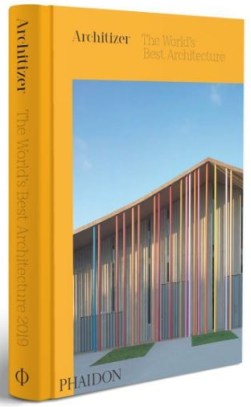 The Architizer A+Awards represent 2019’s best architecture and products, celebrated by a diverse group of influencers within and outside the architectural community. Entries are judged by more than 400 luminaries from fields as diverse as fashion, publishing, product design, real-estate development, and technology, and voted on by the public, culminating in a collection of the world’s finest buildings.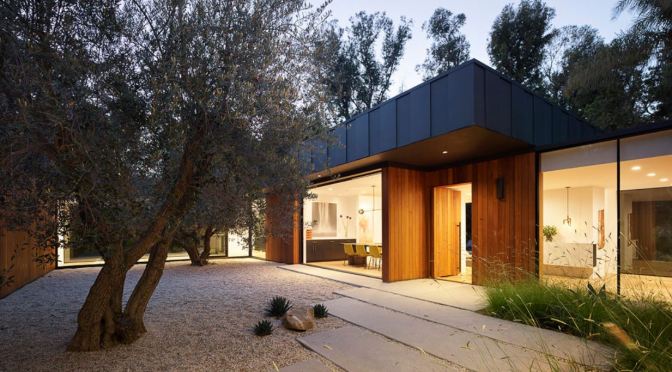
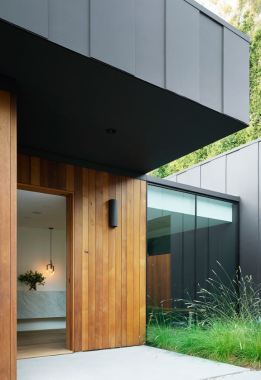 The Western Red Cedar lined guest house/garage pavilion establishes a datum line that carves and connects the two larger volumes of the living and sleeping pavilions, comprised of oversized charcoal-colored board, batten extira and cement board siding. A deep overhang mitigates solar heat gain and shields from the sun exposure.
 Boomers Daily