
A selection of three essential articles read aloud from the latest issue of The Economist. This week, a new-look Gulf, Vladimir Putin’s partial mobilization (10:45), and the Google-Meta advertising duopoly (15:00).
Category Archives: Analysis

Analysis: Biden Rebukes Putin, Republican Politics
New York Times columnist David Brooks and Washington Post columnist Karen Tumulty join Judy Woodruff to discuss the week in politics, including President Biden’s rebuke of Russia and Putin at the U.N. and the state of Republican politics.

Plant-Based Meat: Why It Hasn’t Gone Mainstream
As people’s eating habits change and environmental concerns grow, plant-based protein used as a meat substitute has gained popularity. However, some barriers are preventing it from becoming truly mainstream. Watch what needs to be done to truly realize a future with less meat.
Analysis: How Taiwan Is Facing Threat From China
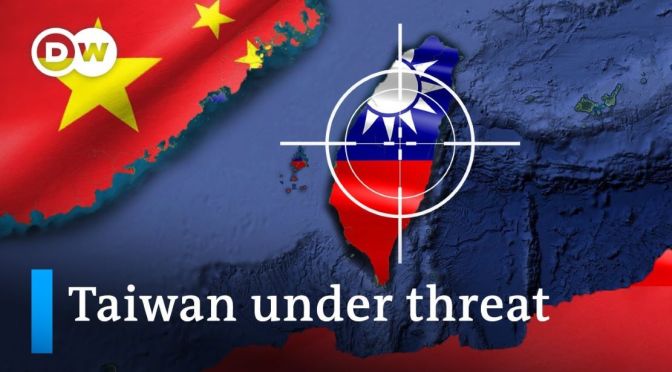
Taiwan is a democracy with a strong human rights record and a high standard of living. But despite the country’s economic strength and elected government, the island state struggles to receive international recognition. Even in terms of corruption, Taiwan’s track record is better than that of some European states.
The problem is that Beijing regards democratic Taiwan, which seceded from the mainland in 1949, as a renegade province rather than an independent state. China is trying to isolate it internationally. Many fear that China has plans to attack Taiwan in the near future: The President of the People’s Republic of China, Xi Jinping, has made it clear that his country is prepared to claim the island by military means. Beijing has been adopting this threatening stance for decades.
Thus far, the goal has been to annex the island to the mainland at some undefined point in the future. China’s historically questionable worldview would see this as reunification; from Taiwan’s perspective, it would be annexation. Both countries are highly armed – a war would inevitably cost many people their lives.
The film throws open a window on a nation that has been in a state of existential threat for decades; a country that is home to people who will defend their freedom at all costs – and also those who yearn for an imminent annexation with China.

World Hunger: Is Biofuel Feeding A Food Crisis?
The UN’s World Food Programme has described 2022 as “a year of unprecedented hunger”, with millions of people in dozens of countries facing famine. At the same time, significant amounts of farmland are being used to produce so-called biofuels. But could a global food crisis change that?
Biofuels are liquid fuels produced from renewable biological sources, including plants and algae. Biofuels offer a solution to one of the challenges of solar, wind, and other alternative energy sources. These energy sources have incredible potential to reduce our dependence on fossil fuels and yield environmental and economic benefits. But many of these sources have a limitation: they can’t replace liquid fuels such as jet fuel, gasoline, and diesel fuel that are critical to our transportation needs. That’s where biofuels could help.
Green Tech: New Ocean Wave Energy Companies
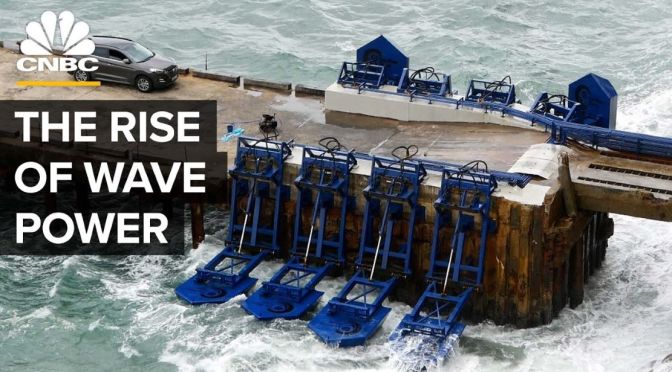
The ocean’s waves are immensely powerful. Harnessing that energy for grid-scale electricity production would be a major boon to the clean energy industry, but building durable, powerful, and cost-effective wave energy converters has proven difficult.
Chapters: 1:46 The challenges 4:05 Wave energy in the U.S. 4:49 (Subchapter) CalWave 6:05 (Subchapter) Oscilla Power 7:34 (Subchapter) C-Power 9:00 Wave energy in Europe 11:51 The future
Now though, an influx of federal funding is helping many U.S. companies gear up to test their latest wave energy technologies, giving many in the industry hope that wave power will see massive growth over the next few decades.
Opinion: Sanctions On Russia, Debt Forgiveness, Work Commute Waste
A selection of three essential articles read aloud from the latest issue of The Economist. This week, are sanctions on Russia working? Plus, Joe Biden’s sweeping debt-forgiveness plan (10:00) and in defence of commuting (15:10).

Firearms: Why AR-15-Style Rifles & Guns Are Surging
Known as a symbol of freedom to its admirers and an assault weapon to its detractors, the AR-15 is one of the most controversial weapons in America. Lightweight and easily customizable AR-15-style weapons have skyrocketed in popularity in recent years taking center stage at gun ranges and shooting competitions across the country.
Chapters: Intro: 0:00–2:17 Chapter 1 America’s rifle: 2:18–5:30 Chapter 2 Gun ownership in America: 5:31–7:35 Chapter 3 Gun-makers: 7:36–9:51 Chapter 4 Gun ads: 9:52–11:55 Chapter 5 Mass shootings: 11:56–16:29
According to the most recent national figures, there are an estimated 393 million civilian-owned firearms in the U.S. And there are about 20 million AR-15-style weapons in the country. Firearm manufacturers have seen revenue surge taking in about $1 billion from the sale of AR-15-style weapons in the past decade.
But the weapons have also been involved in a number of mass shootings. AR-15-style weapons were used at shootings in an elementary school in Uvalde, Texas, a Fourth of July parade in suburban Chicago and a grocery store in upstate New York. Critics argue the weapons are also aggressively marketed by gun companies targeting at-risk young males.
So what is behind the popularity of the AR-15 and what responsibility do gun makers have when their products are used in mass shootings? Watch the video to learn more.

Technology: The Rise Of Touchscreens In Cars
Most cars now have touch screens in the middle of the dashboard. Some tech heavy cars – such as those by companies like Tesla and Rivian – rely nearly entirely on them. They’re also cheaper to make and maintain. But some people hate them. They say they are less safe, confusing, unnecessary, and take longer than a simple button or switch.
But touch screens in cars aren’t going away. Some innovations, such as those by suppliers such as Harman and Continental, may blend some of the best of the old with entirely new possibilities, while managing risks.
Opinion: The Despot In The Desert, Big-Tech Decline, Imperfect Is OK At Work
A selection of three essential articles read aloud from the latest issue of The Economist. This week, MBS: despot in the desert, the era of big-tech exceptionalism may be over (49:05), and why it’s OK not to be perfect at work (55:30).
 Boomers Daily