April 3, 2023: A selection of three essential articles read aloud from the latest issue of The Economist. This week, the China-US contest is entering a new and more dangerous phase, how the tech giants are going all in on artificial intelligence (10:26) and why rice is fuelling climate change and diabetes (25:03).
CNBC (April 2, 2023) – An apartment building boom is unfolding in cities across the U.S. Many of the new units come with “luxury” amenities, like pools and fast-access to transportation. Experts say the uptick in supply is welcome news, but won’t ease rent inflation anytime soon.
As a result, many cities remain stuck in a price-elevating housing shortage. Washington lawmakers are now scrutinizing regulations that slow the pace of homebuilding, in an attempt to slow rent inflation.
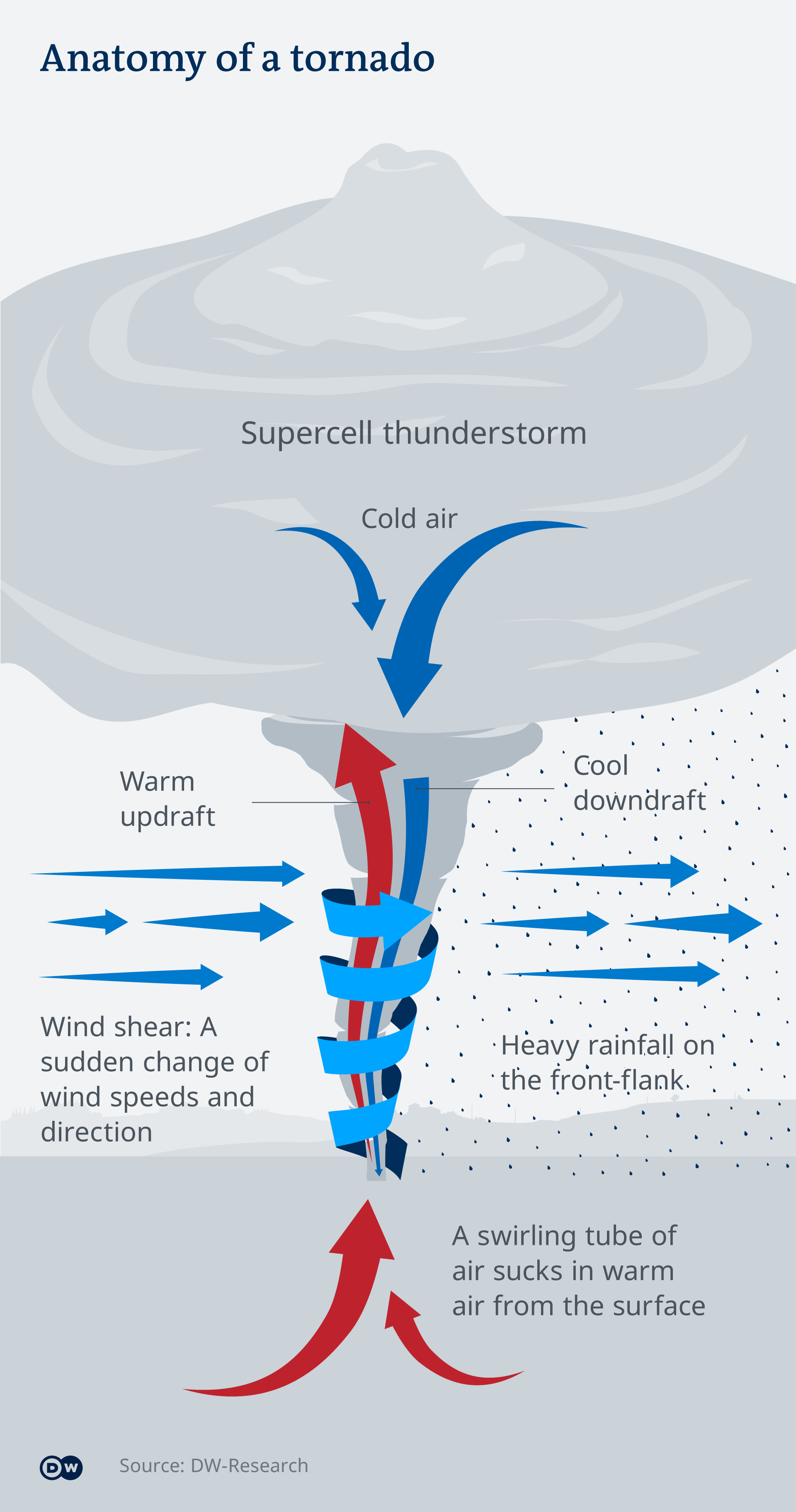
DW News (April 2, 2023) – At least 21 people have been killed and many more injured as storms batter the South and Midwest. Authorities in Arkansas have declared an emergency after multiple tornadoes tore through the state.
Tornadoes develop from severe thunderstorms in warm, moist, unstable air along and ahead of cold fronts. Such thunderstorms also may generate large hail and damaging winds. When intense springtime storm systems produce large, persistent areas that support tornado development, major outbreaks can occur.
The Telegraph (March 29, 2023) – Following Russia’s invasion of Ukraine, Poland has been investing billions in new tanks, weaponry, cyber operations and manpower. By 2035 Poland hopes to double the size of its armed forces to 300,000 troops.
There is even talk of the country becoming a major military power in Europe. Watch The Telegraph’s Steven Edginton interview key members of the Polish military and politicians to understand why they are rearming. He also asked young Poles whether they are prepared to die for their country.
For Poland, investing in the military is no longer a luxury but a necessity. With conflict at their border (don’t forget that two Poles have already been casualties of this war, killed by a stray Ukrainian missile) Poland can no longer rely only on the United States and its Nato allies for protection.
Warsaw plans to increase military spending to 5% of its GDP, outspending its fellow European capitals relatively by a wide margin. Poland’s military expansion must be thought of within the context of the nation’s history. You don’t have to be a pensioner to remember a time when Poland was suffering under Communist rule.
Monuments to the Soviet oppressors litter cities like Warsaw, where one can wonder at Stalin’s “gift” to the Poles, the grand Palace of Culture, and despite the government’s best efforts to tear them down many statues still stand commemorating the Red Army as “liberators”.
Wall Street Journal (March 28, 2023) – The train derailment in East Palestine, Ohio, was just one of over 1,000 that happen every year. NTSB’s Michael Hiller explains the most common reasons trains come off the tracks and what can be done to prevent derailments.
Video timeline: 0:00 Why do trains derail and how can they be prevented? 0:37 One of the biggest causes of derailments are track issues 3:04 Other derailments stem from human errors or equipment failures 5:01 Why most derailments are not severe and could be prevented
March 27, 2023: A selection of three essential articles read aloud from the latest issue of The Economist. This week, we explore the world according to XI. Also, we look at the excruciating trade-off central bankers face (09:56) and why editing Roald Dahl for sensitivity was silly (17:28).
March 20, 2023: A selection of three essential articles read aloud from the latest issue of The Economist. This week, what’s wrong with the banks? Also, we ask whether Bibi will break Israel (10:39) and why men should get a good night’s sleep to ensure vaccines work properly (19:03).
Rising interest rates have left banks exposed. Time to fix the system—again
Only ten days ago you might have thought that the banks had been fixed after the nightmare of the financial crisis in 2007-09. Now it is clear that they still have the power to cause a heart-stopping scare. A ferocious run at Silicon Valley Bank on March 9th saw $42bn in deposits flee in a day. svb was just one of three American lenders to collapse in the space of a week. Regulators worked frantically over the weekend to devise a rescue. Even so, customers are asking once again if their money is safe.
When Israel’s best and brightest are up in arms it is time to worry
This should have been Israel’s moment. As it approaches its 75th birthday in April the risk of a conventional war with neighbouring Arab states, for decades an existential danger, is at its lowest since 1948. The last Palestinian intifada, or uprising against occupation, ended 18 years ago. Israel’s tech-powered economy is more successful and globally relevant than ever. Last year gdp per person hit $55,000, making it richer than the eu.
Vaccines get all the glory, but it is really the immune system that does the heavy lifting. Indeed, those with weak immune systems often benefit little from vaccines. Aware of this, researchers have long thought that people deprived of sleep also ought to benefit less from vaccines, as sleeping less is thought to reduce immune function. A new analysis reveals that this is clearly the case—though only in men.
March 13, 2023: A selection of three essential articles read aloud from the latest issue of The Economist. This week, how to avoid war over Taiwan, the mystery of 250,000 dead Britons (9:50) and the small consolations of office irritations (18:20).