

A number of start-ups and major tech companies like Microsoft, Ticketmaster, Apple, and Google are interested in vaccine or immunization passports to help reopen the economy. But public health officials are weary, warning the apps are pointless without more knowledge about the efficacy of the vaccines. Watch the video above to learn more about digital vaccine verifications and how you could possibly prove your immunity to coronavirus before attending an event or entering a building.
Category Archives: Analysis

Business: ‘LEGO – A $38 Billion Toy Empire’ (Video)
The LEGO brick may not look like much but it is the cornerstone of the $38.5 billion Danish company. Today, LEGO’s blockbuster portfolio includes collaborations with The Beatles, Star Wars, and Frozen, a mega-hit movie franchise and 8 LEGOland theme parks. A toy that was once thought of for little boys is seeing its largest growth coming from girls and adults. But in the early 2000s, the company made several missteps and came extremely close to declaring bankruptcy. Here’s how LEGO reclaimed its status as one of the most successful toy companies in the world.
Analysis: Overpopulation – Are Environmental Issues Caused By It? (Video)
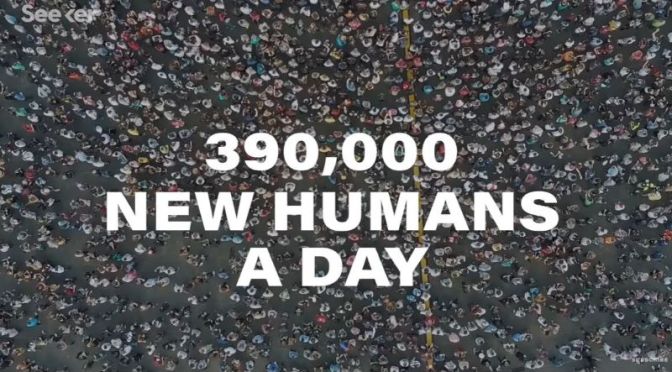
Around 390,000 new humans are born every day. So, on a planet with dwindling resources and an increasing strain on natural systems… is curbing our booming population the key to solving our environmental woes?
In 2018, just North America and China were responsible for almost half of the world’s CO2 emissions. These are also the countries with the highest concentrations of the world’s wealthiest people. Their populations are living longer and having fewer babies, so their population growth is actually slowing down. By contrast, the poorest half of the world—where most global population growth is currently concentrated — produces only 10% of the world’s CO2 emissions.
These populations typically lack the technology and wealth that result in high energy expenditure, increased industrialization, and pollution. So, in climate change projections that take these imbalances into account, it’s been shown that redistributing wealth—so, reducing both extreme wealth and extreme poverty—has as much impact on carbon emissions as reducing overall population would.
Even in projected scenarios where a reduction in population does make a difference in emissions, it’s not enough of a difference to affect projected temperature rise. No amount of population reduction would achieve the reduction in emissions necessary to keep global warming below 2 degrees Celsius in our near future.
Anaylysis: Is Obesity Driven By Food Industry Profits & Low Prices? (Video)
Marion Nestle, Goddard Professor in the Department of Nutrition at New York University, discusses the U.S. food industry being in a highly competitive environment where profits are paramount and public health is not a priority.
Analysis: ‘How Twitter & Facebook Will Change Post Rioting’ (Video)
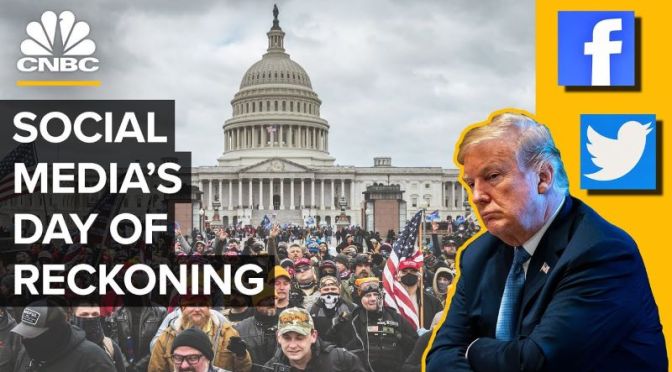
On January 6th, Rioters stormed the U.S. capitol building to overturn the results of the 2020 presidential election. These events were inspired by President Trump and organized and promoted on the platforms of publicly traded companies, most notably Facebook and Twitter. To avoid further violence, those companies, and then many more thereafter including YouTube, banned or blocked President Trump’s access to the megaphone they provide. This exposed a major flaw in the business model of many social media platforms: share first, think later. Tech experts Chamath Palihapitiya, Roger McNamee, Chris Kelly and Dick Costolo all predict major changes coming in the social media landscape and Section 230. Watch the video to find out how big tech may be forced to change.

Covid-19: ‘The Rise Of The RNA Vaccines’ (Podcast)
Benjamin Thompson, Noah Baker and Elie Dolgin discuss RNA vaccines.
In this episode:
01:16 How RNA vaccines came to prominence
In less than a year, two RNA vaccines against COVID-19 were designed, tested and rolled out across the world. We discuss these vaccines’ pros and cons, how RNA technology lends itself to rapid vaccine development, and what this means for the fight against other diseases.
News feature: How COVID unlocked the power of RNA vaccines
09:20 The hurdles for trialling new COVID-19 vaccines
Multiple candidates for new COVID-19 vaccines are still being developed, which may offer advantages over the vaccines currently available. However, running placebo-controlled trials of these candidates is becoming increasingly difficult, so researchers are looking for different ways to evaluate them.
News: Search for better COVID vaccines confounded by existing rollouts
14:45 How long will COVID vaccines be effective?
There is much concern around the world about two faster-spreading variants of SARS-CoV-2. We get an update on whether these variants could render vaccines ineffective.
News: Could new COVID variants undermine vaccines? Labs scramble to find out
Economics: ‘How Biden Will Handle $1.6 Trillion Student Loan Debt’ (Video)
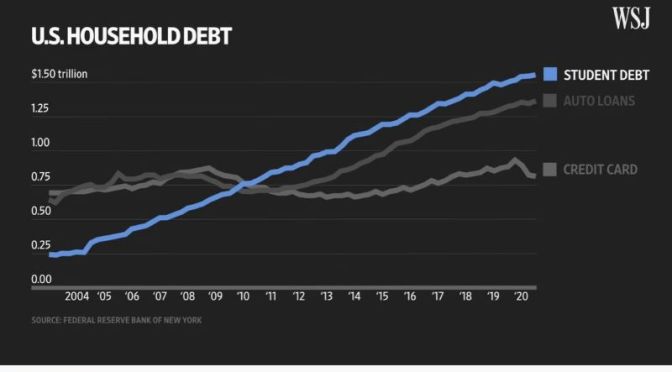
More than 43 million Americans owe a collective $1.6 trillion in federal student loans. WSJ’s Josh Mitchell explains how President-elect Joe Biden plans to help borrowers tackle that debt. Photo illustration: Carlos Waters
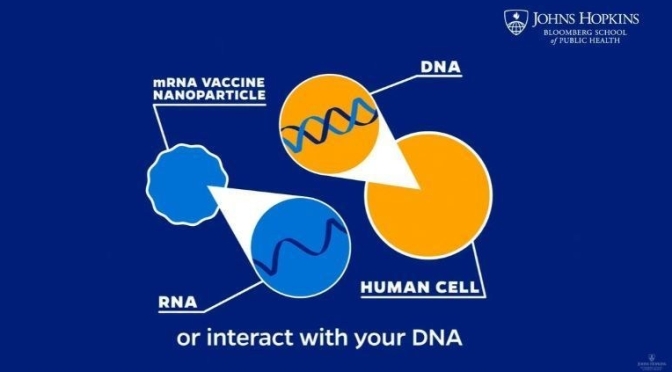
Covid-19: ‘How mRNA Vaccines Work’ (Video)
Messenger RNA—or mRNA—vaccines have been in development for decades, and are now approved for use against COVID-19. Here’s how they work and what you should know about them. Visit https://www.jhsph.edu/covid-19 for even more resources.
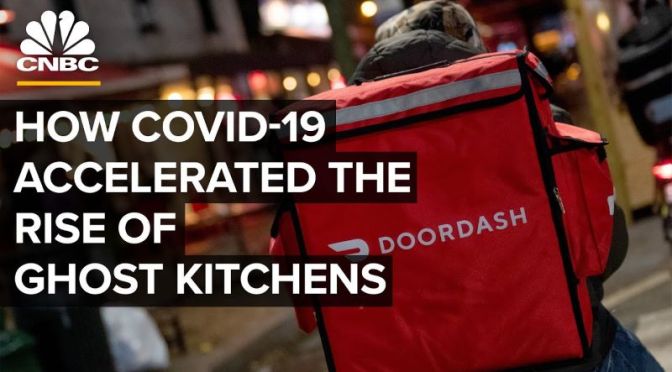
Delivery-Only Dining: ‘How Covid Accelerated Rise Of Ghost Kitchens’
Ghost kitchens are kitchens designed for delivery-only businesses, without dine-in areas or customer facing storefronts. The pandemic has ravaged dine-in eateries, and companies that have focused on delivery could come out on top if the current trends continue. Watch the full video to see why ghost kitchens are taking over the restaurant industry.
Here are some of the top Ghost Kitchens:
Kitchen United
With a $10 million dollar investment from Google Ventures, Kitchen United has been one of the leanest (and fastest-growing) startups in the space. Founder Jim Collins has turned down hundreds of millions of investment dollars to focus on growing more organically. Currently, Kitchen United plans on conquering the global restaurant space — with 5,000 kitchens planned in the next four years.
All in all, Kitchen United offers a turn-key, light-capital model, delivering a complete, code-safe kitchen replete with appliances and cooking implements. All that’s left to do is to…cook.
CloudKitchens
The fastest-growing and most investor-friendly ghost kitchen startup, CloudKitchens, has already taken in over $400 million from investors. $150 million interestingly invested by its founder (former Uber superstar) Travis Kalanick. Like Kitchen United, CloudKitchens offers fully-equipped kitchens (branded as “smart kitchens”) for the delivery-only model. Honestly, you can’t ignore a project that Travis is a part of.
DoorDash Kitchens
Another not-so-surprising entry into the ghost kitchen space is DoorDash, which has already premiered locations in San Francisco and Redwood City. Currently, DoorDash’s model is focused on catering to high-delivery areas for established brands like Chic-Fil-A, but we’re sure they have plans in the works for new locations, as well.
For the time being, DoorDash Kitchens is still in the experimentation phase, with only a few locations. And, like others on this list, it provides everything a restauranteur would need for a single monthly fee.
UberEats
For the moment, we’ll set aside the possible conflicts associated with Uber’s ex co-founder Travis Kalanick — who’s also operating CloudKitchens. We’re sure that bridge will need crossing at some point if Uber expands its operations. For the time being, the ridesharing company has been keeping a low profile in the ghost kitchen space. To date, it has been testing ghost kitchens in a few markets, though it remains curiously reluctant to share the delicious details pertaining to its Paris operations.
Virtual Kitchen Co.
Another new entry is Virtual Kitchen Co. — which already operates several successful ghost kitchens. They plan to open 15 more kitchens over the next few years, driven by $15 million dollar Series A. Again, Virtual Kitchen Co. offers a similar pricing structure: Restaurants can pay a monthly fee for everything.
The one small difference here is that Virtual Kitchen Co. seems to be targeting existing restaurants that want to enter the delivery space.

Business: ‘The Costs Of Climate Change’ (Video)
Climate change is about to upend the corporate world through weather-related disasters, regulation and lawsuits. Can businesses react and adapt in time? Read more here: https://econ.st/3slTXIE
 Boomers Daily