
Read full Research Hightlights

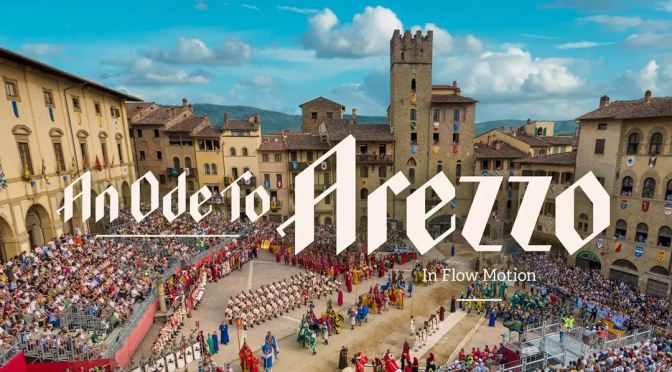
Filmed and Edited by: Rob Whitworth
The little Tuscan town of Arezzo is everything the world wants Italy to be: ancient grandeur, natural abundance and high culture, basking sun and brimming with passion.
I was therefore thrilled at the opportunity to make a flow-motion promoting Arezzo and its most quintessential festival: the ancient Saracen Joust.
As we look ahead, I hope this little film is reminder of what we have to look forward to.
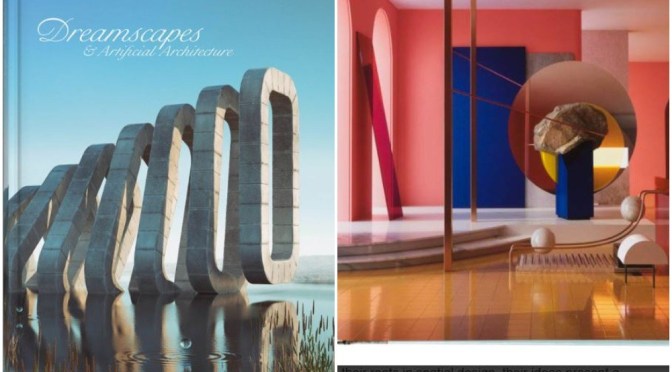
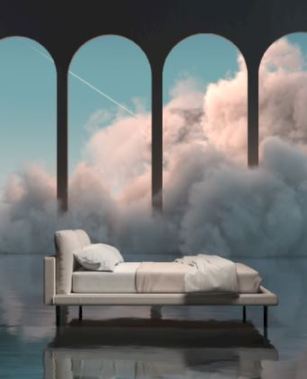 This inspiring compilation of the most innovative projects in digital art covers the work of the artists and creatives at the forefront of this aesthetic. Discover Filip Hodas and his captivating pop culture dystopia artwork series, explore Massimo Colonna’s surrealist urban landscapes and dive into the abstract compositions of Ezequiel Pini, founder of Six N. Five studio.
Digital renderings have long served architects and interior designers to help visualize spaces before the building begins. But a new generation of digital artists are taking this craft a step further to create otherworldly scenes that can’t, and won’t, ever be built.
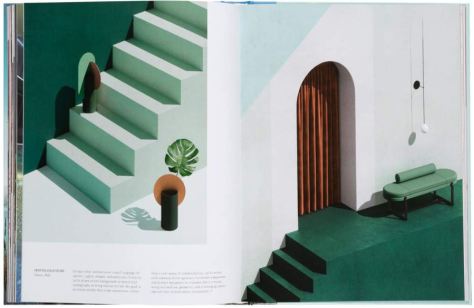
Dreamscapes & Artificial Architecture presents the work of leading creatives from across the globe, exploring the infinite ways to conceptualize utopian oases and dystopian nightmares. With their roots in spatial design, their ideas present a new creative current defined by the fusion of digital techniques such as computer rendering and 3D art, and an aesthetic that moves between fantasy and reality. Freed from the constraints of the physical world, these dreamscapes expand the possibilities for architecture and interior design.
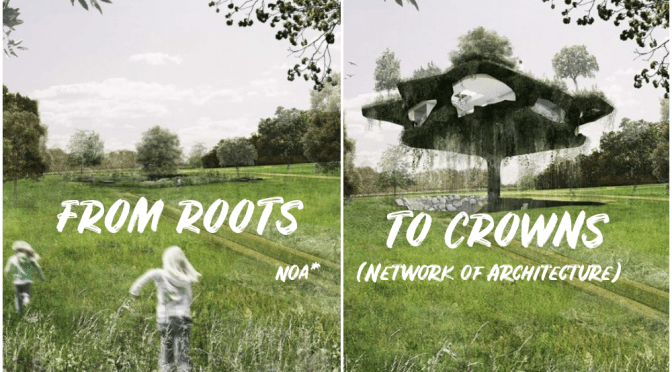
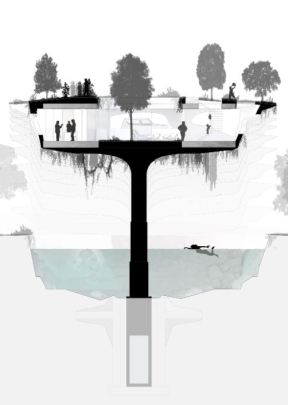 “from roots to crowns” describes the vertical metamorphosis of a hybrid building, moving from below ground through fields and trunks up to the crowns. It is a living shell on the move, able to take on 3 main positions “under the earth”(-1), “on the fields” (0) and “in the tree crowns” (+1+2). The lifting house is a visionary way of adapting the concept of “living and working in nature” to the varying requirements of its inhabitants.
noa* (Network of Architecture) is the essential expression of a collaborative work-ethos: the young team of architects & designers, led by founders Lukas Rungger and Stefan Rier and based in Bolzano (Italy) and Berlin (Germany), explores and examines interdisciplinary methods of design, continuously evolving depending on both nature and requirements of each project.
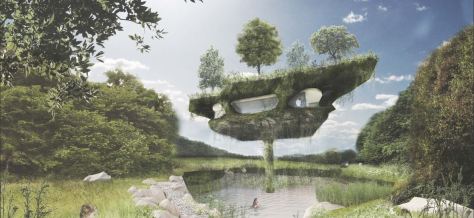
By following the concept of „emergence“, where the whole is perceived as being far greater than the sum of its parts, a holistic approach and strategy is central to noa*s way of conceiving design.
The Florida Keys are a string of tropical islands stretching about 120 miles off the southern tip of the U.S. state of Florida, between the Atlantic Ocean and Gulf of Mexico. They’re known as a destination for fishing, boating, snorkeling and scuba diving. The southernmost city of Key West is famous for Duval Street’s many bars, Mallory Square’s nightly Sunset Celebration and the Ernest Hemingway Home and Museum.
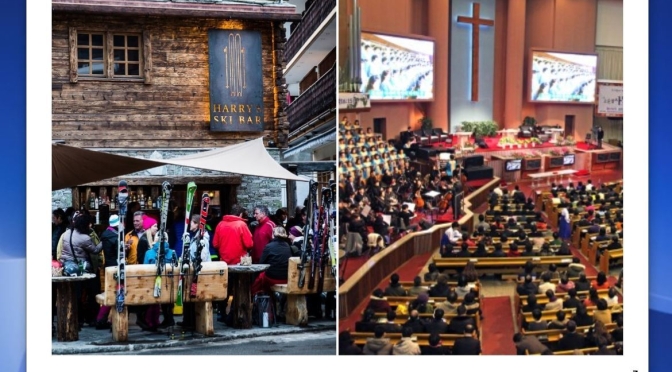
 A bar in the Swiss Alps. A megachurch in South Korea. Scientists are focusing on certain superspreading events that might be responsible for an outsized portion of coronavirus cases.
Bojan Pancevski explains how this understanding could be key to reopening.
Filmed and Produced by: Jonathan Gelez (The World Is Art)
Music: “Spenta Mainyu” by Jesse Gallagher
Here is a simple and relaxing film about the beginning of the spring season as it happened in my garden. Since going outside wasn’t an option due to the confinement measures in place, I tried to capture the beauty of nature at home.
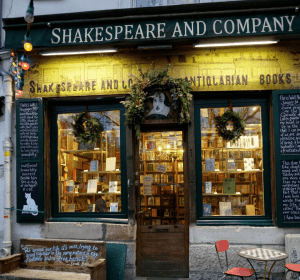 Gertrude Stein. James Joyce. Ernest Hemingway. Aimé Césaire. Simone de Beauvoir. Jacques Lacan. Walter Benjamin.
What do these writers have in common? They were all members of the Shakespeare and Company lending library.
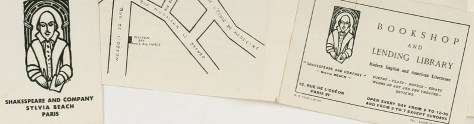
In 1919, an American woman named Sylvia Beach opened Shakespeare and Company, an English-language bookshop and lending library in Paris. Almost immediately, it became the home away from home for a community of expatriate writers and artists now known as the Lost Generation. In 1922, she published James Joyce’s Ulysses under the Shakespeare and Company imprint, a feat that made her—and her bookshop and lending library—famous around the world. In the 1930s, she increasingly catered to French intellectuals, supplying English-language publications from the recently rediscovered Moby Dick to the latest issues of The New Yorker. In 1941, she preemptively closed Shakespeare and Company after refusing to sell her last copy of Joyce’s Finnegans Wake to a Nazi officer.
The Shakespeare and Company Project uses sources from the Beach Papers at Princeton University to reveal what the lending library members read and where they lived. The Project is a work-in-progress, but you can begin to explore now. Search and browse the lending library members and books. Read about joining the lending library. Download a preliminary export of Project data. In the coming months, check back for new features and essays.
 This week, perfecting catalysts that split water using light, the mystery of missing matter in the Universe and how working memory ‘works’ in children.
In this episode:
00:44 Water splitting
After decades of research scientists have managed to achieve near perfect efficiency using a light-activated catalyst to separate hydrogen from water for fuel. Research Article: Takata et al.; News and Views: An almost perfectly efficient light-activated catalyst for producing hydrogen from water
05:37 Research Highlights
The hidden water inside the earth’s core, and how working memory ‘works’ in children. Research Highlight: Our planet’s heart is watery; Research Highlight: A child’s memory prowess is revealed by brain patterns
07:53 Measuring matter
Estimations of baryonic matter in the Universe have conflicted with observations, but now researchers have reconciled these differences. Research Article: Macquart et al.
13:42 Pick of the Briefing
We pick our highlights from the Nature Briefing, including the possibility of a black hole in our solar system, and the biting bees that force plants to bloom. Physics World: If ‘Planet Nine’ is a primordial black hole, could we detect it with a fleet of tiny spacecraft?; Scientific American: Bumblebees Bite Plants to Force Them to Flower (Seriously)
 Peter Paul Rubens was among the most influential artists in 17th-century Europe. Despite a childhood marred by a scandal that landed his father in prison, Rubens rose to become not only a prominent court painter in the Spanish Netherlands but also a lauded diplomat who worked across Western Europe.
With countless biographies written about the artist and exhibitions of his work continuing into the present day, the legacy of this Flemish Baroque artist is hard to overstate.
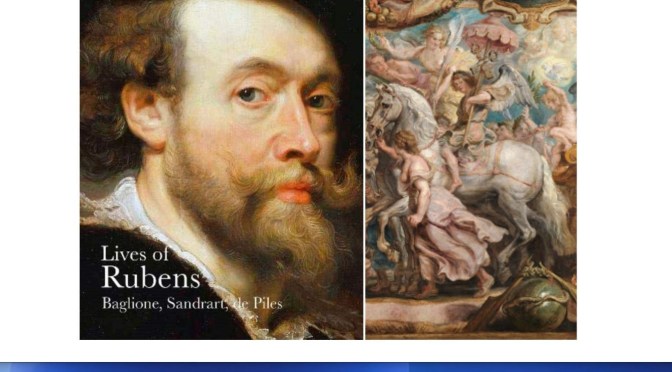
In this episode, Getty curator Anne Woollett discusses the life of Rubens through 17th-century biographies by three authors: Giovanni Baglione, Joachim von Sandrart, and Roger de Piles.
For images, transcripts, and more, visit getty.edu/podcasts.
Sir Peter Paul Rubens was a Flemish artist and diplomat. He is considered the most influential artist of Flemish Baroque tradition. Rubens’s highly charged compositions reference erudite aspects of classical and Christian history.



 Boomers Daily