
Take flight over natural wonders and man-made marvels that celebrate Virginia and our country’s remarkable beginnings.
From the Series: Aerial America: Virginia http://bit.ly/2yXMB59

Take flight over natural wonders and man-made marvels that celebrate Virginia and our country’s remarkable beginnings.
From the Series: Aerial America: Virginia http://bit.ly/2yXMB59


The coronavirus pandemic could have a lasting impact on city life. WSJ’s Jaden Urbi explores how the ways we work, shop and play are changing as urban designers refocus on health, tech and open spaces.
Illustration: Zoë Soriano

Our editor-in-chief Zanny Minton Beddoes asks the philanthropist and co-founder of Microsoft what it will take to defeat the coronavirus. They talk about why a Biden presidency might not transform America’s prospects of defeating the pandemic.
And, as rich countries scramble to be front of the queue for vaccines, should it be down to charitable billionaires to fund vaccinating the world’s poorest?

The Stanford researchers figured out how to regrow articular cartilage by first causing slight injury to the joint tissue, then using chemical signals to steer the growth of skeletal stem cells as the injuries heal. The work was published Aug. 17 in the journal Nature Medicine.

“Cartilage has practically zero regenerative potential in adulthood, so once it’s injured or gone, what we can do for patients has been very limited,” said assistant professor of surgery Charles K.F. Chan, PhD. “It’s extremely gratifying to find a way to help the body regrow this important tissue.”
STANFORD MEDICINE (Aug 17, 2020): Researchers at the Stanford University School of Medicine have discovered a way to regenerate, in mice and human tissue, the cushion of cartilage found in joints.
Loss of this slippery and shock-absorbing tissue layer, called articular cartilage, is responsible for many cases of joint pain and arthritis, which afflicts more than 55 million Americans. Nearly 1 in 4 adult Americans suffer from arthritis, and far more are burdened by joint pain and inflammation generally.

This Morning With Gordon Deal: DNC nominates Kamala Harris in a historic selection for VP, U.S. House to vote on $25 billion postal infusion, and the surprising way to tell you’ve had too much to drink.
Filmed and Edited by: Jan Knüsel
Summer 2020 didn’t turn out as expected. All my Japan trips had to be cancelled. This was at the same time the perfect opportunity to travel across Switzerland and to get to know my beautiful home country a little bit better. In this short film you see Appenzell, the Aletsch Arena (Riederalp, Bettmeralp), St. Moritz, Vals, Lavertezzo, Ascona, Locarno, Zermatt, the Matterhorn, Chexbres, Montreux, Chillon Castle, Lake of Brienz, Iseltwald, Lauterbrunnen and Jungfraujoch.
Trisha Greenhalgh, professor of primary care health sciences at the University of Oxford has been a powerhouse of covid-19 evidence synthesis. She pulled together advice on doing remote consultations, on wearing masks to prevent spread, and a host of other information. She’s now turning her attention to “long-covid” – it’s becoming apparent that it’s not just an acute infection, patients are reporting chronic long term consequences of having the virus.
In this podcast, she describes what we know about long-covid, where the uncertainty lies, and what clinicians should be doing to help patients who are experiencing the symptoms.
Management of post-acute covid-19 in primary care https://www.bmj.com/content/370/bmj.m3026
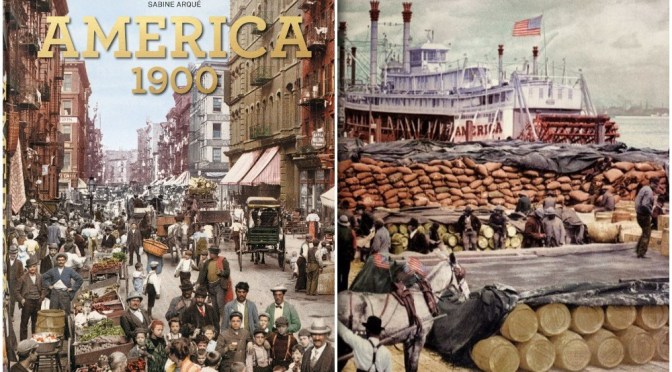
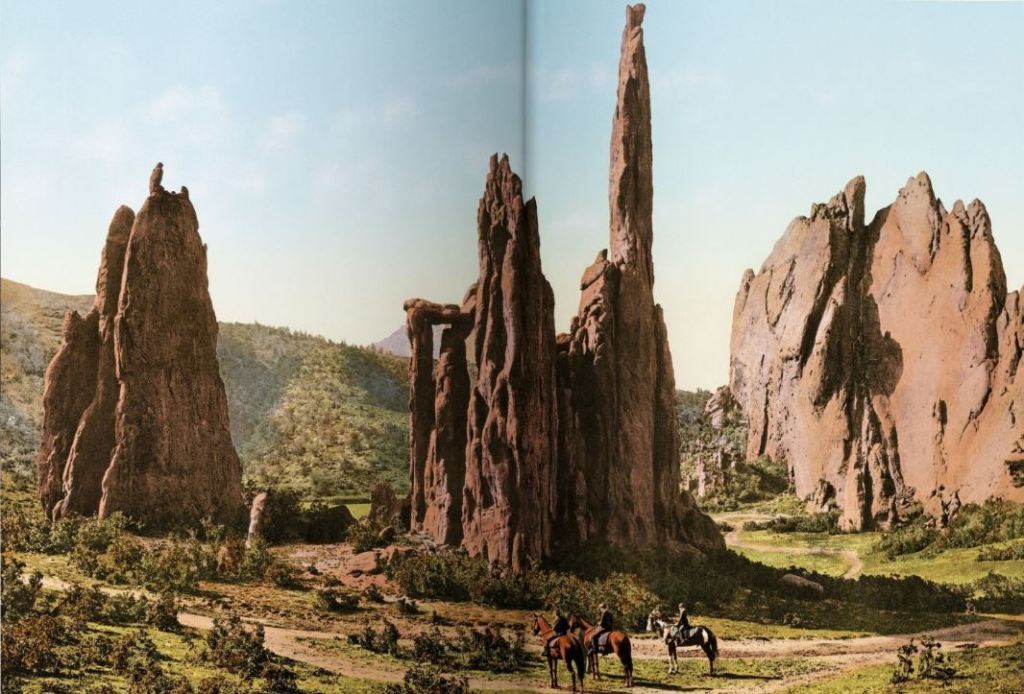
These rediscovered Photochrom and Photostint postcard images from the private collection of Marc Walter were produced by the Detroit Photographic Company between 1888 and 1924. Using a photolithographic process that predated the autochrome by nearly 20 years, they offered people the very first color photographs of the United States.
Suddenly, the continent’s colors were available for all to see. From the rich ochres and browns of the Grand Canyon to the dazzle of Atlantic City, these places were now a visual delight not only for eyewitnesses but for Americans far and wide.
Imbued with a sense of discovery and adventure, the pictures gathered here are a voyage through peoples, places, and time. They take us through North America’s vast and varied landscape, where we encounter its many communities, and above all transport us back to the United States of over a century ago. Across more than 600 pages including fold-out spreads, this sweeping panorama takes us from Native American settlements to New York’s Chinatown, from some of the last cowboys to Coney Island’s heyday. As luminous now as they were some 120 years ago, these rare and remarkable images that brought America to Americans now bring America’s past to our present.
Graphic designer, photographer, and collector Marc Walter (1949–2018) specialized in vintage travel photographs, particularly photochromes, of which he held one of the world’s largest collections. He published numerous books featuring images from his collection as well as his own photographs.
Sabine Arqué is a photo researcher, editor, and author. She has collaborated on numerous publications on the themes of travel, the history of tourism, photochromes, and photography.

Michelangelo is among the most influential and impressive artists of the Italian High Renaissance. His lifelike sculptures and powerful paintings are some of the most recognizable works in Western art history. He also drew prolifically, making sketch after sketch of figures in slightly varying poses, focusing on form and gesture.
However, remarkably few of these drawings remain today, many of them burned by the artist himself, others lost or damaged over the centuries.
A recent exhibition at the J. Paul Getty Museum, Michelangelo: Mind of the Master, brought together more than two dozen of Michelangelo’s surviving drawings—including designs for the Sistine Chapel ceiling and The Last Judgment—to shed light on the artist’s creativity and working method. In this episode, co-curators of this exhibition, Julian Brooks and Edina Adam, discuss the master and what we can learn from his works on paper.
For images, transcripts, and more, visit getty.edu/podcasts.










 Boomers Daily