Earth Day – April 22, 2021: ‘Our Planet, Our Home’

NASA Earth science studies our planet all day, every day. By tracking the movement of our natural systems – and the effect of human activity on them – we can understand the patterns, causes and results of climate change on the elemental activities that sustain us.

On Earth Day, April 22, we take time to celebrate this wondrous planet with special discussions, events (virtual) and activities. Like our satellites, however, NASA’s Earth science goes on year-round, and we continuously create videos, activities, news and more to tell the story of what’s happening on and with our planet – and all always offered free and open to the public.

For the 50th Anniversary of Earth Day in 2020, NASA created a special package of materials designed to mark Earth Day at Home. This included activities, videos, special programs and other materials in English and Spanish. You can find them all archived here.

Aerial Views: ‘Hartford – Connecticut’ (4K Video)

Hartford is the capital of Connecticut. It’s home to the Mark Twain House & Museum. The 1874 mansion contains thousands of artifacts, including the desk at which Twain wrote his best-known works. The Harriet Beecher Stowe Center includes the author’s Victorian house and many period furnishings, plus a garden. The broad collection of the Wadsworth Atheneum Museum of Art includes Renaissance and impressionist works.

Views: Nigatsudo Temple – Nara, Japan (4K HDR Video)

Nigatsu-dō (二月堂, “The Hall of the Second Month”) is one of the important structures of Tōdai-ji, a temple in Nara, Japan. Nigatsu-dō is located to the east of the Great Buddha Hall, on the hillside of Mount Wakakusa.

Walks: ‘Trafalgar Square To The London Eye’ (4K)

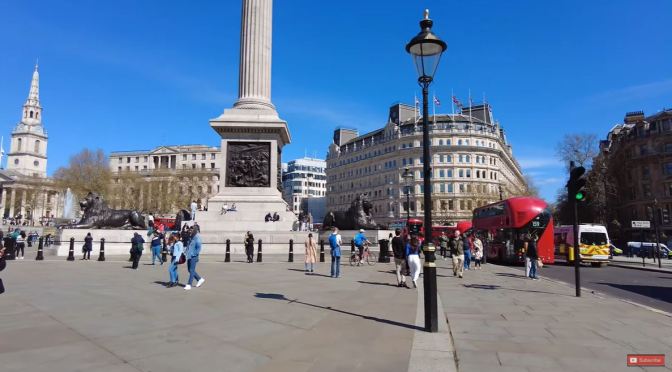
Trafalgar Square is a public square in the City of Westminster, Central London, established in the early 19th century around the area formerly known as Charing Cross. 

The London Eye, or the Millennium Wheel, is a cantilevered observation wheel on the South Bank of the River Thames in London. It is Europe’s tallest cantilevered observation wheel, and is the most popular paid tourist attraction in the United Kingdom with over 3 million visitors annually. 

Global Health Essays: ‘The Politics Of Stopping Pandemics’ (New Yorker)

He identifies a cluster of non-medical drivers of deadly outbreaks—war, political instability, human migration, poverty, urbanization, anti-science and nationalist sentiment, and climate change—and maintains that advances in biomedicine must be accompanied by concerted action on these geopolitical matters.

War and Pestilence ride together as two of the Four Horsemen of the Apocalypse, and there is no shortage of historical precedent to demonstrate the aptness of the allegory. The great influenza pandemic that began in 1918 was propelled, in part, by troop movements and population shifts at the end of the First World War. Both the First and the Second World Wars produced typhus epidemics. Armed conflicts cause malnutrition, poor pest control, and sanitation problems; even the soil often becomes contaminated. Medical facilities are destroyed; doctors and nurses, diverted to combat duty, are unable to provide care, and vaccination and other mass-treatment programs usually falter.

Read full essay at The New Yorker

CRISPR Technology: Dr. Jennifer Doudna On Its Medical Ethics (Video)

Dr. Jennifer Doudna first made her name uncovering the basic structure and function of the first ribozyme, a type of catalytic ribonucleic acid (RNA) that helps catalyse chemical reactions. This work helped lay the foundation for her later helping to pioneer CRISPR-Cas 9, a tool that has provided the means to edit genes on an unprecedented scale and at minimal cost. In addition to her scientific contributions to CRISPR, Doudna is known for spearheading the public debate to consider the ethical implications of using CRISPR-Cas9 to edit human embryos.

Morning News Podcast: India’s Covid-19 Surge, Chad President’s Death

Mass gatherings and in-person voting continue, even as new case numbers smash records and fatalities spiral in public view. We ask how a seeming pandemic success has turned so suddenly tragic.

Chad’s president of three decades has been killed; that has implications for regional violence far beyond the country’s borders. And a deep dive on the international sea-cucumber trade.

Views: ‘Water Castles In Raesfeld, Germany’ (Video)

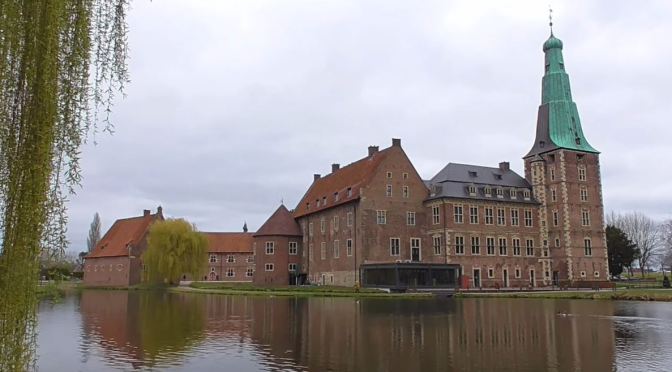
Raesfeld is a municipality in the district of Borken in the state of North Rhine-Westphalia, Germany. It is located approximately 10 km south of Borken and 30 km east of the Dutch border.

water castle is a castle whose site is largely defended by water. It can be entirely surrounded by water-filled moats (moated castle) or natural waterbodies such as island castles in a river or offshore. The term comes from European castle studies, mainly German Burgenkunde, but is sometimes used in English-language popular science books and websites, and is mentioned in other more academic works. When stately homes were built in such a location, or a Wasserburg was later rebuilt as a residential manor, the German term becomes Wasserschloss, lit. “water palace/manor”.

Classics: ‘1967 Volkswagen 21-Window MicroBus’

One of the most notable variants of the T1 Type 2 is the Samba. Samba is the name given the 21 and 23 window versions of the Type 2. The 23 window Samba was built until 1963 and the 21 window Samba was built from 1964 until 1967. These variants were considered to be the top of the line versions of the T1 Type 2 and were fitted with a cloth sunroof. It is very common to find Type 2s that have been converted to 21 or 23 window variants, yet only cars built until 1967 are considered to be original.

Science: Inflatable Self-Supporting Structures, River Carbon Emissions

The self-supporting structures that snap into place, and how a ban on fossil-fuel funding could entrench poverty in sub-Saharan Africa.

In this episode:

00:45 Self-supporting, foldable structures

Drawing inspiration from the art of origami, a team of researchers have demonstrated a way to design self-supporting structures that lock into place after being inflated. The team hope that this technique could be used to create arches and emergency shelters that can be quickly unfolded from flat with minimal input.

Research Article: Melancon et al.

News and Views: Large-scale origami locks into place under pressure

Video: Origami-inspired structures could be deployed in disaster zones

07:32 Research Highlights

Nocturnal fluctuations cause scientists to underestimate rivers’ carbon emissions, and the ‘island rule’ of animal size-change is seen around the world.

Research Highlight: Rivers give off stealth carbon at night

Research Highlight: Animals around the world follow the ‘island rule’ to a curious fate

09:55 Banning fossil-fuel funding will not alleviate poverty

A ban by wealthy nations on the funding of overseas fossil-fuel projects would do little to reduce the world’s climate emissions and much to entrench poverty in sub-Saharan Africa, argues economist Vijaya Ramachandran.

World View: Blanket bans on fossil-fuel funds will entrench poverty

17:17 Briefing Chat

We discuss some highlights from the Nature Briefing. This time, the first powered flight on another world, and estimating how many Tyrannosaurus rex ever lived.

News: Lift off! First flight on Mars launches new way to explore worlds

Video: Flying a helicopter on Mars: NASA’s Ingenuity

News: How many T. rex ever existed? Calculation of dinosaur’s abundance offers an answer