
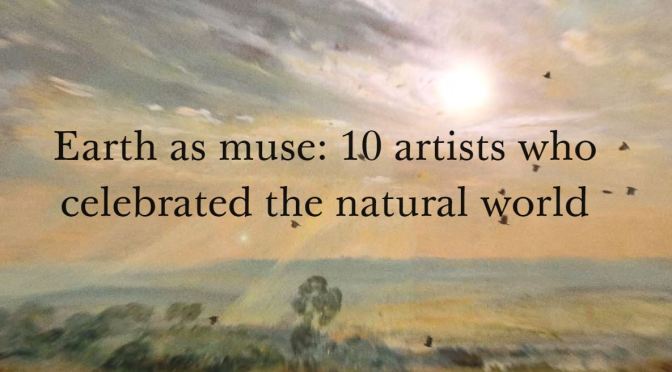
From Christie’s article (April 22, 2020):
From Switzerland to South America, from the South of England to the coast of Maine, they have been moved by mountains, oceans, deserts, plains, lakes and forests — we hope you will find their art every bit as stirring as we do
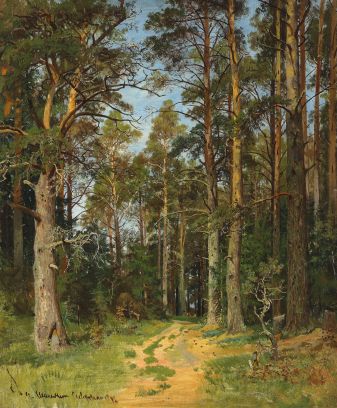
Russia’s pine forests
Siverskaya, located 70km south of St Petersburg, was a popular summer retreat for Russian city-dwellers in the 19th century. It was in Siverskaya and its neighbouring woods that Ivan Shishkin — one of Russia’s most famous landscape painters, dubbed ‘the patriarch of forests’ — created some of his best-known works.
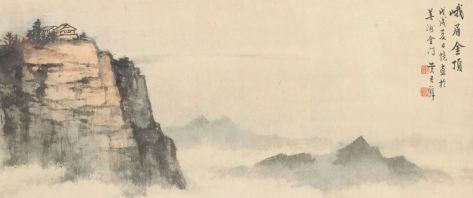
Mount Emei, China
Mount Emei in Sichuan, southwest China, is the highest of China’s four sacred Buddhist mountains, reaching to 3,099 metres. The mountain is a place of pilgrimage, where dozens of temples and monasteries have been erected, and has been an inspiration for artists for centuries.
Wednesday 22 April, 2020 marks 50 years since the declaration of the first Earth Day in 1970 — an occasion on which to reflect on our natural world, and perhaps take action to help sustain it. In celebration of this anniversary, we look back on a selection of artists for whom nature — and our planet — has been an inspiration and guide.

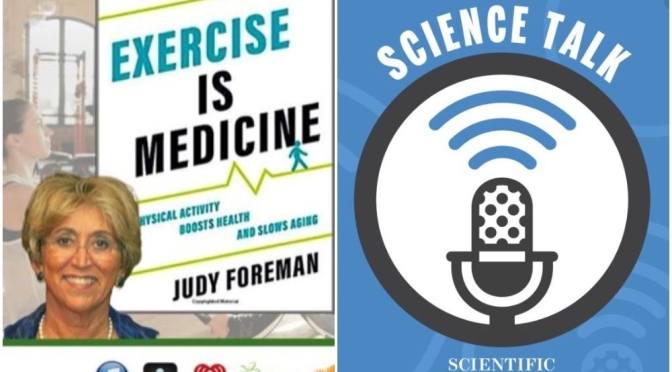
 Health journalist Judy Foreman talks about her new book Exercise Is Medicine: How Physical Activity Boosts Health and Slows Aging
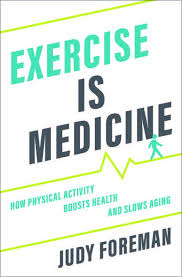 This is Scientific American’s Science Talk, posted on April 24th, 2020. I’m Steve Mirsky. And under our current, often locked-down situation, it’s still really important to try to get some exercise. Judy Foreman is the author of the new book Exercise is Medicine: How Physical Activity Boosts Health and Slows Aging. She’s a former nationally syndicated health columnist for the Boston Globe, LA times, Baltimore Sun and other places, and an author for the Oxford University Press.
 Ventilators have become prized in hospitals across the U.S. and beyond because they are desperately needed to treat very ill Covid-19 patients. But they are also feared for the damage they can inflict, and for the slim odds of survival they offer.



 Benjamin Thompson, Noah Baker, and Amy Maxmen discuss the role of antibody tests in controlling the pandemic, and how public-health spending could curtail an economic crisis. Also on the show, the open hardware community’s efforts to produce medical equipment.

 Boomers Daily