Tuesday, July 21, marks the centennial of the birth of violinist Isaac Stern. He was not only an acclaimed musician, but a devoted teacher who was a mentor to generations of musicians.
Isaac Stern, (born July 21, 1920, Kremenets, Ukraine, Russian Empire—died September 22, 2001, New York, New York, U.S.), Russian-born American musician who was considered one of the premier violinists of the 20th century. Active in organizations promoting the arts, he played a key role in saving New York City’s Carnegie Hall from demolition in 1960 and later became president of the corporation that administered the hall and its cultural programs; he held the post until his death. In 1964 he helped establish the National Endowment for the Arts. Stern was also noted for his encouragement of young musicians, and he aided the careers of Yo-Yo Ma and violinist Itzhak Perlman, among others. The recipient of numerous awards, Stern received the Kennedy Center Honors Award in 1984 and a Grammy for lifetime achievement in 1987.
Slavoj Žižek is a Slovenian philosopher and writer whose vast catalogue of work has earned him celebrity status across the globe. A radical leftist, his work encompasses everything from psychoanalysis and political theory to art and film criticism.
Described as “the leading Hegelian of our time”, he speaks to Georgina Godwin about his latest book, ‘Hegel in a Wired Brain’, which is an evaluation of the German philosopher’s relevance in the 21st century that ties in with the 250th anniversary of his birth.
In celebration of the 250th anniversary of the birth of G.W.F. Hegel, Slavoj Žižek gives us a reading of the philosophical giant that changes our way of thinking about our new posthuman era. No ordinary study of Hegel, Hegel in a Wired Brain investigates what he might have had to say about the idea of the ‘wired brain’ – what happens when a direct link between our mental processes and a digital machine emerges. Žižek explores the phenomenon of a wired brain effect, and what might happen when we can share our thoughts directly with others. He hones in on the key question of how it shapes our experience and status as ‘free’ individuals and asks what it means to be human when a machine can read our minds.
With characteristic verve and enjoyment of the unexpected, Žižek connects Hegel to the world we live in now, shows why he is much more fun than anyone gives him credit for, and why the 21st century might just be Hegelian.
I’ve had lunch with politicians, clergy, reporters and people who’ve just been indicted at Manny’s Cafeteria and Delicatessen in Chicago, and there’s a code of silence over the clatter: it doesn’t count.
The schmear of cream cheese thick enough to be a ski jump? No calories! Potato pancakes hefty as manhole covers?
But the weeks of the shutdown became months. Even as businesses reopened, multitudes still work from home.
“That can’t pay our rent, insurance, our payroll,” says Dan Raskin. “We can’t go on like that.”
When a family business is forced to close, people lose their livelihoods, families lose support, and a city loses revenue and vitality. A landmark like Manny’s is also a link to history. You can point to where Barack Obama talked politics over pastrami, Oprah had apple sauce on her latkes, and where your grandfather went when he got tired of dieting.
Monocle 24’s ‘The Stack’ speaks with Enric Pastor, editor-in-chief of ‘AD Spain’. Plus: ‘Dreamscapes & Artificial Architecture’ from Gestalten and we meet the founder of travel publisher Wildsam.
Enric Pastor – Editor-in-chief of ‘AD Spain’
Elli Stuhler – Editor of Gestalten title ‘Dreamscapes & Artificial Architecture’ and discuss a new trend in publishing
Taylor Bruce – Founder of travel publisher Wildsam, which specialises in guides for cities in the US.
The Economist reviews the world’s top headlines including Blackrock’s earnings, new Covid-19 cases rise in America and other countries, airline industry updates and more.
Some of the country’s largest school districts have already made the decision to go online-only for this coming school year. Many are talking about hybrid models that combine distance and in-person learning, but whether they’re online or in the classroom, teachers will bear the brunt of making their classes work.
Plus, why Joe Biden’s campaign is dreading foreign policy.
Contributing Correspondent Gretchen Vogel talks about what can be learned from schools around the world that have reopened during the coronavirus pandemic. Unfortunately, few systematic studies have been done, but observations of outbreaks in schools in places such as France or Israel do offer a few lessons for countries looking to send children back to school soon.
The United Kingdom and Germany have started studies of how the virus spreads in children and at school, but results are months away. In the meantime, Gretchen’s reporting suggests small class sizes, masks, and social distancing among adults at schools are particularly important measures.
Also this week, Sarah talks with Kiristie Thompson, a Ph.D. student in the Georgia Institute of Technology’s Department of Chemistry and Biochemistry, about increasing the efficiency of petroleum processing. If all—or even some—petroleum processing goes heat free, it would mean big energy savings. Around the world, about 1% of all energy use goes to heating up petroleum in order to get useful things such as gas for cars or polymers for plastics. These days, this separation is done through distillation, heating, and separating by boiling point. Kirstie describes a heat-free way of getting this separation—by using a special membrane instead. Read a related Insight.
This week, the Trump administration ordered hospitals to bypass the Centers for Disease Control and Prevention send all coronavirus-related data straight to the Department of Health and Human Services. This is just the latest step in President Trump’s war on public health experts.
Plus, a shakeup on Trump’s 2020 campaign team.
And, a major Twitter hack Wednesday afternoon left some of the most powerful people on the platform vulnerable to a cryptocurrency scam.
Guests: Axios’ Sam Baker, Mike Allen, and Ina Fried.
Buildings are getting tested for coronavirus, too. Research teams in Oregon are conducting real-time coronavirus tests on ventilation systems in buildings that could be essential for returning to the office or school.
Plus, small businesses are facing an existential threat.
And, in a rare move, the Trump administration rescinds a recent guideline that would have sent hundreds of thousands of international students packing.
Guests: Axios’ Joann Muller, Dion Rabouin, and Mike Allen.

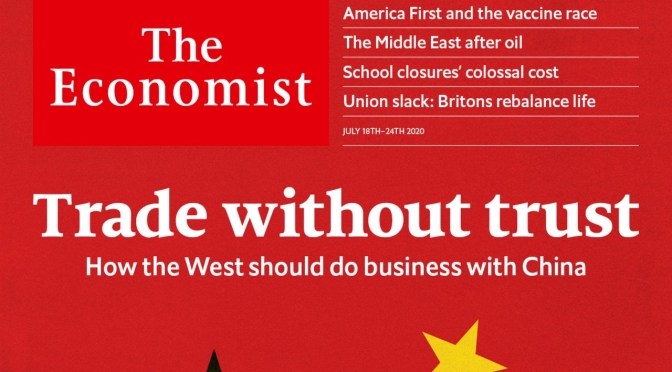
 A selection of three essential articles read aloud from the latest issue of The Economist. This week, Huawei and the tech cold war; (8:55) millions of young minds are going to waste; (16:10) and a new material helps transistors become vanishingly small.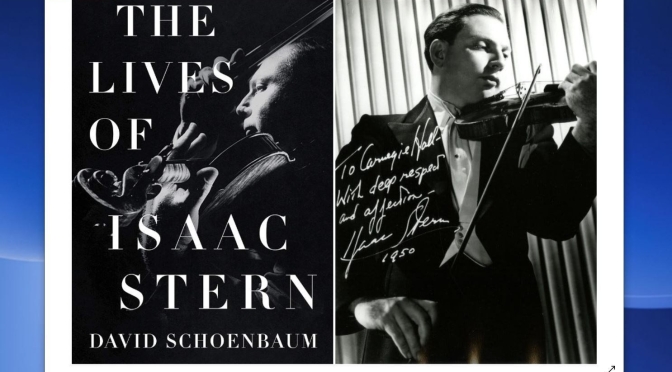
 Tuesday, July 21, marks the centennial of the birth of violinist Isaac Stern. He was not only an acclaimed musician, but a devoted teacher who was a mentor to generations of musicians.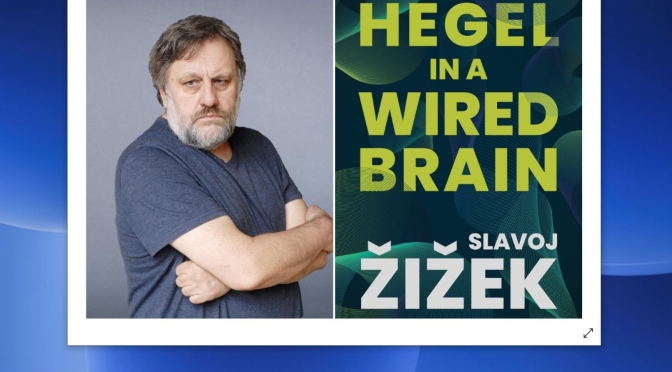
 Slavoj Žižek is a Slovenian philosopher and writer whose vast catalogue of work has earned him celebrity status across the globe. A radical leftist, his work encompasses everything from psychoanalysis and political theory to art and film criticism.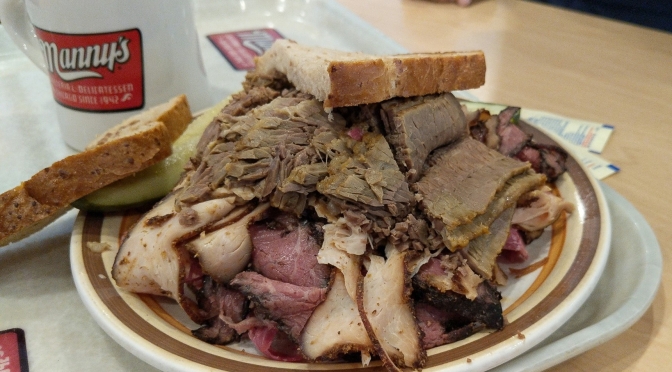
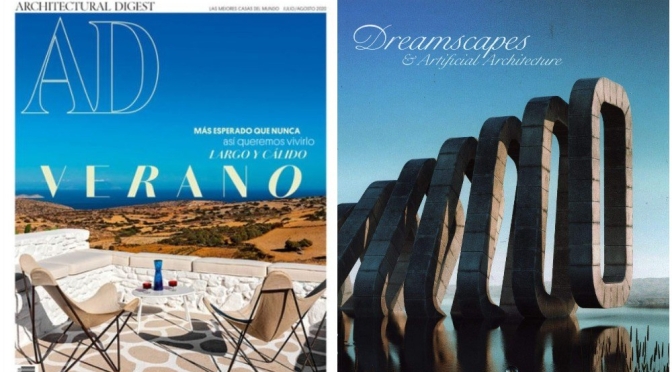
 Monocle 24’s ‘The Stack’ speaks with Enric Pastor, editor-in-chief of ‘AD Spain’. Plus: ‘Dreamscapes & Artificial Architecture’ from Gestalten and we meet the founder of travel publisher Wildsam.
 The Economist reviews the world’s top headlines including Blackrock’s earnings, new Covid-19 cases rise in America and other countries, airline industry updates and more.
 Some of the country’s largest school districts have already made the decision to go online-only for this coming school year. Many are talking about hybrid models that combine distance and in-person learning, but whether they’re online or in the classroom, teachers will bear the brunt of making their classes work.
 Contributing Correspondent Gretchen Vogel talks about what can be learned from schools around the world that have reopened during the coronavirus pandemic. Unfortunately, few systematic studies have been done, but observations of outbreaks in schools in places such as France or Israel do offer a few lessons for countries looking to send children back to school soon.
 Boomers Daily