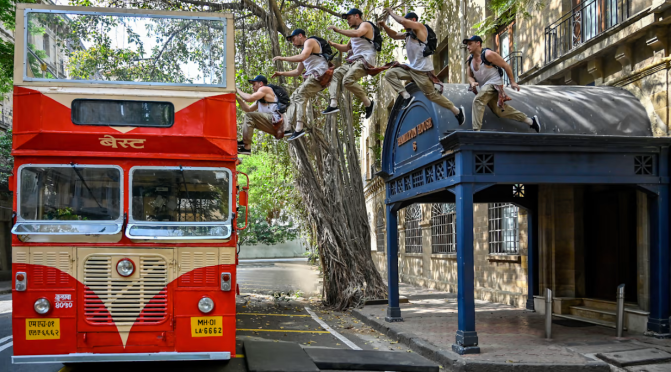
Parkour athlete Jason Paul uses all of his freerunning skills and speed to chase across the busy streets of Mumbai to return a Bollywood actors lunchbox… 🇮🇳
See more incredible freerunning from Jason Paul here: https://www.redbull.com/int-en/shows/…

Parkour athlete Jason Paul uses all of his freerunning skills and speed to chase across the busy streets of Mumbai to return a Bollywood actors lunchbox… 🇮🇳
See more incredible freerunning from Jason Paul here: https://www.redbull.com/int-en/shows/…
An electric bus service has injected a new playfulness into a borough of Tokyo in need of a revamp. We hop aboard and meet Eiji Mitooka, its creator and Japan’s foremost train designer, who explains why he puts fun at the top of his list when designing public transport. All aboard!
Read more in the June issue of the magazine: [https://monocle.com/shop/product/2155…
Climate change is causing rising temperatures, extreme weather events and more and more drought. And, in this changing reality, everyone needs more water. Humans are competing with the natural world for water. What does this mean for biodiversity? Fewer and fewer countries still have an abundance of water. The climate crisis, overpopulation and overexploitation are the root of this global problem. And, in a warming world, everyone is using more water: people, agriculture and industry. In Germany, streams and ponds are disappearing, forests and soils are drying out. What does this mean for biodiversity? And how do people cope with drought in countries that have even less water — for example, in the USA or Mexico? What happens when our water dries up?
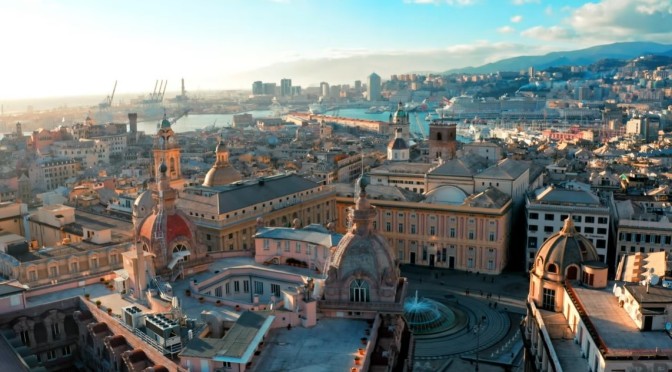
Genoa (Genova) is a port city and the capital of northwest Italy’s Liguria region. It’s known for its central role in maritime trade over many centuries. In the old town stands the Romanesque Cathedral of San Lorenzo, with its black-and-white-striped facade and frescoed interior. Narrow lanes open onto monumental squares like Piazza de Ferrari, site of an iconic bronze fountain and Teatro Carlo Felice opera house.
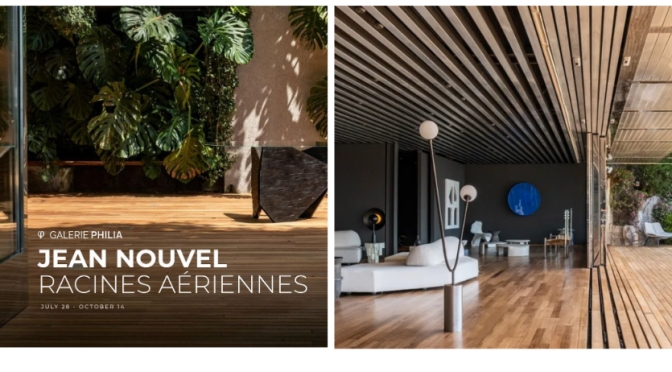
Galerie Philia is proud to announce its summer exhibition taking place in two villas designed by Jean Nouvel and commissioned by Rivere Group on the luxurious Cote d’Azur. Villa Maeterlinck in Nice and villa in St Jean Cap Ferrat, both are perfectly integrated into the landscape and boast terrace gardens in front of wide private sea views on the Mediterranean.
Tillandsias in Saint Jean Cap Ferrat and Monsteras in Nice were planted by Jean Nouvel as an ode to their aerian roots. This specific fauna is in complete harmony with the asesthetic of the influential architect whose innovative aerian principle transforms buildings into dematerialized natural environments. Set in a mesmerizing atmosphere, between the breath-taking coast and the unassuming minimalism of Nouvel, Galerie Philia enhances this dialogue between the aesthetic of the architecture and its natural surroundings.
The concept of aerian roots is in the heart of the scenography of Galerie Philia as transcultural art and design works were selected for the plural and complex aesthetic and national identities they convey. Completed in 2015 and placed right by the famous Maeterlinck Palace, Villa Maeterlink is carved into the rock. Situated just by the waterfront, all of the rooms in the villa have a full view of the sea, with a living room spanning 40m2 without posts (cantilevered).
Set in a grand plot of 8600 m2, the entire house is made to measure including the stainless steel ceilings, light fixtures, and inox surfaces along with a multitude of special details that make this a truly unique place. The space breaths at all times thanks to the sliding partitions that were built in a studied way to dissipate the boundary between interior and exterior in this house that opens to the sea, and the stainless steel ceiling of the house allows one to see the sea at all times.
Blending with the unique and entirely customized architecture of Jean Nouvel, Galerie Philia’s elegant collection of sculptural design and art dresses these villas in a new look and create stunning vistas, transforming them into a living and breathing homes. The gardens and the interior of both villas are united by a harmonious scenography and become a reflection of the lightness of Nouvel’s aesthetic. The exhibition features unique pieces by Frederic Saulou, Andrés Monnier, Arno Declercq, Jojo Corväiá, Rick Owens, Elsa Foulon, Jan Ernst and many more designers represented by Galerie Philia.
The hand-carved stone firepit of Andres Monnier creates a radiant atmosphere in the patio with the ravishing views of plants as Gerard Kuijpers’ Dancing Stones move with the breeze from the mediterranean. Arno Declercq’s unique daybed accommodates a relaxing environment in the cozy living space and Jörg Pietschmann’s solid oak unique bench invites one to enjoy the monstera haven. The Revue Eclipse collaborated with Galerie Philia on the fine art selection, and internationally known artists will be exhibited such as Sam Szafran, Flora Temnouche, Edgar Sarin, Manuel Merida, Francisco Salazar, Jörg Kratz and Mateo Revillo.
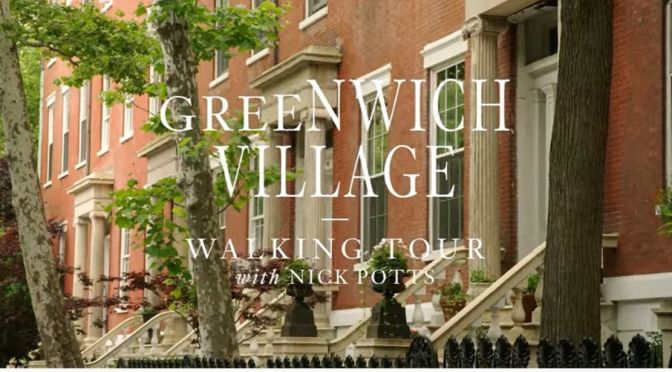
Architectural Digest takes you to New York City for an insightful walking tour of Greenwich Village with architect Nicholas Potts. From jazz clubs and coffee shops to the dramatic arch at Washington Square Park and the landmark buildings on Waverly Place, “The Village” continues to exist at the nexus of New York’s past, present, and future.
Come along with Nick as he explores the architectural details hidden in plain sight. Check out Nicholas Potts here:
Website: https://nicholasgpotts.com/ Instagram: https://www.instagram.com/nicholasgpo…
Merseburg, city, Saxony-Anhalt Land (state), eastern Germany. It lies on the left bank of the Saale River, just south of Halle. Founded about 800 as a frontier fortress against the Slavs, it was a favourite residence of the German kings Henry I the Fowler (d. 936), Otto I, and Henry II.
It was the seat of a bishop from 968 until the Reformation (1561) and was chartered in 1188. It passed to Saxony in 1561 and was captured (1631) by the Swedes in the Thirty Years’ War. The residence of the dukes of Saxe-Merseburg from 1656 to 1738, it passed to Prussia in 1815. It was heavily bombed in World War II.
Merseburg’s most notable buildings are the imposing castle (1480–89) and the cathedral, begun in 1015 and dating mainly from the 13th and 16th centuries. Today there is a technical university (now part of Martin Luther University of Halle-Wittenberg) in Merseburg. The city’s industries include aluminum foil production.
Offering a playful rendition of the familiar sustainable narrative, Casa Mia enables residents to experience life inside a dream house. Crafted by Iredale Pedersen Hook Architects in collaboration with Caroline Di Costa Architect, the residence uses brickwork to convey a liberating message.
Video timeline: 00:00 – Introduction to Casa Mia 00:28 – High-Density Living 01:11 – A Playful Space 01:53 – Providing a Presence and Privacy 02:13 – Sustainable Brickwork 03:08 – Love and Appreciation for Brickworks 03:39 – Historic and Ancient Japanese Architecture 04:25 – Utilising Unfinished Materials 05:00 – Sustainable Design 05:47 – The Architect’s Favourite Aspects of the House
Located on the Ocean Mia Estate in City Beach, Casa Mia is an architect’s own home, sitting in contrast to the built context. Constructed from carefully positioned brickwork with spaces between bricks at its edge, the dream house juxtaposes the rectilinear forms of the surrounding buildings, presenting a dynamic profile of surprising lightness.
Liaising with Brickworks, Iredale Pedersen Hook Architects both inheres the project with a sense of sustainability and makes the concept legible as a prominent feature of the architect’s own home. Brickworks enables its products to be applied to the dream house in their uncut state – an atypical usage – in order to minimise waste. Every brick of the dream house is locally sourced and exhibits colours reminiscent of the earthy natural landscape. Inspired by Japanese architecture, Iredale Pedersen Hook Architects employs fully-glazed bricks around particular openings.
The bricks bounce sunlight into the depths of the home, allowing the residents to save energy where possible. Although Casa Mia represents the weight of responsibility architects have towards the environment, it also presents this responsibility as beneficial. Iredale Pederson Hook Architects and Caroline Di Costa Architect craft a dream house that rejoices in its sustainability, utilising the colour and texture of brick to suggest a playful variation of an architect’s own home.
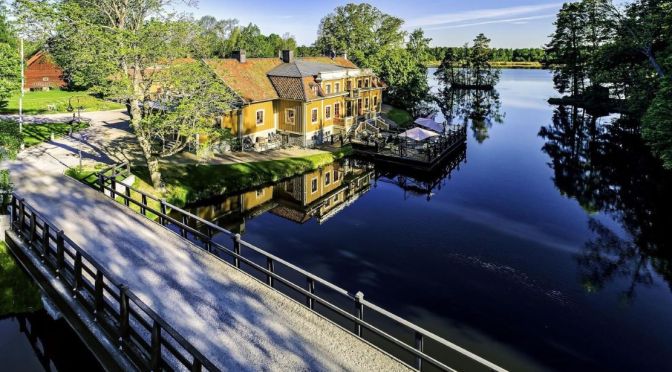
Dufweholms Herrgård is a romantic manor hotel located just outside Katrineholm.
Katrineholm is a locality and the seat of Katrineholm Municipality, Södermanland County, Sweden with 24,271 inhabitants in 2018. It is located in the inland of Södermanland and is the third largest urban area in the county after Eskilstuna and county seat Nyköping.
“I found my way to James Beard-nominated chef Bryce Shuman (and his succulent pork ribs) during the summer of 2020 when he was offering a barbecue rib delivery service in Brooklyn and Manhattan out of the back of his Subaru. The food, the delivery, the entire presentation was flawless, ingenious—beautiful to the eye and supremely mouth-watering.” — Chris Ohlson (Director) Read more on NOWNESS





 Boomers Daily