Freethink – Robotics are helping make minimally invasive surgeries even less invasive. Case in point: single-port robotic surgery, a relatively new type of approach where a robotic system controlled by a human surgeon executes the procedure by making only one incision into the patient.
Although still relatively uncommon, single-port surgery has been gaining momentum in recent years. The benefits are noticeable. Compared to traditional surgery, single-port surgery might leave patients with shorter recovery times, less scarring, and overall better outcomes.
The technique is also transforming how surgeons think about and execute surgery itself. “It’s allowing us to do surgeries differently than we do with [multi-port surgery],” said Michael Stifelman, M.D., director of robotic surgery at Hackensack University Medical Center. “What every patient wants is to get back to their life. Single-port robotics is allowing us to get them to that point more quickly.”
Learn more about the future of single-port surgery in this episode of “Operation: Reimagine Surgery,” a Freethink original series produced in partnership with Intuitive, which created the world’s first commercially available robotic surgery system in the 1990s.
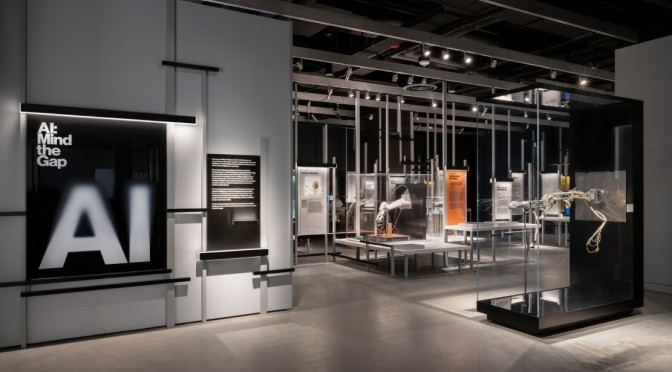
PBS NewsHour – Artificial intelligence, robotics and gene sequencing are the stuff of headlines, science fiction and sometimes even our worst fears. It’s all on view at the new MIT Museum. A place where the latest scientific advancements fill galleries, but only really work with your input. Special correspondent Jared Bowen of GBH Boston looks at this artistic frontier for our arts and culture series, “CANVAS.”
From AI in the home to robots in the workplace, the presence of AI all around us compels us to question its potential and recognize the risks. What has become clear is that the more we advance AI technology and consider machine ability versus human ability, the more we need to mind the gap.
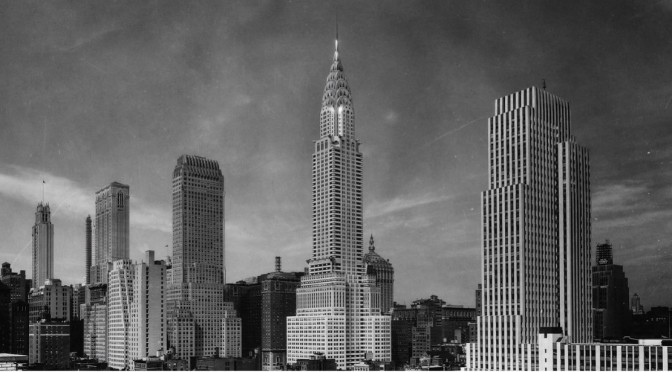
Today Michael Wyetzner of Michielli + Wyetzner Architects returns to Architectural Digest for a deep, detail-oriented break down of New York City’s singular Chrysler Building. From its unmistakable Art Deco design to the hidden details that echo its automotive inspiration, see why the Chrysler Building is an iconic staple of the Manhattan skyline.
HISTORY
The story of the Chrysler Building began in 1928, when automotive titan Walter P. Chrysler, founder of Chrysler Corporation, bought the property from Coney Island developer William H. Reynolds for $2 million. Chrysler hired architect William Van Alen, who had previously designed a skyscraper for Reynolds on the site, to create the world’s tallest tower. Construction on Chrysler’s project began in 1929 and was completed in 1930. Reaching a height of 1,048 feet, including its 125-foot steel spire, the Chrysler Building surpassed the Woolworth Building and 40 Wall Street in Lower Manhattan in a “Race to the Sky” to claim the tallest building in the world–a title it held until 1931. The Chrysler Building still reigns as the world’s most famous skyscraper, playing prominent roles in film and television from Godzilla and Spider-Man to Sex and the City.
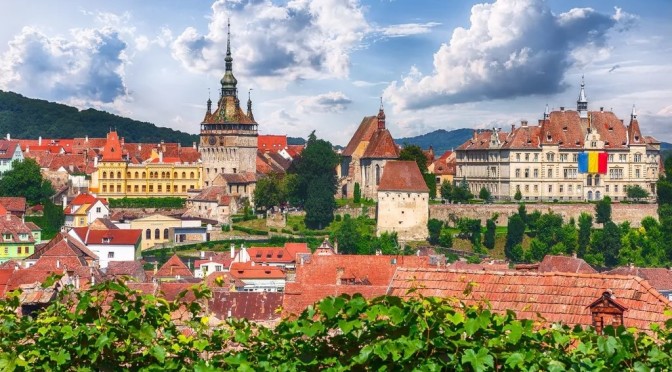
Romania is a southeastern European country known for the forested region of Transylvania, ringed by the Carpathian Mountains. Its preserved medieval towns include Sighişoara, and there are many fortified churches and castles, notably clifftop Bran Castle, long associated with the Dracula legend. Bucharest, the country’s capital, is the site of the gigantic, Communist-era Palatul Parlamentului government building.
ART VISION TV – Montmartre is a hill in the north of Paris, famous for its artists and Bohemian culture. The hill is topped by the Sacré-Coeur Basilica, which offers stunning views over the city. The streets around the basilica are lined with art galleries and cafés, and there are often buskers and performers in the square. In fact, Montmartre is one of the neighborhoods that Paris is most famous for.
CBS Sunday Morning – We leave you this first Sunday of 2023 at Ausable Chasm (known as the “Grand Canyon of the Adirondacks”), near Lake Champlain in New York state. Videographer: Jaime McDonald.
Ausable Chasm, open since 1870, is the oldest and largest natural attraction in the Adirondacks. More than 10 million visitors have explored the chasm on the well-maintained scenic nature trails.
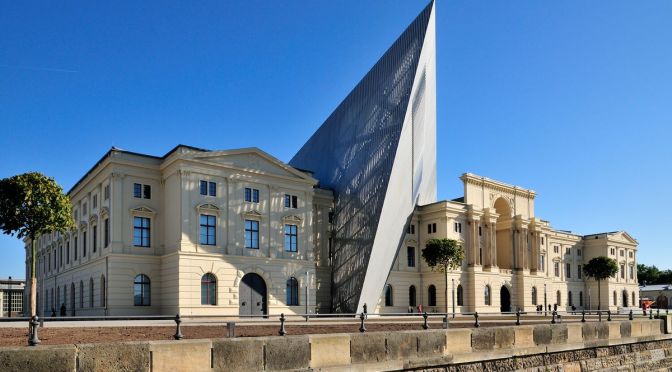
Smithsonian Channel – In 2001, Daniel Libeskind was hired to design a tasteful extension to the Bundeswehr Museum of Military History, in Dresden. His vision was an ingenious feat of architecture that managed to be both modern and respectful of the city’s tragic past.
The Military History Museum in Dresden, Saxony is one of very few museums in Germany that has German war equipment from both World Wars. Some of the most famous large items in the museum include a V2 flying bomb and Germany’s first submarine. The museum aims to explain how the military, armies and war influenced politics and society, and vice versa.
December 29, 2022 – Ginzan Onsen (銀山温泉, lit. “Silver Mountain Hot Spring”) is a secluded hot spring town nestled in the mountains of Yamagata Prefecture. The area originally developed around a silver mine; however, these days it is better known as one of Japan’s prettiest onsen towns with historic ryokan lined up along the river.
Ginzan Onsen’s traditionally styled ryokan occupy beautiful three and four story wooden buildings that, with their exposed woodwork and white plaster walls, evoke nostalgic feelings of a bygone era. There is one exception, however, in the Fujiya ryokan at the center of town, which was recently rebuilt by famous modern architect Kuma Kengo. Although purists may find it out of place, its unique modern design incorporates many of the traditional design elements of the surrounding buildings, such as the same exposed wood and white plaster.
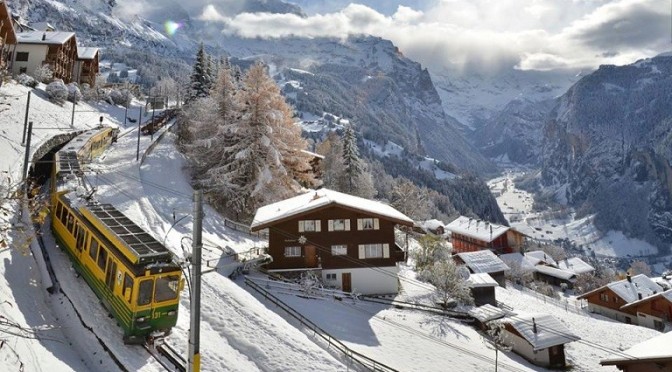
Wengen, the car-free village at the foot of the Jungfrau, is located on a sunny plateau and presents you with a breathtaking panorama of the surrounding peaks. A train trip to the Jungfraujoch -Top of Europe is the top! The Lauberhorn Race and the Jungfrau Marathon are two of the many big events on the calendar in Wengen.
The village is located on a sunny, wind-protected terrace at the foot of the Jungfrau, 400 meters above the Lauterbrunnen valley at 1274 m above sea level. The car-free village, steeped in tradition, offers a family-friendly skiing and hiking area all around the Männlichen and Kleine Scheidegg.
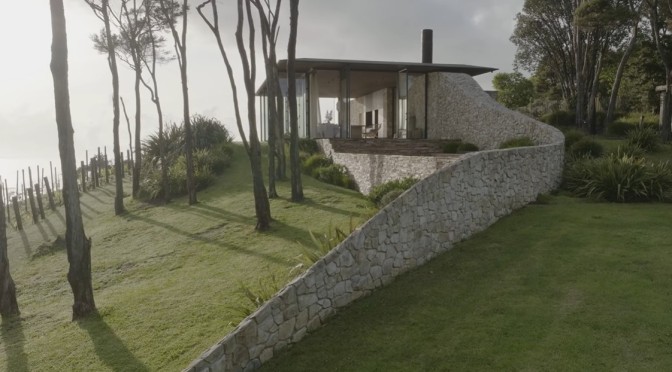
The Local Project – Through natural material selections, Cheshire Architects has unveiled Waiheke House, a home that embraces its surrounds to become the best modern house in the world. Operating under the rule that grandeur does not need to be shown through scale but rather quality, Waiheke House is a place of respite for its owners with only one and a half bedrooms and a focus on entertaining areas.
Video timeline:00:00 – Introduction to the Best Modern House in the World 00:45 – An Island Location 01:05 – The Aspect of the House 01:35 – Tasked with Entertaining 02:01 – The House Plan and its Materials 03:39 – Hidden Openings and Passages 04:22 – Bathing Rituals 05:27 – The Goal Behind the Home 05:43 – Creating a Centred Feeling 06:09 – Becoming One with the Environment 06:33 – A Vessel for Experience 06:53 – A Home Made with Real Materials 07:20 – A Love for the Layered Experience
While the views of Waiheke House are only part of what establishes it as the best modern house in the world, it is how the structure inserts itself into the landscape that is awe-inspiring. Focused on evoking the numerous meanings of ‘shelter,’ Waiheke House acts as a platform that can open or close for the watching of the weather as it changes. Comprised of two pavilions, which are slightly offset from one another,
Cheshire Architects have separated the living spaces to designate a place of reprieve and a place to entertain. The larger of the two pavilions, known as the seaward pavilion, is framed by landscaping. Shaped by the stone wall that curves around and holds the home, the idea of anchoring the seaward pavilion is seen through the home’s distinct architectural theme. To make the best modern house in the world feel warm and comfortable, the use of stone, wood and brass help the house insert itself into the surrounding nature. Created for entertaining, the seaward pavilion is intentionally designed to be small, with only a kitchen, large dining section and lounge.
Framed by glass on three sides, doors butterfly open so that the living areas can connect seamlessly with the lawn. Conceptually thought of as a canopy atop a mouth of a cave, Cheshire Architects has formed the best modern house in the world to navigate a spatial dialect that speaks to both broad ocean views and small, contained spaces. Throughout the house tour, it is evident that the selected surfaces and materials are chosen to act as a vessel for experience – an idea that Cheshire Architects hopes will still be embodied in 100 years as the home ages in place.
Seen in the stacked stone of the wall to the layered floor, Cheshire Architects avoids using crisp whites or laminates and instead imbues the home with richness from natural materials. Throughout the second pavilion, the adaption of narrower halls, lower ceilings and darker tones have been employed to create a dynamic internal contrast. Intended as a retreat for the owners, Waiheke House is a place to align and connect with the natural surroundings. By focusing on simple, high-quality design choices over scale, Cheshire Architects has created the best modern house in the world so that it may amplify what already exists.
News, Views and Reviews For The Intellectually Curious












 Boomers Daily