Tag Archives: Technology

Health & Data Trackers: Will “Body Technology” Really Make Us Healthier?

The principle behind these technologies is that collecting more data will help make us healthier. The message from experts I spoke with is that there’s potential in that idea, but it hasn’t been fulfilled yet.


NEW YORK TIMES (August 28, 2020): One big limitation of health devices, though, is that many people don’t know what to do with the data they see about their heart rate or how many hours they slept.

“We’re not doing a very good job of educating people what to do with that information. That’s the piece that’s missing,” said John Jakicic, the director of the Healthy Lifestyle Institute at the University of Pittsburgh. (Side note: For some people, having data on their sleep might actually be counterproductive.)

Read full article

Covid-19: The Realities Of “Automated Contact Tracing” (Rand Video)

Ben Boudreaux, policy researcher with the RAND Corporation, describes how contact tracing can be used to track the spread of COVID-19 and explains the differences between manual and automated contact tracing.

Get more insights from RAND on the COVID-19 pandemic: https://www.rand.org/latest/covid-19….

Online Payments: What Is The Chinese App “Alipay” From “Ant”? (WSJ Video)

The Chinese fintech titan Ant Group—co-founded by Alibaba billionaire Jack Ma—is set to go public in what could be one of the largest listings ever. WSJ explains how Ant’s backbone service, Alipay, has revolutionized payments and investing in the world’s most populous country.

Photo Composite: Crystal Tai

Technology: “Can 5G Replace Your Home Internet?” (WSJ Video)

Blazing fast 5G speeds are here but they aren’t all that useful on the new 5G smartphones. WSJ’s Joanna Stern packed up a motor home to see if the connection could power all her connected gadgets, including laptops, printers, Xboxes and camera-equipped doorbells. She explains the confusing world of 5G along the way.

Photo illustration: Sharon Shi

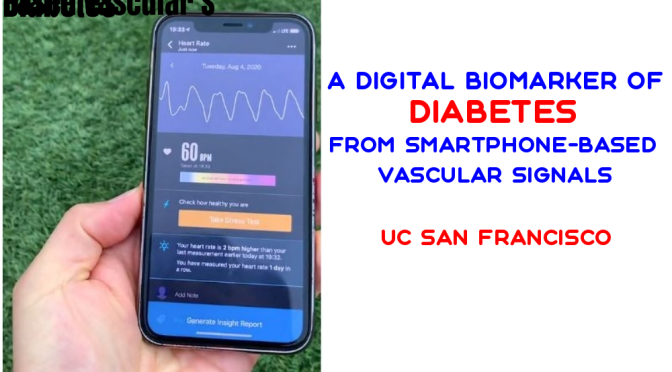
Health: Scientists Develop Simple Smartphone App To Detect “Diabetes” With Up To 80% Accuracy (UCSF)

Overall, the algorithm correctly identified the presence of diabetes in up to 81 percent of patients in two separate datasets. When the algorithm was tested in an additional dataset of patients enrolled from in-person clinics, it correctly identified 82 percent of patients with diabetes.  

In the Nature Medicine study, UCSF researchers obtained nearly 3 million PPG recordings from 53,870 patients in the Health eHeart Study who used the Azumio Instant Heart Rate app on the iPhone and reported having been diagnosed with diabetes by a health care provider. This data was used to both develop and validate a deep-learning algorithm to detect the presence of diabetes using smartphone-measured PPG signals.  

Among the patients that the algorithm predicted did not have diabetes, 92 to 97 percent indeed did not have the disease across the validation datasets. When this PPG-derived prediction was combined with other easily obtainable patient information, such as age, gender, body mass index and race/ethnicity, predictive performance improved further.

Read more

The Future Of Driving: Michigan To Build USA’s First “Autonomous Vehicle Corridor”

The Detroit  News (Aug 13, 2020)— Michigan is angling to build a first-in-the-nation connected and autonomous vehicle corridor in the state’s southeast corner, the latest bid to ensure the region remains the epicenter of an auto industry moving rapidly into a technology-driven future.

Local and state government officials, members of Michigan’s congressional delegation, Ford Motor Co. executives and project developer Cavnue confirmed plans Thursday for a roadway that would stretch from downtown Detroit to Ann Arbor. Along the way, it would connect to such key milestones as the American Center for Mobility in Ypsilanti, the University of Michigan in Ann Arbor and would parallel parts of Interstate 94 to Detroit Metropolitan Airport. 

The roadway would be publicly accessible and could feature both public transit and shared mobility options. It will be called the “Michigan Connected Corridor,” officials confirmed, sharpening a vision Ford shared when it acquired the historic train station two years ago. 

Read more

FOOD & AGRICULTURE: “The Robot Producing Crops Of The Future” (WSJ Video)

Arizona has what researchers call “the climate of tomorrow, today.” Scientists are using a 30-ton robotic field scanner in the state to study plant genetics and hopefully develop stress-resilient crops.

Photo: Jesse Rieser for The Wall Street Journal

More from the Wall Street Journal: Visit WSJ.com: http://www.wsj.com

Top Innovations: Xiaomi Unveils “Mi TV LUX”, World’s First Transparent TV For Mass Consumer Market

Beijing, CHINA, Aug 11, 2020: Mi TV LUX Transparent Edition is the world’s first mass-produced transparent TV. With an edge-to-edge transparent self-luminous display transmitting images that seem to be suspended in the air, this TV ushers in a new way to consume visual content previously only seen in science fiction films.

This slideshow requires JavaScript.

Mi TV LUX Transparent Edition offers a perfect combination of cutting-edge display technology and exquisite industrial design. For Xiaomi, it is also a major exploration of future TV forms. When Mi TV LUX Transparent Edition is turned off, it looks like a mere glass display. The pictures it displays seem to be floating in the air, merging the virtual and the real to bring an unprecedented visual experience.

Unlike traditional TVs that come with a back panel, Mi TV LUX Transparent Edition creatively embeds all the processing units in its base stand, preserving the compact shape of the screen and in the meantime brings about countless technical challenges.

Read more

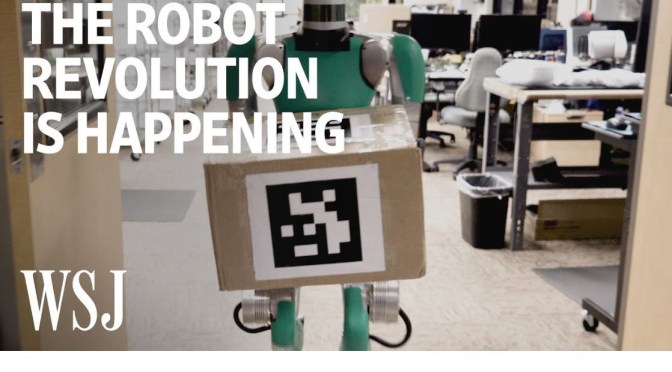
Technology: “The Robot Revolution Is Happening”

Nearly every company across every industry is looking for new ways to minimize human contact, cut costs and address the labor crunch in repetitive and dangerous jobs. WSJ explores why many are looking to robots as the solution for all three.

Photo: FedEx

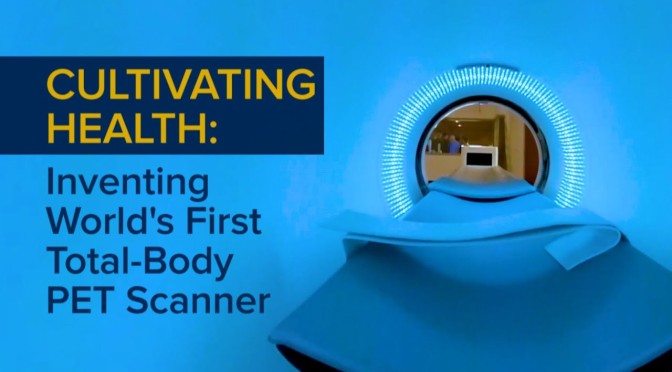
New Medical Technology: UC Davis Scientists Invent World’s First Total-Body PET Scanner (Video)

UC Davis Health scientists Simon Cherry and Ramsey Badawi spent 15 years developing the world’s first total-body PET scanner, called EXPLORER. This imaging machine scans a patient’s entire body at one time, delivering breathtaking image quality that improves patient diagnoses and disease research.

UC Davis Cultivating Health blog: https://health.ucdavis.edu/cultivatin…