Inside the November 14, 2022 issue:
A Used-Car Dealer Has Big ESG Backers. Some of Its Low-Income Customers Ran Into Problems.
A Barron’s investigation found pricey cars, registration delays, and other complaints.

Inside the November 14, 2022 issue:
A Barron’s investigation found pricey cars, registration delays, and other complaints.
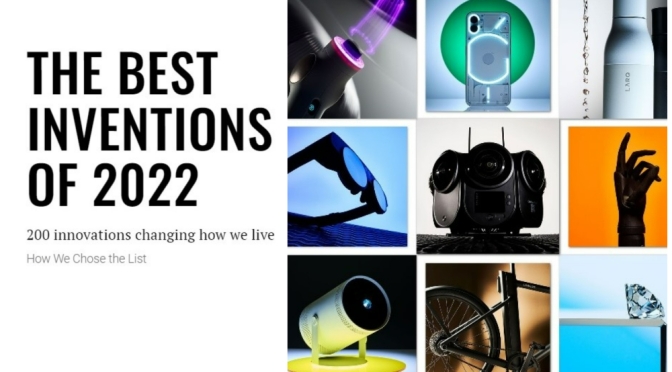
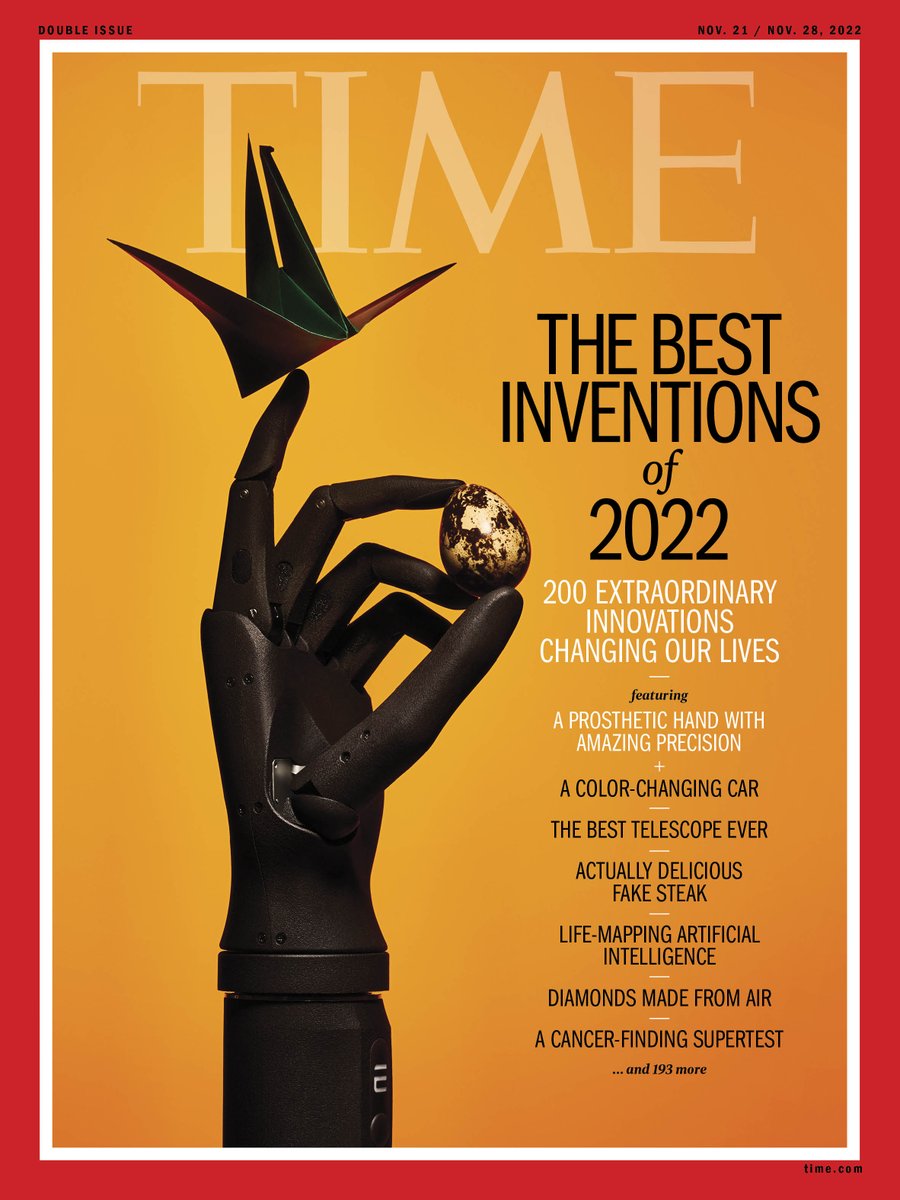
TIME – TIME’s Best Inventions of 2022:
Chaperone robots have helped the world’s elderly overcome loneliness and social isolation worsened by the pandemic. But where most bots need prompting, ElliQ is proactive: the voice-operated AI-powered “personal sidekick” initiates conversation and helps its human companion develop healthy habits—social, physical, and mental.
Hearing aids are often stigmatized as a device for the old or infirm. But the latest hearing aids are anything but old–fashioned: they’re teched out with AI, fitness trackers, streaming capability, and more. Now Phonak is out with the first commercially available hearing aid with a heart-rate sensor. Audéo Fit’s receiver-in-canal device tracks fitness data, such as steps, activity level, and distance walked, while also monitoring the wearer’s heart rate when paired with the MyPhonak app.
Capitalizing on advances in artificial intelligence and digital signal processing, Esper Bionics’ prosthetic hand is the first AI-powered, cloud-based robotic prosthetic that gets smarter over time. The lightweight device has up to 24 wearable sensors that detect and process muscle activity and brain impulses; machine learning from Esper’s platform enables the hand to act more “intuitively” over time.
Business Insider – AppHarvest is exploring the future of indoor farming and agriculture technology by using up to 90% less water, human-assisting AI, and the power of the sun for reliable food growth. Alongside local education efforts, AppHarvest’s main focus is to provide US consumers with sustainable, reliable produce so that we can all enjoy a healthier, more vibrant planet in the future.
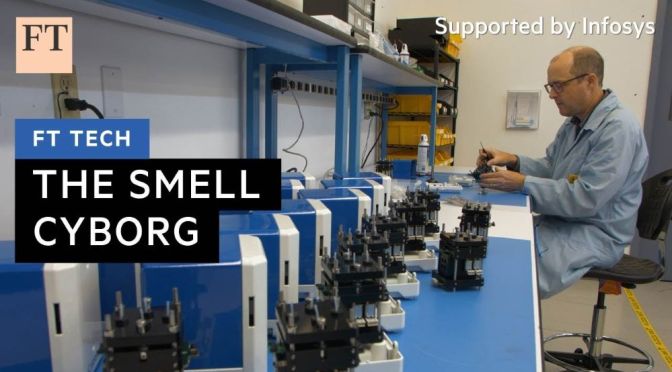
Financial Times – It could be the Shazam of smells. A California-based start-up has developed a device to sniff out substances such as drugs, explosives and viruses. Sniff tech is a burgeoning sector which could have major implications in fields including healthcare and security but may also raise issues over individual privacy. The FT’s Patrick McGee takes a trip to the lab and gets a good whiff of how the future might smell.
Koniku builds smell cyborgs. We will put out small form factor smell cyborgs in 10 million homes inside this decade. We aim to securely and safely diagnose disease and maintain health and wellness in real-time. We are building a marketplace that makes every individual the CEO of their own health.
Land on Water by Copenhagen-based Architecture Studio MAST

The system is based on simple flat pack modules made from recycled reinforced polymer. These are extremely strong and resilient and can be easily transported and assembled on location


The modules can be assembled in different configurations to provide floating foundations for floating infrastructure, public spaces or housing.

A growing acknowledgement of sea level rise and an increased risk of urban flooding has contributed to a sharp increase in interest in building on water, but current solutions, including polystyrene filled concrete foundations and plastic pontoons are inflexible, difficult to transport and highly unsustainable.
MAST has envisioned a new system of simple of flat-packed modules made from recycled reinforced plastic, that can be easily transported around the globe and assembled into countless configurations, providing a secure floating foundation. The system offers a sustainable and highly flexible solution for building almost anything on the water; from floating houses in Seattle, to floating campsites on Oslo fjord, to saunas on Hobart’s riverfront.


The system was inspired by gabion construction, an ancient technology which utilises mesh cages filled with rubble to create extremely sturdy, low cost foundations. In this case the concept is inverted; and the modular ‘cages’ are filled with locally sourced, up-cycled floatation supporting the weight of any structure built on top. they are also much more adaptable than existing solutions since floatation can be added or adjusted at any time if weight is added or shifted around above.
Land on water will provide a climate resilient and adaptable solution for the construction of new floating buildings worldwide but could also lead to an entirely new type of dynamic and organic off-grid floating community and an alternative to the large master-planned floating cities currently under development which repeat many of the mistakes made by urban planners in the middle of the 20th century.
World Economic Forum – Top Stories of the Week:
00:16 Why more people than ever are short-sighted – The trend is worst in children and young adults, and half the world’s population could be short sighted by 2050.
01:37 Six species saved from extinction – Recent ecosystem restorations have rescued some species from the brink of extinction.
03:30 You could soon 3D-print furniture at home – Scientists from the Hebrew University of Jerusalem have developed a new wood-based ink that can be used for making 3d printed furniture
04:48 How Dark Data Affects Your Carbon Footprint -Companies generate 3.5 trillion gigabytes of dark data every day. But what is dark data?
The World Economic Forum is the International Organization for Public-Private Cooperation. The Forum engages the foremost political, business, cultural and other leaders of society to shape global, regional and industry agendas. We believe that progress happens by bringing together people from all walks of life who have the drive and the influence to make positive change.

Andre Terzic, M.D., Ph.D., a Mayo Clinic cardiologist
Regenerative medicine could slow the clock on degenerative diseases that often ravage the golden years, a Mayo Clinic study finds. Life span has nearly doubled since the 1950s, but health span — the number of disease-free years — has not kept pace. According to a paper published in NPJ Regenerative Medicine., people are generally living longer, but the last decade of life is often racked with chronic, age-related diseases that diminish quality of life. These final years come with a great cost burden to society.
Researchers contend that new solutions for increasing health span lie at the intersection of regenerative medicine research, anti-senescent investigation, clinical care and societal supports. A regenerative approach offers hope of extending the longevity of good health, so a person’s final years can be lived to the fullest.
World Economic Forum ‘Stories of the Week’ for October 14, 2022:
00:15 How a Chinese village eradicated poverty – In 2017, nearly a third of villagers lived below the poverty line. Here’s how one the project saw poverty drop from 28% to zero in just 3 years.
02:28 New mosquito repellent – From 2015 to 2019, dengue fever cases in Southeast Asia rose by 46%. This new repellent may be the answer.
03:35 Australia to end species extinction – More than one in ten species have gone extinct in the past 200 years. The Australian government is now taking steps to prevent further extinctions.
05:12 Firefighters’ AI helmet – The Scottish Fire and Rescue Service trialled the helmet which could help them better locate victims and teammates in firefighting situations.
The World Economic Forum is the International Organization for Public-Private Cooperation. The Forum engages the foremost political, business, cultural and other leaders of society to shape global, regional and industry agendas. We believe that progress happens by bringing together people from all walks of life who have the drive and the influence to make positive change.
As severe drought in the West forces states to make drastic water cuts, Las Vegas offers a road map to making the most out of every drop of water. Since 2002, Southern Nevada has cut its Colorado River water use by 26% while its population has grown by 750,000.
The Line is a proposed smart linear city in Saudi Arabia in Neom, Tabuk, currently under construction, which is designed to have no cars, streets or carbon emissions.
The Line is being described as a one-building vertical city outfitted with exterior mirrors, big enough to house 9 million people — along with everything they need, from parks and waterfalls to flying taxis and robot maids. There are even plans to include an artificial moon for residents to gaze upon.
With its proposed width of only 656 feet, The Line will rely primarily on its height to encompass its residents and a host of modern trappings, such as a high-speed rail to connect sections of the 106-mile city. Saudi Arabian officials claim The Line will be otherwise devoid of roads, cars or emissions and will be powered strictly by clean energy (although details have not been released). Here are a few of most notable proposed features of The Line: