Tag Archives: Technology

Preview: MIT Technology Review – January 2024

Image

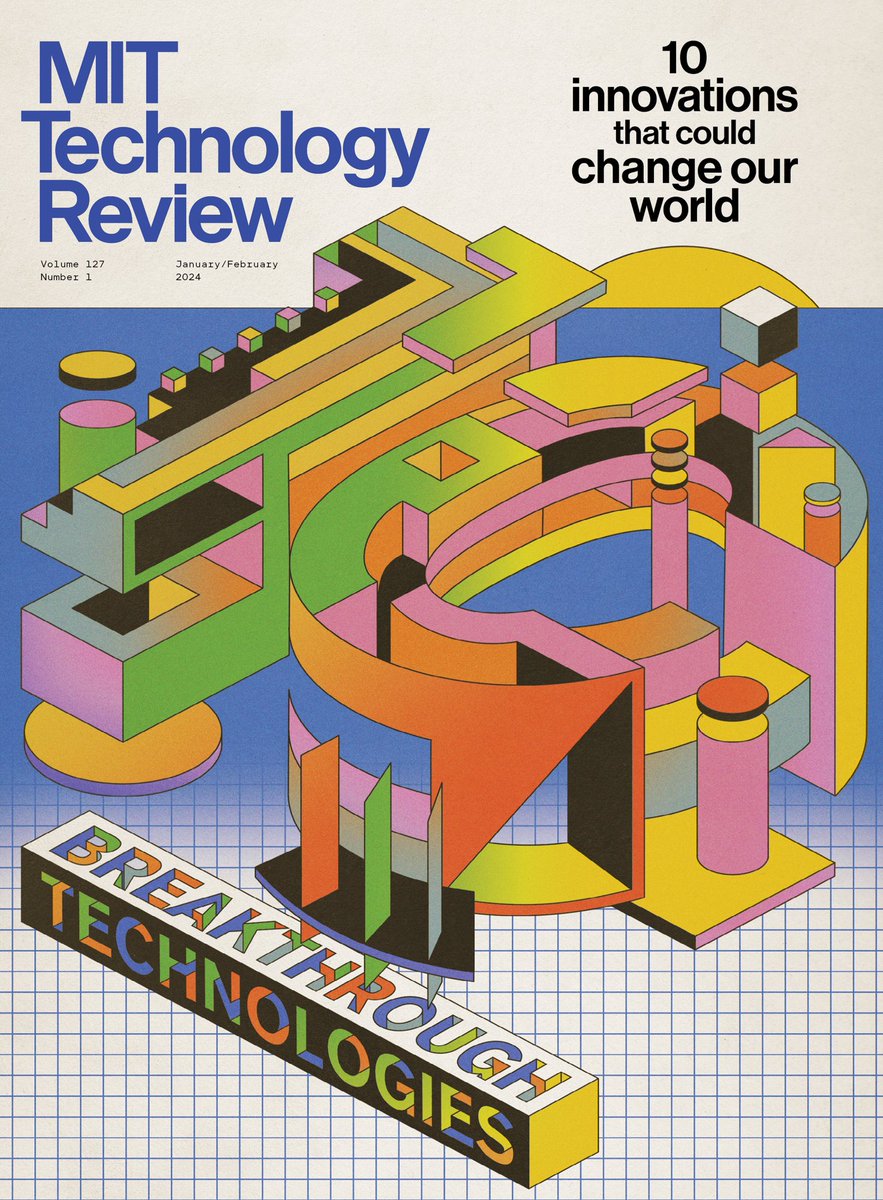
MIT Technology Review (January/February 2024) – The new issue features 10 Innovations that could change our World.

10 Breakthrough Technologies 2024

Every year, we look for promising technologies poised to have a real impact on the world. Here are the advances that we think matter most right now.

AI for everything

Passwordless Login

We now live in the age of AI. Hundreds of millions of people have interacted directly with generative tools like ChatGPT that produce text, images, videos, and more from prompts. Their popularity has reshaped the tech industry, making OpenAI a household name and compelling Google, Meta, and Microsoft to invest heavily in the technology.

Super-efficient solar cells

Solar power is being rapidly deployed around the world, and it’s key to global efforts to reduce carbon emissions. But most of the sunlight that hits today’s panels isn’t being converted into electricity. Adding a layer of tiny crystals could make solar panels more efficient. WHY IT MATTERS

Apple Vision Pro

Apple will start shipping its first mixed-reality headset, the Vision Pro, this year. Its killer feature is the highest-resolution display ever made for such a device. Will there be a killer app? It’s early, but the world’s most valuable company has made a bold bet that the answer is yes. WHY IT MATTERS

Weight-loss drugs

The global rise in obesity has been called an epidemic by the World Health Organization. Medications like Mounjaro and Wegovy are now among the most powerful tools that patients and physicians have to treat it. Evidence suggests they can even protect against heart attacks and strokes. WHY IT MATTERS

Technology: How AI Is Changing Entertainment

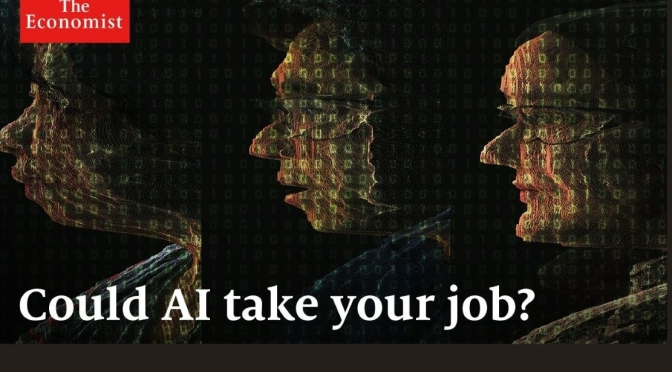
The Economist (January 4, 2024) – A new wave of artificial intelligence is starting to transform the way the entertainment industry operates. Who will be the winners and losers?

Video timeline: 01:07 AI is changing the music business 04:09 How big data revolutionised entertainment industries 05:20 Can AI predict a film’s success? 09:26 How generative AI is creating new opportunities 12:36 What are the risks of generative AI?

Politics: The Guardian Weekly – January 5, 2024

Image

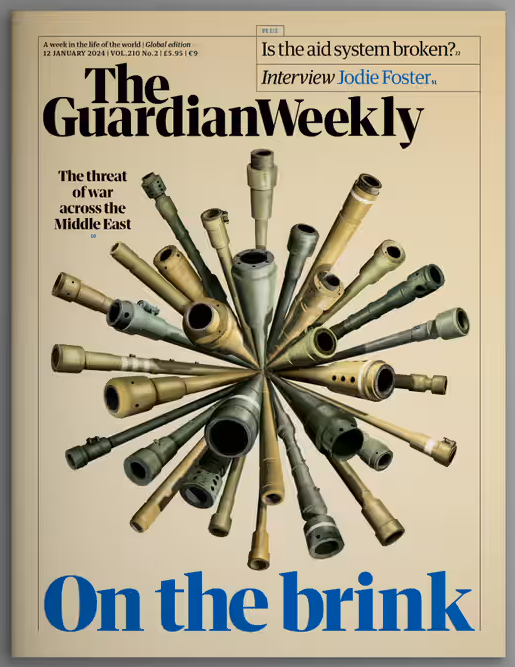
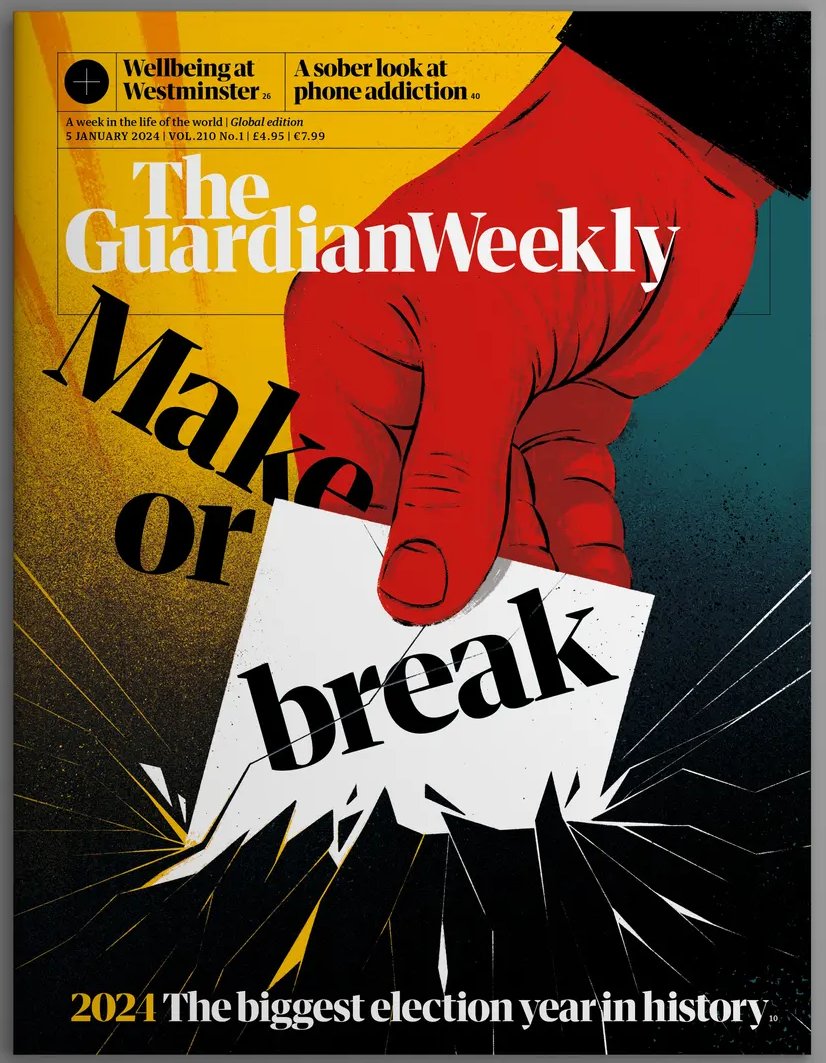
The Guardian Weekly (January 4, 2024) – The new issue features ‘Make or Break 2024’ – The biggest election year in history.

About 2 billion people have the opportunity to cast their ballots in polls that span the globe from the United States to Taiwan, and India to Mexico in 2024. The outcomes, as our analysts and correspondents explain in our big story, have implications for us all.

Washington bureau chief David Smith looks at the likely rerun of 2020’s Biden v Trump contest in November and explores what has changed and what has not in the US as the old adversaries square up. It is an almost foregone conclusion that Narendra Modi will be back for a third term as Indian prime minster, reports Hannah Ellis-Petersen from Delhi where analysts fear his victory will further imperil the country’s Muslim minority. And while Vladimir Putin will certainly continue as president in Russia, Pjotr Sauer explains why the man about to become fifth-time president might allow other candidates onto the ballot list. From Taiwan’s poll on 13 January to the 27-state European elections in June, how citizens vote will influence the geopolitical landscape for us all, while the conduct of campaigns will reveal how vulnerable democracies now are to misinformation and cyber interference from malign actors.

Nature Magazine Podcast: ‘A New Kind Of Solar Cell’

nature podcasts (December 29, 2023) – A new kind of solar cell is coming: is it the future of green energy? Firms commercializing perovskite–silicon ‘tandem’ photovoltaics say that the panels will be more efficient and could lead to cheaper electricity.

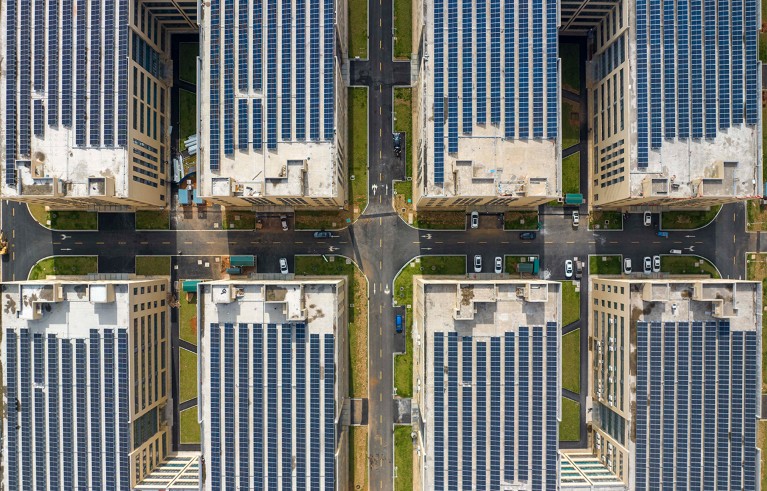
Rooftop Solar Energy Facility In Yongzhou, China.

On the outskirts of Brandenburg an der Havel, Germany, nestled among car dealerships and hardware shops, sits a two-storey factory stuffed with solar-power secrets. It’s here where UK firm Oxford PV is producing commercial solar cells using perovskites: cheap, abundant photovoltaic (PV) materials that some have hailed as the future of green energy. Surrounded by unkempt grass and a weed-strewn car park, the factory is a modest cradle for such a potentially transformative technology, but the firm’s chief technology officer Chris Case is clearly in love with the place. “This is the culmination of my dreams,” he says.

Reviews: The Race To Build America’s First High-Speed Railway – L.A. To Las Vegas

The B1M Films (December 27, 2023) – This new plan for a US bullet train might actually work.

The Los Angeles Times (December 2023) – A high-speed rail project between the Inland Empire and Las Vegas landed a $3-billion federal grant that sets it on track to be open by 2028, in time for the Olympic Games in Los Angeles, officials said Tuesday.

Brightline, a private company that completed the final phase of the intercity rail line connecting Miami and Orlando, Fla., this year, secured the U.S. Department of Transportation grant as part of the historic infrastructure package, Nevada’s U.S. senators said. The rest of the funds for the $12-billion project are expected to be raised through private capital and bonds.

The trip on the 218-mile electrified line from Rancho Cucamonga to Las Vegas will take just over two hours, with stops in Hesperia or Apple Valley, according to Brightline. The trains can reach speeds of 200 miles per hour. The company already has the federal permits, the labor agreements and the land — a swath in the wide median of Interstate 15 — to build the line. Construction is expected to begin early next year.

Politics: The Guardian Weekly – December 22, 2023

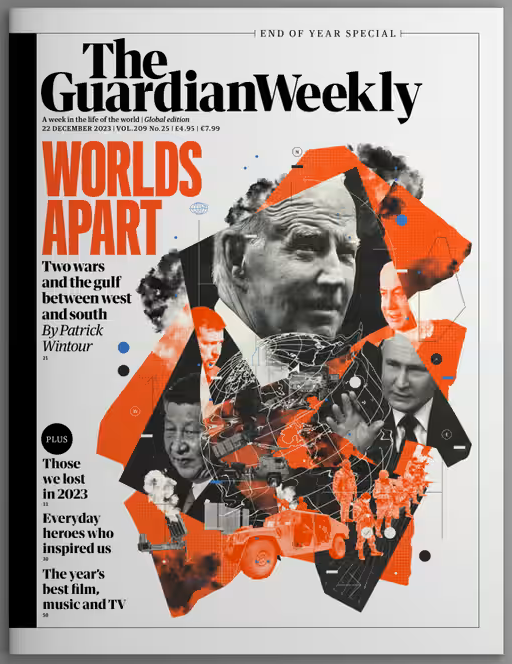
Image

The Guardian Weekly (December 20, 2023) – The new issue features Two wars and a growing divide between the global west and south. Plus: Best culture of 2023.

World risks new age of empires where might makes right, warns Estonian foreign minister

Margus Tsahkna

International institutions seem powerless in face of Russia’s invasion of Ukraine, writes Margus Tsahkna, arguing they ‘cannot survive unchanged’

The international rules-based system needs urgent and fundamental change if it is not to collapse, the Estonian foreign minister has said, calling for “a new global conversation” to begin on how to reform the UN and the international criminal court.

Writing in the Guardian on Wednesday, Margus Tsahkna says Russia’s invasion of Ukraine has highlighted flaws in the system that risk fatally undermining people’s faith in it.

_______________________________

Elsewhere, we shouldn’t forget there are plenty of reasons for hope. Having been expected to deliver little, the Cop28 climate summit turned out to be full of surprises – but was the final deal on fossil fuels just a ruse, asks environment editor Fiona Harvey.

Writers from the Guardian’s global development team reflect on the inspirational figures they met in 2023, from leaders to dancers to dads, who proved that humanity still has much to give. And leading conservationists and scientists tell us about the mysteries of the planet they wish they better understood.

The review of 2023 continues with the Observer’s selection of those we lost, recalled with affection by their friends. There’s also a dazzling range of images courtesy of the Guardian agency photographers of the year.

Last but not least, the Guardian critics’ top 10 rundowns of the best film and music of 2023, topped off with the Guardian Weekly team’s now-legendary television selections of the year.

Reviews: How The Best Of Technology Works (WSJ)

The Wall Street Journal (December 16, 2023) – How does Google Maps use satellites, GPS and more to get you from point A to point B? What is the tech that powers Spotify’s recommendation algorithm?

Video timeline: 0:00 Google Maps 9:07 LED wristbands 14:30 Spotify’s algorithm 21:30 Tap-to-Pay 28:18 Noise-canceling headphones 34:33 MSG Sphere 41:30 Shazam

From the unique tech that works in seconds to power tap-to-pay to how Shazam identifies 23,000 songs each minute, WSJ explores the engineering and science of technology that catches our eye. Chapters:

Reviews: Autonomous Driving Reshapes The Car

The Wall Street Journal (December 14, 2023) – As autonomous driving technology becomes more mainstream, automakers like Waymo and Geely are beginning to make crucial decisions about what their next generation of vehicles will look like.

Video timeline: 0:00 The future of the car 0:51 Car seats and safety 3:51 Wheel and trust 5:11 Screens and sickness 7:15 Trusting autonomous cars

So could future driverless cars have no steering wheels? And what could the touchscreen dashboards look like? WSJ’s George Downs explores how the car could evolve when you don’t need to be behind the wheel. #Autonomous #Cars #WSJ

Commentary Magazine – January 2024 Preview

Image

Commentary Magazine (December 14, 2023) – The latest issue features After Hamas Is Destroyed, Here Are the Five Things That Must Not Happen in Gaza; The Future Isn’t Going as Promised; Putin Won’t Stop; Brush Off Your Shakespeare, and more…

After Hamas Is Destroyed, Here Are the Five Things That Must Not Happen in Gaza

After Hamas Is Destroyed, Here Are the Five Things That Must Not Happen in Gaza

by Richard Goldberg

Israel is resolved to remove Hamas and its terrorist infrastructure from the Gaza Strip permanently, and for much of the world, its determination raises one question more than any other: What comes next in Gaza? For those who disapprove of Israel’s actions in the war or those who either passively or actively support the role of Hamas as the Strip’s governing authority, the lack of answers provides a pretext not only to demand a permanent cease-fire but to suggest (often quietly and with a furrowed brow indicating supposed realpolitik wisdom) that the path Israel seems to be making for itself is a dead end from which it needs to be saved.

The Future Isn’t Going as Promised

The Future Isn’t Going as Promised

by James B. Meigs

In his new book, The Conservative Futurist: How to Create the Sci-Fi World We Were Promised,American Enterprise Institute scholar James Pethokoukis writes about the go-go years of the 1960s: Saturn V rockets were blasting to the moon, atomic power promised to make electricity “too cheap to meter,” and sci-fi TV shows like Star Trek depicted new marvels right around the corner.

Brush Off Your Shakespeare

Brush Off Your Shakespeare

by Joseph Epstein

“Joseph,” my friend Edward Shils said to me, “we have spoken about many things, among them about various writers, but we are both too civilized ever to talk about Shakespeare. After all, what could one say?” Yes, what can one say? Over a long writing career, I have never written about Shakespeare, and, best I can recall, among the many millions of words I have produced, have never even quoted him. Truth is, I have long admired Shakespeare without being especially nuts about him.