
From a Genetic Engineering & Biotechnology News release:
 “But what’s really intriguing is that we can now see how vitamin D might help the immune system fight cancer. We know when the Wnt/beta-catenin pathway is active in melanoma, it can dampen down the immune response causing fewer immune cells to reach the inside of the tumor, where they could potentially fight the cancer better.
“Although vitamin D on its own won’t treat cancer, we could take insights from the way it works to boost the effects of immunotherapy, which uses the immune system to find and attack cancer cells.”

In melanoma patients, elevated serum levels of vitamin D appear to be helpful. Tumors are thinner. Outcomes are improved. But how, exactly, are these benefits realized? To answer this question, researchers at the University of Leeds scrutinized the interaction between vitamin D and the vitamin D receptor (VDR) on melanoma cells. The researchers, fully aware that vitamin D on its own won’t treat cancer, hoped to identify cell signaling pathways that could lead to new therapeutic strategies.
To read more: https://www.genengnews.com/news/vitamin-ds-melanoma-taming-ways-uncovered/
 “This study identifies a new molecular connection between exercise and inflammation that takes place in the bone marrow and highlights a previously unappreciated role of leptin in exercise-mediated cardiovascular protection,” said Michelle Olive, program officer at the National Heart, Lung, and Blood Institute Division of Cardiovascular Sciences. “This work adds a new piece to the puzzle of how sedentary lifestyles affect cardiovascular health and underscores the importance of following physical-activity guidelines.”
 There was a massive shift in Roman residents’ ancestry, the researchers found, but that ancestry came primarily from the Eastern Mediterranean and Near East, possibly because of denser populations there relative to the Roman Empire’s western reaches in Europe and Africa.
 We conclude that Pollock avoided the appearance of the hydrodynamic instabilities, contrary to what was argued by previous studies. Pollock selected the physical properties of the paint to prevent filament fragmentation before deposition, and applied it while moving his hand sufficiently fast and at certain heights to avoid fluid filaments from coiling into themselves. An understanding of the physical conditions at which these patterns were created is important to further art research and it can be used as a tool in the authentication of paintings.
 Considered one of the most prominent American painters of the 20th century, the life and work of Jackson Pollock have been the subject of books, movies, and documentaries [
 “Another behavior change is physical exercise,” Pillemer said. “A paradox of pain is that exercise helps reduce it, but it’s difficult for people in pain to think about exercising. So they don’t exercise, they get more sedentary and the pain increases; it’s a vicious circle. So how do you get people to actually change their behavior?”
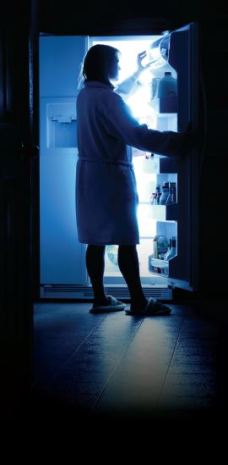 When people are awake during the night, their behaviors are often mismatched with their internal body clocks. This can lead to nighttime eating, which can influence the way the body processes sugar and could lead to a higher risk in diabetes. “What happens when food is eaten when you normally should be fasting?” Scheer asked the audience. “What happens is that your glucose tolerance goes out the window….So your glucose levels after a meal are much higher.” This can increase people’s risk for diabetes.
 Researchers suggest that intensity is critical. Seniors who exercised using short, bursts of activity saw an improvement of up to 30 percent in
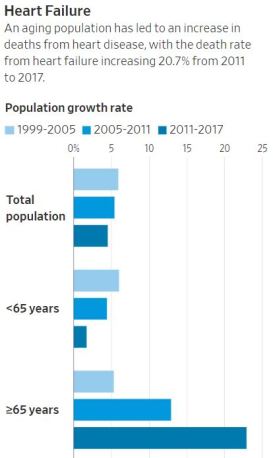 The findings help explain why a decadeslong decline in the death rate from cardiovascular disease has slowed substantially since 2011 and started rising in middle-aged people, helping
  Mr. Chambers, a 48-year-old physical therapist in Jersey City, N.J., modified his sleep, diet and exercise routines. Eighteen months later, his performance on a battery of cognitive tests improved, particularly in areas like processing speed and executive function, such as decision-making and planning.
 The current study points to the role of norepinephrine, a neurotransmitter that signals arousal and stress in the central nervous system. This chemical is present in low levels in the brain while we sleep, but when production ramps up it arouses our nerve cells, causing us to wake up and become alert. The study showed that norepinephrine also acts on a specific receptor, the beta2 adrenergic receptor, which is expressed at high levels in microglia. When this chemical is present in the brain, the microglia slip into a sort of hibernation.
 Boomers Daily