
Tag Archives: Previews

Research Preview: Science Magazine – Sept 22, 2023

Image

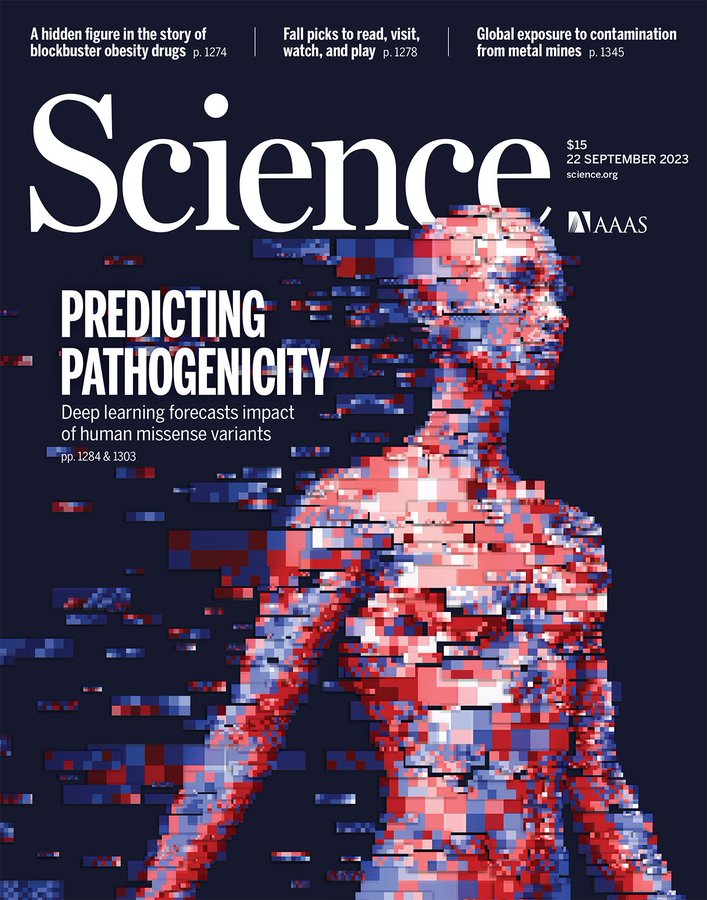
Science Magazine – September 22, 2023: This illustration depicts a human form out of a collage of heatmaps (red and blue squares).

Peak solar activity is arriving sooner than expected, reaching levels not seen in 20 years

The Sun’s flare-ups can threaten satellites and electric grids, highlighting need for better forecasts

Quantum algorithm offers faster way to hack internet encryption

Scheme to factor giant numbers could be more efficient than 30-year-old Shor’s algorithm

Arts/Books: Times Literary Supplement – Sept 22, 2023

Image

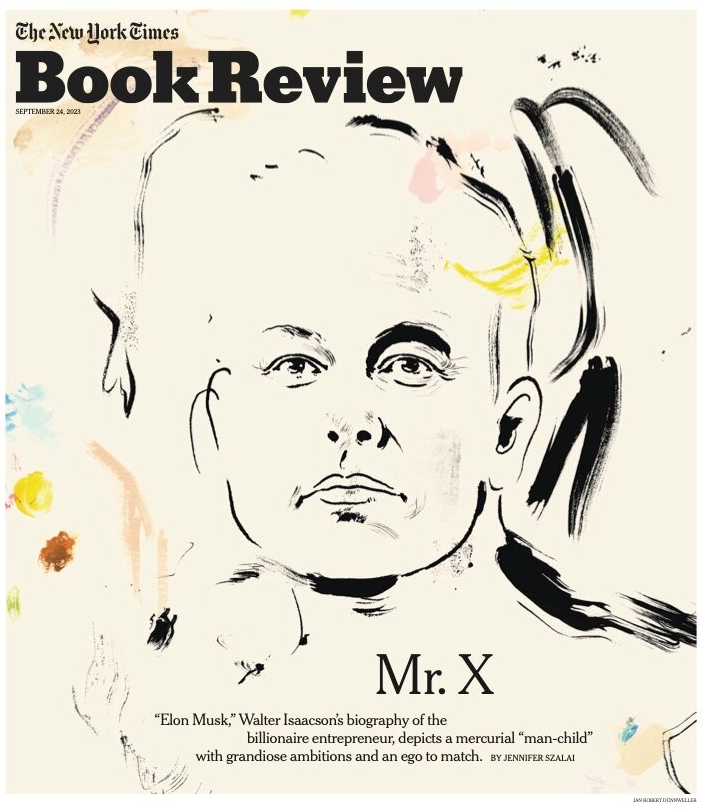
Times Literary Supplement (September 22, 2023): The new issue features Playing with Fire – The limitless ambition of Elon Musk; Peter Brown in an antique land; The new New Journalism; A literary critic and murderer; John Gray’s Hobbes for liberals, and more…

The X files

Elon Musk, 2020

ELON MUSK by Walter Isaacson

Walter Isaacson’s intimate account of a tech titan

When Elon Musk was a child, his parents warned him against playing with fire. His response was to take a box of matches behind a tree and start lighting them. Scenes like this are frequent in Walter Isaacson’s new biography of Musk, who has become the world’s richest person thanks to his disdain for authority, instinct for the dramatic and “reality-bending wilfulness” (and because he has applied these traits to good ideas). Isaacson reports that the family’s motto is “Live dangerously – carefully”, but a more apt one might be the maxim quoted by Musk’s cousin Peter: “Risk is a type of fuel”.

Travels with his aunts

Peter Brown

The intellectual life of a pioneering historian of Late Antiquity

By Mary Beard

JOURNEYS OF THE MIND – A Life in History by Peter Brown

In the late 1970s, the historian Peter Brown dumped his old dinner jacket on a park bench in Berkeley, California. It was not just a minor act of charity to the local homeless, who may or may not have welcomed a cast-off “tuxedo”. Brown had recently moved from an academic career in Oxford and London to a post in the United States, and he was signalling to himself a new start in what seemed to be a more democratic, less hidebound educational system: more jeans and trainers than black tie. He has been based in America ever since.

Previews: History Today Magazine – October 2023

Image

HISTORY TODAY MAGAZINE (OCTOBER 2023) – This issue features Turkey and the end of the Ottomans; When Inca mummies came to Europe; How Henry II survived the Great Rebellion, and more…

Turkey and the End of the Ottoman Empire

Hagia Sophia, Istanbul, photographed by Orthmar Pferschy c.1930.

The Republic of Turkey is 100 years old. Built on the ashes of an old empire, what place is there for the Ottoman past in the secular state?

Will Putin Get His ‘Nuremberg Moment’?

Vladimir Putin in an orange jumpsuit behind bars.

As new crimes are committed, new laws must be written to punish them. When it comes to crimes committed by states like Putin’s Russia, who decides?

How Henry II Survived the Great Rebellion

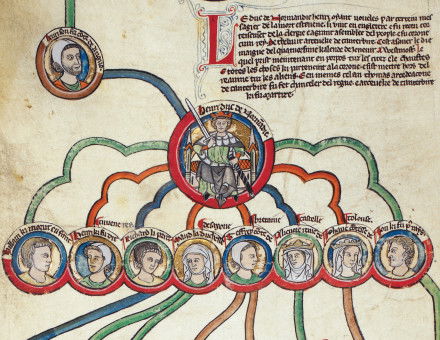
Angevin family tree showing Henry II and his children. From left: William, Henry, Richard, Matilda, Geoffrey, Eleanor, Joan and John.

In 1173 the Angevin empire looked set to fall, facing rebellion on all sides. Against incredible odds Henry II won a decisive victory, silencing kings, lords – and his own children.

Previews: The Economist Magazine – Sept 23, 2023

Image

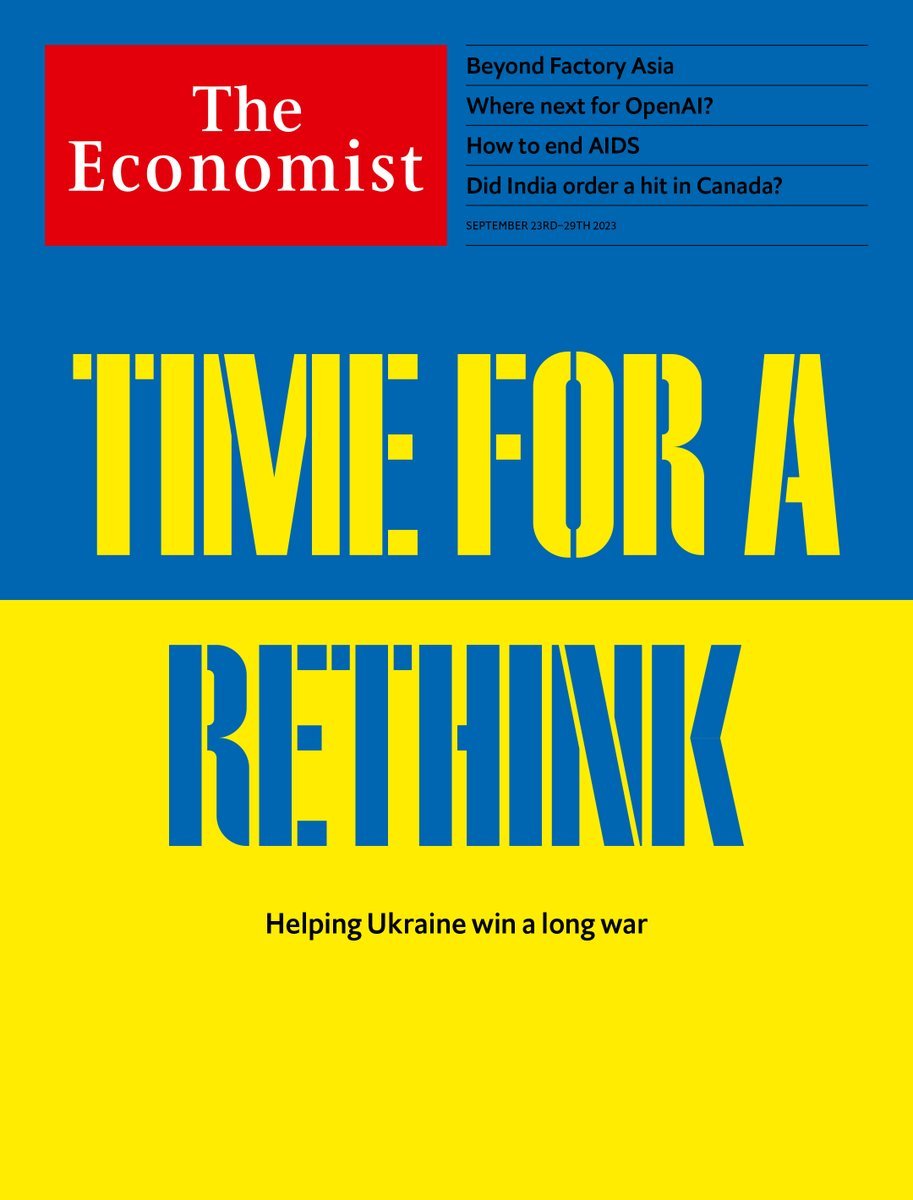
The Economist Magazine (September 23, 2023): The latest issue features ‘Ukraine faces a long war’ – A change of course is needed; Its backers should pray for a speedy victory—but plan for a long struggle.

Ukraine faces a long war. A change of course is needed

Its backers should pray for a speedy victory—but plan for a long struggle

The war in Ukraine has repeatedly confounded expectations. It is now doing so again. The counter-offensive that began in June was based on the hope that Ukrainian soldiers, equipped with modern Western weapons and after training in Germany, would recapture enough territory to put their leaders in a strong position at any subsequent negotiations.

If India ordered a murder in Canada, there must be consequences

Hardeep Singh Nijjar

Western countries have for too long acquiesced to the Indian government’s abuses

For years, India objected to Western strategists lumping it together with its violent and chaotic neighbour in the phrase “Indo-Pakistan”. Now recognised as a fast-growing giant and potential bulwark against China, India claims to have been “de-hyphenated”. Yet the explosive charge aired this week by Justin Trudeau suggests that diplomatic recalibration may have gone too far. Canada’s prime minister alleges that Indian agents were involved in the murder in Vancouver of a Canadian citizen sympathetic to India’s Sikh separatist movement

Research Preview: Nature Magazine – Sept 21, 2023

Volume 621 Issue 7979

nature Magazine – September 21, 2023:  In this week’s issue, an estimate of global human exposure to air pollution from landscape fires (dominated by wildfires, but also including planned or controlled open land fires) between 2000 and 2019.

COVID boosters are back: what scientists say about whether to get one

As many countries head into autumn, they are targeting vaccinations at people in high-risk categories, leaving those at lower risk uncertain about what to do.

Libya floods: how climate change intensified the death and devastation

Climate change, civil war and international sanctions all contributed to the devastation caused by some of Libya’s worst flooding ever, researchers say.

Politics: The Guardian Weekly – Sept 22, 2023

Image

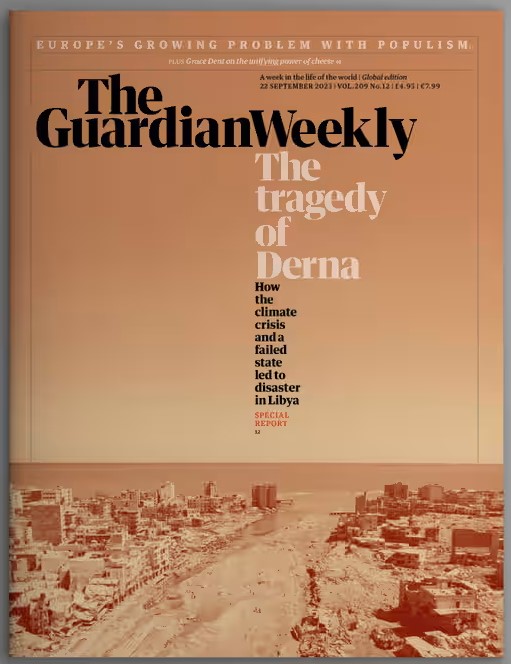
The Guardian Weekly (September 22, 2023) The new issue features How disaster struck Libya. Plus: Populism in Europe, and the unifying power of cheese.

Two separate natural disasters in north Africa have dominated the news recently. But Moroccan emergency responses to an earthquake that killed about 3,000 people seemed rapid and efficient in contrast to the chaos at the deluged Libyan port of Derna, where many thousands more lost their lives after the town was deluged following a double dam burst caused by Storm Daniel.
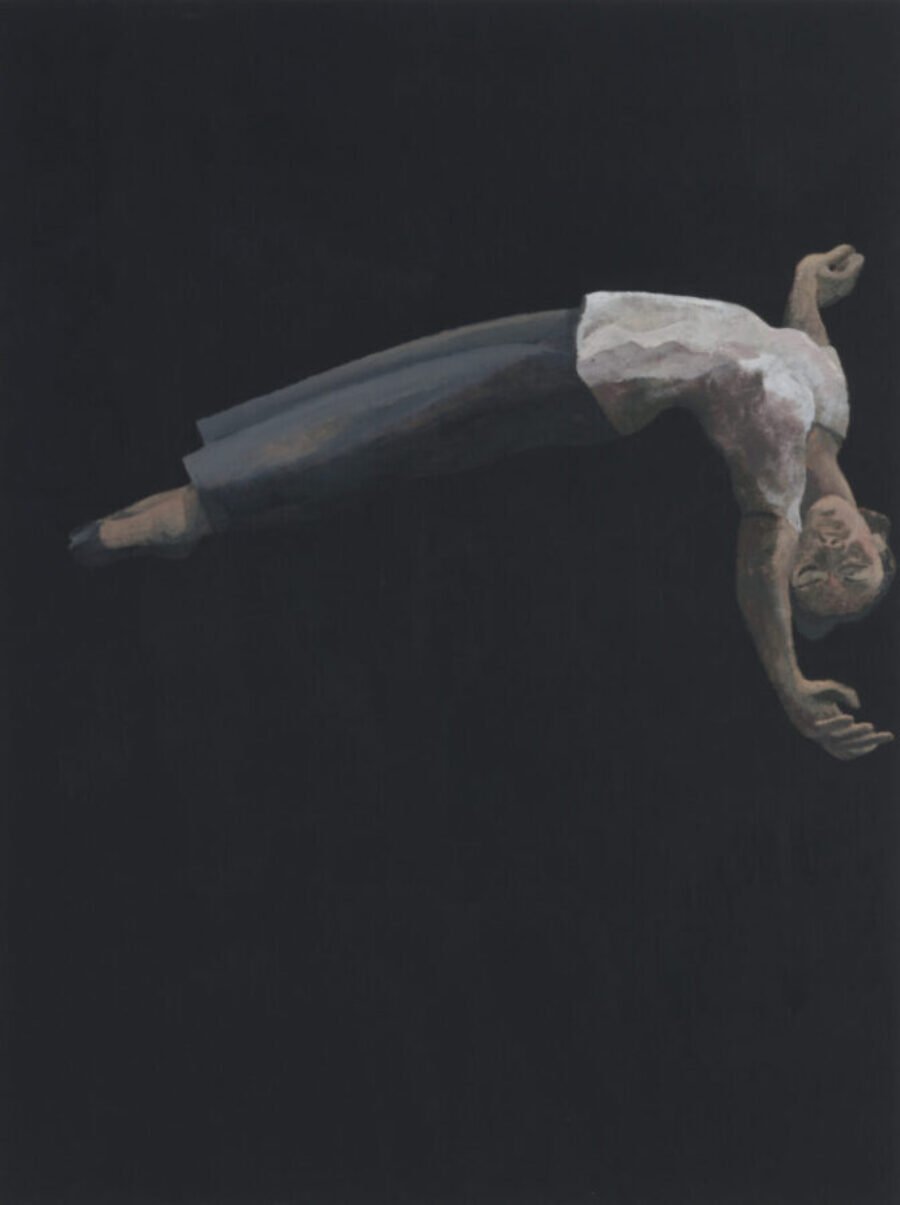
While logistical and administrative challenges have made access to Derna incredibly difficult, Observer reporter Kaamil Ahmed has gathered the testimonies of several local Libyan journalists who witnessed scenes they are still struggling to process. Diplomatic editor Patrick Wintour explains why the disaster can be seen as a culmination of the climate crisis descending upon a failed state, while Rupert Neate and Peter Beaumont discuss the differing responses to the two situations.

From Europe, Jon Henley previews three upcoming elections that could have profound consequences for the region’s political future. Indeed, as the Guardian launches a new Europe-focused digital edition, editor-in-chief Katharine Viner outlines why now is the right time for us to expand our reporting across the continent.

Science Review: Scientific American – October 2023

Image

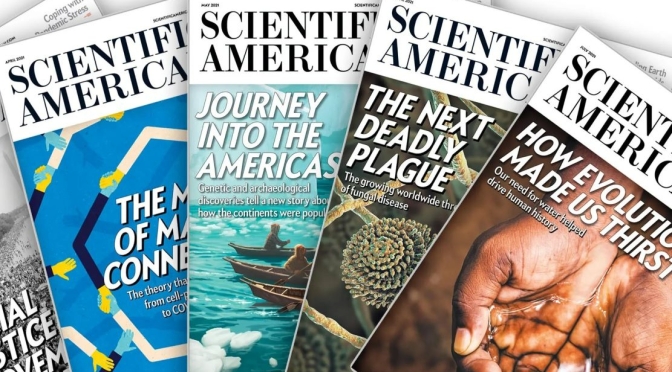
Scientific American – October 2023: The issue features ‘Will Humans ever Live in Space – Here’s what it will take to leave planet Earth’; AI could help us to talk to animals; New origins of wine, and more…

Why We’ll Never Live in Space

Why We'll Never Live in Space

Medical, financial and ethical hurdles stand in the way of the dream to settle in space

By Sarah Scoles

It’s Time to Engineer the Sky

It's Time to Engineer the Sky

Global warming is so rampant that some scientists say we should begin altering the stratosphere to block incoming sunlight, even if it jeopardizes rain and crops

By Douglas Fox

Arts & Culture: The New Criterion — October 2023

Image

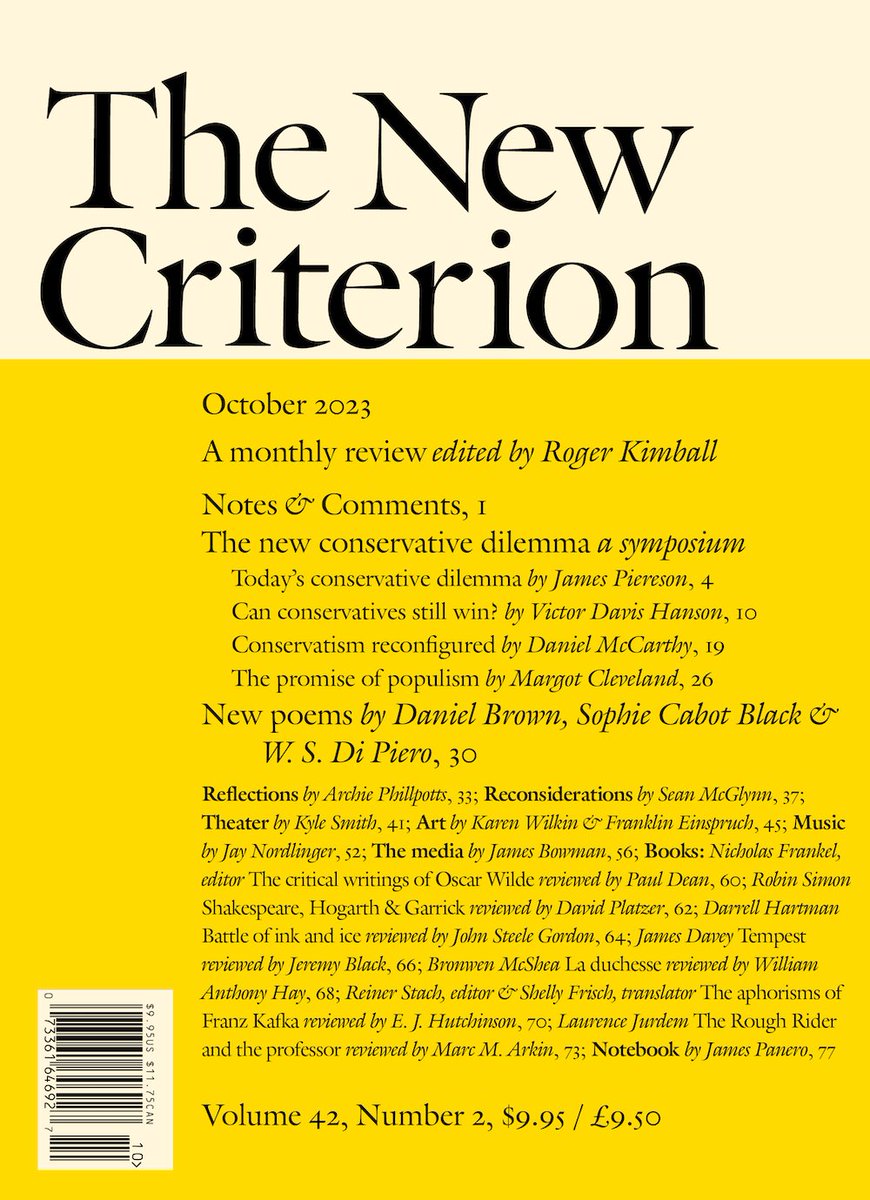
The New Criterion – October 2023 issue:

The new conservative dilemma  a symposium

Today’s conservative dilemma  by James Piereson
Can conservatives still win  by Victor Davis Hanson
Conservatism reconfigured  by Daniel McCarthy
The promise of populism  by Margot Cleveland

New poems  by Daniel Brown, Sophie Cabot Black & W. S. Di Piero

Culture/Politics: Harper’s Magazine – October 2023

Image

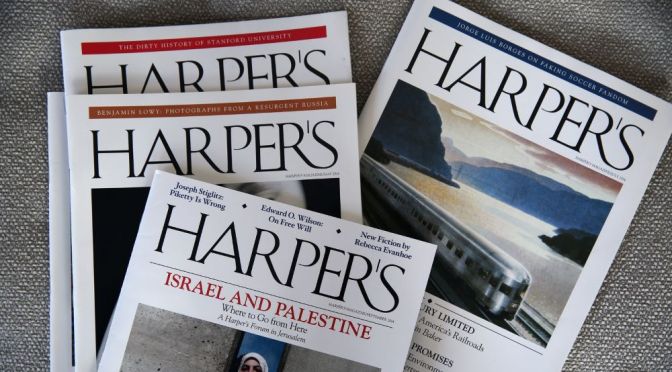
Harper’s Magazine – OCTOBER 2023: This issue features ‘Craving A Choice’ – Insurgency and its Threat to the Democratic Party; The Spy – An Essay On seeing without being seen, and more…

Against the Current

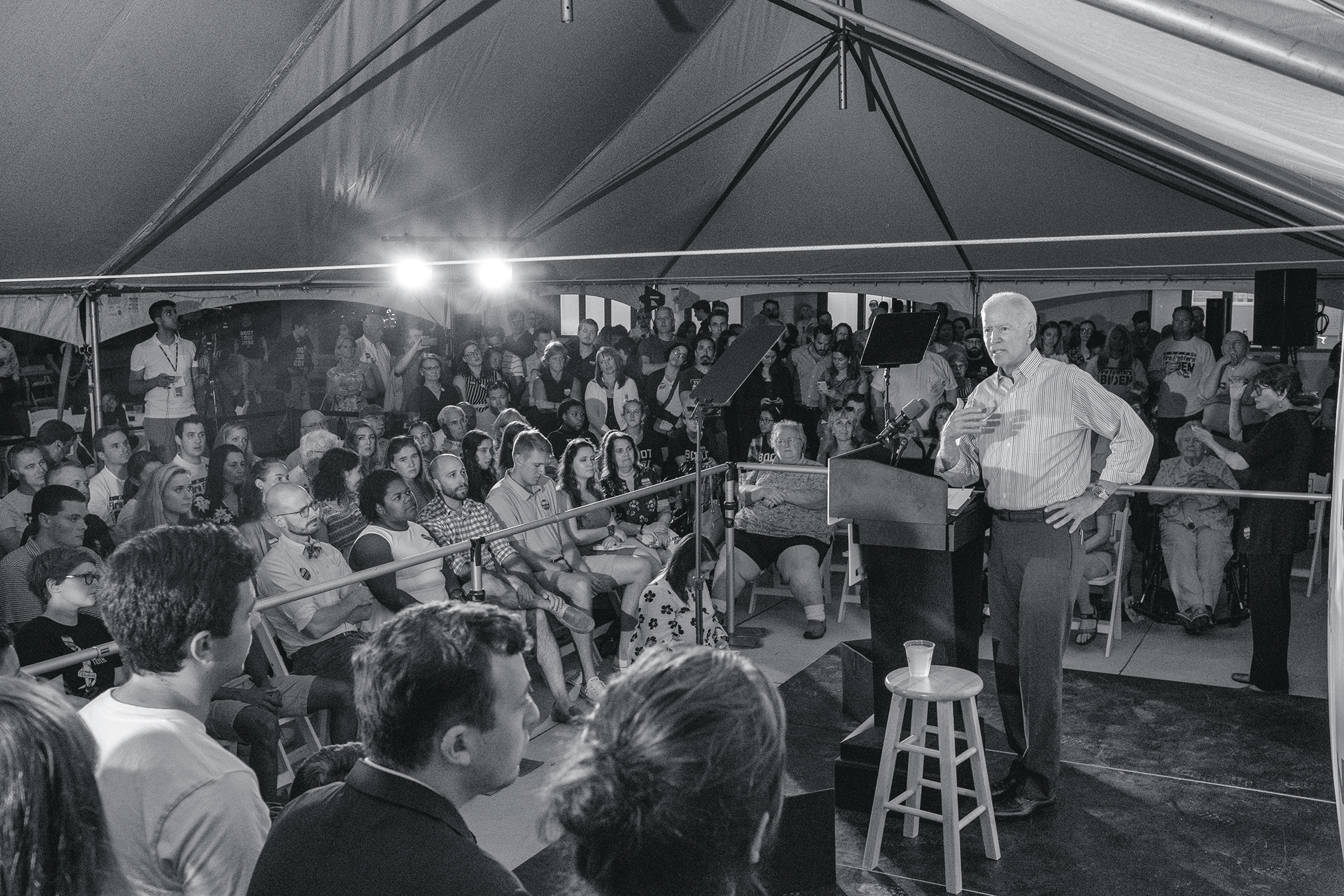
Joe Biden campaigning in Portsmouth, New Hampshire, July 12, 2019 © Devin Yalkin

Where’s the support for Democratic insurgents?

by Andrew Cockburn

For decades, New Hampshire has generated brisk and gratifying drama with its first-in-the-nation presidential primary. The Granite State momentously destroyed a presidency in 1968, when the Minnesota senator Eugene McCarthy ran against President Lyndon Johnson on an antiwar platform.

The Spy

Intrusive Thought, by Lenz Geerk © The artist. Courtesy the artist and Roberts Projects, Los Angeles

On seeing without being seen

by Rachel Cusk

Not long ago our mother died, or at least her body did—the rest of her remained obstinately alive. She took a considerable time to die and outlasted the nurses’ predictions by many days, so that those of us who had been summoned to her bedside had to depart and return to our lives.

Previews: The New Yorker Magazine – Sept 25, 2023

Diana Ejaitas “Lines of Beauty”
Art by Diana Ejaita

The New Yorker – September 25, 2023 issue: The new issue features the Fall Style & Design issue which showcases the work of Diana Ejaita, an artist who has herself dabbled in the world of fashion.

The Bloomsbury Group Is Back in Vogue

Lady Ottoline Morrell photographed by Cecil Beaton.

The bohemian English circle that included Virginia Woolf, Duncan Grant, and Vanessa Bell revolted against Victorian formality—and their casually ornamental style is inspiring designers today.

By Rebecca Mead

In July, 1918, Virginia Woolf spent a weekend at Garsington—a country home, outside Oxford, owned by Lady Ottoline Morrell, a celebrated hostess of the era, and her husband, Philip Morrell, a Member of Parliament. The house, a ramshackle Jacobean mansion that the Morrells had acquired five years earlier, had been vividly redecorated by Ottoline into what one guest called a “fluttering parrot-house of greens, reds and yellows.” One sitting room was painted with a translucent seafoam wash; another was covered in deep Venetian red, and early visitors were invited to apply thin lines of gold paint to the edges of wooden panels. The entrance hall was laid with Persian carpets and, as Morrell’s biographer Miranda Seymour has written, the pearly gray paint on the walls was streaked with pink, “to create the effect of a winter sunset.” Woolf, in her diary, noted that the Italianate garden fashioned by Morrell—with paved terraces, brilliantly colored flower beds, and a pond surrounded by yew-tree hedges clipped with niches for statuary—was “almost melodramatically perfect.”

A Young Architect’s Designs for the Climate Apocalypse

Pavels Hedström wearing the Inxect Suit.

Pavels Hedström believes that most architecture separates us from nature. He wants to make nonhuman life inescapable.

By Sam Knight

At the end of his first year at the architecture school of the Royal Danish Academy, Pavels Hedström went on a class trip to Japan. Hedström, a twenty-five-year-old undergraduate, revered Japanese culture and aesthetics, even though he had never visited the country. As a teen-ager growing up in rural Sweden, Hedström had been introduced to Zen meditation by his mother, Daina, and devoured manga and anime. In architecture school, Hedström was drawn to Japanese principles of design and how they applied to a world—and a profession—increasingly troubled by the climate crisis. Hedström was particularly influenced by Metabolism, a postwar Japanese architectural movement that imagined cities of the future as natural organisms: ephemeral, self-regulating, and subject to biological rhythms of growth, death, and decay. In 1977, Kisho Kurokawa, one of Metabolism’s founders, wrote, “Human society must be regarded as one part of a continuous natural entity that includes all animals and plants.”