
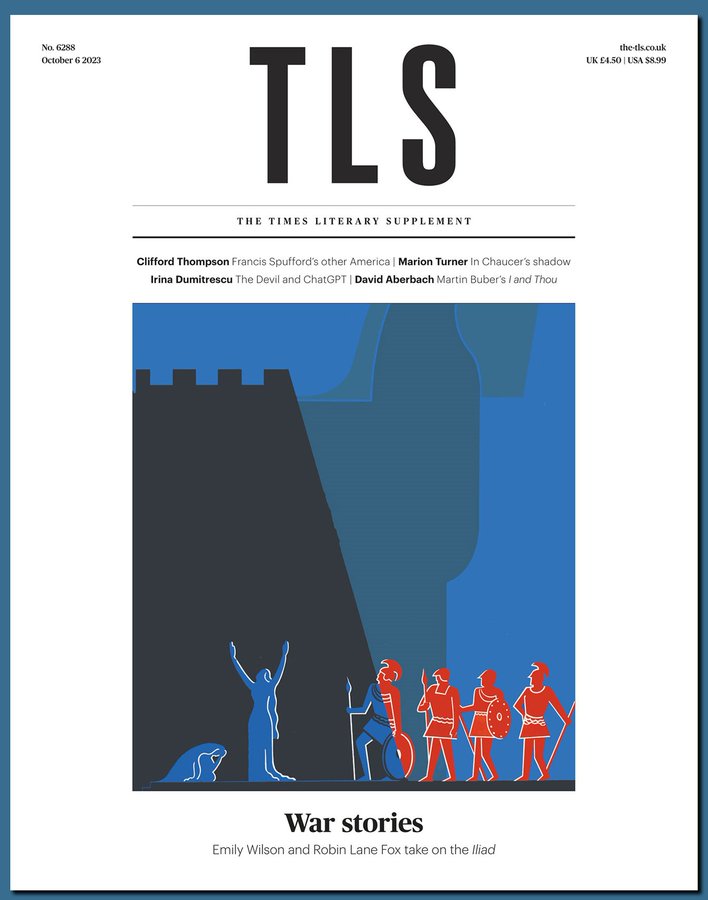

Times Literary Supplement (October 6, 2023): The new issue features War Stories – A review of the Iliad; Frances Sputford’s ‘Other America’; In Chaucer’s Shadow; The devil and ChatGPTand Martin Buber’s ‘I and Thou’…

Times Literary Supplement (October 6, 2023): The new issue features War Stories – A review of the Iliad; Frances Sputford’s ‘Other America’; In Chaucer’s Shadow; The devil and ChatGPTand Martin Buber’s ‘I and Thou’…


Country Life Magazine – October 4, 2023: The latest issue features the silvery spectacle of ethereal mist as it coats the countryside; Autumn’s beauty as a source of inspiration for artists from van Gogh and Monet to David Hockney, and more…

John Lewis-Stempel revels in the silvery spectacle of ethereal mist as it coats the countryside, moving in its mysterious ways

Autumn’s beauty is a source of inspiration for artists from van Gogh and Monet to David Hockney, finds Michael Prodger

In the first of two articles, John Goodall explores the founding of St Bartholomew’s in London



How the chef at Tatiana brought Afro-Caribbean cooking—and his life story—to the center of New York City’s fine-dining scene.

For more than a hundred years, the Neshoba County Fair has drawn revellers from all over the country. Why do they keep coming back?


THE NEW YORK TIMES MAGAZINE (October 1, 2023):

Josh Koskoff’s legal victory against Remington has raised the possibility of a new form of gun control: lawsuits against the companies that make assault rifles.

Our broken immigration system is still the best option for many migrants — and U.S. employers.
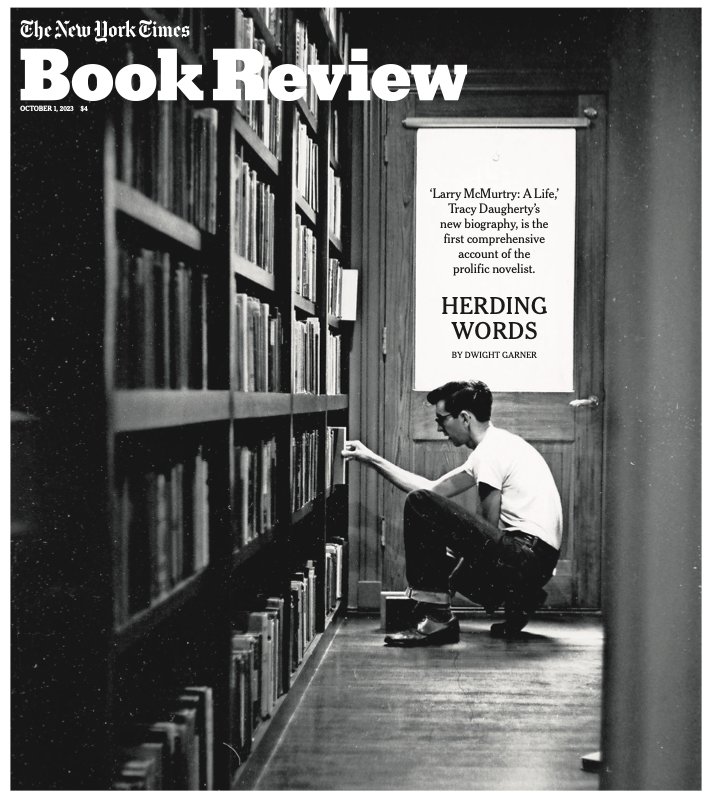

THE NEW YORK TIMES BOOK REVIEW (October 1, 2023): This week’s issue features the biography “Larry McMurtry: A Life”….

Tracy Daugherty’s new biography is the first comprehensive account of the prolific novelist who brought us “Lonesome Dove,” “The Last Picture Show” and more.
LARRY McMURTRY: A Life, by Tracy Daugherty
When the art critic Dave Hickey learned that Tracy Daugherty was writing a biography of his friend Larry McMurtry (all three men are Texans), he said to Daugherty: “Knowing Larry, it’s going to be a real episodic book.” Episodic this biography is. It’s also vastly entertaining.
McMurtry, the prolific author of “The Last Picture Show,” “Terms of Endearment” and “Lonesome Dove,” was a demythologizer of the American West who appeared to live in several registers at once.

Benjamín Labatut’s novel “The Maniac” examines the dawn of the nuclear age and the brilliant, sometimes troubled minds behind it.
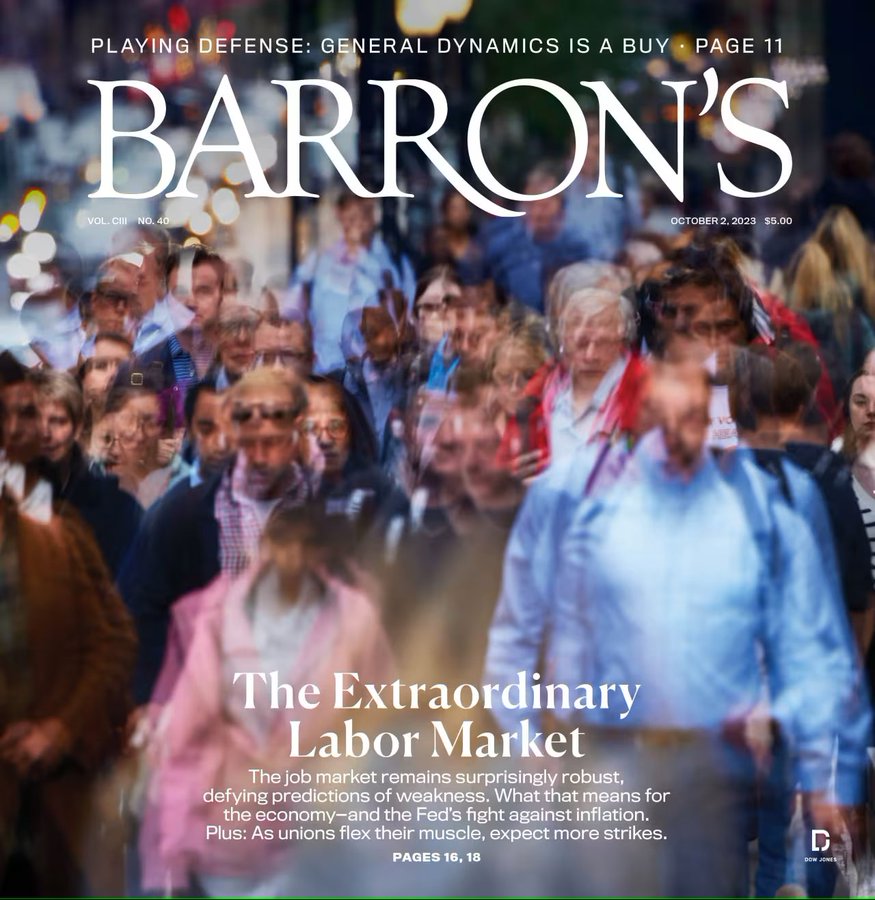

BARRON’S MAGAZINE – October 2, 2023 ISSUE:

Unemployment remains near historic lows even after the Fed’s aggressive rate hikes. What’s behind the job market’s resilience—and why it could last.

After decades of losing ground to corporate cost-cutting and globalization, labor unions face their biggest opportunity in years to forge a comeback. It won’t be easy.

The defense contractor’s shares are cheap and the company is growing faster than its peers.

Ron Shaich, head of Act III Holdings, founded and later sold Panera, and then backed Cava, this year’s IPO sensation. What he’s investing in now.

The rising costs of new and used cars has fueled soaring claims costs—19% year over year in August. The situation hurts drivers. insurers, and investors.


The problem, however, is that at the very moment that events demand a strong and coherent response from the United States, the country cannot provide one. Its fractured political leadership—Republican and Democratic, in the White House and in Congress—has failed to convince enough Americans that developments in China and Russia matter. Political leaders have failed to explain how the threats posed by these countries are interconnected. They have failed to articulate a long-term strategy to ensure that the United States, and democratic values more broadly, will prevail.
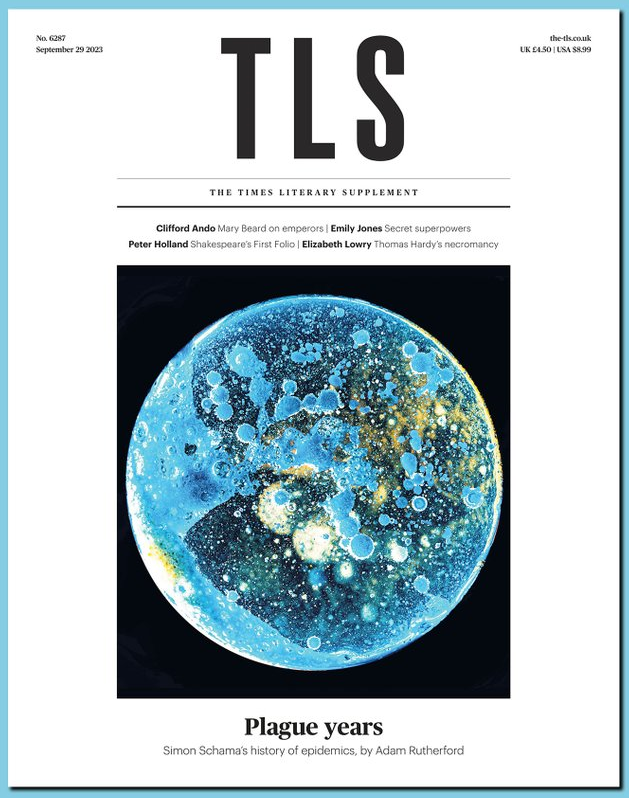
Times Literary Supplement (September 29, 2023): The new issue features The First Folio at 400; how disease shaped global history; novels of queer experience; what Britain laughs at; literary thefts and coincidences – and much more…

How disease has shaped global history
Scientists often make poor historians. Their shortcomings in describing and analysing the past include a failure to shed the whiggish stories that academic history moved away from decades ago. Straight lines are still drawn between Great Men and the impact of their brilliant insights on our view of reality. They also sometimes fail to treat the material of history with the seriousness they bring to their own discipline. Simple questions that are drummed into schoolchildren are frequently ignored in analysing documentary evidence: who wrote this, why, and for whom? The result is context-lite narrative that doesn’t stand up to scrutiny.

Works to commemorate the 400th anniversary of the First Folio
Next year, the Folger Shakespeare Library in Washington DC will reopen after a three-year closure for a large-scale renovation of its building, which dates from 1932. The centrepiece of the new Shakespeare Exhibition Hall, will be, as the press release puts it, something “that only the Folger could produce: all 82 copies of the 1623 First Folio of Shakespeare that were collected by Henry and Emily Folger”. The Folger holds slightly more than a third of all extant copies of the book and now eighty of them will be on permanent show in a “20-foot long visible vault”, while two more will be open in cases as part of an “interactive” visitor experience. Peering into the vault says much about the Folgers’ appetite for cornering the market in Folios but, since nearly all copies differ in some respects, it did make some kind of sense to buy many of them.
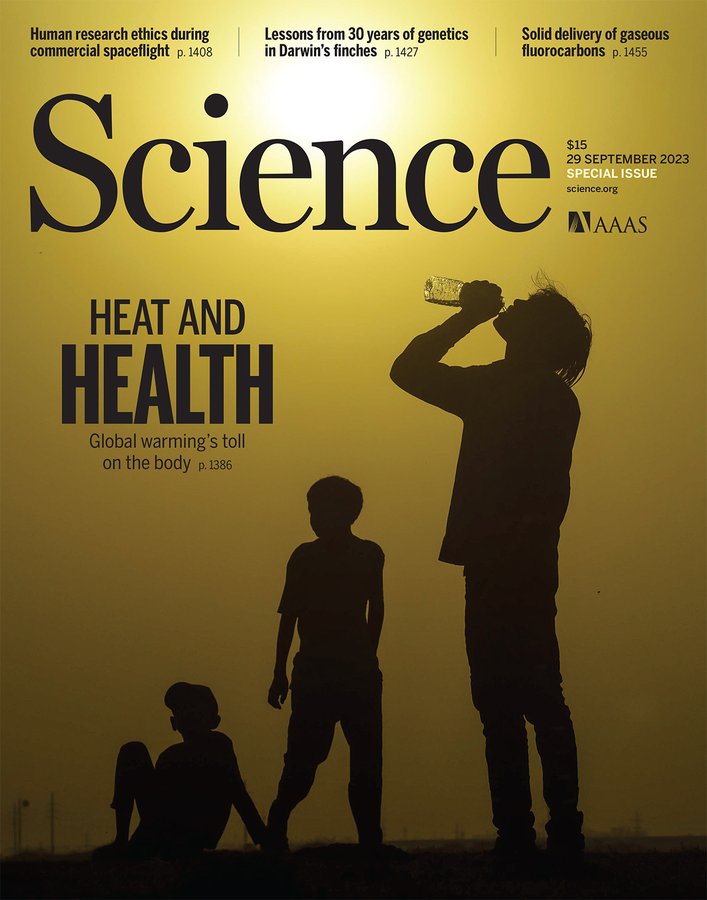

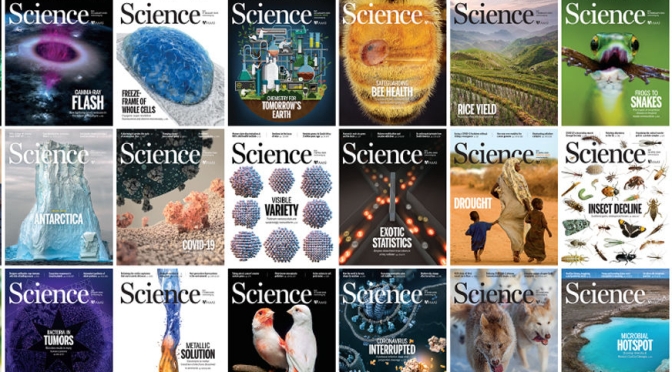
Introducing a special issue of Science
Earth scientists often call climate change a “great global experiment,” which humanity is heedlessly performing as we pump greenhouse gases into the atmosphere. The dire consequences are already becoming clear—not just for the workings of the planet, but for our own health. Over the next few days, the stories in this special package will explore the threats, and how we can minimize them.
From cold viruses to influenza to respiratory syncytial virus, viruses that spread through the air cause billions of infections each year. That makes it important to understand how they will respond to climate change. But little is known so far, except that different viruses will react differently. Measles, for instance, spreads efficiently in all climates, suggesting global warming will make little difference to its transmission.
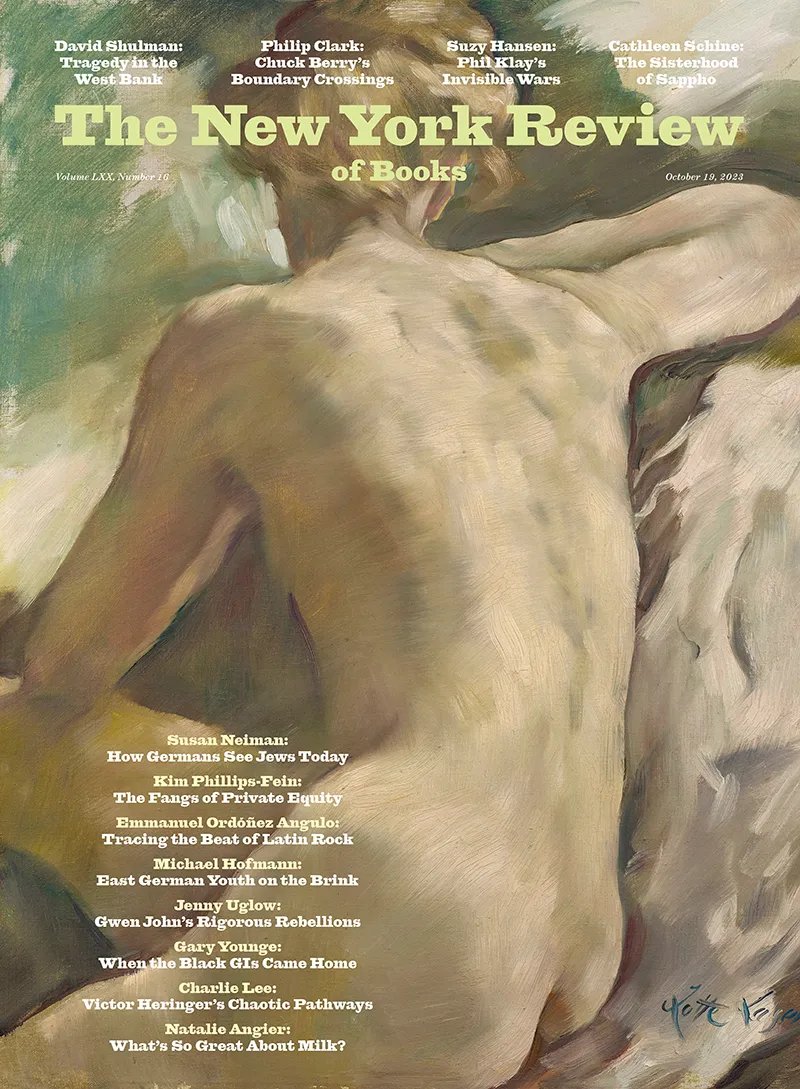


By Gary Younge
Half American: The Epic Story of African Americans Fighting World War II at Home and Abroad by Matthew F. Delmont
The ambivalence many Black soldiers felt toward the United States during World War II was matched only by the ambivalence the United States demonstrated toward the principles on which the war was fought.
Selby Wynn Schwartz’s novel After Sappho is populated by the notable lesbians who helped modernism blossom.
After Sappho by Selby Wynn Schwartz
One of my favorite novels is by Compton Mackenzie, a Scottish writer known today, if he is known at all, for his whimsically comic Whisky Galore (1947) and his ambitious early novel Sinister Street (1913). The one I love, however, is Extraordinary Women: Theme and Variations (1928), a satirical roman à clef about the sapphic adventures of the unorthodox and eccentric inhabitants of an island modeled after Capri during World War I. After Sappho, a novel by Selby Wynn Schwartz that was longlisted for the Booker Prize in 2022, is many things, none of them satirical, but I kept thinking of the title of Mackenzie’s book as I read it.





 Boomers Daily