In the spring of 1689, Matsuo Bashō set out from Edo with his inkstone and his disciple, walking north through Japan’s interior. This essay imagines the painter Ogata Kōrin at his side, brush catching what haiku left unsaid: the lantern’s glow, a fox’s mischief, the silence after sound.
The morning I left Edo, the sky was thick with petals. Cherry blossoms fell in sudden gusts, scattering across canals and clinging to the backs of merchants. Someone in the crowd said my name. “Bashō—the man of stillness.” The words felt like a shroud. Stillness was not peace. Stillness was suffocation.
I carried only a robe, a small pack, and my inkstone. I gave no notice, offered no farewell. A poet should know the difference between an entrance and an exit, and Edo was drowning in entrances—recitations in smoky salons, verses pinned to pillars, applause echoing in courtyards. To slip away silently was my only true poem.
Sora, my disciple, waited by the gate, his journal tied at his side. Beside him stood Ogata Kōrin, carrying brushes wrapped in cloth, a small box of pigments, and sheets of fine paper. He was famed for painting bold pines and cranes against gold, but he wanted to walk with us, to see if paint could keep pace with words.
“You walk for silence,” he said as we stepped into the road.
“And you?” I asked.
“I will paint the sound.”
A crow on a bare branch— autumn evening.
Walking unstitched illusions. You cannot hurry rain. You cannot plead with a mountain. Each step was a reminder of smallness.
Oku—the interior—was more than geography. It was the hidden chamber within things. To walk north into deep country was to step into the interior of myself.
The road gave humility: a thin robe against spring wind, an empty belly by sundown, blistered feet in straw sandals. Hunger was not a lack but a space for the world to fill. Only when stripped of comfort could I hear the world breathe.
By the second month, rains thickened. Each evening Sora dried our sandals by the inn’s hearth, though by morning they were heavy again.
At a mountain temple, a monk struck the great bell. The sound swelled, then emptied into air.
“Not the ringing,” he whispered, “the silence after—that is the true temple.”
Kōrin ground his ink and left behind a circle fading into white paper. I looked at it and felt the hush expand. His first gift of the journey.
Pine shadow— the road bends to meet it.
Summer pressed down like a hand. Cicadas shrieked in the trees, their chorus burning itself away. At a roadside inn, a farmer’s wife handed me a bowl of barley and salt.
“Why walk in this heat?” she asked.
“To see what words cannot hold,” I said. She laughed, shaking her head.
That night, I listened to the cicadas outside the window. Kōrin painted their wings in silver strokes. Sora struggled to describe them, blotting his brush, sighing. Not every moment can be pinned to the page.
One afternoon, a girl chased dragonflies, sleeves spread like wings. She caught none, but her laughter rang sharper than capture. Kōrin caught her mid-flight in vermilion. He pressed the paper into Sora’s hands. “If you cannot hold it with words,” he said, “let color remind you.”
We reached Matsushima, where pine-covered islets scattered like jewels across the bay. Some places do not need words. Kōrin’s blues and greens glowed even at dusk.
That night, fireflies pressed against the paper walls of our hut, their glow brighter than the lamp. I set down my brush. Some nights call for silence more than lines.
Later, in a fishing village, I collapsed with fever. A fisherman’s wife placed cloths on my brow and whispered prayers to the sea.
When I woke, Kōrin held out a small painting of a lantern’s glow against dark waves. The flame was steadier than I had felt in days.
Lantern flickers— the sea’s hush louder than my pulse.
By August, the barley fields had turned gold. The harvest moon rose red above the stubble. Villagers poured sake and sang. A boy ran over with a cup. “Drink, master!”
“The moon is already enough,” I said.
Snow still lingered in the high passes. The mountain does not flatter. It does not care if a man is poet or beggar. It accepts only attention.
Winter gust— even the inkstone holds the wind.
Crossing a frozen river, I slipped. A peasant caught my arm. “Careful, master. The ice breaks without warning.”
“So does the self,” I said.
Even in silence, the self lingered like a shadow. I imagined my words drifting northward, reaching readers yet unborn. But the further I walked, the thinner that dream became. What immortality is there in syllables, when rivers change their course and mountains crumble?
In Edo, applause had filled the air like thunder. On the road, there was only silence. Silence wounds, but it also heals.
The answer came not in thunder but in a sparrow’s wing. Write not to endure, but to attend. Not for tomorrow, but for now.
Near a riverbank, a boy approached with a scroll of verses. “Master, how do I make my poems last?”
“Write what you see,” I said. “Then write what you feel when you see it. Then tear it up and walk.”
The boy bowed. Kōrin added, softly: “Or paint the emptiness left behind.”
River mist— the boy’s scroll left unopened.
In the mountains I met a man from the north whose dialect I could not follow. He pointed to the sky, then to the river, then to his chest. We shared tea in silence. I realized then that language is not the vessel, but the gesture. Poetry lives in the space between.
One morning, I watched a fox dart through a field, a rice ball clutched in its mouth. The farmer cursed, but I laughed. Even hunger has mischief. Kōrin’s brush caught the moment in quick ink.
Fox in the field— the rice ball warmer than the sun.
Toward the end of our walk, Sora counted the ri that remained. “Two thousand and more behind us,” he said. His journal pages were full of weather, distances, small observations.
“I counted shadows,” I told him. “I counted pauses.”
Kōrin smiled. “I painted both.”
At last, beneath a cedar, I placed the inkstone on my lap and listened. Snow weighed heavy on the branches. The air was sharp with winter. The wind moved through ridges and needles and into the hollow of the stone. For a moment it seemed the ink itself stirred.
I wrote one last haiku, not as conclusion but as surrender. The road has no end. Only pauses where breath gathers.
Wind in the cedar— the inkstone deepens into silence.
When these fragments later formed Oku no Hosomichi, I wondered what I had left behind. Not a record of steps, but a trace of listening. The form belonged not to me but to the rhythm of walking.
Kōrin returned to Edo with his scrolls. I with my scattered lines. Yet three small works stayed with me: the fading bell, the glowing lantern, the fox with his rice ball. They were his haiku in color, brief offerings to impermanence.
If others take their own narrow roads, let them not follow our footsteps but their own shadows. The road is never the same twice. Neither traveler nor mountain remains unchanged.
Perhaps one day, a traveler will walk with a pen of light, or a scroll made of glass. They will pause beneath a cedar, not knowing my name, not knowing Kōrin’s brush, but feeling the same hush. The road will whisper to them, as it did to us. And they will listen—not to the words, nor the colors, but to the breath between.
It begins with a joke that insists on being taken seriously: that Friedrich Nietzsche shows up in Sils Maria whenever another translation of The Odyssey arrives, like a critic doomed to review the same book forever. He doesn’t need them, of course—he could spar with Homer in the original Greek long before most of us had mastered the alphabet. But each new version lures him back to the lake, as though Odysseus himself had slipped ashore in yet another borrowed tongue. Translation is just another disguise; recurrence, another mask. Nietzsche, who built his philosophy on both, seems condemned—or seduced—to reread the wanderer endlessly, as if the Engadin Alps demanded it as tribute.
He had come back to the lake, the same one that had once whispered eternity into his ear. Nietzsche sat by the water at Sils Maria, Mendelsohn’s new translation of The Odyssey spread across his knees, the pages bright in the alpine sun. He read not out of admiration, but suspicion. His own idea—eternal recurrence—had haunted him for years. He wondered now, with the weight of illness and solitude pressing harder than ever, whether recurrence was survivable. Odysseus would be his test.
From the first line, the Muse seemed to speak directly into the thin Engadin air: “Tell me, Muse, of the man of many turns…” Nietzsche felt the word polytropos twist through him—not merely “wily,” but turned and turning, fragmented, caught in endless motion. Was recurrence not the same: the self turning upon itself until it fractured into multiplicity? He traced the letters with a frail finger, the ink seeming to pulse with a life of its own. This wasn’t just a poem; it was a mirror held up to his deepest philosophical anxieties. To be polytropos was to be a kaleidoscope of selves, a truth Nietzsche had long espoused but now felt not as liberation but as dizziness. What if the self, in its endless turning, simply wore away?
The air was high and crystalline, but his body was not. Migraines came like daggers, sudden and merciless, blinding him to light. His stomach soured; food betrayed him. He walked hunched, exhausted, restless. He had broken with Wagner, grown estranged from academia, wandered from city to city like a ghost of his own philosophy. At Sils Maria he wrote not to clarify but to survive. The mountains had become his Ithaca—severe, withholding, demanding. Unlike Ithaca, they offered no promise of rest at the end of wandering. They were recurrence itself, permanent and pitiless.
He had paced these paths before. In 1881, by a great stone shaped like a pyramid at the lake’s edge, he had first conceived the thought of eternal recurrence: that every moment must be lived again, endlessly, without remainder. The revelation had come not as a triumph but as a chill—something he later called “the most abysmal thought.” Even now, the air smelled of resin and cold stone, the scent of pine needles bruised underfoot. The wind moved through the valley like a slow instrument, its tones alternating between whisper and moan. Here, philosophy never separated from sensation; thought rose and fell with the mountain’s breath.
The lake shimmered, but not as a mirror. It was a mirror that refused to reflect, a surface that yielded nothing but depth. Nietzsche had always felt the valley was Ithaca’s double—clarity above, abyss below. To return here was to return to a place that was never the same twice, a home that asked if one could ever come home at all. Odysseus too had seen the multiplicity of the world: “He saw the cities of many men, and learned their minds.” What better philosopher could Nietzsche imagine than this wanderer who turned from city to city, discovering that no truth was singular?
But even heroes were not guaranteed their ends. Athena’s warning in Mendelsohn’s cadence hung in the alpine stillness: “Even now, your homecoming is not assured.” The words might have been addressed to Nietzsche himself, a man without a home in Basel, Turin, or Leipzig, wandering in body and in thought. What was eternal recurrence, after all, if not the refusal of safe arrival, the demand that the journey itself be endlessly relived? It was a homecoming that never concluded, an arrival that dissolved into another departure.
He turned another page. The man of cunning sat by the sea and broke down: “Odysseus wept, hiding his face in his cloak, ashamed to be seen crying.” Nietzsche lingered here. He knew the shame of breakdowns, the humiliation of migraines that felled him for days, the solitude that left him in tears. Here was a hero who did not embody Apollonian restraint but Dionysian excess—grief that refused the mask of virtue. This was not the strong, stoic figure of schoolroom myth, but a man undone by the weight of his suffering, a man who had faced monsters and gods only to be brought low by simple grief. Nietzsche saw himself in that cloak.
And then another voice, colder: “The gods have long since turned their faces away.” The line struck like an echo of Nietzsche’s own pronouncement that God was dead, that divinity had withdrawn, leaving only men to endure. Odysseus, abandoned, becomes the emblem of modern man—staggering forward in a world emptied of divine assurance. In this vacuum, there was no plan, no destiny, only the sheer will to survive. Nietzsche, who once joked that his only companions were his books and his headaches, could hardly disagree.
Yet how different this Odysseus was from the ones Nietzsche had met in other tongues. Fagles gave us a noble Odysseus, his voice rich and grand, swelling with dignity. Fitzgerald offered a modernist one, lean and sharp, almost severe. Wilson gave us an Odysseus brisk and lucid, her lines crisp as salt air. But Mendelsohn’s Odysseus was something else—fractured, recursive, morally ambiguous—a man who could have walked beside Zarathustra and argued in riddles. Even the openings diverged: Fagles gave us “the man of twists and turns,” Fitzgerald “the man skilled in all ways of contending,” Wilson “the complicated man.” Mendelsohn’s “many-turned” suggested not mastery but fracture—caught in perpetual reconfiguration. Nietzsche raised an eyebrow at this crowded gallery of Odysseuses, as if wondering whether Homer himself would recognize any of them.
Nietzsche’s fingers tightened on the book. Telemachus’s words surfaced next: “He spoke not as a king, but as a man who had suffered.” This was the recognition—father to son, philosopher to survivor. Not majesty, not nobility, but suffering itself as the currency of truth. Was this not Nietzsche’s fate, to speak no longer as professor or system-builder, but as a man undone, scarred by solitude? His philosophy was not a polished edifice but aphorisms wrested from pain. It was a philosophy of the wound.
A hawk circled above, its shadow sliding across the lake. The thought of inheritance pressed on him, the futility of lineage. Homer’s line followed, with its brutal candor: “Few sons are the equals of their fathers; most fall short, all too few surpass them.” Nietzsche could not escape the question of whether he had surpassed his own philosophical fathers—Schopenhauer, Wagner, Plato—or whether he had only fallen short, a son estranged from every lineage. Surpassing required rupture, a violent break. He had done this, but at what cost? He was a son without a father, a successor without inheritance.
Mendelsohn’s commentary pierced further: “But which is the true self? the Odyssey asks, and how many selves might a man have?” Nietzsche closed his eyes. He had written that truth is a mobile army of metaphors, that the self is nothing but a mask. But Homer had already staged the question: Odysseus, beggar and king, father and liar, scarred and disguised, endlessly polytropic. To be true, one must be many. The self was not a solid, unchanging thing, but a performance. The mask was the face. Nietzsche, who often signed his letters “Dionysus” or “the Crucified” depending on his mood, could hardly deny it.
A breeze lifted the page, and another voice arrived, softer, almost contemporary: “We all need narrative to make sense of the world.” Nietzsche scoffed, then paused. He had rejected metaphysics, rejected God, rejected morality—but had he not always returned to story? Zarathustra was not an argument but a parable. Perhaps Odysseus’s voyage was not philosophy’s rival but its secret ally: narrative as the vessel of truth. Even he, the self-proclaimed destroyer of systems, had relied on fables to smuggle his most dangerous ideas into the world.
He came at last to the moment of recognition: “He knew the scar, though the rest had changed.” The line startled him. Eurycleia’s recognition of Odysseus was not by face, but by wound. Memory was not intellectual—it was embodied, etched in pain. Could eternal recurrence itself be recognized in the same way? Not by sameness, but by scars carried forward?
Here Nietzsche faltered. In The Gay Science, he had asked whether one could will the same life again and again. In Ecce Homo, he claimed to embrace his fate—amor fati. But Mendelsohn’s Odysseus offered no affirmation, only ambiguity. He returns, yes—but as a stranger, a beggar, a killer. Recurrence here is not comfort. It is metamorphosis: arriving at the same place with a different soul.
He closed his eyes and imagined a dialogue across time.
“Tell me, cunning man,” he asked, “what does it mean to return?”
Odysseus did not answer. He lifted his tunic and showed the scar on his thigh. Nietzsche pressed.
“You endure, but to what end?”
At last Odysseus spoke, his voice neither triumphant nor despairing. “To return is to wear the same name with a different soul.”
Nietzsche hesitated. “You speak of endurance. But what of joy?”
Odysseus’s gaze was steady. “Joy is not what brings you back. It is what allows you to remain, even when you no longer know who you are.”
Nietzsche’s voice broke. “I have dreamed recurrence. I have feared it.”
“Then you are not yet home.”
“And you?” Nietzsche asked.
“I returned,” Odysseus said. “But I did not arrive.”
Nietzsche waited, but Odysseus spoke again, almost like a riddle: “Every disguise is also a truth. Every mask you wear wears you in return.”
The silence thickened. The mountain stood like a question, the lake like an answer withheld. The survivor explained nothing. He endured.
It would have been enough, this single reading at the lake. But recurrence demands more. Nietzsche returns again and again, each time when Homer is born anew in a different tongue. He returns to Sils Maria, the pyramid-shaped stone waiting, the lake unaltered, the text altered.
In 1781, Johann Heinrich Voss gave Germany its definitive Homer. A century later, Nietzsche, young philologist turned philosopher, read Voss with admiration and disdain. He respected the fidelity, the hexameters hammered out in German. But he muttered that Voss’s Homer was too polished, too Apollonian—Homer in a Sunday coat. Nietzsche’s Homer was wilder, bloodier, Dionysian.
In 1900, Samuel Butler gave the world a Victorian prose Odyssey, rational, stripped of song. Nietzsche returned that year in ghostly form, reading Butler on the lakeshore. He scoffed at the flattened prose, the “rosy-fingered dawn” now blanched into English daylight. Odysseus, robbed of meter, was Odysseus disarmed.
In 1946, E.V. Rieu launched the Penguin Classics with his plainspoken prose. Nietzsche reappeared, bemused at this “Odysseus for commuters.” Clarity, yes—but clarity was its own disguise.
In 1961 Fitzgerald sang a lyrical Odysseus, swift and elegant. Nietzsche walked the path again, whispering: too beautiful, too smoothed. In 1965 Lattimore countered with severity, lines stiff as armor. Nietzsche admired the discipline, but found no scar.
In 1996, Fagles delivered an Odysseus swelling with grandeur. Nietzsche laughed aloud. “A Wagnerian Odysseus!” Too sweeping, too theatrical—Odysseus as opera. And yet, in its excess, he recognized a brother.
In 2000, Lombardo turned Odysseus into a fast-talking street trickster. Nietzsche smiled darkly: here at last was cunning made colloquial. He imagined Odysseus haggling in a Neapolitan market.
In 2017, Emily Wilson arrived, the first woman to translate the Odyssey into English. Nietzsche lingered longest here. Odysseus was no longer simply the hero of endurance; he was reframed as a survivor, stripped of glamour, his slaves called “slaves,” not “maids.” Nietzsche paced the lakeshore, struck by how recurrence could reveal something genuinely new. For the first time, he felt Odysseus’s masks pierced by another’s.
In 2021, Barry Powell emphasized precision, the scholar’s Homer, clean and correct. Nietzsche shook his head. Exactitude without ambiguity was another mask, no less false.
And in 2025, Mendelsohn. At last Nietzsche was there in the flesh, not as ghost but as man. Mendelsohn’s Odysseus was fractured, scarred, cunning, forever altered. This Odysseus was recurrence embodied. Nietzsche closed the book by the lake, heavier now, and whispered: perhaps the philosopher, too, must become a poet to survive.
The sun slipped west across the water. The lake shimmered, but now it was deeper. Nietzsche rose slowly, frail yet fierce, and stepped into the forest. He did not know if he would come this way again. But he knew coming back was not arrival. And perhaps, in the hush between pines, he felt another step beside him—the rhythm of sandaled feet, the shadow of a wanderer who had survived not by truth but by disguise.
The path ahead was a scar, and he knew he would walk it again and again, forever returning as a stranger to his own home.
On a Central Park bench, a student-poet becomes the witness as Wallace Stevens, T. S. Eliot, Langston Hughes, and Mary Oliver clash over the future of verse.
It was Sunday, late morning, and the city had softened. The joggers had thinned into solitary silhouettes, their sweat darkening cotton in abstract shapes of effort and release. The brunch crowd had not yet surged onto the avenues, their laughter still a distant, imagined chorus. Under the arcade, a saxophone player blew short, testing gusts—vibrations that trembled like the first sentences of a story he wasn’t sure how to tell. Not yet music, more like the throat-clearing of the city itself, a quiet settling before the day’s performance began. The air was a mosaic of scents: damp earth, a faint sweetness from the flowerbeds, and the savory promise of roasted nuts from a cart not yet rolled into place.
Bethesda Terrace shimmered in late-September light, the Angel of the Waters extending her shadow over the fountain’s slow churn. The sandstone bench, curved and facing the pool, was empty. It waited, a silent invitation. She sat. The stone’s chill pressed through her jeans, climbed her spine, spread across her shoulder blades. She leaned into it, a physical surrender, her body quieted, her mind alert. This was catalepsy—not sleep, not paralysis, but suspension. A body stilled into receptivity; a consciousness stretched thin, porous, listening with its skin. The shuffle of leaves, the clap of pigeon wings, the metallic crack of a pretzel bag: everything arrived brighter, as if a filter had lifted. She was no longer simply a woman on a bench; she was a conduit, participant in a larger, unacknowledged ritual.
From her tote she drew The Collected Poems of Wallace Stevens, its margins crowded with penciled hieroglyphs. She was a sophomore at Columbia, apprenticing herself to poetry the way others apprenticed themselves to finance or law. The writing program had its rites: chalk-dusted seminar rooms, steam radiators clanking, professors who spoke of poets as if handling relics. Stevens was invoked in hush, his lines treated as proofs in sacred geometry. She remembered one professor sketching a triangle on the board and calling it “Stevens’s geometry of the imagination,” as if abstraction could be mapped. But she also remembered reading him alone in her dorm, the fluorescent hum above, feeling the language bend her without yielding. Still, something stirred—the tremor that words might bend time, that they could turn a bench into a portal if she sat still enough.
She flipped to “The Comedian as the Letter C.” That line, the one that haunted her: “A bench was his catalepsy, theater of trope.” She whispered it, and the pigeons, used to human murmur, did not flinch. The bench was not only stone. It was a tuning fork, a place where perception settled into resonance. Stevens had given her a name for what she was doing: sitting, body locked, mind open, waiting for the city to become legible.
Then another voice intruded—T. S. Eliot, stern and dry, from “Burnt Norton”: “Words strain, / Crack and sometimes break, under the burden, / Under the tension, slip, slide, perish.” Not Stevens’s easing cadence but a warning, a cold draught of reality. She remembered first reading those lines in Butler Library, underlining so hard she nearly tore the page. Words strain. How often had they failed her? She knew Eliot was right: no trance of perception could spare language from the world’s pressure.
The fountain gave its own reply, a language without alphabet. Its voice was a fluid script, endlessly transcribed by the Angel above, her arm raised as if in dictation. If words strain, perhaps water does not. Maybe poetry’s task is less to master than to echo this ceaseless murmur, to become porous to it.
She turned a page, this time to “Description Without Place”:
Nietzsche in Basel studied the deep pool Of these discolorations, mastering The moving and the moving of their forms In the much-mottled motion of blank time.
The mottled motion was here: leaves circling, coins winking on the bottom, fragments of sky trembling on the surface. She imagined Nietzsche not in Basel but here, hunched on a nearby bench, attempting to master tourists and pigeons, saxophonists and children. Wasn’t this what Stevens asked—that the city itself be read as poem, each gesture a coloration across blank time?
But Stevens was not the only voice in her bag. She pulled out Langston Hughes, slim and sharp, his “Park Bench” already dog-eared:
I live on a park bench. / You, Park Avenue.
No metaphor. No gloss. Just fact. She looked across the terrace to a man sleeping on the far bench. His belongings were stacked in a rusted cart: a green plastic bag, a jacket folded awkwardly, a cracked umbrella. His beard uneven, a shoelace untied, one hand gripping the bench as if to keep from sliding off. His chest rose and fell, slow and steady. Not a symbol. Not a trope. A man. Hughes refused to let her forget him. In workshop a classmate had dismissed Hughes as “too simple,” mere reportage. The word still stung. She had wanted to ask: what is survival if not the hardest metaphor? What is hunger if not its own supreme fiction—one body insisting on endurance?
Could she hold both visions at once—Stevens’s trance and Hughes’s ledger? Eliot complicated things further. In Tradition and the Individual Talent, he had written: “Poetry is not a turning loose of emotion, but an escape from emotion.” Was she escaping into Stevens, away from Hughes’s blunt truth? Or was this escape a discipline, a refusal of indulgence, a transmutation of feeling into form? Again Eliot whispered across the water: “Only by the form, the pattern, / Can words or music reach / The stillness.”
She looked down. Perhaps the bench itself was a form, a stanza of stone. It received everything: the boy’s paper boat veering toward collapse, the woman in a camelhair coat leaping at her phone, the saxophone’s melody finding coherence. The bench gathered fragments without commentary. Was poetry like that—absorbing, indiscriminate, neither consoling nor condemning, only holding?
The saxophonist found his line—“Autumn Leaves”—and the terrace filled with it like a breath held and released.
One Sunday the bench was occupied. An older man in frayed tweed sat with a notebook in his lap, smelling faintly of espresso. She sat beside him. Silence was easy; the fountain supplied conversation. He scribbled; she read Stevens. At last he asked, “Do you come here often?”
“Most Sundays.”
“A good place for thinking.”
“Or not thinking.”
He smiled. “Same thing, sometimes.” He closed his notebook, stood, and, as he left, offered a benediction: “Good luck with your poems.” He was punctuation in her life—a comma pause, an exclamation departure.
Her poems began to shift. They still strained, but now they breathed. “There’s more space in these,” a professor said. “More air.” Stevens’s credo returned: “It must be abstract. / It must change. / It must give pleasure.” Change, yes—but into what? Pleasure, yes—but for whom? Hughes would demand reckoning. Eliot would demand pattern. Beyond the seminar room, Instagram couplets hustled for attention, TikTok captions performed disposable verse, headlines rhymed only by accident. Did poetry still have a place in a city where jingles worked harder than sonnets and slogans colonized every surface?
Another Sunday, rain slicked the bench, but she sat anyway. Water seeped through denim, chilling her thighs, and Stevens blurred on the page until she closed the book. A line returned from “The House Was Quiet and the World Was Calm”: “The reader became the book; and summer night / Was like the conscious being of the book.” If the reader could become the book, could she become the bench? She felt the city write itself into her—the man in the wheelchair pausing at the balustrade, the woman in saffron photographing the Angel, the skateboarder skimming past with ears sealed. Each was a sentence inscribed across her awareness.
And Eliot again, exacting: poetry is not release but reception. Form, not confession.
By winter the fountain had been drained, the Angel presiding over silence. The saxophonist still came, sending vaporous notes that hung like clouds—an arc from tentative gusts in October to frozen ellipses in December. She began to imagine benches as the city’s libraries. Not catalogues of bound paper but palimpsests of bodies: grooves of old kisses, indents of forgotten elbows, ghosts of whispered confessions. A library of sandstone, open to anyone who would sit.
Was poetry necessary anymore—or only another archive browsed by the dutiful few? Eliot had said words strain, crack, perish. Stevens had countered: poetry is the supreme fiction. Hughes insisted it is survival’s blunt truth.
Then a new voice arrived, unbidden and clear as spring water. Mary Oliver. Not a specter, but a woman with kind eyes and a notebook pressed to her chest. She pointed not at the fountain or the sleeping man, but to a sparrow hopping between flagstones. “Look,” she said, a quiet command. “Every morning, a little prayer. A little ceremony.”
“Poetry is not in the grand gesture,” Oliver said, her gaze fixed on the sparrow. “It’s in the particular.” She turned to the student, her voice both tender and insistent. “It doesn’t need a city to thrive. It only needs an open eye. Tell me—what is it you plan to do with your one wild and precious life?” The question arrived not as judgment but as invitation, a door left ajar.
And then her words seemed to fold into image:
And did you see it, finally, just under the clouds— a white cross streaming across the sky, its feet like black leaves, its wings like the stretching light of the river?
Oliver’s presence was another kind of weather. Eliot demanded tradition, Stevens imagination, Hughes survival. Oliver offered attention. The sparrow hopped to the fountain’s lip, bent to drink, then vanished into the elms—a poem enacted, and over. She turned back to the student, her eyes luminous, and said, “You do not have to be good.” The words fell with the quiet weight of a feather. “You only have to let the world break your heart,” she added softly, “so the world may also heal it.”
The student gave in to the smallest details: the brown V of the sparrow’s back, the chipped basin of the fountain, the hairline crack in her own thumbnail. Attention, Oliver implied, is the first discipline, and gentleness the second. Poetry, then, is attention married to mercy.
Spring returned. The fountain gushed into speech again. She drafted her thesis, uncertain about an MFA, uncertain about poetry as livelihood. Stevens’s line steadied her: “The poem of the mind in the act of finding / What will suffice.” Poetry did not have to be everything. It had to suffice. And Eliot’s assurance from “Little Gidding” answered: “We shall not cease from exploration / And the end of all our exploring / Will be to arrive where we started / And know the place for the first time.” That, she realized, was what her Sundays had become: recurrence as revelation. The same bench, the same fountain, mottled anew.
She thought of defending Hughes in workshop, furious at the word “simple.” She remembered copying Stevens until the lines lived inside her like scaffolding. Reading Eliot at midnight, indicted and rescued by austerity. Hearing Oliver’s imperative—look—and the sparrow that answered it by existing without explanation. Her apprenticeship was not to one voice but to the friction between voices, to the city’s mottled motion and its counterpoint of stillness.
One evening in May, dusk violet around the Angel, she rose. Her shadow stretched across the bench, a fleeting discoloration that dissolved as she stepped away. The bench held, as it always had, receiving its next actor. Maybe that is poetry’s place now: not permanence but recurrence. Not monument but act. To sit, to read, to hear, to write—to do it again and again. To know the bench, and then to know it again for the first time.
The saxophonist lifted his horn and released a phrase that drifted up and seemed, almost, to answer her unasked question. Poetry was not gone. It was still here—cataleptic, receptive, crucible, witness. It persisted like water, like stone, like breath meeting cold air and making a brief, visible shape. And perhaps that was enough.
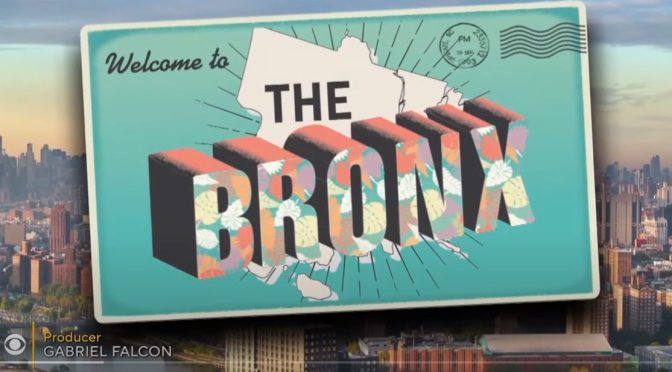
SUNDAY MORNING (January 26, 2025): Comedian and actress Susie Essman was a kid from the Bronx, and maintains a devotion to this monumental, magical and, at times, maligned slice of the Big Apple.
She takes “Sunday Morning” viewers on a tour, joined by such Bronx luminaries as writer and humorist Ian Frazier, astrophysicist Neil deGrasse Tyson, actor and playwright Chazz Palminteri, rapper and entrepreneur Fat Joe, and Bronx Borough President Vanessa Gibson.
TRACKS – Travel Documentaries (October 12, 2024): Explore the vibrant blend of modernity and tradition in cities like Hong Kong, showcasing its futuristic skyline and cultural heritage. Throughout this 4 hour marathon, prepare to whisked away to other global cities like New York, Sydney, and Rome, highlighting their unique character, architectural feats, and rich histories.
Architectural Digest (September 19, 2024) – Michael Wyetzner of Michielli + Wyetzner Architects joins AD in New York as he returns to Central Park to explore the thousands of years of history found there.
Video timeline: 00:00 Intro 00:28 Columbus Circle 01:55 Glen Span Arch 03:44 Cleopatra’s Needle 05:45 The Blockhouse 06:41 The Arsenal 08:23 McGown’s Pass 10:40 Strangers’ Gate
Although Central Park itself would not have existed 200 years ago, you can track the use of the land back 13,000 years. From ancient Native American trails to billion-year-old rocks, take an in-depth look at the thousands of years of history housed inside this iconic park.
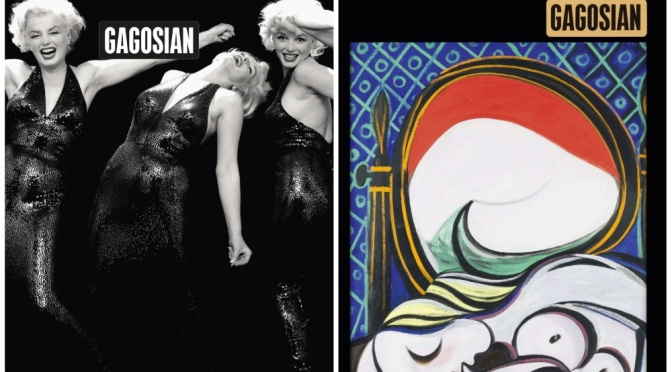
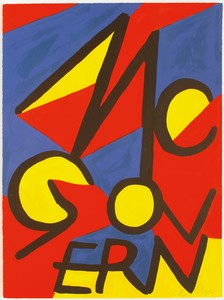
Gagosian Quarterly (Fall 2024) – The new issue features Jessica Beck discussing Andy Warhol’s Mao series, contextualizing Warhol’s return to painting in the early 1970s and his attraction to subjects of notoriety. We dig into the archives to honor the inimitable Richard Serra, who had over forty exhibitions at Gagosian since his first in 1983. Elsewhere in the issue, Salomé Gómez-Upegui examines the work of artists confronting the climate crisis, and Péjú Oshin speaks with Jayden Ali about his expansive view of architecture.
Andy Warhol’s Insiders at the Gagosian Shop in London’s historic Burlington Arcade is a group exhibition and shop takeover that feature works by Warhol and portraits of the artist by friends and collaborators including photographers Ronnie Cutrone, Michael Halsband, Christopher Makos, and Billy Name. To celebrate the occasion, Makos met with Gagosian director Jessica Beck to speak about his friendship with Warhol and the joy of the unexpected.
Against the backdrop of the 2020 US presidential election, historian Hal Wert takes us through the artistic and political evolution of American campaign posters, from their origin in 1844 to the present. In an interview with Quarterly editor Gillian Jakab, Wert highlights an array of landmark posters and the artists who made them.
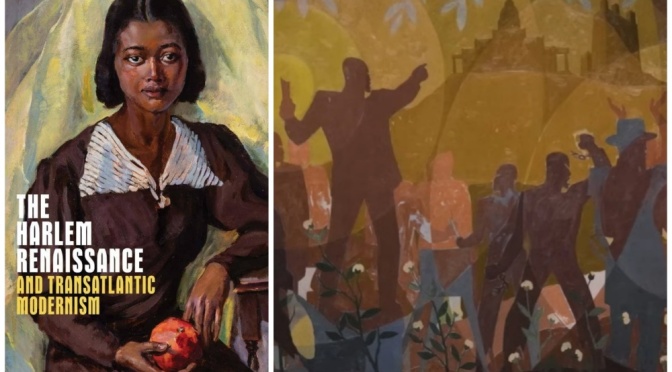
Through some 160 works of painting, sculpture, photography, film, and ephemera, it will explore the comprehensive and far-reaching ways in which Black artists portrayed everyday modern life in the new Black cities that took shape in the 1920s–40s in New York City’s Harlem and nationwide in the early decades of the Great Migration when millions of African Americans began to move away from the segregated rural South.
The first art museum survey of the subject in New York City since 1987, the exhibition will establish the Harlem Renaissance and its radically new development of the modern Black subject as central to the development of international modern art.
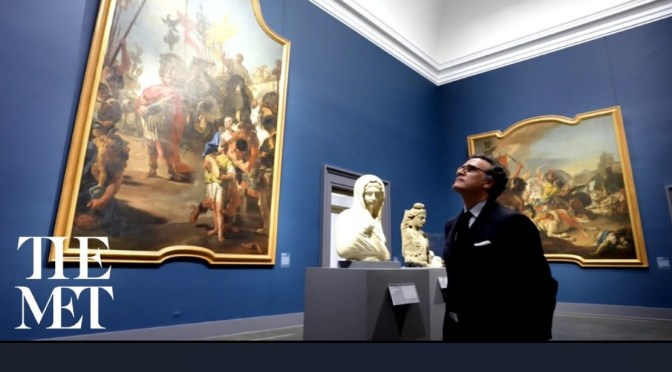
The Met (January 19, 2024): Join curators Stephan Wolohojian, Adam Eaker, David Pullins, and Anna-Claire Stinebring along with their special guests as they guide you through the newly reopened galleries dedicated to European Paintings from 1300 to 1800.
The reconfigured galleries highlight fresh narratives and dialogues among more than 700 works of art from the Museum’s world-famous holdings, which include recently acquired paintings and prestigious loans, as well as select sculptures and decorative art, showcase the interconnectedness of cultures, materials, and moments across The Met collection.
News, Views and Reviews For The Intellectually Curious














 Boomers Daily