Tag Archives: Mortality

Diet Studies: “Eat Less, Live Longer” – Calorie Restriction Delays Age-Related Diseases (Salk)

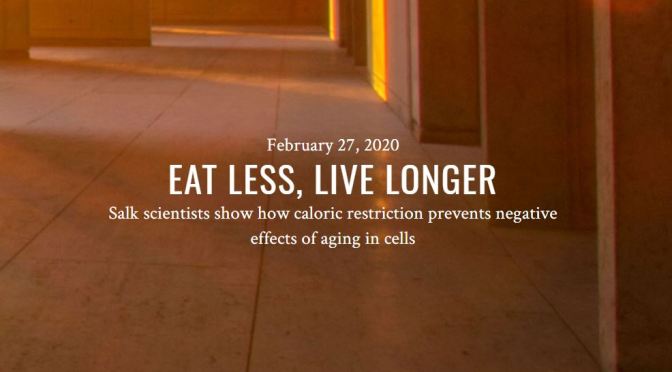
Salk Institute logoEat less, live longer- If you want to reduce levels of inflammation throughout your body, delay the onset of age-related diseases and live longer—eat less food. That’s the conclusion of a new study by scientists from the US and China that provides the most detailed report to date of the cellular effects of a calorie-restricted diet in rats.

(Salk News, February 27, 2020)

While the benefits of caloric restriction have long been known, the new results show how this restriction can protect against aging in cellular pathways, as detailed in Cell on February 27, 2020.

Aging is the highest risk factor for many human diseases, including cancer, dementia, diabetes and metabolic syndrome. Caloric restriction has been shown in animal models to be one of the most effective interventions against these age-related diseases. And although researchers know that individual cells undergo many changes as an organism ages, they have not known how caloric restriction might influence these changes.

In the new paper, Belmonte and his collaborators—including three alumni of his Salk lab who are now professors running their own research programs in China—compared rats who ate 30 percent fewer calories with rats on normal diets. The animals’ diets were controlled from age 18 months through 27 months. (In humans, this would be roughly equivalent to someone following a calorie-restricted diet from age 50 through 70.)


Read more 

Diet Studies: Repeated “Diet Switching” Found To Increase Mortality Risks

From a Science Journal study (Feb 21, 2020):

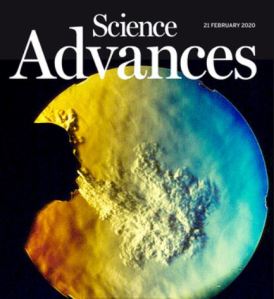
Science Advances Feb 2020We suggest this increase in mortality seen on DR in the 4-day switch treatment is due to either accrued physiological costs or more probable, a carryover of deaths directly resulting from the rich diet, but recorded on the DR diet.
A closer examination of the timing of mortality within the 4-day switching paradigm showed that the mortality response was strongest in the second 48 hours after exposure to both DR and rich diets.

Ageing has attracted extensive scientific interest, from both a fundamental and biomedical perspective. Dietary restriction (DR) extends health and life span across taxa, from baker’s yeast to mice, with very few exceptions (12). The reduction in total calories—or restriction of macronutrients, such as protein—extends life span reliably (35). Although the precise universal mechanisms that connect DR to ageing remain elusive, translation of DR’s health benefits to human medicine is deemed possible. The widespread assumption of DR’s translational potential originates from the notion that DR’s beneficial effects are facilitated by shared evolutionary conserved mechanisms, as beneficial effects of DR are observed across taxa.

Read full article

Mayo Clinic Health Video: Dangers Of “Sepsis” Now Require Response Teams In Intensive Care Units

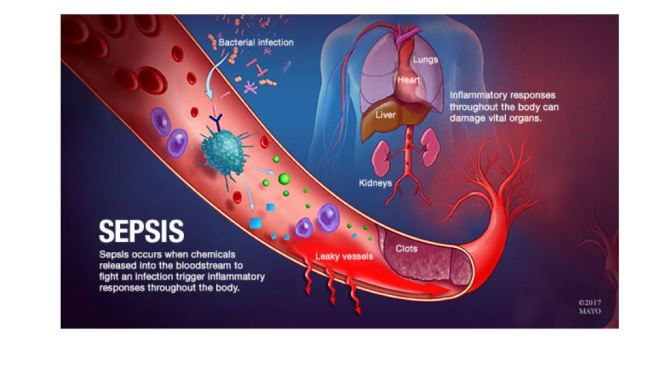
Our bodies are very good at fighting infection. The immune system reacts and attacks bacteria and viruses that make us sick. But sometimes the immune reaction is so strong that it damages the body. This is called a septic reaction or sepsis, and the mortality rate associated with it can be high.

In fact, a new study suggests that sepsis is responsible for 20 percent of all deaths worldwide. That’s more deaths than are estimated to be attributable to cancer. At Mayo Clinic, doctors like Kannan Ramar, M.B.B.S., M.D., are trying to change that with a sepsis response team in intensive care units. Their goal: to stop sepsis and save lives.

More health and medical news on the Mayo Clinic News Network. https://newsnetwork.mayoclinic.org/

Health: Heart Disease, Stroke Deaths Are Rising, Even In Healthy States

From a Wall Street Journal online article (01/14/20):

Americans are dying of heart disease and strokes at a rising rate in middle age, normally considered the prime years of life. An analysis of U.S. mortality statistics by The Wall Street Journal shows the problem is geographically widespread. 

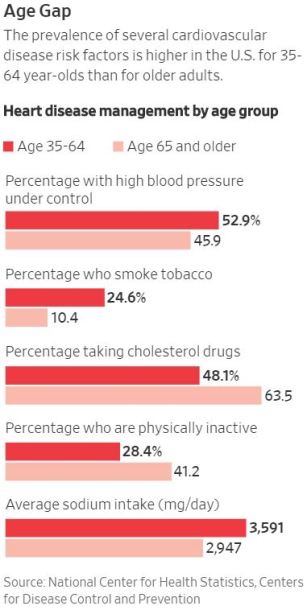
Heart Disease Management by age group WSJ from National Center for Health Statistics CDCDeath rates from cardiovascular disease among people between the ages of 45 and 64 are rising in cities all across the country, including in some of the most unlikely places.

In the Journal’s analysis, three metro areas east of Colorado’s Rocky Mountains—Colorado Springs, Fort Collins and Greeley—recorded some of the biggest increases. Death rates in each rose almost 25%. The three cities boast robust access to exercise and health care. There are bike trails, good heart-disease treatment-and-prevention programs and nearby skiing and hiking.

Wall Street Journal Logo Heart Disease Article January 14 2020

To read more

Aortic Stenosis: Early Aortic-Valve Replacement Surgery Lowers Mortality

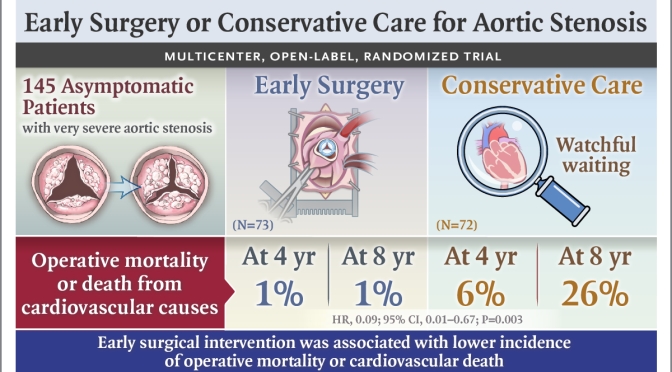
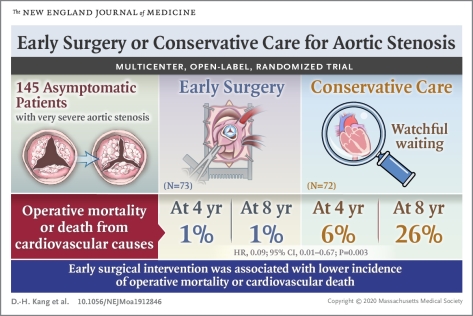
Early Surgery or Conservative Care for Aortic Stenosis New England Journal of Medicine January 8 2020 Infographic

CONCLUSIONS

Among asymptomatic patients with very severe aortic stenosis, the incidence of the composite of operative mortality or death from cardiovascular causes during the follow-up period was significantly lower among those who underwent early aortic-valve replacement surgery than among those who received conservative care.

Read study

Exercise Studies: Older Adults’ “Fragmented Physical Exercise” Linked To Higher Death Rates

From a National Institute On Aging release:

Baltimore Longitudinal Study of Aging Studies

Fragmented physical activity, but not total daily activity, was significantly associated with death, the researchers found. For each 10% higher degree of activity fragmentation, mortality risk was 49% greater. The duration of physical activity also mattered: Participants who frequently engaged in short bouts of activity of less than five minutes were more likely to die than those whose activity bouts lasted five minutes or longer. These associations held after adjusting for age, sex, body mass index and other factors.

Daily physical activity, which benefits health and quality of life, typically decreases in older adults. A new study shows that higher fragmentation of that activity — more transitions from activity to sedentariness — may be a better indicator of risk of death than a person’s overall level of physical activity.

Researchers from the Johns Hopkins Bloomberg School of Public Health, Baltimore, analyzed data from the NIA-supported Baltimore Longitudinal Study of Aging (BLSA), looking at a week’s worth of minute-by-minute physical activity for 548 healthy participants age 65 and older (average age, 76).

To read more: https://www.nia.nih.gov/news/fragmented-physical-activity-linked-higher-risk-death-older-adults

Studies: Surging Number Of Deaths From Heart Failure Tied To Aging Population, Obesity Rates

From a Wall Street Journal online article:

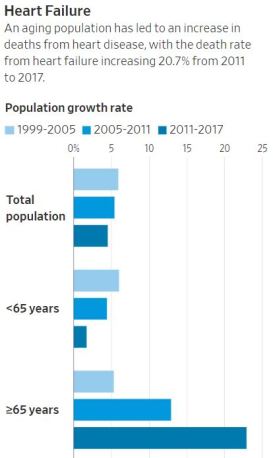
The rapid aging of the population, together with high rates of obesity and diabetes in all ages, are pushing both the rate and number of deaths from heart failure higher, the study said. Most deaths from heart failure occur in older Americans, but they are rising in adults under 65, too, the study showed.

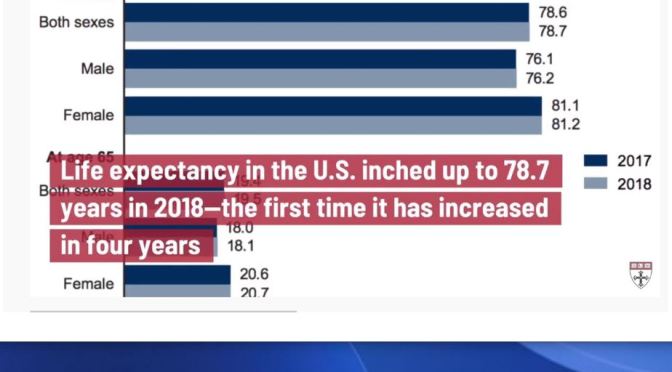
Heart Failure Increase in Aging PopulationThe findings help explain why a decadeslong decline in the death rate from cardiovascular disease has slowed substantially since 2011 and started rising in middle-aged people, helping drive down U.S. life expectancy.

Deaths from heart failure, one of the nation’s biggest killers, are surging as the population ages and the health of younger generations worsens.

The death rate from the chronic, debilitating condition rose 20.7% between 2011 and 2017 and is likely to keep climbing sharply, according to a study published Wednesday in the journal JAMA Cardiology.

To read more: https://www.wsj.com/articles/heart-failure-deaths-rise-contributing-to-worsening-life-expectancy-11572411901